Puerta de los Doce Cantos — Spain castle

Puerta de los Doce Cantos

Puerta de los doce cantos city gate in toledo, spain
Toledo, Spain
High Medieval (11th–13th c.)
Restored

The Puerta de los Doce Cantos is a historic city gate situated in the ancient city of Toledo, within the region of Castile-La Mancha, Spain. This gate is recognized as the most modest among the various gates that once fortified the city. Its origins trace back to the Arab period of Toledo's history, reflecting the Islamic architectural influence that shaped the city's defenses during the medieval era.

Historical context and significance

Constructed as part of the extensive fortifications of Toledo, the Puerta de los Doce Cantos served a strategic military function. It is located at the southeastern end of the fortress known as Al-Hieén, which was a key defensive structure during the Al-Andalus period. The gate was designed to facilitate the movement of foot troops towards the Plaza de armas de Alcántara, a critical military square within the city. This positioning highlights its role in the city's defensive network, allowing for the efficient deployment of soldiers and control of access points.

Architectural features and style

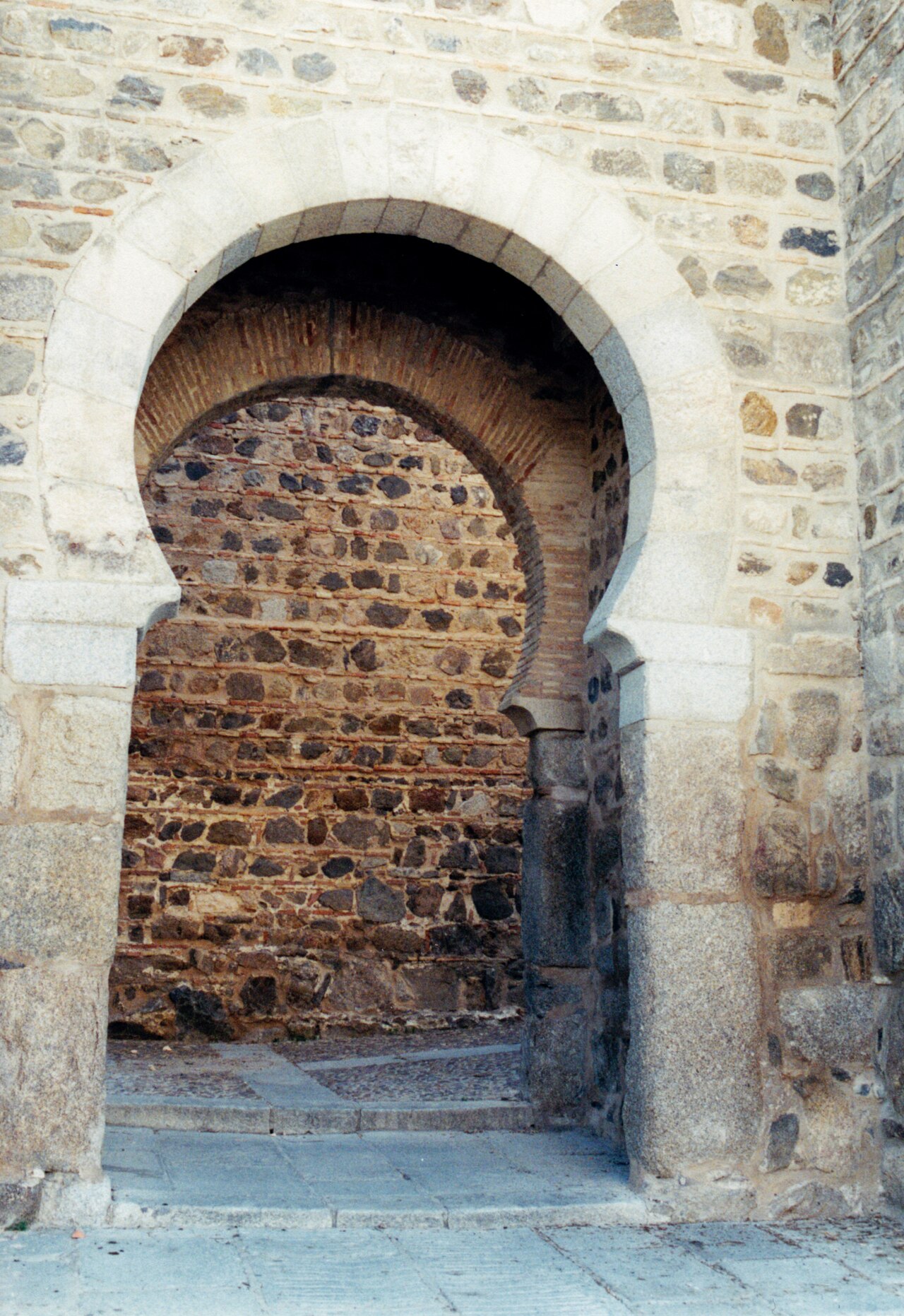
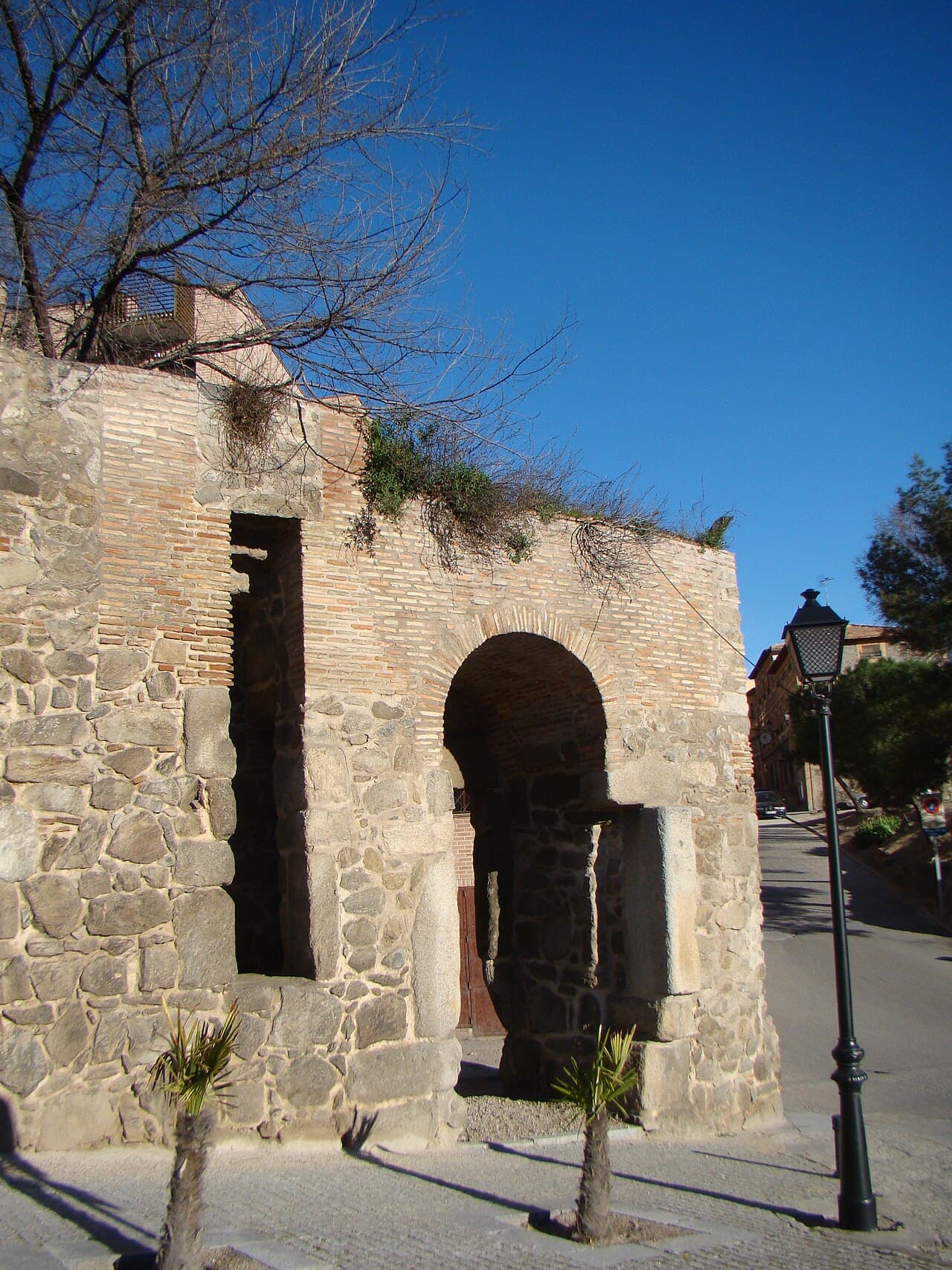
The Puerta de los Doce Cantos originally displayed characteristics typical of Arab military architecture, including robust masonry and functional design aimed at defense rather than ornamentation. The name "Doce Cantos" refers to the twelve angled facets or "corners" that once defined the gate's structure, a distinctive feature that contributed to its defensive capabilities by allowing better angles of surveillance and protection against attackers.

Despite its modest size compared to other gates in Toledo, the gate's design incorporated elements of a bastioned fortress, a style that became more prevalent in later military architecture. This classification aligns with its purpose as a fortified entry point equipped to withstand sieges and assaults.

Restoration and preservation efforts

For many centuries, the Puerta de los Doce Cantos was walled up, rendering it inaccessible and preserving it in a state of relative obscurity. However, during the 1920s civic renovations in Toledo, the gate underwent significant restoration. These efforts aimed to recover and preserve the remaining elements of its original structure, although some parts of its Arabic architecture were removed in the process.

Following restoration, the gate was declared a Bien de Interés Cultural, a status that recognizes its cultural and historical importance within Spain. This designation ensures ongoing protection and conservation, highlighting the gate's value as a heritage monument.

Location and access

The Puerta de los Doce Cantos is situated within the historic city walls of Toledo, a city renowned for its blend of Christian, Muslim, and Jewish architectural influences. Visitors to Toledo can explore this gate as part of the broader historical landscape that includes numerous other gates, fortifications, and monuments reflecting the city's complex past.

Although the gate itself is modest in scale, its preservation offers insight into the military architecture of medieval Spain and the strategic importance of Toledo as a fortified city during the Islamic period.

Frequently asked questions (FAQ)

What is the historical significance of Puerta de los Doce Cantos?
Puerta de los Doce Cantos, located in Toledo, Spain, is a remarkable example of Mudejar architecture, reflecting the city’s rich cultural heritage. Built in the 14th century, this gate served as a vital entrance to the old city, showcasing the blend of Christian and Islamic influences that characterize Toledo's history.
What are the opening hours for Puerta de los Doce Cantos?
The Puerta de los Doce Cantos is open to visitors year-round, typically from 10 AM to 6 PM. However, it is advisable to check for any seasonal changes in hours or special closures due to events or maintenance.
Can I access Puerta de los Doce Cantos easily?
Yes, Puerta de los Doce Cantos is accessible to visitors, located within the historic area of Toledo. The surrounding streets are pedestrian-friendly, making it easy to explore on foot, although some parts of the old city may have uneven surfaces.
When is the best time to visit Puerta de los Doce Cantos?
The best time to visit Puerta de los Doce Cantos is during the spring and fall when the weather is mild and the tourist crowds are smaller. Visiting in the morning or late afternoon can also enhance your experience, allowing for better lighting for photographs and a more peaceful atmosphere.
Is there an admission fee to visit Puerta de los Doce Cantos?
There is no admission fee to visit Puerta de los Doce Cantos as it is an outdoor historical site. However, if you wish to explore guided tours or nearby attractions, some may have associated costs.
What nearby attractions can I visit while at Puerta de los Doce Cantos?
While visiting Puerta de los Doce Cantos, you can explore other nearby historical sites such as the Alcázar of Toledo and the stunning Toledo Cathedral. The charming streets of Toledo also offer shops, cafes, and museums, making it a perfect area for a full day of exploration.

Photo gallery

Puerta de los Doce Cantos
Click to view

Photo by Antonio.velez•CC BY-SA 3.0 es

1 photo • Click any image to view in full screen

Information

Bastioned Fortress

Loading map...

Visitor reviews

No reviews yet. Been here? Write the first review and help other travelers!

Write the first review

Visited this castle? Share your experience

Your review helps other travelers and adds first-hand knowledge to our encyclopedia.

Write a review

(5/5)

0/2000 characters

Your review will be visible after admin approval

Nearby castles

0.2 km

Alcázar of Toledo

Toledo, Spain

The Alcázar of Toledo stands as a monumental symbol of the city's rich history and strategic importance in Spain. This imposing fortress dominates the skyline of Toledo, located in the region of Castile and León, overlooking the vast eastern plains of Castile and the winding river Tagus. Its commanding position has made it a key military and political landmark for centuries, reflecting the layered history of the city from Roman times through the medieval period and into modern Spain. The origins of the Alcázar trace back to the 3rd century when it began as a Roman palace. This early foundation laid the groundwork for a structure that would evolve dramatically over the centuries. During the 10th century, when Toledo was a major city in Moorish Spain, the fortress was rebuilt and expanded, serving as a critical defensive stronghold. The architectural fabric of the Alcázar embodies a fusion of cultural influences, including Roman, Islamic, and Christian elements, which reflect the city's diverse historical rulers. Architectural evolution and design features The Alcázar of Toledo underwent significant transformations, particularly under the reigns of Alfonso VI and Alfonso X during the Christian reconquest. The fortress was extensively modified in 1535 under the commission of Charles I of Spain (also Holy Roman Emperor Charles V), who entrusted the architect Alonso de Covarrubias with its redesign. Covarrubias introduced Renaissance architectural elements, giving the building a more refined and monumental character while retaining its military functionality. The fortress is organized around a rectangular courtyard featuring two levels of elegant arches supported by classical columns. The austere facade is divided into three levels and is marked by a giant imperial shield above the main entrance, symbolizing royal authority. The scale and grandeur of the facade were later enhanced by architect Francisco de Villalpando, who contributed to its imposing appearance in the late 16th century. Structural elements and fortifications The Alcázar's design as a true fortress is evident in its thick defensive walls, battlements, and strategic towers. Its elevated position on a hilltop allowed for commanding views and control over the surrounding landscape, making it a formidable defensive site. The fortress was equipped to withstand sieges, with robust stone construction and limited points of access. Historical significance and royal connections Throughout its history, the Alcázar of Toledo has played multiple roles. After the Christian conquest, it briefly served as a royal residence, housing notable figures such as Mary Anne of Austria, widow of Philip IV, and Mariana of Neuburg, widow of Charles II. However, with the transfer of the Spanish court to Madrid, the Alcázar's role shifted primarily to military functions, becoming a prestigious military academy. One of the most dramatic chapters in the Alcázar's history occurred during the Spanish Civil War (1936–1939). The fortress was the site of a prolonged and intense siege lasting 70 days, during which it was nearly destroyed by Republican forces. The defense of the Alcázar became a powerful symbol of Nationalist resistance. Following the war, under the regime of General Francisco Franco, the Alcázar was meticulously rebuilt and repurposed as a military museum, preserving its historical legacy and educating visitors about Spain's military history. Cultural importance and visitor experience Today, the Alcázar of Toledo is one of the city's major landmarks and a must-visit attraction for tourists interested in Spanish history and architecture. Its imposing silhouette is visible from afar, continuing to dominate the city's skyline as it has for centuries. Visitors can explore the fortress's courtyards, halls, and battlements, gaining insight into its strategic design and historical roles. The Alcázar also serves as a cultural symbol of Toledo's layered past, representing the city's evolution from a Roman provincial center to a Moorish stronghold and then a Christian royal seat. Its preservation as a well-maintained military museum allows for an immersive experience into Spain's complex history, military architecture, and royal heritage. Architectural legacy and restoration efforts The restoration of the Alcázar after the Civil War was a significant architectural and historical project. Efforts focused on maintaining the fortress's original Renaissance style while repairing extensive war damage. This careful restoration has ensured that the Alcázar remains a well-preserved example of Spanish Renaissance military architecture and a testament to the resilience of Toledo's heritage. Overall, the Alcázar of Toledo encapsulates centuries of Spanish history, from its Roman origins through medieval conflicts to modern times. Its architectural grandeur, historical significance, and cultural resonance make it an essential site for understanding Spain's past and the enduring legacy of its fortifications.

High Medieval (11th–13th c.)
Details
0.3 km
Puerta de Alcántara — Spain castle

Puerta de Alcántara

Toledo, Spain

The Puerta de Alcántara, also known as the Alcantara Gate, is a significant fortified city gate located in Toledo, within the autonomous community of Castile-La Mancha, Spain. This historic gateway provides access to the eastern side of Toledo's ancient walled city, serving as a crucial point of entry during the Middle Ages. It stands prominently opposite the Puente de Alcántara, a bridge that spans the Tagus River, itself protected by fortified gates at both ends, underscoring the strategic importance of this area in the city's defense system. Originally constructed in the 10th century during the Early Medieval period under Arab rule, the Puerta de Alcántara exemplifies the military architectural style characteristic of Hispanic-Muslim engineering. Its design features a distinctive gateway set within a bend, a defensive layout intended to slow and expose attackers. The main entrance is marked by a prominent horseshoe arch, framed by two robust square towers that are crenellated and equipped with arrowslits for archers, providing both protection and offensive capability to defenders. Architectural features and military design The Puerta de Alcántara's architectural composition reflects the dual influences of its Islamic origins and later Christian modifications. The gate's bent entrance is a tactical feature that forces entrants to navigate a turn, complicating direct assaults and enabling defenders to better control access. The two square towers flanking the gate are integral to its defense, offering elevated positions for surveillance and archery. The crenellations atop the towers and walls provide cover for defenders while allowing them to launch arrows or other projectiles at attackers. The presence of arrowslits—narrow vertical openings—further enhances this defensive capability. The gate's robust construction with thick masonry walls speaks to its role as a bastioned fortress element within Toledo's city fortifications. Historical significance and evolution Throughout the Middle Ages, the Puerta de Alcántara was a vital access point for both people and goods entering Toledo. Its location on the eastern perimeter of the city meant it was often the first line of defense against invaders approaching from that direction. The gate's strategic position near the Puente de Alcántara bridge, which crosses the Tagus River, amplified its importance in controlling movement and trade. After the Christian reconquest of Toledo in 1085, the gate underwent significant modifications to reinforce its defenses and adapt to changing military technologies and needs. These alterations included strengthening the towers and walls, as well as updating the battlements and defensive apertures. The gate thus embodies a layered history of cultural and military adaptation spanning several centuries. Context within Toledo's fortifications The Puerta de Alcántara is part of Toledo's extensive medieval city walls, which were designed to protect the city from various threats over the centuries. Toledo's walls combine elements from different periods, including Roman, Visigothic, Islamic, and Christian phases, making the city a palimpsest of defensive architecture. Within this context, the Puerta de Alcántara serves as a prime example of Hispanic-Muslim military architecture that was later adapted by Christian forces. Its function as a bastioned fortress gate highlights the integration of military engineering techniques aimed at enhancing the city's resilience against sieges and attacks. Preservation and current status Today, the Puerta de Alcántara remains a well-preserved monument and a key historical landmark within Toledo. Its sturdy construction and strategic design continue to attract visitors interested in medieval military architecture and the city's rich history. The gate stands as a testament to Toledo's complex past and the blending of cultural influences that shaped its urban fabric. Visitors can appreciate the gate's imposing presence and architectural details while exploring the surrounding historic center. The proximity to the Puente de Alcántara bridge and the Tagus River adds to the site's scenic and historical appeal.

Early Medieval (5th–10th c.)
Details
0.4 km
San Servando Castle — Spain castle

San Servando Castle

Toledo, Spain

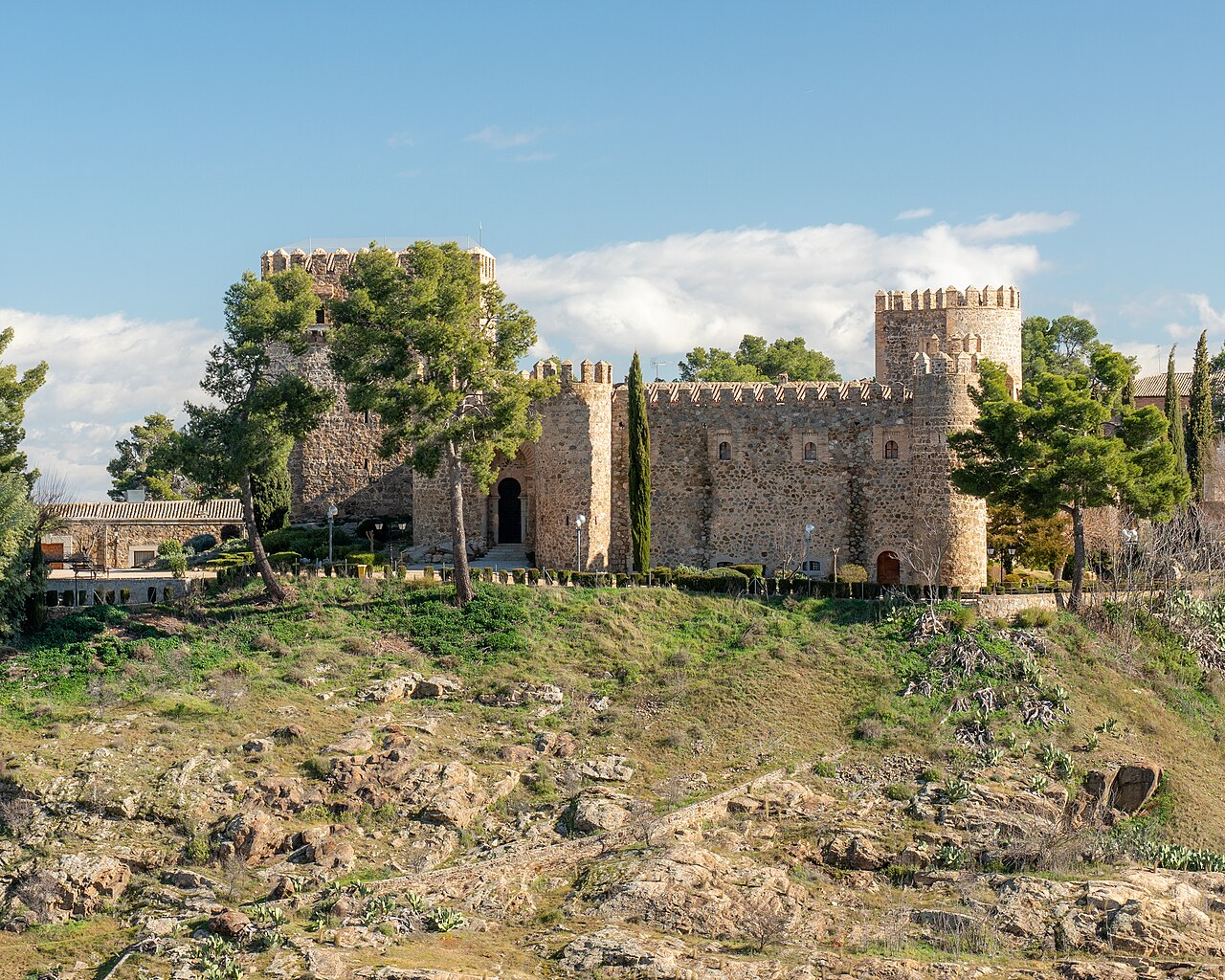
San Servando Castle, located on the Cuesta de San Servando hill opposite the historic city of Toledo in Castilla-La Mancha, Spain, is a remarkable example of layered medieval architecture and history. This castle's origins trace back to a 7th-century Visigothic monastery, reflecting the early Christian presence in the Iberian Peninsula before the Muslim conquest. The site initially housed a Visigothic monastery that was likely founded in the early medieval period. With the Umayyad conquest of Toledo in the early 8th century, the monastery was transformed into an Arab fortress, marking the site's strategic importance overlooking the Tagus River gorge. This early adaptation highlights the castle's long-standing military and religious significance. The transformation from monastery to fortress Following the Christian reconquest of Toledo in 1085 by King Alfonso VI of Castile, the structure was rebuilt as a fortified monastery. In 1088, the king donated it to the French Abbey of St. Victor in Marseille, entrusting its administration and religious practices to the Benedictine monks from France. This period saw the introduction of the Rule of St. Benedict and the replacement of the ancient Mozarabic Rite with the Roman Rite, under the guidance of Cardinal Richard of St. Victor, a papal legate. The monastery enjoyed royal patronage, including donations of surrounding lands and churches, aimed at preserving the Christian identity in a region with a strong Mozarabic tradition. The establishment of a Benedictine nunnery attached to the church further emphasized its religious and social role, including hospitality to the poor and travelers. Destruction and military reinvention In 1110, the monastery was destroyed during an Almoravid attack, forcing the monks to return to Marseille. Subsequently, the property came under the control of the Archbishop of Toledo and the cathedral chapter. Later in the 12th century, King Alfonso VIII of Castile granted the site to the Knights Templar, who transformed the ruined monastery into a formidable fortress. Their primary mission was to protect the Puente de Alcántara, a vital bridge over the Tagus River, from potential Muslim incursions. Architectural features and military significance San Servando Castle exemplifies the typical early medieval fortress adapted and rebuilt by the Templars. The castle's strategic location on a hill provided commanding views of Toledo and the surrounding landscape, essential for defense and surveillance. The Knights Templar fortified the complex with robust stone walls, towers, and battlements designed to withstand sieges. The castle's architecture reflects a blend of Visigothic, Islamic, and Christian military styles, illustrating the cultural and political shifts in medieval Spain. The fortifications included a keep, defensive walls, and a courtyard, all arranged to maximize defense while accommodating the needs of the monastic community and the military garrison. The decline and restoration With the disappearance of the Muslim threat in the region and the dissolution of the Knights Templar in 1312, San Servando Castle gradually lost its military importance. Over the centuries, it fell into neglect and became a picturesque ruin by the 19th century. The castle's romantic ruin status attracted attention for its historical and cultural value. In the mid-20th century, specifically the 1950s, restoration efforts were undertaken to preserve and reconstruct the castle, restoring it to a condition that reflects its medieval origins. Today, San Servando Castle is well preserved and repurposed as a youth hostel, allowing visitors to experience its historic ambiance firsthand. Access to the castle is generally limited to guests of the hostel, but its location and history make it a significant cultural landmark in Toledo. Historical and cultural significance The castle's long history from a Visigothic monastery through Islamic conquest, Christian reconquest, and Templar fortress encapsulates the complex medieval history of Spain. Its connection to prominent figures such as King Alfonso VI, King Alfonso VIII, and Cardinal Richard of St. Victor underlines its importance in religious and military history. The castle also features in local legends, including tales of a ghostly knight, Don Nuño Alvear, adding a layer of folklore to its historical narrative. These stories contribute to the castle's allure and its role in Toledo's cultural tourism. Visiting San Servando Castle today Visitors to Toledo interested in medieval history and architecture will find San Servando Castle a fascinating site, offering insights into the region's religious, military, and cultural transformations. Although public access is restricted due to its current use as a youth hostel, special tours and events occasionally provide opportunities to explore the castle's interiors and grounds. The castle's location near the Puente de Alcántara and the Tagus River gorge offers spectacular views and a tangible connection to Toledo's strategic landscape. Its preservation and adaptive reuse ensure that San Servando Castle remains a vital part of Spain's rich heritage.

Early Medieval (5th–10th c.)
Details