Puerta de Alcántara
The Puerta de Alcántara, also known as the Alcantara Gate, is a significant fortified city gate located in Toledo, within the autonomous community of Castile-La Mancha, Spain. This historic gateway provides access to the eastern side of Toledo's ancient walled city, serving as a crucial point of entry during the Middle Ages. It stands prominently opposite the Puente de Alcántara, a bridge that spans the Tagus River, itself protected by fortified gates at both ends, underscoring the strategic importance of this area in the city's defense system.
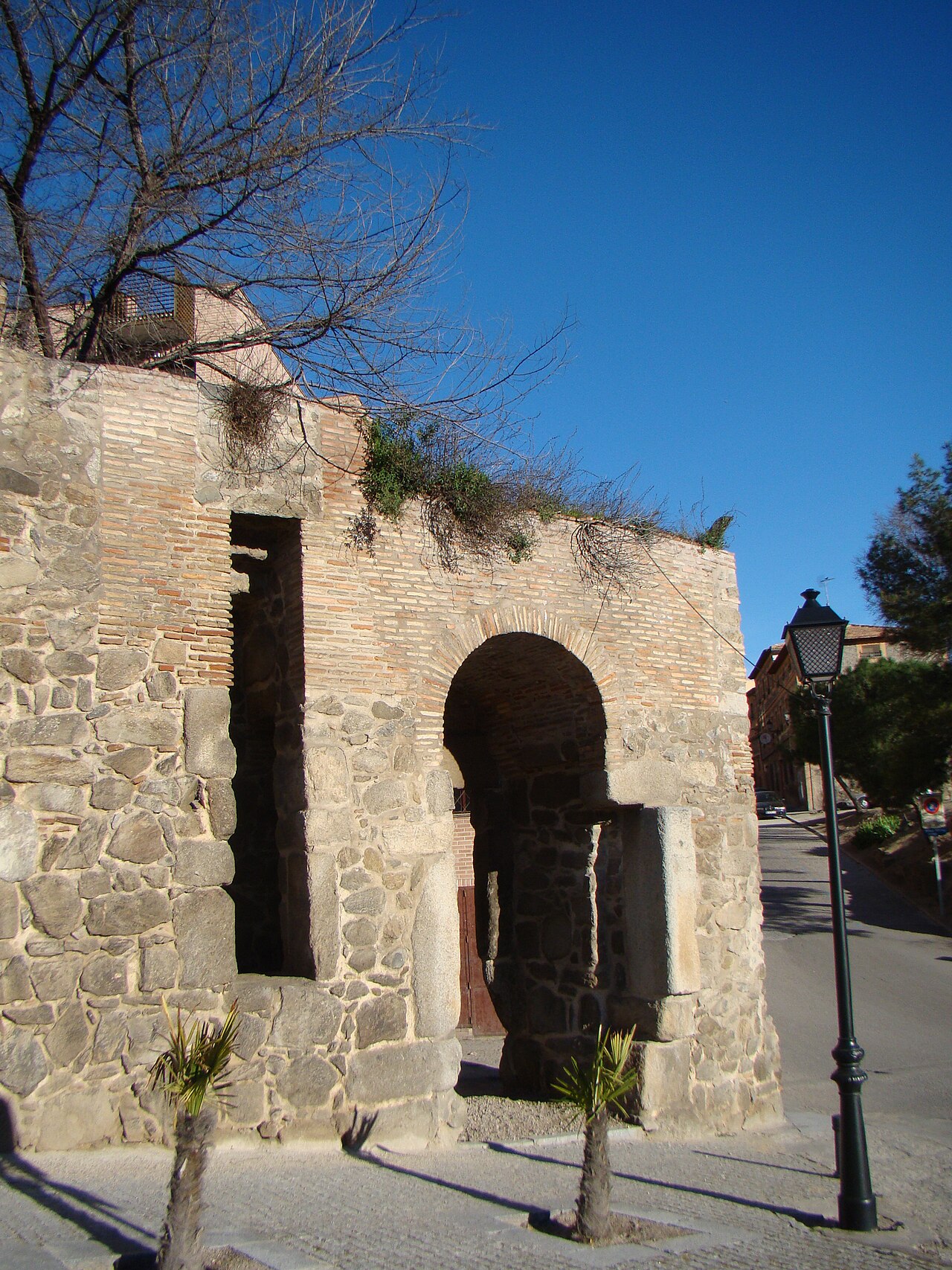
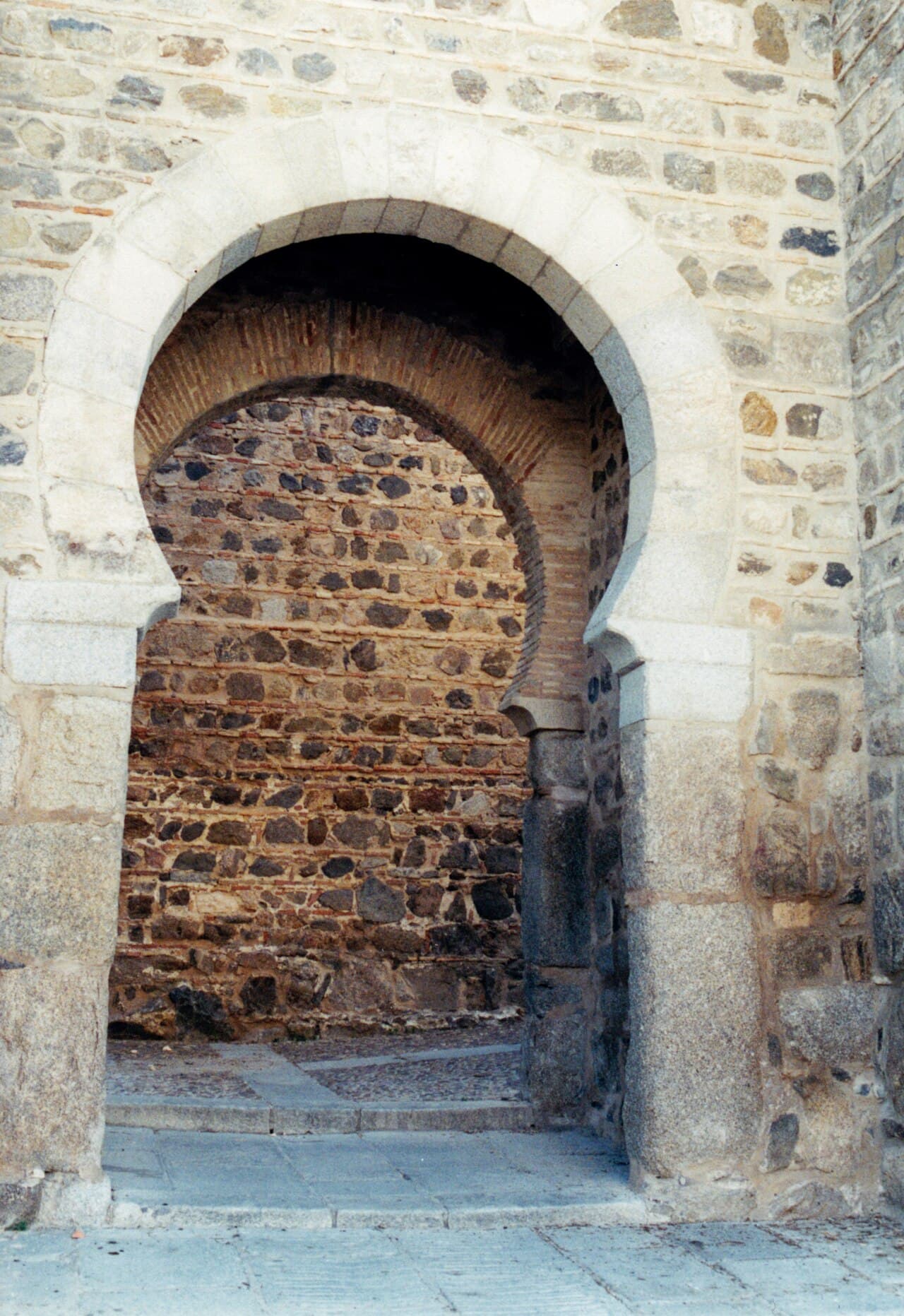
Originally constructed in the 10th century during the Early Medieval period under Arab rule, the Puerta de Alcántara exemplifies the military architectural style characteristic of Hispanic-Muslim engineering. Its design features a distinctive gateway set within a bend, a defensive layout intended to slow and expose attackers. The main entrance is marked by a prominent horseshoe arch, framed by two robust square towers that are crenellated and equipped with arrowslits for archers, providing both protection and offensive capability to defenders.
Architectural features and military design
The Puerta de Alcántara's architectural composition reflects the dual influences of its Islamic origins and later Christian modifications. The gate's bent entrance is a tactical feature that forces entrants to navigate a turn, complicating direct assaults and enabling defenders to better control access. The two square towers flanking the gate are integral to its defense, offering elevated positions for surveillance and archery.
The crenellations atop the towers and walls provide cover for defenders while allowing them to launch arrows or other projectiles at attackers. The presence of arrowslits—narrow vertical openings—further enhances this defensive capability. The gate's robust construction with thick masonry walls speaks to its role as a bastioned fortress element within Toledo's city fortifications.
Historical significance and evolution
Throughout the Middle Ages, the Puerta de Alcántara was a vital access point for both people and goods entering Toledo. Its location on the eastern perimeter of the city meant it was often the first line of defense against invaders approaching from that direction. The gate's strategic position near the Puente de Alcántara bridge, which crosses the Tagus River, amplified its importance in controlling movement and trade.
After the Christian reconquest of Toledo in 1085, the gate underwent significant modifications to reinforce its defenses and adapt to changing military technologies and needs. These alterations included strengthening the towers and walls, as well as updating the battlements and defensive apertures. The gate thus embodies a layered history of cultural and military adaptation spanning several centuries.
Context within Toledo's fortifications
The Puerta de Alcántara is part of Toledo's extensive medieval city walls, which were designed to protect the city from various threats over the centuries. Toledo's walls combine elements from different periods, including Roman, Visigothic, Islamic, and Christian phases, making the city a palimpsest of defensive architecture.
Within this context, the Puerta de Alcántara serves as a prime example of Hispanic-Muslim military architecture that was later adapted by Christian forces. Its function as a bastioned fortress gate highlights the integration of military engineering techniques aimed at enhancing the city's resilience against sieges and attacks.
Preservation and current status
Today, the Puerta de Alcántara remains a well-preserved monument and a key historical landmark within Toledo. Its sturdy construction and strategic design continue to attract visitors interested in medieval military architecture and the city's rich history. The gate stands as a testament to Toledo's complex past and the blending of cultural influences that shaped its urban fabric.
Visitors can appreciate the gate's imposing presence and architectural details while exploring the surrounding historic center. The proximity to the Puente de Alcántara bridge and the Tagus River adds to the site's scenic and historical appeal.
Frequently asked questions (FAQ)
- What is the Puerta de Alcántara?
- The Puerta de Alcántara is a stunning ancient Roman arch located in Toledo, Spain. It served as a gateway into the city during the Roman era and is a remarkable example of Roman architecture, showcasing the historical significance of Toledo as a cultural and political hub.
- When was the Puerta de Alcántara built?
- The Puerta de Alcántara was constructed in 102 AD during the reign of Emperor Trajan. Its enduring presence reflects the city's long and rich history, making it one of the best-preserved monuments from the Roman period in Spain.
- Can I visit the Puerta de Alcántara?
- Yes, the Puerta de Alcántara is open to the public, and visitors can explore this impressive structure year-round. The site is easily accessible, allowing guests to appreciate both its architectural beauty and historical context.
- What are the opening hours for the Puerta de Alcántara?
- The Puerta de Alcántara is typically open from 10 AM to 7 PM, but it's advisable to check local listings before your visit as hours may vary seasonally or due to special events. Ensure you plan your visit accordingly to make the most of your experience.
- Is it possible to access the Puerta de Alcántara with mobility aids?
- Yes, the area around the Puerta de Alcántara is generally accessible for visitors with mobility aids. However, some surrounding cobblestone paths may present challenges, so it's recommended to plan accordingly and seek assistance if needed.
- What is the best time to visit the Puerta de Alcántara?
- The best time to visit the Puerta de Alcántara is during the spring and fall when the weather is mild and ideal for sightseeing. This timing also helps you avoid the peak summer tourist crowds, allowing for a more enjoyable visit.
- Are there any nearby attractions to explore after visiting the Puerta de Alcántara?
- Yes, after visiting the Puerta de Alcántara, you can explore other nearby attractions such as the Alcázar of Toledo and the stunning Toledo Cathedral. The city is rich in history and culture, making it easy to spend an entire day discovering its many treasures.
- What are the ticket prices for visiting the Puerta de Alcántara?
- There is no entry fee to visit the Puerta de Alcántara, making it an accessible historical site for all visitors. However, if you wish to join guided tours or visit nearby museums, those may have separate admission fees.
Photo gallery

Information
Loading map...
Visitor reviews
No reviews yet. Been here? Write the first review and help other travelers!
Write the first reviewVisited this castle? Share your experience
Your review helps other travelers and adds first-hand knowledge to our encyclopedia.