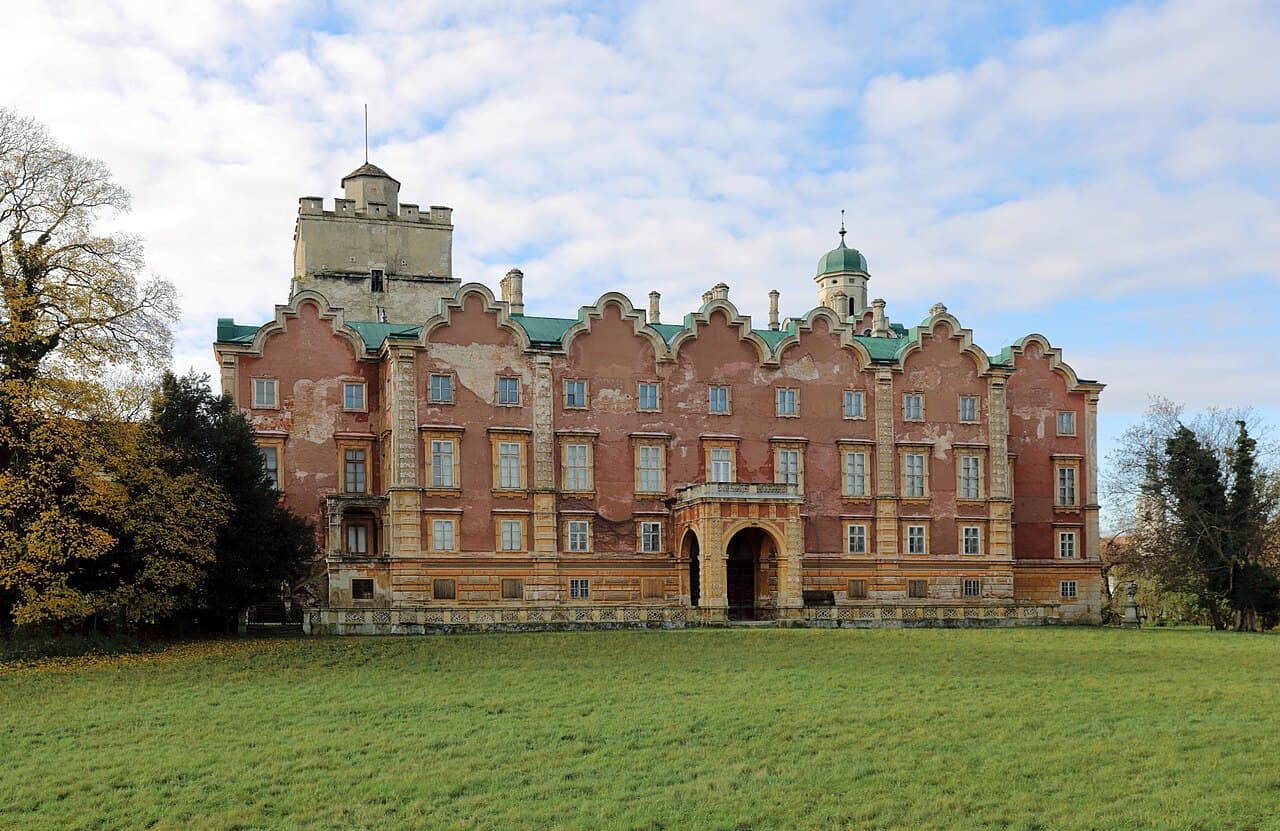
Prugg Castle — Austria castle

Prugg Castle

Prugg castle: medieval hill fortress in austria
High Medieval (11th–13th c.)
Ruins

Prugg Castle is a high medieval hill castle dating back to the 12th century, situated in Austria. This castle is an example of the typical fortifications built during the High Middle Ages to secure strategic locations and control surrounding territories. Its position atop a hill provided natural defense advantages, allowing surveillance over the nearby landscape and protection against invaders.

Historical context and significance

The construction of Prugg Castle in the 12th century places it within a period of increased castle building across Europe, driven by feudal conflicts and the need for territorial control. Castles like Prugg were often commissioned by local lords or nobility to establish dominance and serve as administrative centers. While detailed records of Prugg Castle's original owners and specific historical events are limited, its enduring presence reflects the strategic importance of hilltop fortresses in medieval Austria.

Architectural features and layout

As a hill castle, Prugg Castle was designed to take advantage of its elevated terrain. The castle's layout likely included a central keep or donjon serving as the main stronghold, surrounded by defensive walls and possibly a bailey or courtyard area. The steep slopes of the hill would have made direct assault difficult, while the walls and towers provided additional layers of defense.

The architectural style of Prugg Castle is consistent with High Medieval fortifications, characterized by robust stone construction and functional design focused on defense rather than elaborate ornamentation. Features such as battlements, arrow slits, and thick walls would have been integral to its defensive capabilities.

Defensive structures

The castle's fortifications likely included curtain walls enclosing the main living and defensive spaces. Towers positioned at key points would have allowed defenders to monitor approaches and provide flanking fire. A gatehouse with a fortified entrance would have controlled access, possibly supplemented by a drawbridge or moat, depending on the terrain and water availability.

Role in regional history

While specific historical episodes involving Prugg Castle are not extensively documented, hill castles in Austria during the High Medieval period often played roles in local power struggles, defense against invading forces, and administration of feudal estates. The castle would have served as a residence for the lord and a military stronghold, contributing to the control of trade routes and local governance.

Current condition and preservation

The present condition of Prugg Castle is generally classified as ruins, with remnants of walls and foundational structures visible. These ruins provide valuable insights into medieval military architecture and the historical landscape of the region. Preservation efforts may focus on stabilizing the remaining structures to prevent further decay and facilitating access for visitors interested in medieval history and architecture.

Visiting prugg castle

Visitors to Prugg Castle can explore the site to appreciate its strategic location and architectural remnants. The hilltop setting offers panoramic views of the surrounding Austrian countryside, enhancing the experience of the castle's historical ambiance. Information panels or guided tours, if available, would provide additional context about the castle's history and construction.

Accessibility and visitor tips

Access to the castle ruins may involve walking uphill on uneven terrain, so appropriate footwear and physical readiness are advised. Visiting during daylight hours is recommended to fully appreciate the views and safely navigate the site. Nearby towns or villages may offer accommodations and amenities for tourists.

Frequently asked questions (FAQ)

How do I get to Prugg Castle?
Prugg Castle is located in Austria, easily accessible by car or public transport. The nearest train station is in Bruck an der Mur, from where you can take a short taxi ride or enjoy a scenic walk to the castle.
What is the historical significance of Prugg Castle?
Prugg Castle dates back to the early medieval period and has played a vital role in the region's history. It served as a stronghold for local nobility and has witnessed various historical events, making it a significant site for understanding Austria's feudal past.
When was Prugg Castle built?
Prugg Castle was originally constructed in the 12th century, with various renovations and expansions occurring over the centuries. Its architecture reflects the evolution of defensive structures from the medieval era to the Renaissance.
Can I take guided tours of Prugg Castle?
Yes, guided tours are available at Prugg Castle, offering visitors in-depth insights into its history and architecture. Tours are conducted in multiple languages, and it's advisable to book in advance, especially during the peak tourist season.
Why is the architecture of Prugg Castle unique?
The architecture of Prugg Castle showcases a blend of medieval and Renaissance styles, highlighting its historical evolution. Features such as its imposing towers, sturdy walls, and intricate decorative elements make it a fascinating example of historical military architecture.
Is it possible to host events at Prugg Castle?
Yes, Prugg Castle offers facilities for hosting events such as weddings, corporate gatherings, and private celebrations. The stunning backdrop of the castle, combined with its historical ambiance, makes it an attractive venue for special occasions.
What are the opening hours for visiting Prugg Castle?
Prugg Castle is typically open to visitors from April to October, with varying hours depending on the season. It's recommended to check the official website or contact the castle directly for the most current opening hours before planning your visit.
What are the ticket prices for Prugg Castle?
Ticket prices for Prugg Castle vary based on age groups and whether you choose a guided tour. Discounts may be available for students, seniors, and families, making it accessible for all visitors.
When is the best time to visit Prugg Castle?
The best time to visit Prugg Castle is during the spring and early autumn when the weather is pleasant and the landscape is beautiful. Additionally, visiting during weekdays may help you avoid large crowds and enhance your overall experience.
What nearby attractions can I explore while visiting Prugg Castle?
While visiting Prugg Castle, you can explore nearby attractions such as the charming town of Bruck an der Mur and the stunning natural landscapes of the surrounding region. Outdoor activities like hiking and biking are also popular, offering visitors a chance to enjoy the scenic beauty of Austria.

Photo gallery

Prugg Castle
Click to view

Photo by C.Stadler/Bwag•CC BY-SA 4.0

1 photo • Click any image to view in full screen

Information

Hill Castle

Loading map...

Visitor reviews

No reviews yet. Been here? Write the first review and help other travelers!

Write the first review

Visited this castle? Share your experience

Your review helps other travelers and adds first-hand knowledge to our encyclopedia.
Write a review

(5/5)

0/2000 characters

Your review will be visible after admin approval

Nearby castles

11.4 km
Carnuntum — Austria castle

Carnuntum

, Austria

Carnuntum was a prominent Roman legionary fortress and the headquarters of the Pannonian fleet from around 50 AD. Located on the banks of the Danube River in what is now Lower Austria, it served as the capital of the Pannonia Superior province after the 1st century AD. The site developed into a significant urban center, growing into a large city with an estimated population of approximately 50,000 inhabitants at its peak. The fortress and city of Carnuntum were strategically positioned halfway between the modern cities of Vienna and Bratislava, near the present-day villages of Petronell-Carnuntum and Bad Deutsch-Altenburg. The extensive archaeological remains cover an area of about 10 square kilometers (3.9 square miles), now preserving a vast archaeological park that offers insight into Roman military and civilian life in the province of Pannonia. Historical significance and development Carnuntum began as a military installation, established to secure the Roman Empire's northern frontier along the Limes Danubianus. The fortress housed a full Roman legion and served as the base for the Pannonian fleet, which patrolled the Danube. Its strategic location made it a vital center for military operations and logistics in the region. Following the military phase, Carnuntum evolved into a provincial capital of Pannonia Superior, reflecting its growing administrative importance. The city expanded with typical Roman urban features, including a forum, baths, amphitheater, and temples. The civilian settlement flourished alongside the military camp, becoming a bustling hub of commerce and culture. Architectural features and urban layout The fortress itself was designed with bastioned fortifications typical of Roman military engineering, including thick defensive walls, towers, and gates to control access. The extensive remains show well-planned streets and public buildings, reflecting the Roman emphasis on order and functionality. Within the archaeological park, visitors can explore reconstructed buildings and ruins that illustrate the city's complex urban fabric. Notable structures include the amphitheater, which hosted gladiatorial games and public spectacles, and the thermae (public baths), which were central to Roman social life. The site also reveals evidence of residential quarters, workshops, and markets, highlighting the diversity of activities that took place in Carnuntum. The combination of military and civilian architecture provides a comprehensive picture of life in a Roman provincial capital. Archaeological discoveries and preservation Excavations at Carnuntum have uncovered a wealth of artifacts, including mosaics, inscriptions, statues, and everyday objects that shed light on the cultural and economic life of the city. The site is one of the most important Roman archaeological parks in Central Europe, attracting scholars and tourists alike. The preservation of Carnuntum's remains has been supported by ongoing archaeological research and conservation efforts. The site offers educational programs and guided tours that help visitors understand the historical context and significance of the fortress and city. Cultural impact and tourism Today, Carnuntum Archaeological Park serves as a major cultural and historical attraction in Austria. It provides a unique opportunity to experience Roman history firsthand through reconstructed buildings, museum exhibits, and interactive displays. The park hosts events such as reenactments, workshops, and festivals that celebrate Roman heritage and engage the public in the ancient past. Its location near major urban centers like Vienna makes it accessible for day trips and educational visits.

Early Medieval (5th–10th c.)
Details
14.5 km

Orth Castle

Orth an der Donau, Austria

Orth Castle, known locally as Schloss Orth, is a historic moated castle situated north of the town of Orth an der Donau in the province of Lower Austria, Austria. The castle's origins trace back to the early 12th century, with probable construction around 1140 by the Lengenbach family, a notable noble lineage of the region. First documented in 1201, Orth Castle originally featured a classic medieval defensive design, characterized by a moat surrounding the structure and four corner towers that reinforced its fortifications. Medieval origins and early history The castle's initial form as a moated fortress was typical of the period, serving both as a defensive stronghold and a noble residence. Its strategic location near the Danube River made it a significant asset during the turbulent times of the Middle Ages. Throughout the 15th century, Orth Castle was a focal point of regional power struggles. It was notably involved in the conflicts between Emperor Frederick III and the Lower Austrian Estates, who supported Ladislaus the Posthumous as their rightful ruler. In August 1452, the castle was seized by forces loyal to the Estates under the command of Ulrich von Eyczing. Following the death of Ladislaus in 1457, the castle again became a contested site. In 1460, it endured a siege by an imperial army targeting the castle's then-holder, Gamareth Fronauer. Fronauer managed to escape through secret underground passageways, allowing the castle to be captured without further conflict. These events highlight Orth Castle's strategic importance during the late medieval period. Destruction and renaissance reconstruction The castle suffered significant damage during the 1529 Ottoman campaign led by Sultan Suleiman the Magnificent, as the Ottoman forces passed through the region en route to the Siege of Vienna. The destruction left Orth Castle in ruins until it was rebuilt in the Renaissance style by Nicholas, Count of Salm, after the Ottoman retreat to Hungary. This reconstruction introduced architectural elements typical of the Renaissance, including more refined stonework and updated defensive features adapted to the evolving military technologies of the 16th century. Baroque expansion and 19th-century historicism In the 17th century, Orth Castle transitioned from a military fortress to a hunting lodge, reflecting changing social and political conditions. Around 1680, the castle underwent further modifications in the Baroque style, which added ornamental details and expanded living quarters to suit its new function as a leisure residence. Ownership of the castle passed to the Habsburg dynasty in 1824. Later in the 19th century, Rudolf, Crown Prince of Austria, undertook a significant refitting of the castle in 1873. His renovations embraced a late historic style, which sought to evoke the grandeur of earlier architectural periods while modernizing the castle's facilities. Rudolf also used Orth Castle as a personal hunting retreat, continuing its long association with aristocratic leisure. Architectural features and current use Orth Castle is laid out on an irregular square ground plan with four square corner towers, although the southwestern wing of the castle no longer survives. The remaining structures showcase a blend of medieval fortification elements with Renaissance and Baroque modifications, creating a layered architectural narrative that reflects its varied history. Today, Orth Castle serves as a museum, the visitor center for the National Park Donau-Auen, and administrative offices. The castle's role as a cultural and natural heritage site makes it an important destination for visitors interested in both history and the unique riverine ecosystem of the Danube floodplains. While the museum may occasionally be closed for maintenance or other reasons, the castle remains a notable landmark in Lower Austria.

Late Medieval (14th–15th c.)
Details
17.9 km

Hainburg Castle

Hainburg an der Donau, Austria

Hainburg Castle, also known as Heimenburg or Heimoburg, is a significant medieval fortress located on a mountain overlooking the town of Hainburg an der Donau in the province of Lower Austria. This castle stands as a testament to the region's turbulent history and strategic importance along the Danube River. Originally constructed in the mid-11th century, it has undergone numerous expansions, sieges, and reconstructions, reflecting the evolving military architecture and political landscape of Central Europe. The origins of Hainburg Castle date back to around 1050, when Henry III, Holy Roman Emperor, ordered the construction of a new fortification at the site, likely restoring an earlier defensive structure. The castle's location was chosen strategically to protect and control traffic along the vital Danube trade route, underscoring its military and economic significance. Early construction efforts were met with resistance, as Hungarian troops attempted to prevent the castle's completion, highlighting the contested nature of the border region. Medieval expansions and the babenberg era In 1192, Leopold V, Duke of Austria, initiated a major expansion of the castle, enhancing its defensive capabilities and residential facilities. After Leopold's death in 1194, his successors continued the work, financed in part by the ransom paid for the release of Richard the Lionheart. Throughout the 13th century, Hainburg Castle served as a residence for the influential Babenberg family, who were the ruling dynasty in Austria before the rise of the Habsburgs. The castle's chapel was the site of an important royal marriage in 1252, when Ottokar II of Bohemia wed Margaret of Austria, symbolizing political alliances of the period. The castle later came under the control of the Habsburg family in 1278, marking a new chapter in its history and the broader power shifts within the Holy Roman Empire. Sieges and military significance in the late medieval period Between 1477 and 1482, the castle endured multiple sieges by the forces of Matthias Corvinus, the Hungarian king known for his formidable Black Army. Despite several unsuccessful attempts, Matthias finally captured the castle after a prolonged five-month siege in September 1482. His occupation lasted until his death in 1490, when Maximilian I, Holy Roman Emperor, reclaimed the fortress for the Habsburgs. In the early 16th century, the castle was granted to the Von Zelking family in 1514. Recognizing the growing threat of Ottoman incursions, the Von Zelking family fortified the castle further and adapted its defenses to accommodate firearms, reflecting advances in military technology. Despite these efforts, the castle fell to Sultan Suleiman the Magnificent during his 1529 campaign en route to the Siege of Vienna. Decline and destruction in the early modern period Following its military peak, Hainburg Castle entered a period of decline. By 1547, the Von Zelking family leased the castle, which marked the end of its use as a noble residence. Subsequent rebuilding efforts focused on strengthening the fortress, but a catastrophic lightning strike in 1569 caused an explosion in the powder depot, severely damaging the structure. By 1672, the castle's palas (main residential building) was in ruins, although its defensive walls remained formidable. However, in 1683, during the Ottoman advance toward Vienna, the castle was captured and destroyed by the forces of Grand Vizier Kara Mustafa Pasha. This event marked the end of the castle's military relevance. Post-medieval abandonment and modern preservation After the destruction in the late 17th century, Hainburg Castle was gradually abandoned throughout the 18th century and left to deteriorate. It was no longer maintained as a military stronghold or noble residence. In the 20th century, efforts were made to consolidate the ruins and preserve what remained of the historic structure. Today, Hainburg Castle is a freely accessible ruin that offers visitors panoramic views over the medieval town of Hainburg an der Donau and the surrounding countryside. The site is appreciated for its historical significance and scenic vantage points. Nearby, visitors can also explore the ruins of Röthelstein Castle, adding to the region's rich medieval heritage. Architectural features and layout The castle's original design reflects typical high medieval fortification principles with a focus on strategic location and robust defensive structures. Its position atop a mountain provided natural protection and commanding views of the Danube valley. Over the centuries, the castle complex was expanded to include multiple defensive walls, towers, a palas, a chapel, and fortified gates. Adaptations in the 16th century to accommodate firearms included reinforced bastions and artillery platforms, demonstrating the evolution of military architecture in response to changing warfare technologies. Despite damage from sieges and explosions, elements of the castle's walls and towers remain visible, offering insights into medieval construction techniques. Historical context and cultural importance Hainburg Castle played a pivotal role in controlling the Danube trade route and defending the eastern borders of the Holy Roman Empire. Its history encapsulates the shifting power dynamics between Austrian, Hungarian, and Ottoman forces. The castle's association with prominent historical figures such as Henry III, Leopold V, Matthias Corvinus, and Suleiman the Magnificent underscores its importance as a military and political landmark. As a ruin, the castle today serves as a cultural monument and tourist attraction, preserving the legacy of medieval fortifications in Austria. Its accessibility and scenic location make it a favored destination for history enthusiasts and visitors seeking to experience the region's medieval past firsthand.

High Medieval (11th–13th c.)
Details

