Orth Castle
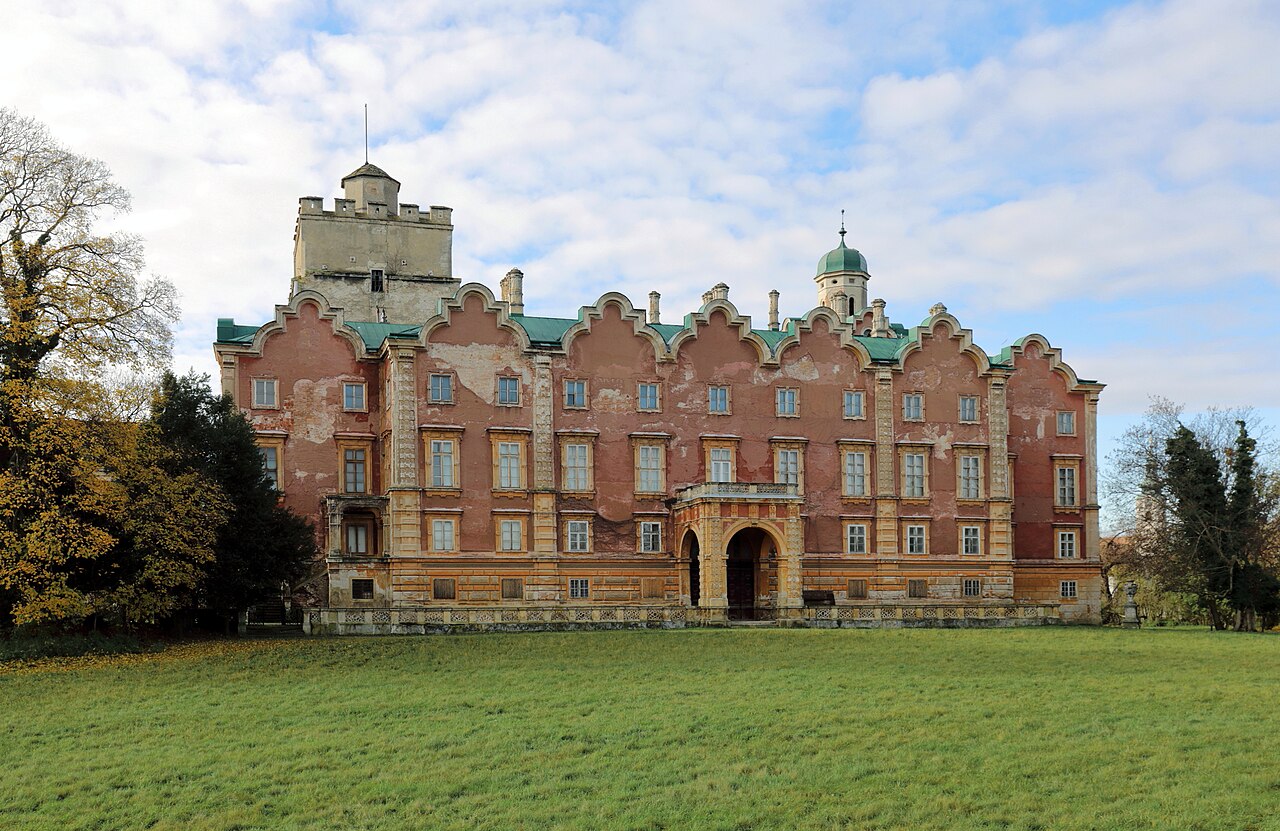
Orth Castle, known locally as Schloss Orth, is a historic moated castle situated north of the town of Orth an der Donau in the province of Lower Austria, Austria. The castle's origins trace back to the early 12th century, with probable construction around 1140 by the Lengenbach family, a notable noble lineage of the region. First documented in 1201, Orth Castle originally featured a classic medieval defensive design, characterized by a moat surrounding the structure and four corner towers that reinforced its fortifications.
Medieval origins and early history
The castle's initial form as a moated fortress was typical of the period, serving both as a defensive stronghold and a noble residence. Its strategic location near the Danube River made it a significant asset during the turbulent times of the Middle Ages. Throughout the 15th century, Orth Castle was a focal point of regional power struggles. It was notably involved in the conflicts between Emperor Frederick III and the Lower Austrian Estates, who supported Ladislaus the Posthumous as their rightful ruler.
In August 1452, the castle was seized by forces loyal to the Estates under the command of Ulrich von Eyczing. Following the death of Ladislaus in 1457, the castle again became a contested site. In 1460, it endured a siege by an imperial army targeting the castle's then-holder, Gamareth Fronauer. Fronauer managed to escape through secret underground passageways, allowing the castle to be captured without further conflict. These events highlight Orth Castle's strategic importance during the late medieval period.
Destruction and renaissance reconstruction
The castle suffered significant damage during the 1529 Ottoman campaign led by Sultan Suleiman the Magnificent, as the Ottoman forces passed through the region en route to the Siege of Vienna. The destruction left Orth Castle in ruins until it was rebuilt in the Renaissance style by Nicholas, Count of Salm, after the Ottoman retreat to Hungary. This reconstruction introduced architectural elements typical of the Renaissance, including more refined stonework and updated defensive features adapted to the evolving military technologies of the 16th century.
Baroque expansion and 19th-century historicism
In the 17th century, Orth Castle transitioned from a military fortress to a hunting lodge, reflecting changing social and political conditions. Around 1680, the castle underwent further modifications in the Baroque style, which added ornamental details and expanded living quarters to suit its new function as a leisure residence.
Ownership of the castle passed to the Habsburg dynasty in 1824. Later in the 19th century, Rudolf, Crown Prince of Austria, undertook a significant refitting of the castle in 1873. His renovations embraced a late historic style, which sought to evoke the grandeur of earlier architectural periods while modernizing the castle's facilities. Rudolf also used Orth Castle as a personal hunting retreat, continuing its long association with aristocratic leisure.
Architectural features and current use
Orth Castle is laid out on an irregular square ground plan with four square corner towers, although the southwestern wing of the castle no longer survives. The remaining structures showcase a blend of medieval fortification elements with Renaissance and Baroque modifications, creating a layered architectural narrative that reflects its varied history.
Today, Orth Castle serves as a museum, the visitor center for the National Park Donau-Auen, and administrative offices. The castle's role as a cultural and natural heritage site makes it an important destination for visitors interested in both history and the unique riverine ecosystem of the Danube floodplains. While the museum may occasionally be closed for maintenance or other reasons, the castle remains a notable landmark in Lower Austria.
Frequently asked questions (FAQ)
- When was Orth Castle originally built?
- Orth Castle was probably built around 1140 by the Lengenbach family and first mentioned in historical records in 1201.
- What architectural styles are visible at Orth Castle?
- Orth Castle features a mix of medieval defensive structures, Renaissance reconstruction elements, and Baroque expansions from the 17th century.
- What historical events took place at Orth Castle?
- The castle was involved in 15th-century conflicts between Emperor Frederick III and the Lower Austrian Estates, and it was destroyed during the 1529 Ottoman campaign.
- Can visitors tour Orth Castle today?
- Orth Castle currently functions as a museum and visitor center for the National Park Donau-Auen, although the museum may sometimes be closed for maintenance.
- What is the layout of Orth Castle?
- The castle has an irregular square plan with four square corner towers, though the southwestern wing is missing.
Information
Current owner
State museum
Address
Schlossplatz 1, Orth an der Donau, Austria
Loading map...
Visitor reviews
No reviews yet. Been here? Write the first review and help other travelers!
Write the first reviewVisited this castle? Share your experience
Your review helps other travelers and adds first-hand knowledge to our encyclopedia.