Prudhoe Castle
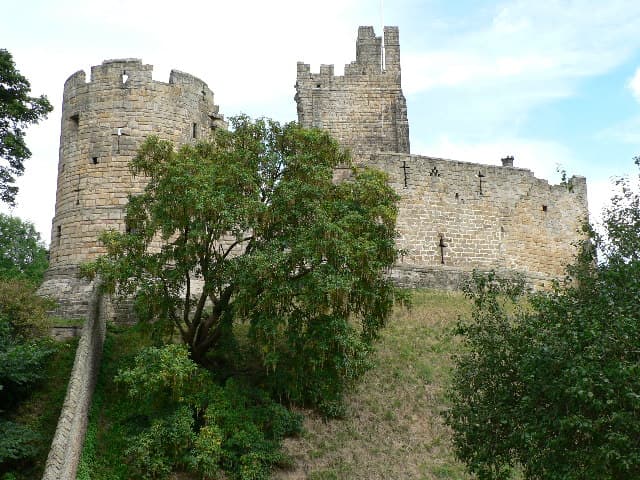
Prudhoe Castle stands as a significant example of a medieval hill castle located in the town of Prudhoe, Northumberland, England. Perched on a ridge approximately 150 feet above the southern bank of the River Tyne, the castle occupies a commanding position with steep slopes descending toward the river, enhancing its natural defenses. Its origins trace back to the Norman conquest of England in the mid-11th century, when it was initially established as a motte and bailey fortress—a typical early medieval castle design featuring a raised earthwork topped with a wooden or stone structure and an enclosed courtyard.
The castle's early history is closely tied to the Umfraville family, who gained control of the site shortly after its founding. Robert d’Umfraville was officially granted the barony of Prudhoe by King Henry I in the early 12th century, although the family likely held the castle from the late 11th century. During their tenure, the Umfravilles replaced the original wooden defenses with more durable clay and stone earthworks, later augmenting the fortifications with a stone curtain wall and a fortified gatehouse. In the late 12th century, after successfully defending the castle against two Scottish sieges in 1173 and 1174, Odinel II Umfraville further strengthened Prudhoe by constructing a substantial stone keep and a great hall.
Medieval architecture and fortifications
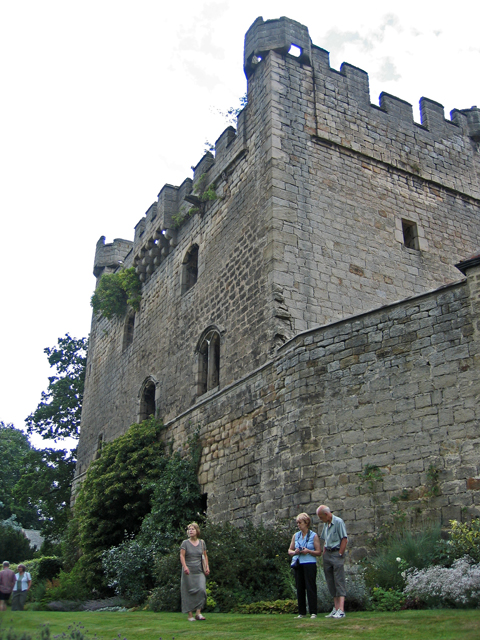
The castle's layout exemplifies classic medieval defensive design, featuring distinct outer and inner wards separated by strong fortifications. The inner ward houses the principal medieval structure—the 12th-century stone keep—which has formidable walls approximately 10 feet thick and interior dimensions of roughly 20 by 24 feet. Originally, the keep consisted of two storeys beneath a pitched roof, serving as the castle’s primary stronghold and last refuge during sieges.
The outer ward is accessed through a barbican on the south side, an outer defensive gateway dating from the early 14th century. This entrance is flanked by a mill pond and the remains of a water mill, indicating the integration of water management and industrial functions within the castle complex. The original gatehouse, constructed in the early 12th century, leads into the outer ward, where remnants of several buildings survive.
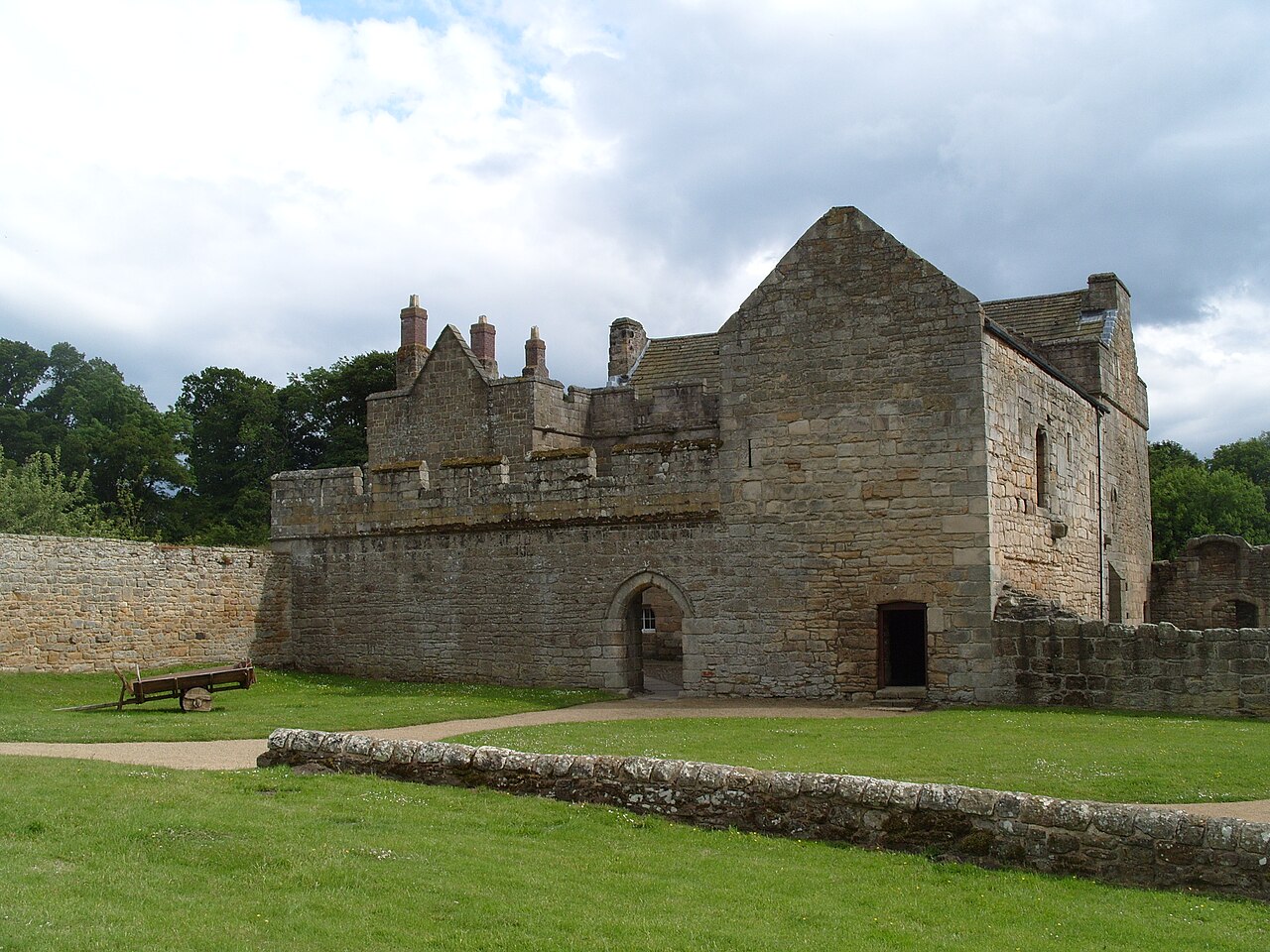
Among these is the Great Hall, situated against the north curtain wall, which measures approximately 60 by 46 feet and was built by the Percy family after they acquired the castle through marriage in the late 14th century. This hall was replaced by a newer great hall to its west by the late 15th century. On the western side of the outer ward stands a Georgian manor house dating from the early 19th century, which replaced earlier residential quarters and now serves as exhibition and visitor facilities. A gateway at the southern end of this manor house provides access to the inner ward.
Historical significance and ownership
Prudhoe Castle's history reflects its strategic importance on the Anglo-Scottish border. The Umfraville family maintained control for several generations, actively engaging in regional disputes and military conflicts, including opposition to King John and defending against Scottish incursions. In 1316, King Edward I funded a garrison of 40 heavily armed men-at-arms and 80 light cavalry to defend the castle, underscoring its ongoing military role.
Following the death of the last Umfraville heir in 1381, the castle passed to the Percy family, who continued to enhance its domestic and defensive facilities. The castle's ownership changed multiple times during the 15th century due to political upheaval. After Henry Percy, 1st Earl of Northumberland, was declared a traitor in 1405, the castle was confiscated by the Crown and granted to the Duke of Bedford until 1435. It was restored to the Percy family in 1440, briefly passed to George, Duke of Clarence, and Lord Montague during the 1460s, before finally returning to the Percys in 1470.
The Percy family occupied Prudhoe intermittently throughout the 16th century. Notably, Henry Percy, 6th Earl of Northumberland, and Sir Thomas Percy lived there before their executions for treason during the 1530s. After this period, the castle ceased to serve as a noble residence and was leased to tenants. By the late 18th century, Prudhoe Castle was reported to be in ruins.
Restoration and modern use
In the early 19th century, Hugh Percy, 2nd Duke of Northumberland, initiated extensive repairs to the castle. Between 1808 and 1817, he replaced older residential buildings inside the walls with a new Georgian manor house adjoining the medieval keep. This marked a shift from the castle's original military function to a more domestic and residential role.
Today, Prudhoe Castle is a Scheduled Ancient Monument and a Grade I listed building, recognized for its historical and architectural significance. It is managed by English Heritage and open to the public. Visitors can explore the ruins of the medieval fortifications, the imposing stone keep, and the Georgian manor house, gaining insight into the castle’s evolution over nearly a millennium.
Castle layout and defensive features
The castle's position on a ridge with steep northern slopes overlooking the River Tyne provided natural defense. The deep moat surrounding much of the castle further enhanced its security. The barbican guarding the main southern entrance was a critical defensive feature, designed to delay and expose attackers before they reached the main gatehouse.
Within the outer ward, the arrangement of buildings, including the great halls and residential quarters, reflects the dual military and domestic functions of the castle. The transition from the outer to the inner ward through a gateway emphasizes the layered defense typical of medieval castles.
The keep
The 12th-century keep is the most prominent surviving medieval structure at Prudhoe. Its thick stone walls and compact interior space were designed to withstand prolonged sieges. The keep's two-storey design under a pitched roof provided both defensive strength and habitable space for the lord and his retainers.
Water management and industrial elements
The presence of a mill pond and remains of a water mill near the barbican highlights the castle’s integration of industrial activities within its defensive perimeter. Water management was essential not only for daily life but also for sustaining the castle during sieges.
Visitor information and cultural importance
Prudhoe Castle is accessible to visitors interested in medieval history and architecture. Its ruins offer a tangible connection to the turbulent history of the Anglo-Scottish border region. The castle's combination of Norman fortifications, medieval military architecture, and Georgian residential adaptations provides a unique narrative of architectural evolution.
Managed by English Heritage, the site includes interpretive displays within the Georgian manor house, enhancing the visitor experience. The castle’s status as a Scheduled Ancient Monument and Grade I listed building ensures its preservation for future generations.
Frequently asked questions (FAQ)
- How do I get to Prudhoe Castle?
- Prudhoe Castle is located in Prudhoe, United Kingdom, easily accessible by car and public transport. If traveling by train, the nearest station is Prudhoe, which is a short walk from the castle grounds. Buses also run frequently from nearby towns, making it convenient for visitors.
- What is the historical significance of Prudhoe Castle?
- Prudhoe Castle dates back to the 12th century and played a crucial role in the defense of the region during the medieval period. It was originally built by the de Prudhoe family and later became a strategic stronghold during conflicts such as the Anglo-Scottish Wars. Today, it stands as a testament to the rich history of Northumberland.
- When was Prudhoe Castle last renovated?
- Prudhoe Castle has undergone several renovations over the centuries, with significant restoration work completed in the late 20th century. The most recent major restoration was in the 1990s, aimed at preserving its architectural integrity and improving visitor access. These efforts ensure that visitors can appreciate the castle's historical features.
- Can I take guided tours of Prudhoe Castle?
- Yes, guided tours are available at Prudhoe Castle, providing an in-depth look at its history and architecture. Knowledgeable guides share fascinating stories and insights about the castle's past, making for an enriching experience. Check the official website for tour schedules and availability.
- Why is Prudhoe Castle an important architectural site?
- Prudhoe Castle showcases a mix of Norman and medieval architecture, reflecting the styles that were prevalent during its construction and subsequent modifications. The castle features impressive stonework, a well-preserved keep, and stunning views of the Tyne Valley. Its architectural significance makes it a popular site for history and architecture enthusiasts alike.
- Is it possible to host events at Prudhoe Castle?
- Yes, Prudhoe Castle can accommodate various events, including weddings, corporate functions, and private gatherings. The picturesque setting and historical ambiance provide a unique backdrop for any occasion. It's advisable to contact the management team in advance to discuss options and availability.
- What are the opening hours for Prudhoe Castle?
- Prudhoe Castle typically opens to visitors from 10 AM to 5 PM during the summer months, with reduced hours in the winter. It's essential to check the official website for specific opening times, as they may vary seasonally or due to special events. Planning your visit accordingly will ensure you have ample time to explore the castle.
- What are the ticket prices for Prudhoe Castle?
- Ticket prices for Prudhoe Castle are generally affordable, with discounts available for children, students, and seniors. Family tickets are also offered for a better value. For the most accurate pricing and any special offers, it’s best to consult the official website before your visit.
- When is the best time to visit Prudhoe Castle?
- The best time to visit Prudhoe Castle is during the spring and summer months when the weather is generally pleasant and the gardens are in full bloom. Additionally, the longer daylight hours allow for more time to explore the grounds. However, autumn can also be beautiful with fall foliage, making it a lovely time to visit as well.
- Are there nearby attractions to Prudhoe Castle?
- Yes, there are several attractions near Prudhoe Castle, including the scenic Tyne Valley and the charming town of Prudhoe itself. Visitors can explore the nearby Hexham Abbey, or enjoy outdoor activities such as hiking along the riverside. The area is rich in history and natural beauty, making it a great destination for a full day of exploration.
Photo gallery

Information
Sources & official resources
Verify the information above using these authoritative references.
Loading map...
Visitor reviews
No reviews yet. Been here? Write the first review and help other travelers!
Write the first reviewVisited this castle? Share your experience
Your review helps other travelers and adds first-hand knowledge to our encyclopedia.