Aydon Castle
Aydon Castle stands prominently on a rocky spur overlooking the Cor Burn river in Northumberland, England. This fortified manor house, dating back to the late 13th century, offers a compelling glimpse into the turbulent history of the Anglo-Scottish borderlands during the Wars of Scottish Independence. Originally constructed as a grand residence, it was later fortified to withstand the frequent raids and battles that defined the region.
The castle's origins trace to a timber hall recorded in 1225, owned by the Gosbeck family. Its transformation into stone began under the stewardship of the de Raymes family, notable landowners from Suffolk who acquired the estate in the late 13th century. Between 1293 and 1296, Hugh de Raymes took possession, and after his death, his son Robert de Raymes inherited the property. Robert, a figure actively involved in the Scottish Wars, initiated the construction of the stone manor house in 1296, initially without defensive features, reflecting its intended role as a comfortable noble residence.
The historical context and ownership
During the late 13th and early 14th centuries, Northumberland was a volatile border region. The political landscape shifted dramatically when the Scots, under leaders like Robert the Bruce and William Wallace, challenged English dominance. Robert de Raymes found himself in the midst of this conflict, participating in key battles such as the Battle of Falkirk in 1298. The manor he built soon required fortification to protect against the escalating violence.
In 1305, Robert de Raymes received royal permission to crenellate his manor, a significant status symbol that also enhanced its defenses. Between 1311 and 1312, curtain walls were constructed, enclosing the manor and providing a fortified perimeter. Despite these measures, the castle was captured by Scottish forces in 1315 after an agreed surrender, suffering extensive damage from burning and looting. English raiders inflicted further damage in 1317, illustrating the ongoing instability of the border region.
Robert de Raymes was captured at the Battle of Bannockburn in 1314, enduring financial ruin before his death in 1324. His son, Robert II de Raymes, undertook extensive repairs and fortification enhancements, restoring the castle's defenses. After Robert II's death in 1349, the estate passed to Nicholas de Raymes, who eventually sold it in the 15th century due to financial difficulties. The castle changed hands multiple times over the following centuries, with few significant alterations.
Architectural features and fortifications
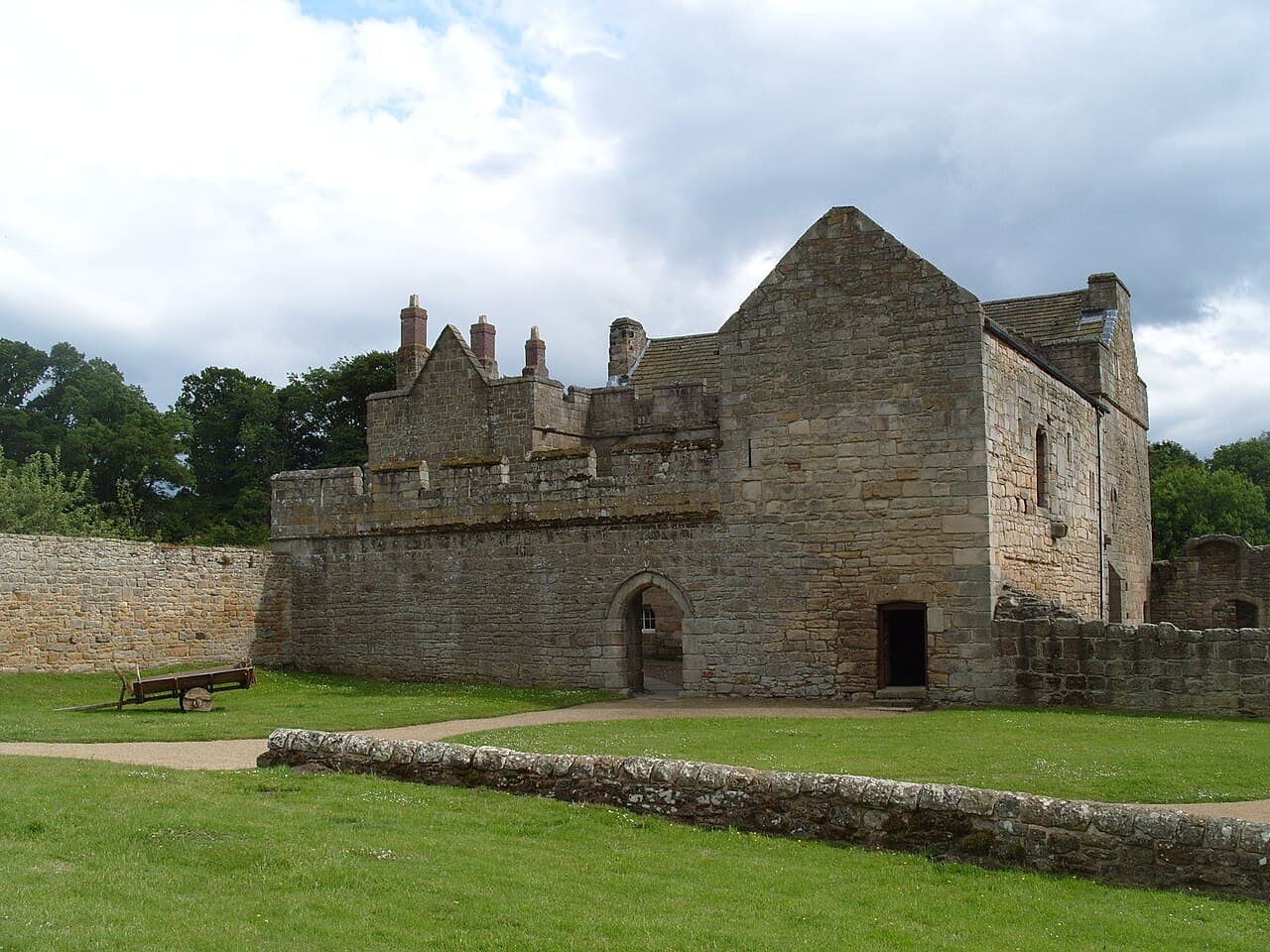
Aydon Castle exemplifies the evolution of a medieval manor house adapting to the demands of border warfare. The original stone construction replaced the earlier timber hall with a two-storey manor house comprising a chamber block and a hall range. The chamber block served as private living quarters, while the hall was used for social and administrative functions.
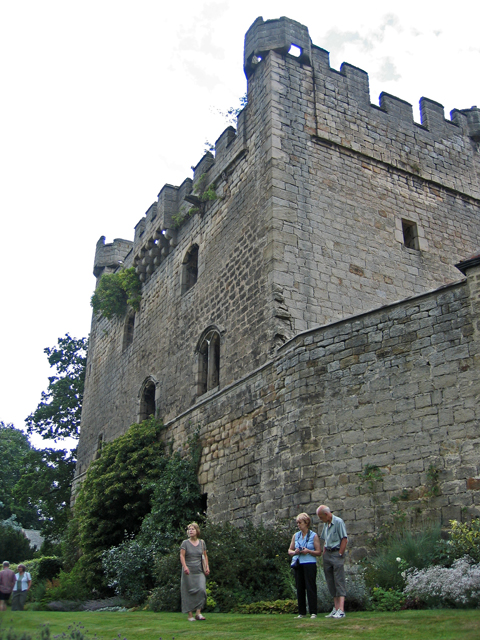
The addition of crenellations in 1305 transformed the manor's silhouette, adding battlements that combined defensive utility with a display of noble prestige. The curtain walls built shortly thereafter enclosed the manor, creating a courtyard and enhancing protection against raids. These walls were manned by crossbowmen during attacks, underscoring the castle's military preparedness.
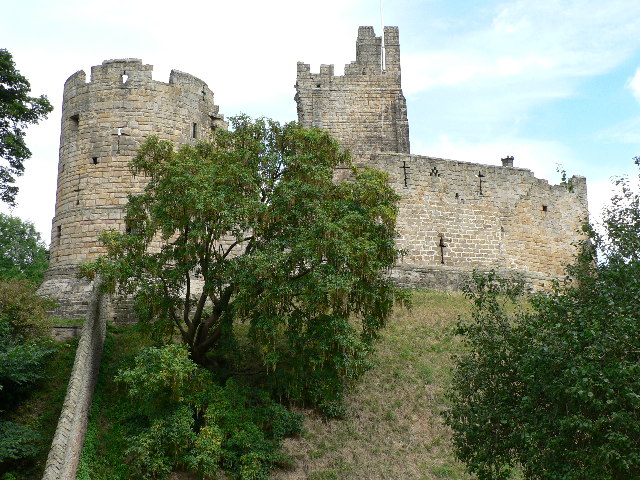
The castle's strategic location on a natural rocky spur provided a defensive advantage, with the Cor Burn river forming a natural barrier on three sides. The elevation of approximately 116 meters above sea level afforded commanding views of the surrounding landscape, crucial for early warning of approaching forces.
Interior and living quarters
The manor's interior reflected the dual nature of the castle as both a residence and a fortress. The great hall was the center of daily life, hosting meals, meetings, and judicial proceedings. Private chambers offered relative comfort and privacy, while storage rooms and service areas supported the household's needs.
Defensive structures
The curtain walls featured battlements and arrow slits, enabling defenders to repel attackers effectively. The presence of crossbowmen during sieges highlights the castle's role as a defensive stronghold. Although not a full-scale military fortress, Aydon Castle's fortifications were sufficient to withstand multiple assaults until its eventual capture in 1315.
Later history and restoration
Following its medieval military significance, Aydon Castle transitioned to agricultural use by the 17th century, serving as a farmhouse. In the early 19th century, it was occupied by George Bates, and restoration efforts began, notably under Sir Edward Blackett in the 1830s. These efforts aimed to preserve the castle's medieval character while adapting it for modern use.
The 20th century brought tragedy when a fire at the castle resulted in the deaths of three children, marking a somber chapter in its history. The castle ceased functioning as a farmhouse in 1966 and was subsequently opened to the public as a historic property managed by English Heritage. Its designation as a Grade I listed building underscores its exceptional importance as one of the best-preserved fortified manor houses from the 13th century.
Significance and visitor experience
Today, visitors to Aydon Castle can explore a remarkably intact example of a fortified manor house that embodies the complex history of the Anglo-Scottish border. The castle's well-preserved walls, chambers, and defensive features provide valuable insights into medieval architecture, social life, and military strategy.
The site offers a unique opportunity to understand how English gentry adapted their homes to the challenges of warfare while maintaining residential comfort. Its setting amidst the scenic Northumberland countryside adds to the visitor experience, blending historical education with natural beauty.
Managed by English Heritage, the castle is accessible to the public, offering guided tours, educational programs, and events that bring its rich history to life. The castle's preservation allows historians, architects, and visitors alike to appreciate the architectural ingenuity and historical significance of this medieval landmark.
Frequently asked questions (FAQ)
- What is Aydon Castle?
- Aydon Castle is a well-preserved medieval manor house located in Corbridge, United Kingdom. Originally built in the 13th century, it showcases stunning architecture and offers a glimpse into the life of the nobility during the medieval period.
- When was Aydon Castle built?
- Aydon Castle was constructed in the late 13th century, around 1240. It served as a fortified manor house and has been remarkably preserved, allowing visitors to explore its historical significance and architectural features.
- What are the opening hours for Aydon Castle?
- Aydon Castle is generally open to visitors from April to October, with specific hours that may vary. It is recommended to check the official website for the most current opening times before planning your visit.
- Can I visit Aydon Castle with my family?
- Yes, Aydon Castle is family-friendly and welcomes visitors of all ages. There are facilities available to ensure a comfortable visit for families, including picnic areas and educational resources for children.
- Is Aydon Castle accessible for visitors with disabilities?
- Aydon Castle strives to be accessible for all visitors. There are pathways and facilities to accommodate those with mobility challenges, but it is advisable to contact the site in advance to ensure a smooth visit.
- What is the best time to visit Aydon Castle?
- The best time to visit Aydon Castle is during the spring and summer months when the weather is pleasant, and the gardens are in full bloom. These seasons also offer a variety of events and activities for visitors to enjoy.
- Are there any nearby attractions to Aydon Castle?
- Yes, Aydon Castle is located near several attractions, including the historic town of Corbridge and the stunning Northumberland National Park. Visitors can easily explore these sites to enhance their experience in the region.
- What are the ticket prices for Aydon Castle?
- Ticket prices for Aydon Castle vary depending on age and group size, with discounts available for children and families. It is best to check the official website for the latest pricing information and any special offers.
Photo gallery

Information
Website
Visit websiteSources & official resources
Verify the information above using these authoritative references.
Loading map...
Visitor reviews
No reviews yet. Been here? Write the first review and help other travelers!
Write the first reviewVisited this castle? Share your experience
Your review helps other travelers and adds first-hand knowledge to our encyclopedia.