Bywell Castle
Bywell Castle stands prominently in the village of Bywell, overlooking the River Tyne in Northumberland, England. Located approximately four miles east of Corbridge, this castle is a notable example of a late medieval hill castle built during the 15th century. Its strategic position on elevated ground provided natural defense advantages, typical of hill castles constructed during this period.
Historical background and construction
The castle was commissioned in 1430 by the influential Neville family, specifically associated with the Earls of Westmorland. The Nevilles were one of the most powerful noble families in northern England during the late medieval period, and Bywell Castle was intended to serve as a fortified residence and symbol of their regional dominance. However, the castle was never fully completed, which is evident in its current architectural state.
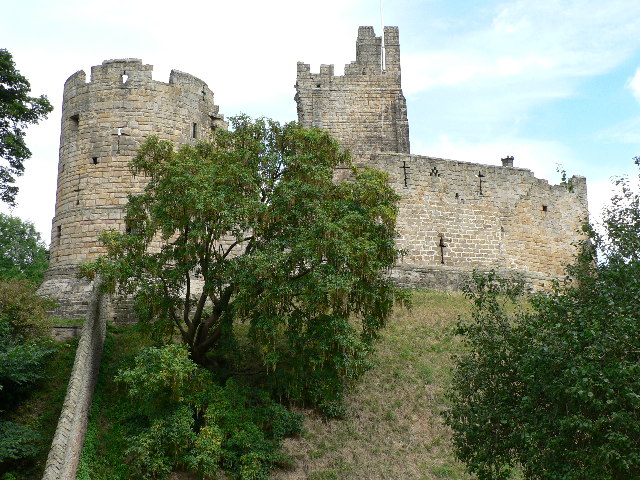
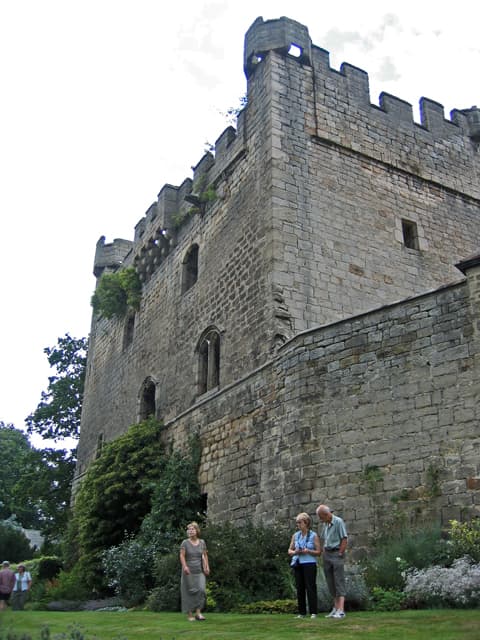
The existing structure prominently features a three-storey gatehouse, which remains one of the most impressive elements of the castle. This gatehouse would have served as the main point of entry and a defensive stronghold, equipped to withstand attacks while controlling access to the inner courtyard. Adjacent to the gatehouse, parts of the curtain wall survive, enclosing the castle's inner precincts and providing additional fortification.
Incorporated within the curtain wall is a later-built house, which holds a Grade II listing. This addition reflects the evolution of the site from a purely defensive structure to a residence adapted for more comfortable living conditions in subsequent centuries.
Architectural features and design
Bywell Castle exemplifies characteristics typical of late medieval military architecture in northern England. The castle's design emphasizes defense, with thick stone walls and a formidable gatehouse designed to repel invaders. The castle's location on a hill overlooking the River Tyne provided natural surveillance and control over the surrounding landscape, which was essential during the turbulent times of the 15th century.
The gatehouse, as the focal point of the surviving structure, includes multiple defensive features such as narrow arrow slits and battlements. Its three-storey height allowed defenders to observe and engage attackers from a vantage point. The curtain walls, though partially ruined, once formed a continuous barrier around the castle's inner wards.
Historical significance and events
Bywell Castle played a role in the conflicts of the Wars of the Roses, a series of dynastic battles for the English throne during the 15th century. Notably, King Henry VI sought refuge at Bywell Castle following his defeat at the Battle of Hexham in 1464. This event underscores the castle's importance as a secure stronghold during a period marked by political instability and armed conflict.
Although the castle was never completed, its association with the Neville family and its use during significant historical events contribute to its cultural and historical value.
Later history and current status
Today, Bywell Castle remains privately owned and serves as the seat of the Viscounts Allendale. It is not generally open to the public, preserving its status as a private residence while maintaining its historical fabric. The castle is recognized as a Grade I listed building and a Scheduled Ancient Monument, reflecting its national importance and protected status under UK heritage laws.
Bywell Castle also lent its name to a maritime vessel involved in a tragic accident on the River Thames in 1878. The ship named "Bywell Castle" collided with the SS Princess Alice, resulting in one of the worst river disasters in British history, with estimated fatalities ranging between 590 and 640.
Visiting and accessibility
As a private residence, Bywell Castle is not normally accessible to visitors. Its location in the scenic Northumberland countryside, however, makes it a point of interest for those studying medieval architecture and English history. The surrounding village of Bywell and nearby Corbridge offer additional historical sites and amenities for visitors to the region.
Frequently asked questions (FAQ)
- Can I visit Bywell Castle?
- Bywell Castle is privately owned and not normally open to the public. Visitors can view the castle's exterior from nearby public areas but cannot enter the grounds.
- What is the historical significance of Bywell Castle?
- Bywell Castle was built by the Neville family in the 15th century and served as a refuge for King Henry VI after the Battle of Hexham in 1464, marking its role in the Wars of the Roses.
- What architectural features are notable at Bywell Castle?
- The castle is known for its impressive three-storey gatehouse and surviving curtain walls, which demonstrate typical late medieval defensive design.
- Where is Bywell Castle located?
- Bywell Castle is located in the village of Bywell, Northumberland, England, overlooking the River Tyne about four miles east of Corbridge.
- Is Bywell Castle protected as a historic site?
- Yes, Bywell Castle is a Grade I listed building and a Scheduled Ancient Monument, ensuring its preservation under UK heritage laws.
Photo gallery

Information
Current owner
Private owner
Loading map...
Visitor reviews
No reviews yet. Been here? Write the first review and help other travelers!
Write the first reviewVisited this castle? Share your experience
Your review helps other travelers and adds first-hand knowledge to our encyclopedia.