Karneid Castle

Karneid castle: medieval fortress in northern italy
Karneid, Italy
High Medieval (11th–13th c.)
Well Preserved

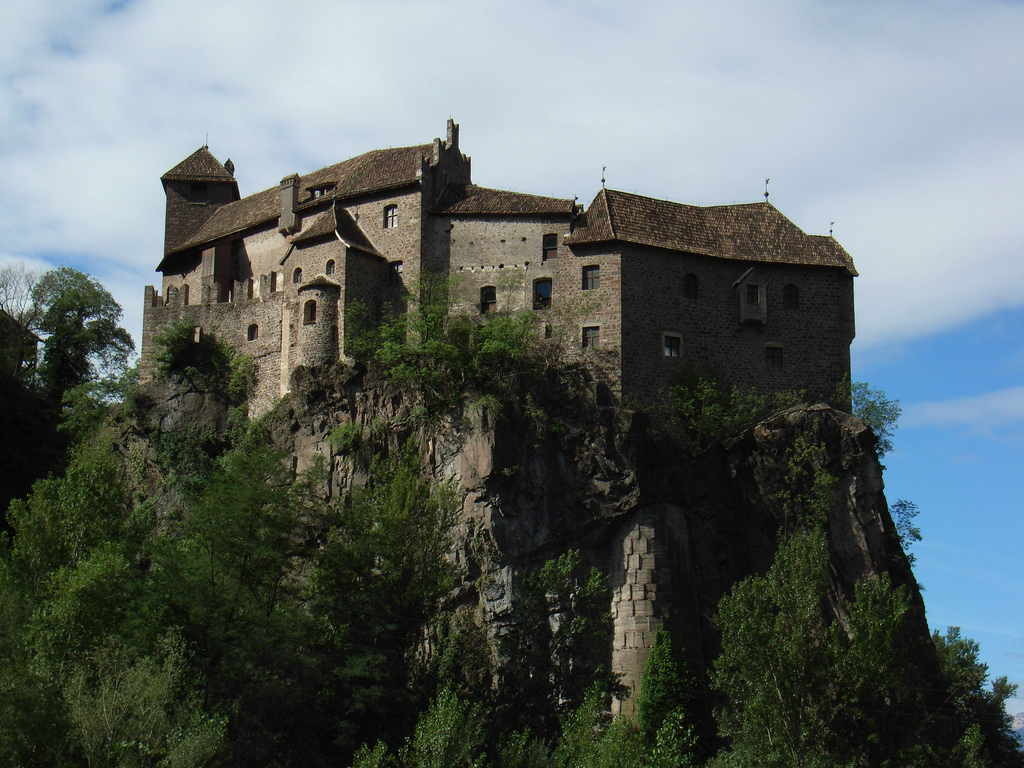
Karneid Castle is a striking example of a high medieval fortress located in the municipality of Karneid in northern Italy. Constructed around the late 12th and early 13th centuries, it was built by vassals of the Prince-Bishopric of Brixen, an influential imperial estate within the Holy Roman Empire. The castle's strategic position atop an inaccessible cliff face overlooks the confluence of the Eggental and the Eisack rivers, a location of great historic significance as it marked the ancient border between the kingdoms of the Lombards and the Bavarii.

Historical context and origins

The origins of Karneid Castle are closely tied to the political and military landscape of the high medieval period. The castle was likely erected as a defensive stronghold and administrative center by local nobles loyal to the Prince-Bishopric of Brixen. This ecclesiastical principality wielded considerable power in the region, and castles like Karneid served to assert control over key trade routes and territorial boundaries.

The name "Karneid" is derived from the Latin word "cornus," meaning "horn," which aptly describes the castle's prominent position on a horn-shaped rocky outcrop. This natural feature made the fortress particularly defensible and visually imposing, enhancing its role as a symbol of feudal authority.

Architectural features and layout

Karneid Castle's architecture reflects the typical design elements of medieval fortifications adapted to its challenging terrain. The castle complex includes a courtyard that remains one of its most picturesque features, complete with a historic fountain that would have served both practical and aesthetic functions. The courtyard is surrounded by defensive walls and buildings that housed the castle's inhabitants and garrison.

One of the castle's distinctive architectural highlights is its free-standing staircases, which connect different levels of the fortress and add to its visual complexity. Additionally, the castle boasts a two-story loggia, an open gallery that provided a sheltered outdoor space for residents to enjoy views of the surrounding landscape and river valleys.

The fortress's construction on a steep cliff required innovative engineering solutions to integrate the natural rock formations into its defensive structures. This integration not only enhanced the castle's security but also contributed to its dramatic silhouette against the alpine backdrop.

Defensive elements

The castle's defensive features include thick stone walls, battlements, and narrow arrow slits designed to protect against invaders. Its elevated position made direct assaults difficult, while the surrounding natural barriers of the rivers and cliffs further secured the site. The layout likely included a keep or donjon as a final refuge during sieges, although specific details about this structure are less documented.

Cultural significance and preservation

Karneid Castle holds considerable cultural and historical importance as a well-preserved example of medieval fortification in the South Tyrol region. It represents the power dynamics of the Holy Roman Empire's ecclesiastical territories and their defensive strategies during the high medieval period.

Today, the castle remains in a well-preserved condition, allowing visitors to experience its medieval atmosphere and architectural details firsthand. The site is accessible via guided tours offered primarily in the months of May, June, September, and October, which provide insights into its history, architecture, and the lives of its former inhabitants.

Visitor experience and accessibility

The castle's remote location on a cliff means that access involves some hiking and careful approach, but the effort is rewarded with spectacular views and a rich historical environment. The guided tours typically explore the courtyard, loggia, and other key areas, highlighting the castle's defensive features and residential quarters.

Visitors interested in medieval architecture, history, and alpine landscapes will find Karneid Castle a compelling destination. Its combination of natural setting and architectural heritage makes it a unique example of a high medieval hill castle in Italy.

Frequently asked questions (FAQ)

What are the opening hours of Karneid Castle?
Karneid Castle is open to visitors from April to October, typically from 10 AM to 5 PM. It is recommended to check the official website for any seasonal changes or special events that may affect visiting hours.
How do I get to Karneid Castle?
Karneid Castle is located in the picturesque village of Karneid, Italy. You can reach the castle by car, and there is parking available nearby. Public transport options include buses from Bolzano that connect to Karneid.
Is it possible to take guided tours of the castle?
Yes, guided tours are available at Karneid Castle, providing visitors with an in-depth look at its rich history and stunning architecture. Tours are typically conducted in multiple languages and can be booked in advance through the castle's official website.
What is the historical significance of Karneid Castle?
Karneid Castle dates back to the 13th century and is a prime example of medieval architecture in the region. It has served various purposes throughout history, including a noble residence and a stronghold, reflecting the feudal system of its time.
Can I take photographs inside the castle?
Yes, photography is allowed inside Karneid Castle, but visitors are advised to be respectful of the exhibits and other guests. Some areas may have restrictions, so it's best to check with the staff regarding specific guidelines.
When is the best time to visit Karneid Castle?
The best time to visit Karneid Castle is during the spring and early autumn months when the weather is pleasant, and the surrounding landscapes are particularly beautiful. This is also when the castle hosts various events and activities for visitors.
What are the ticket prices for visiting Karneid Castle?
Ticket prices for Karneid Castle are generally modest, with discounts available for children, seniors, and groups. It's advisable to check the official website for the latest pricing information and any special offers that may be available.
Are there any nearby attractions to see while visiting Karneid Castle?
Yes, nearby attractions include the charming village of Karneid itself and beautiful hiking trails in the surrounding mountains. Additionally, the city of Bolzano is just a short drive away and offers a range of cultural and historical sites worth exploring.
Is the castle accessible for visitors with mobility challenges?
Karneid Castle has made efforts to improve accessibility for all visitors, including ramps and designated pathways. However, due to its historical structure, some areas may still be challenging to navigate, so it's best to contact the castle in advance for specific accessibility information.

Information

Hill Castle

Loading map...

Visitor reviews

No reviews yet. Been here? Write the first review and help other travelers!

Write the first review

Visited this castle? Share your experience

Your review helps other travelers and adds first-hand knowledge to our encyclopedia.
Write a review

(5/5)

0/2000 characters

Your review will be visible after admin approval

Nearby castles

3.9 km
Maretsch Castle — Italy castle

Maretsch Castle

Bolzano, Italy

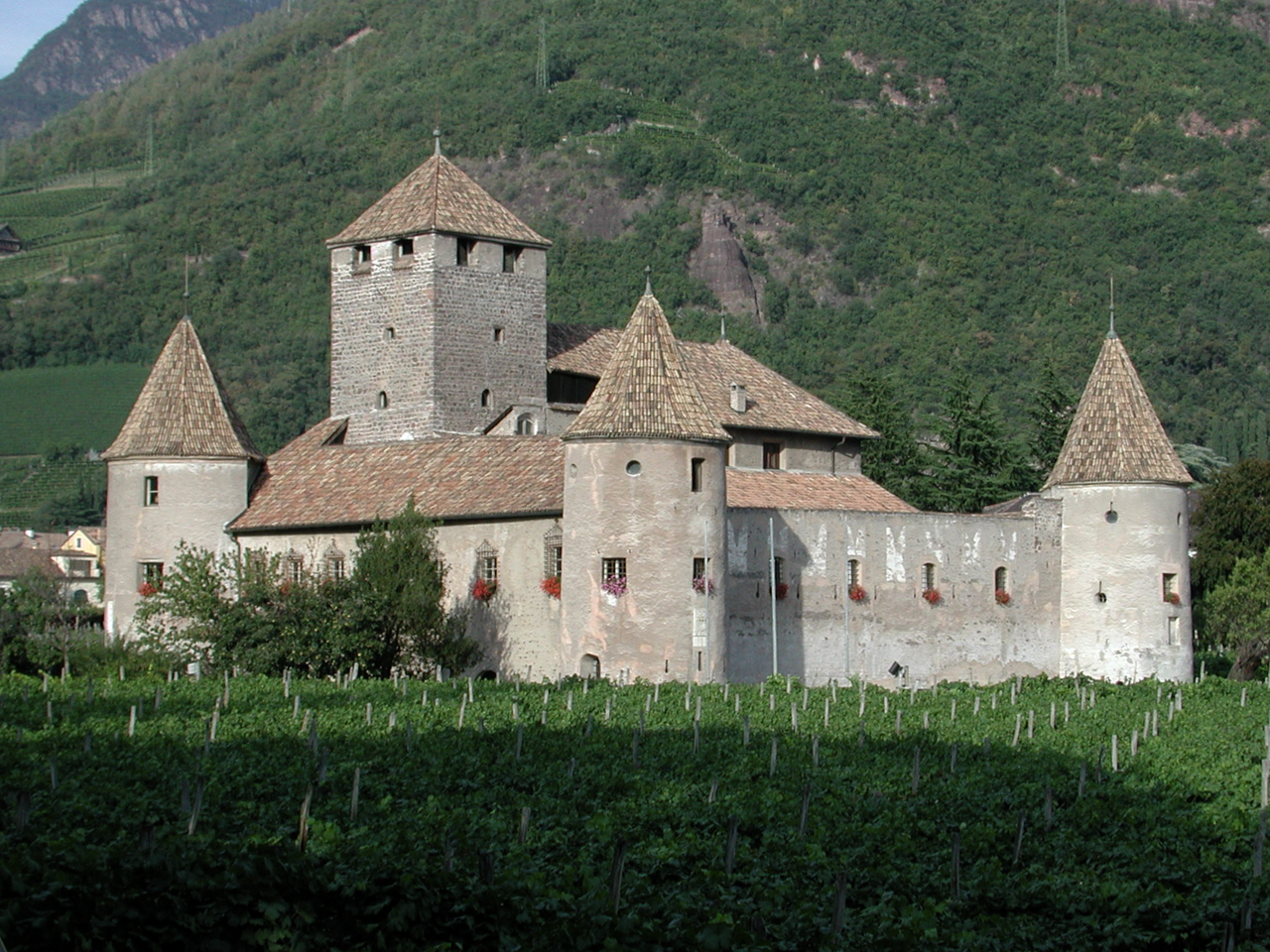
Maretsch Castle, also known as Castel Mareccio or Schloss Maretsch, is a historic hill castle located in the heart of Bolzano, the capital of the South Tyrol province in the Trentino-Alto Adige region of northern Italy. This castle stands out as a remarkable example of architectural evolution from its High Medieval origins into a refined Renaissance residence. Its strategic position atop a small hill amidst vineyards offers both a commanding view of the surrounding landscape and a scenic setting that enhances its historic charm. Medieval origins and early construction The earliest part of Maretsch Castle is the keep (donjon), constructed around 1194 by Berthold von Bozen, who served as a commissary for the Lords of Tyrol and a legal authority in Bolzano. This massive tower remains a dominant feature of the castle complex, embodying the defensive needs of the time. The castle was first documented in 1237 as the property of Dietmut von Maretsch. During the latter half of the 13th century, Dietmut's son Heinrich von Maretsch and knights Dietrich and Autlin von Maretsch undertook significant alterations, expanding the castle's fortifications and living quarters. Renaissance transformation under the römer family In 1477, the castle was acquired by Sigmund Römer zu Rubein. The Römer family played a pivotal role in the castle's transformation from a medieval fortress into a Renaissance residence. By the mid-16th century, the Römer brothers—Hans Jakob, Lukas, Christoph, and Kaspar—undertook extensive renovations between 1560 and 1570. They redesigned the castle into a rectangular complex characterized by four round corner towers and the original square keep integrated into the northwestern wall. The interior was lavishly decorated with a series of frescoes depicting Biblical scenes, allegorical figures, and fantastic motifs, which remain remarkably well-preserved and are a highlight of guided tours today. Architectural features and interior decoration The Renaissance remodeling introduced elegant architectural features that emphasized comfort and aesthetic appeal rather than purely military function. The castle's open courtyard serves as a central organizing space, surrounded by residential and service buildings. The defensive corridor and crenellations dating from the 13th and 14th centuries were preserved, blending medieval defensive elements with Renaissance elegance. The frescoes commissioned during the Römer renovations include representations of contemporary philosophers and richly detailed biblical narratives, showcasing the cultural interests and artistic patronage of the family. These artworks provide valuable insight into the Renaissance mindset and artistic trends in South Tyrol during this period. Later ownership and modifications In 1580, ownership passed to Maximilian Hendl, who added a chapel within the southern corner tower around 1600, further enhancing the castle's residential and ceremonial functions. From 1658, the castle belonged to the Counts of Thun for nearly two centuries, before being sold in 1851 to Countess Anna Sarnthein. Subsequently, it passed by inheritance to the Counts of Toggenburg. 20th-century restoration and current use During the 20th century, under Italian administration, Maretsch Castle served as the State Archives until it was acquired by the city of Bolzano in 1974. Following a careful restoration in the 1980s, the castle was repurposed as a venue for conferences, cultural events, concerts, and weddings. It is no longer inhabited but remains an important cultural asset and historic landmark in Bolzano. Visitors can explore the castle through guided tours that highlight its Renaissance frescoes, architectural evolution, and its role in the region's history. Its location within walking distance from Bolzano's old town makes it an accessible destination for those interested in medieval and Renaissance architecture. Architectural significance and cultural heritage Maretsch Castle exemplifies the transition from a medieval fortress to a Renaissance noble residence, reflecting broader social and cultural changes in South Tyrol during the 13th to 16th centuries. The castle's blend of medieval defensive structures with Renaissance artistic embellishments illustrates the evolving priorities of castle architecture, shifting from military defense to residential comfort and display of status. The preservation of the castle's frescoes and structural elements offers valuable insights into the artistic and architectural developments of the period. As a venue for public events, Maretsch Castle continues to contribute to the cultural life of Bolzano, connecting contemporary audiences with the region's rich historical legacy.

High Medieval (11th–13th c.)
Details
4.3 km
Runkelstein Castle — Italy castle

Runkelstein Castle

Bolzano, Italy

Runkelstein Castle, also known as Castel Roncolo, is a remarkable medieval fortress perched on a rocky spur overlooking the city of Bolzano in the Trentino-Alto Adige region of Italy. Constructed in 1237 by the brothers Friedrich and Beral von Wangen, the castle stands as a testament to the turbulent history and rich cultural heritage of the region during the High Medieval period. Its strategic location provided both defensive advantages and control over the surrounding territory, making it a significant stronghold in the area. Throughout its history, Runkelstein Castle underwent multiple phases of construction, expansion, and restoration, reflecting the changing needs and tastes of its various owners. The castle is particularly renowned for its exceptional collection of secular frescoes, which are among the most important and well-preserved examples of medieval mural art in Europe. These frescoes depict a variety of themes, including courtly life, chivalric romance, and legendary tales such as the story of Tristan and Isolde and the Arthurian Round Table. Early history and original construction The origins of Runkelstein Castle date back to the early 13th century when Alderich, Prince-Bishop of Trent, granted permission to the von Wangen brothers to build a fortress on the rocky outcrop known as Runchenstayn. The initial structure was designed primarily as a defensive stronghold, featuring typical medieval fortification elements such as thick stone walls, a keep, and battlements. The castle's Romanesque architectural elements from this period are still visible in parts of the surviving structure. In 1274, the castle suffered damage during a siege led by Meinhard II of Tirol amid his conflict with Heinrich, Prince-Bishop of Trent. After his victory, Meinhard II entrusted the castle to Gottschalk Knoger of Bozen, marking a shift in control that would influence the castle's subsequent development. The vintler family and the flourishing of fresco art In the late 14th century, the castle entered a new phase under the ownership of the wealthy Vintler brothers, Niklaus and Franz, prominent merchants from Bolzano. Their acquisition of Runkelstein Castle in 1385 was unusual for merchants at the time, as castles were typically the domain of nobility. This purchase reflected their rising social status and influence, particularly Niklaus, who served as a counselor and financier to Leopold III, Duke of Austria. The Vintler brothers undertook extensive renovations and expansions, including the construction of a new defensive wall, a moat, and additional chambers. Most notably, in 1390, they commissioned the building of the "Casa d'Estate" (Summer House), which became the centerpiece for the castle's famous frescoes. These murals, painted both inside and on the exterior walls, depict a rich tapestry of secular themes, including the romantic legend of Tristan and Isolde by Gottfried von Straßburg and one of the earliest surviving depictions of the Arthurian Round Table. These frescoes are exceptional for their vivid colors, detailed narrative scenes, and insight into medieval courtly culture. Architectural features added by the vintlers A new defensive wall and moat enhanced the castle's fortifications. A cistern was installed to ensure a reliable water supply during sieges. The Summer House featured spacious halls adorned with frescoes, serving as a residence and a symbol of the Vintlers' wealth and taste. Additional rooms and chambers were constructed to improve the castle's habitability and status. Conflicts and ownership changes in the 15th and 16th centuries The early 15th century brought political turmoil to Runkelstein Castle. In 1407, a conflict erupted between Frederick IV, Duke of Austria, and the Tyrolean nobility, including the Vintler family. The castle was besieged during these hostilities. Niklaus Vintler, allied with the noble faction known as the Hawk League, suffered significant losses, including his wealth and possessions. His brother Franz, who sided with the Duke, retained ownership of the castle until it eventually passed to Sigismund, Archduke of Austria. Under the Habsburgs, the castle saw further renovations ordered by Emperor Maximilian I, who valued the fortress for its strategic and symbolic importance. Maximilian furnished his apartments and commissioned restoration of the frescoes, also prominently displaying his coat of arms throughout the castle. Around 1500, the castle was granted to his vassal Georg von Frundsberg, with a vicar appointed to manage its upkeep. In 1520, a catastrophic explosion of the powder magazine in the tower caused significant damage to the outer walls, entrance, and the Eastern Palace, destroying the tower itself. This event marked the beginning of the castle's decline, as it was neglected in the following decades. Later history, decline, and romantic rediscovery Following the explosion and subsequent neglect, Runkelstein Castle changed hands several times. In 1530, it was bestowed by King Ferdinand I to Sigmund von Brandis, Knight Commander of Bozen. Later, the castle returned to the control of the Prince-Bishops of Trent, who granted it as a fief to the Counts of Lichtenstein-Kastelkorn. A fire in 1672 destroyed the Eastern Palace, which was never rebuilt, further contributing to the castle's ruinous state. By the 18th century, the castle was in grave decay. However, during the 19th century Romanticism movement, Runkelstein Castle was rediscovered and celebrated as a symbol of medieval chivalry and art. German writer Johann Joseph von Görres was among the first to visit, inspiring a wave of artists and intellectuals, including those connected to King Ludwig I of Bavaria. The castle's fortunes improved when Johann Salvator Archduke of Austria purchased it in 1880 and gifted it to Emperor Franz Josef in 1882. The emperor commissioned the renowned architect Friedrich von Schmidt to undertake a comprehensive restoration, which included careful preservation of the frescoes. In 1893, the castle was donated to the city of Bolzano, ensuring its protection and public accessibility. Architectural highlights and frescoes Runkelstein Castle is distinguished by its blend of Romanesque and Gothic architectural elements. The castle complex includes defensive walls, a moat, a cistern, various residential buildings, and the famous Summer House, which serves as a gallery for the frescoes. The frescoes are the castle's defining feature. They are unique for their secular themes, which contrast with the predominantly religious art of the period. Scenes depict courtly love, chivalric adventures, and legendary narratives, providing invaluable insight into medieval culture and values. The depiction of the Arthurian Round Table is particularly significant as one of the earliest visual representations of this iconic legend. Preservation and current status Today, Runkelstein Castle is well preserved thanks to multiple restoration campaigns, most recently in the late 1990s. It functions as a cultural monument and museum, attracting visitors interested in medieval history, art, and architecture. The castle's frescoes remain a highlight for scholars and tourists alike, celebrated for their artistic quality and historical importance. Visitors can explore the castle's courtyards, halls, and towers, gaining a vivid sense of medieval life and the artistic achievements of the period. The site also hosts exhibitions and cultural events, further enriching its role as a vibrant heritage landmark in the heart of Bolzano.

High Medieval (11th–13th c.)
Details
4.4 km

Haselburg Castle

Bolzano, Italy

Haselburg Castle, also historically known as Castle Flavon, is a remarkable medieval hill castle perched on a rock spur overlooking the city of Bolzano in northern Italy. Its origins date back to the 12th century, when the noble Lords of Haselberg first established a fortress on this strategic site above the Haslach district. The castle’s position provided commanding views of the surrounding landscape, making it a vital stronghold in the region for centuries. The initial construction featured a circular defensive wall on the east and south flanks, designed to protect the fortress from assault. The great hall was built directly above the porphyry rock base, highlighting the castle’s integration with the natural terrain. It is believed that a donjon or keep existed even in these early phases, serving as the fortified core of the castle. Early history and political significance The castle was originally built by the Lords of Haselberg, a noble family who took their name from the local Haslach area. These lords acted as ministeriales—appointed officials—under the authority of the Bishopric of Trent. They exercised judicial powers and lordship over the nearby Bolzano parish, making Haselburg a center of local governance and control. In 1259, the Haselberg family sold their extensive rights and holdings to Count Meinhard II of Tyrol-Gorizia, a transaction that underscores the castle’s early importance in regional politics. Around the turn of the 14th century, Haselburg suffered significant destruction, likely due to military conflict or local strife, but was partially rebuilt thereafter. Renaissance transformation and architectural evolution The castle’s present form largely reflects the extensive renovations and expansions carried out between 1474 and 1541 under the direction of Leonhard II of Völs, a member of the Lords of Fiè family. These changes transformed Haselburg into a more complex and fortified residence, adapting to the evolving needs of defense and comfort during the Renaissance period. During this time, Haselburg was remodeled into a three-winged complex, with the addition of a double arcade hall, a new great hall on the northern side, and a reinforced defensive wall. The interiors were richly decorated with Renaissance frescoes painted by the artist Bartlmä Dill Riemenschneider. These frescoes depicted busts of ancient emperors and generals, scenes from their lives, and mythological narratives centered on the myth of Apollo, reflecting the cultural sophistication of the castle’s inhabitants. An artificial pond was also created on the hill above the castle, enhancing both the fortress’s defensive capabilities and its aesthetic appeal. This water feature is a notable example of Renaissance landscape modification. Later history and ownership changes In 1549, the nearby Schloss Ried was acquired by Christoph Küepacher, a councilor to Emperor Ferdinand I and secretary to Emperor Maximilian II. Christoph was ennobled as “von Khuepach,” and his son, Ferdinand von Khuepach, purchased Haselburg in 1590. The Küepacher family retained ownership until 1730. The castle suffered a damaging fire during the 18th or 19th century, which led to partial ruin of its structure. Subsequent proprietors included the Counts of Sarnthein and later the Toggenburg family, who remain the current owners. Notably, in 1933, Haselburg was the birthplace of the National Socialist “Südtiroler Heimatfront,” later renamed the “Völkischer Kampfring Südtirols.” Modern restoration and archaeological discoveries Between 2001 and 2002, the castle underwent significant restoration under the guidance of architect Dietmar Dejori and the stewardship of the Toggenburg family. Restoration efforts focused on removing later overbuildings from the 18th century, exposing the original double arcades, and stabilizing the structure. The northern great hall, which had partially collapsed in 1880, was reconstructed to restore the castle’s original three-winged layout. Archaeological excavations during this period uncovered 14th-century remains beneath the castle, particularly in an underground hall. These findings have provided valuable insight into the castle’s earlier medieval phases and construction techniques. Architectural features and cultural significance Haselburg Castle’s architecture is a blend of High Medieval origins and Renaissance modifications. The hilltop fortress is characterized by its three-winged layout, defensive walls, and the integration of natural rock formations into its design. The presence of a donjon in early phases suggests a traditional medieval keep structure, while the Renaissance era introduced more refined residential halls and artistic decoration. The castle’s frescoes are among its most significant artistic treasures, illustrating imperial iconography and classical mythology. Although some were lost due to structural collapse and neglect, surviving works demonstrate the cultural aspirations of the castle’s Renaissance inhabitants. Today, Haselburg serves as a congress center and hosts a restaurant, blending its historic ambiance with modern functionality. Its preservation and adaptive reuse highlight the importance of maintaining cultural heritage sites while allowing contemporary engagement. Location and views Situated above the Haslach district of Bolzano, Haselburg commands panoramic views of the city and the surrounding alpine landscape. Its elevated position was strategically chosen for defense and surveillance, typical of hill castles in the region. Defensive elements The castle’s original circular walls on vulnerable flanks and the later addition of a new defensive wall during the Renaissance reflect evolving military architecture. The artificial pond on the hilltop also contributed to the castle’s defenses by creating a natural barrier. Cultural events and accessibility Haselburg’s current use as a venue for seminars, congresses, and celebrations allows visitors to experience its historical atmosphere firsthand. The restoration has made the site accessible while preserving its architectural integrity.

High Medieval (11th–13th c.)
Details