Prochowice
Prochowice Castle stands as a compelling relic of medieval fortification nestled among the marshy meadows near the confluence of the Kaczawa and Odra rivers in Poland. This hill castle traces its origins back to the early 13th century, with the settlement of Prochowice (originally Parchovici) first documented in 1217. The castle's history is closely intertwined with the region's feudal dynamics, noble families, and architectural evolution, reflecting significant transitions from wooden fortifications to imposing brick structures.
The earliest fortification on the site was likely a wooden knight's stronghold erected in the mid-13th century. The first direct mention of this fortification dates to 1317. Its initial owner, Piotr of Prochowice, sold the estate in 1383 to Duke Ruprecht of Legnica, who subsequently enfeoffed it to Otto von Zedlitz the Elder in 1400. This marked the beginning of the von Zedlitz family's long tenure, which lasted until 1554.
Architectural transformation from wooden fortress to brick castle
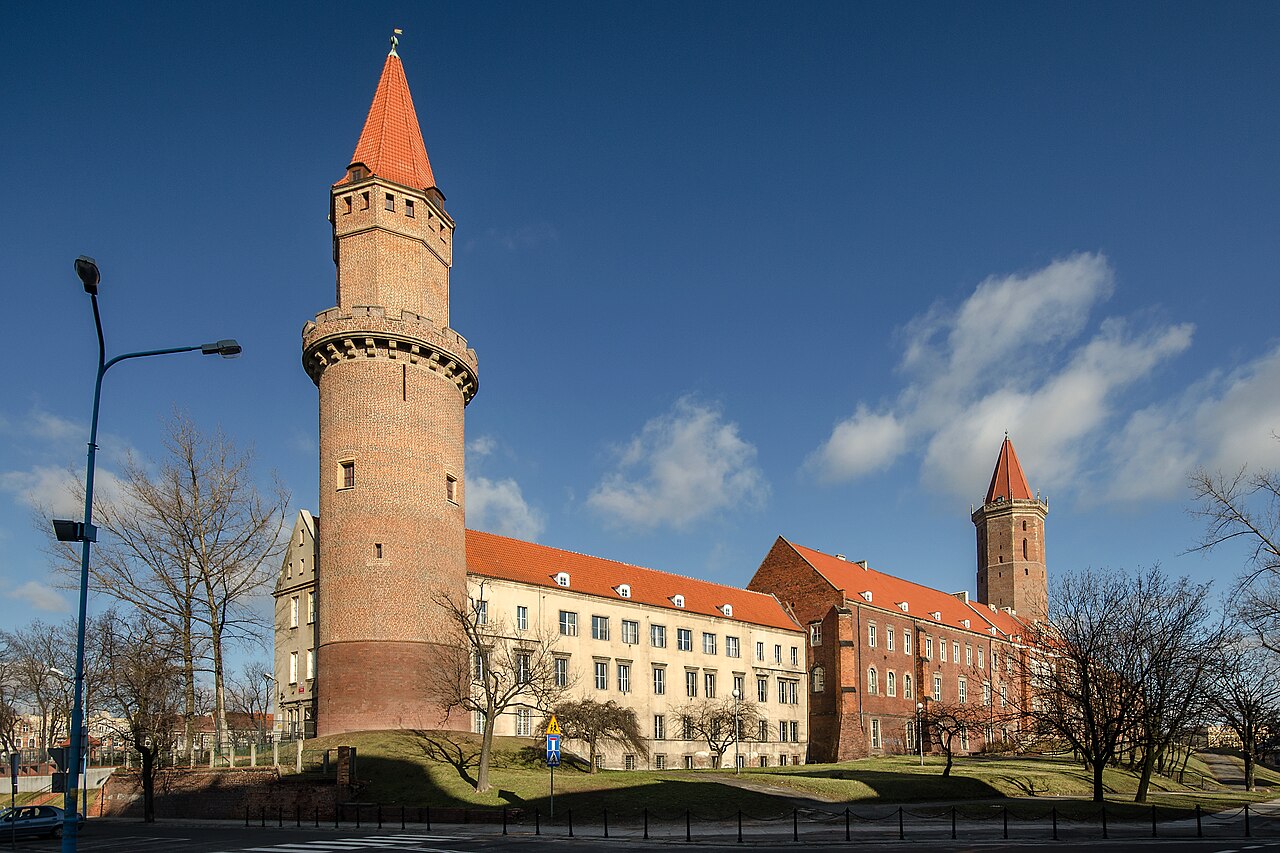
Circa 1422, the original wooden fortification was demolished to make way for a new Gothic brick castle. Built on a rectangular plan, the castle featured a residential building on the northern side and a southern entrance gate. The most striking architectural element was the tall, over 30-meter-high polygonal tower located at the southwest corner. This tower served multiple purposes: a defensive stronghold guarding the castle entrance, a residential space, and a dungeon at its lower level.
The castle was strategically accessible via a causeway and a bridge spanning the surrounding moat, emphasizing its defensive capabilities. The von Zedlitz family maintained and presumably enhanced the castle's fortifications during their ownership.
Renaissance modifications and expansions
After the estate changed hands in 1554 to Hans von Oppersdorf, an imperial field marshal and son-in-law to Otto the Younger von Zedlitz, the castle underwent Renaissance-style modifications. These included the addition of new buildings integrated within the existing Gothic structure. Notably, a wing housing a chapel was constructed along the southern wall, reflecting the period's architectural trends and the growing importance of private chapels within noble residences.
In 1564, the castle became the residence of Duke Henry XI of Legnica, marking its status as a ducal seat. Ownership briefly passed to the Schoenaich family before returning to the Piast dukes in 1594. During this period, further Renaissance expansions took place, including the construction of an eastern wing connected to the chapel and a southern gatehouse wing. These additions created a second courtyard, enclosed on the west by an economic building. The original Gothic residential building was enhanced with a Renaissance gable, and the gate passages received new portals, blending defensive and aesthetic functions.
Destruction, decline, and partial restoration
In the early 17th century, the castle suffered significant damage when it was captured and destroyed by Swedish forces during the Thirty Years' War. Despite attempts to restore it, the castle never regained its former grandeur. After the death of the last Piast duke, George William, the castle passed to Emperor Leopold I and later to the Prussian kings of the Hohenzollern dynasty from 1741.
Throughout the 18th and 19th centuries, the castle served as a residence for various tenants and underwent some restoration efforts. In 1820, Count Erdman Sylvius von Puckler acquired the property and initiated reconstruction between 1835 and 1837, adding a fourth floor to the medieval building. Subsequent owner Count Curt von Strachwitz aimed to revive the castle's former splendor in the early 20th century, but these efforts were undone by the severe destruction inflicted during World War II in 1945.
Current condition and conservation efforts
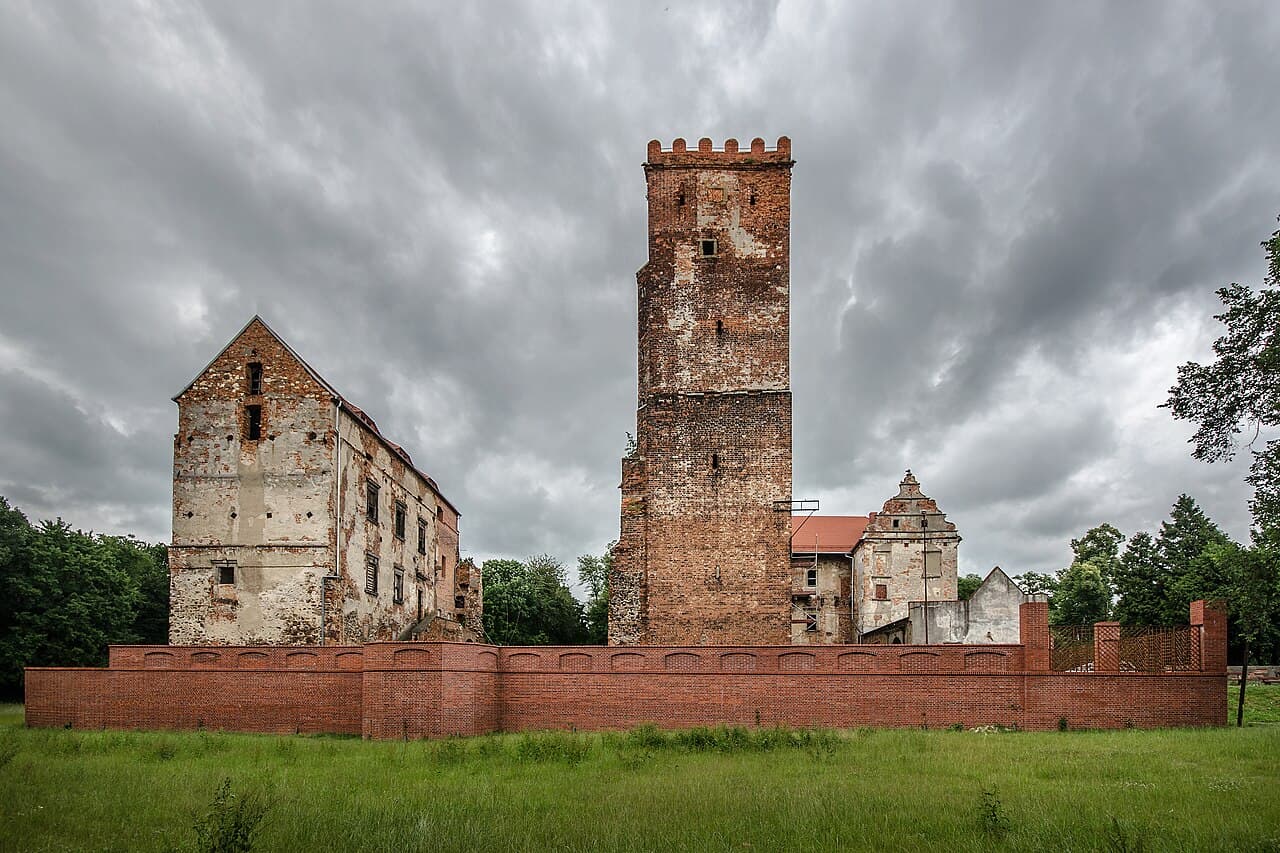
Today, Prochowice Castle remains in a state of ruin, with the main castle body, including the imposing Gothic tower and residential building, still standing. The castle's richly decorated Renaissance gate portal survives, as do the surrounding earthworks with bastions, which once formed part of the castle's defensive perimeter.
Conservation work began in 1960 after a partial collapse of the residential wing the previous year. Despite these efforts, the castle has suffered ongoing deterioration due to neglect and exposure to the elements. The ruins evoke the rich historical tapestry of Silesian medieval architecture and the complex feudal history of the region but stand as a poignant reminder of the ravages of war and time.
Architectural highlights and historical significance
The Gothic tower
The castle's most distinctive feature is its polygonal Gothic tower, rising over 30 meters high. This tower was a multifunctional structure, combining defensive, residential, and penal functions. Its height and position made it a dominant visual landmark and a formidable obstacle to attackers.
Renaissance chapel and wings
The integration of Renaissance architectural elements, especially the chapel wing along the southern wall, illustrates the castle's evolution from a purely military fortress to a noble residence with religious and ceremonial functions. The Renaissance gables and portals added during the late 16th century reflect broader European architectural trends of the period.
Defensive earthworks
The castle was protected by extensive earthworks including moats, embankments, and bastions. These features enhanced its defensive capabilities against sieges and artillery, particularly during the transitional period from medieval to early modern warfare.
Visiting Prochowice Castle
Visitors to Prochowice Castle can explore the evocative ruins that reveal layers of history from the High Medieval period through the Renaissance and beyond. While the castle is not fully restored, its surviving structures offer valuable insight into the architectural and historical development of Silesian castles. The site is accessible via a causeway and is surrounded by scenic natural landscapes, making it a compelling destination for history enthusiasts and castle architecture admirers.
Although the castle remains in ruins, ongoing conservation efforts aim to stabilize the structures and preserve this important cultural heritage site. Visitors are encouraged to respect the fragile condition of the ruins while enjoying the unique atmosphere of this medieval hill castle.
Frequently asked questions (FAQ)
- What is the historical significance of Prochowice Castle?
- Prochowice Castle, dating back to the 13th century, is a prime example of medieval architecture in Poland. It served as a defensive stronghold and residence for local nobility, reflecting the region's rich history and cultural heritage.
- When was Prochowice Castle built?
- The construction of Prochowice Castle began in the 13th century, with significant modifications and expansions occurring over the centuries. Its enduring presence showcases the evolution of architectural styles from the medieval period to the Renaissance.
- Is it possible to visit Prochowice Castle?
- Yes, Prochowice Castle is open to visitors throughout the year. Guided tours are available, allowing guests to explore its historic rooms and learn about its fascinating past.
- What are the opening hours for Prochowice Castle?
- Prochowice Castle typically opens at 10 AM and closes at 6 PM during the peak tourist season. It's advisable to check the official website for any seasonal variations or special event hours.
- Can I find nearby attractions when visiting Prochowice Castle?
- Absolutely! Visitors to Prochowice Castle can explore nearby attractions such as the picturesque town of Prochowice itself, as well as the scenic landscapes of Lower Silesia. The region offers various hiking trails and historical sites to enhance your visit.
- What are the ticket prices for visiting Prochowice Castle?
- Ticket prices for Prochowice Castle are generally affordable, with discounts available for students and seniors. Children under a certain age may enter for free, making it a great family-friendly destination.
- When is the best time to visit Prochowice Castle?
- The best time to visit Prochowice Castle is during the spring and early fall when the weather is mild and conducive for exploring. These seasons also feature fewer crowds, allowing for a more enjoyable experience.
- How do I access Prochowice Castle?
- Prochowice Castle is easily accessible by car and public transport from major cities in Poland. Adequate parking is available on-site, and local bus services frequently connect to the castle from nearby towns.
- Why is the architecture of Prochowice Castle noteworthy?
- The architecture of Prochowice Castle is noteworthy due to its blend of Gothic and Renaissance styles, which demonstrate the historical evolution of castle design in Poland. The structure features impressive stonework and decorative elements that highlight its artistic significance.
Photo gallery

Information
Loading map...
Visitor reviews
No reviews yet. Been here? Write the first review and help other travelers!
Write the first reviewVisited this castle? Share your experience
Your review helps other travelers and adds first-hand knowledge to our encyclopedia.