Legnica
Legnica Castle stands as a monumental testament to the rich medieval history of Silesia and the legacy of the Piast dynasty. Located in Legnica, Poland, this late medieval palace castle occupies a site with origins dating back to the 8th and 9th centuries when it was first established as a fortified settlement by the Slavic tribe known as the Trzebowianie. The castle’s strategic position at the confluence of the Czarna Woda and Kaczawa rivers underscored its military and administrative importance throughout the centuries.
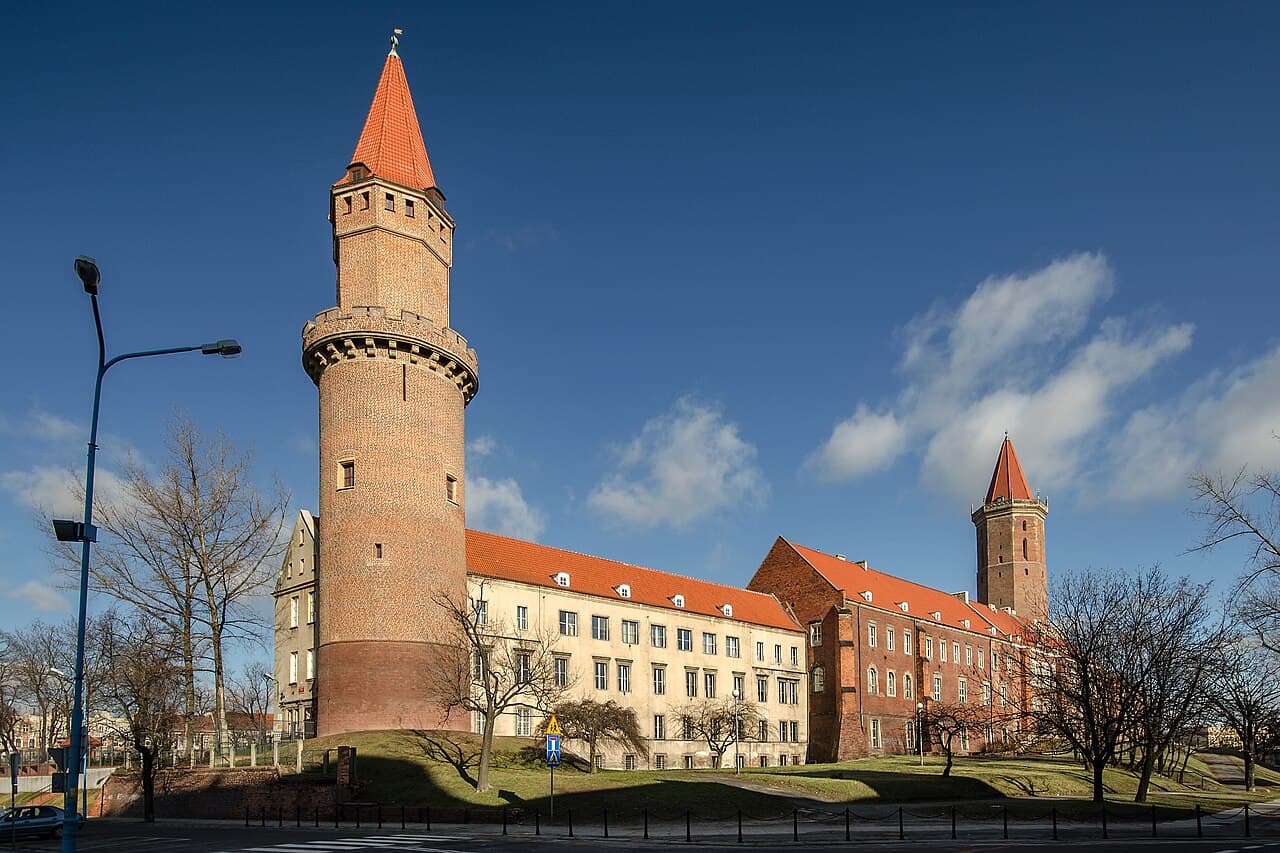
Archaeological investigations have revealed that the earliest fortifications were made of wood and earth, surrounded by moats and ramparts, evolving into a significant ducal stronghold by the late 12th century. The castle’s transformation from a wooden fort to a masonry fortress began under the rule of Bolesław I Wysoki, who replaced earlier structures with one of Poland’s earliest stone and brick castles. This included the construction of the Romanesque Tower of Piotr, a distinctive defensive bergfried with a cylindrical base transitioning to an octagonal upper section, notable for its massive walls measuring up to 4.5 meters thick.
Early medieval origins and romaneseque foundations
At the turn of the 8th and 9th centuries, the site of Legnica Castle was home to a wooden and earth fortification belonging to the Trzebowian tribe. This early stronghold was part of a network of similar settlements designed to control local waterways and trade routes. Written records from 1149 confirm the existence of a settlement here, which by the late 12th century became a castellany seat.
In the early 13th century, Henryk I Brodaty (Henry the Bearded), a duke with royal ambitions, initiated the construction of a brick and stone castle on the site of the older fortifications. The castle featured two Romanesque towers: the cylindrical Tower of St. Peter on the east and the Tower of St. Jadwiga on the west, which protected the original entrance. The centerpiece was the ducal palatium, a three-story rectangular residential building adjacent to the main courtyard, serving as the prince’s residence and administrative center.
Gothic and renaissance transformations
During the 15th century, the castle underwent significant Gothic-style renovations under Duke Ludwik II. The octagonal extension of the Tower of St. Peter was added, enhancing its defensive and symbolic stature. Subsequent expansions between 1453 and 1488 further developed the castle’s fortifications and living quarters.
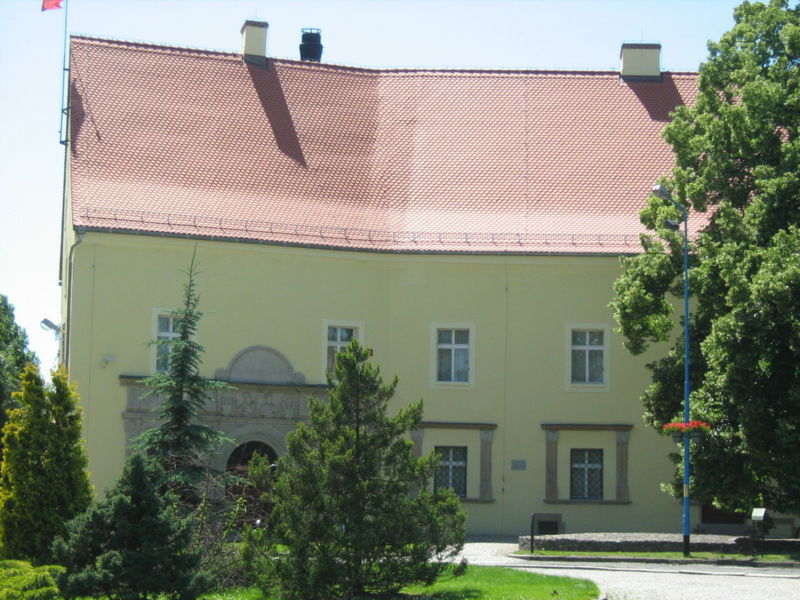
In the early 16th century, Duke Fryderyk II modernized the castle in the Renaissance style, reflecting contemporary architectural trends. This included the construction of a magnificent Renaissance portal at the main gate, adorned with intricate sandstone carvings and medallions of the duke and his wife. The castle’s defenses were reinforced with earthworks and corner bastions, adapting to the evolving military technology of the period.
Architectural layout and key features
The castle’s layout is characterized by an elongated quadrangular plan organized around two courtyards separated by a colonnaded gallery with a clock tower. The eastern courtyard housed the representative ducal buildings, while the western courtyard contained economic and administrative structures.
The palatium remains a dominant feature, originally built in the Romanesque style and later modified with Gothic elements. Measuring approximately 16 by 61 meters, it was a three-level brick building with sandstone window and door frames. The upper floor served as the ducal hall and private apartments.
The two main towers, the Tower of Piotr and the Tower of St. Jadwiga, exemplify the castle’s defensive architecture. The Tower of Piotr, originally about 25 meters tall, features thick walls and an octagonal upper section added in the 15th century. The Tower of St. Jadwiga, guarding the eastern gate, included a prison in its basement and a richly decorated residential chamber known as the "Green Chamber" on the upper floor.
Additional structures include the remains of the Lubin Tower, a smaller square tower that guarded the northern gate, and the main gate rebuilt in 1532 with Renaissance sandstone decorations. The castle also features a late 19th-century neo-Gothic wing connecting the southern courtyards, currently housing a college library.
Historical significance and later history
Legnica was one of the largest Silesian cities during the medieval period, reaching its zenith in the 14th and 15th centuries. The castle served as the ducal residence and administrative center for the Piast rulers of the region. It endured sieges, including a Mongol attack in 1241, and was a focal point of regional power struggles.
The Thirty Years' War (1618-1648) and subsequent epidemics led to the city's decline. The death of the last Piast duke, Jerzy Wilhelm, in 1675 brought Legnica under Habsburg rule. The castle suffered extensive damage from fires in 1711 and 1835, leading to multiple reconstructions.
In the 19th century, restorations gave the castle a romantic neo-Gothic character, aligning with contemporary tastes. However, World War II inflicted severe damage, with fires in 1945 destroying the roofs and interiors. Post-war reconstruction in the 1960s adapted the castle for educational use, preserving key architectural elements and uncovering archaeological remains.
Archaeological discoveries and current status
Extensive archaeological excavations between 1958 and 1964 uncovered layers of the castle’s construction phases, including remnants of the original Romanesque chapel dedicated to St. Benedict and St. Lawrence. This chapel, polygonal in shape and supported by six pillars, was demolished in the early 17th century but remains a significant archaeological site within the castle grounds.
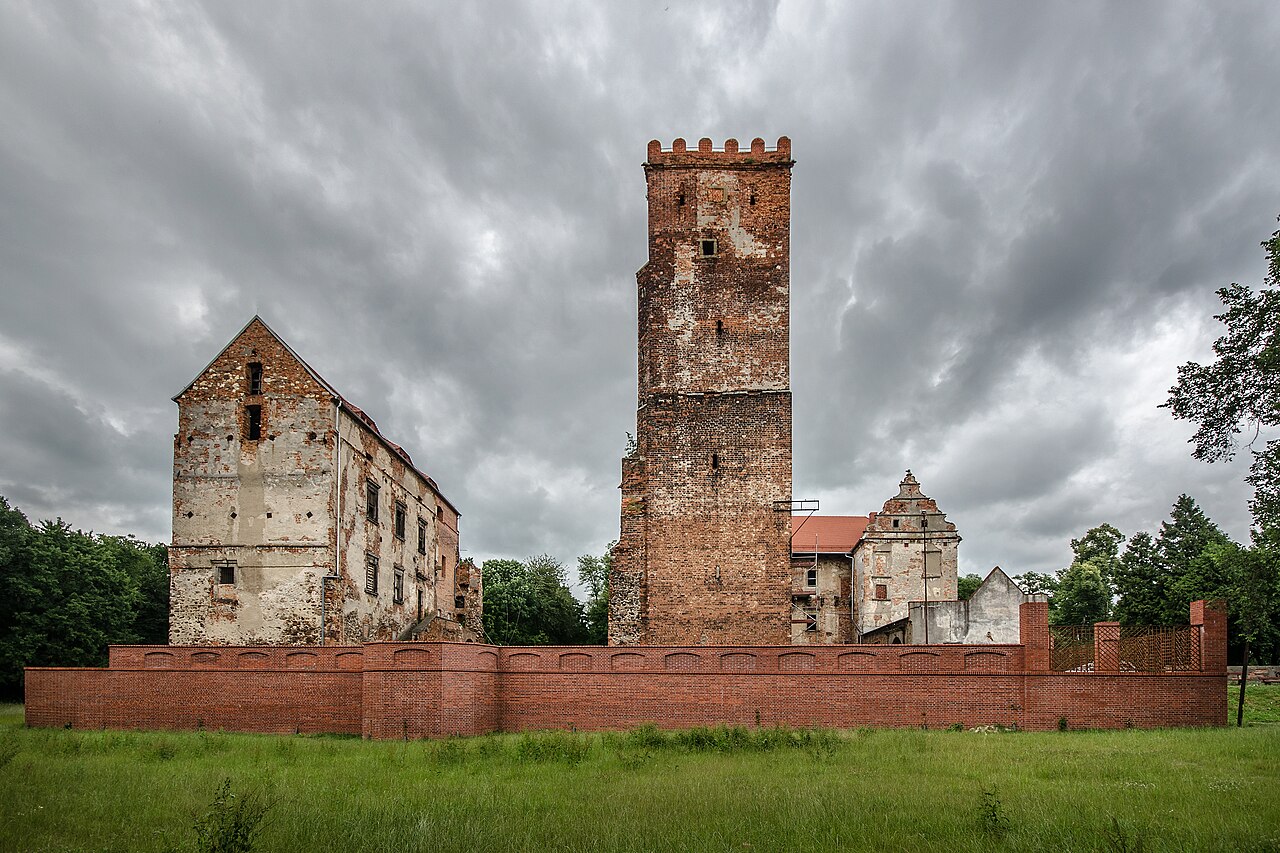
Today, Legnica Castle is preserved as ruins with several restored elements such as the Tower of Piotr, the Tower of St. Jadwiga, and the Renaissance portals. It serves educational purposes, housing institutions like the Teachers’ College of Foreign Languages and a military secondary school named after the medieval knight Zawisza Czarny. The castle is accessible to visitors interested in exploring its layered history and architectural evolution.
Ongoing restoration efforts aim to maintain the castle’s structural integrity and highlight its cultural heritage. The legends associated with the castle’s towers, including the "Hunger Tower" tale, enrich its historical narrative and attract tourism. Legnica Castle remains a vital link to Poland’s medieval past and the enduring legacy of the Piast dynasty.
Frequently asked questions (FAQ)
- How do I visit Legnica Castle and what are the opening hours?
- Legnica Castle is open to visitors during regular daytime hours, typically from 9:00 to 17:00. It is advisable to check the local tourist information for seasonal variations and guided tour availability.
- What architectural styles are represented in Legnica Castle?
- Legnica Castle showcases a blend of Romanesque, Gothic, Renaissance, and 19th-century Romantic neo-Gothic architectural styles, reflecting its long history and multiple renovations.
- What historical events is Legnica Castle known for?
- Legnica Castle is notable for its role as a ducal residence, surviving a Mongol siege in 1241, and its association with the Piast dynasty and Habsburg rule after 1675.
- Is Legnica Castle accessible for people with disabilities?
- While some areas of Legnica Castle are accessible, the ruins and older structures may present challenges for visitors with mobility impairments. It is recommended to contact the site in advance for specific accessibility information.
- Can I see archaeological remains at Legnica Castle?
- Yes, the castle grounds include an archaeological reserve with remains of the original Romanesque chapel and other medieval structures, open for public viewing.
- What is the best time of year to visit Legnica Castle?
- The best time to visit Legnica Castle is during spring and summer when the weather is favorable for exploring the outdoor ruins and courtyards.
Photo gallery

Information
Sources & official resources
Verify the information above using these authoritative references.
Loading map...
Visitor reviews
No reviews yet. Been here? Write the first review and help other travelers!
Write the first reviewVisited this castle? Share your experience
Your review helps other travelers and adds first-hand knowledge to our encyclopedia.