Lubin
Lubin Castle stands as a testament to the rich medieval heritage of Lubin, Poland. Its origins trace back to the early medieval period when a wooden and earth fortification existed on the site known as Stary Lubin. This early stronghold was the seat of a castellany, documented in a papal bull dated April 23, 1155, which listed Lubin among the thirteen castellanies of Silesia. Around 1205, the town of Lubin was officially founded by Jadwiga and Henryk I, marking a significant development in the region's urban and defensive architecture. By the late 13th century, the wooden fortifications were replaced by a more durable stone castle, attributed to Konrad II of Żagań, signaling the transition from early medieval fortifications to a more complex bastioned fortress.
The first written mention of the castle itself appears in the 14th century, specifically in a 1312 document dividing the Duchy of Głogów, which references "Castrum Lubyn." The castle's most significant expansions occurred under the rule of Bolesław III and his son Ludwik I, who ruled in the mid-14th century. Between 1348 and 1358, Ludwik I undertook extensive renovations and fortifications, transforming Lubin Castle into a formidable bastioned fortress. This period coincided with Ludwik's conflict with his elder brother Wacław, during which he secured Lubin as his principal residence after buying it back from a pledge. The castle's strategic location east of the town, surrounded by a system of water-filled moats on marshy lowlands, enhanced its defensive capabilities.
Architectural features and layout
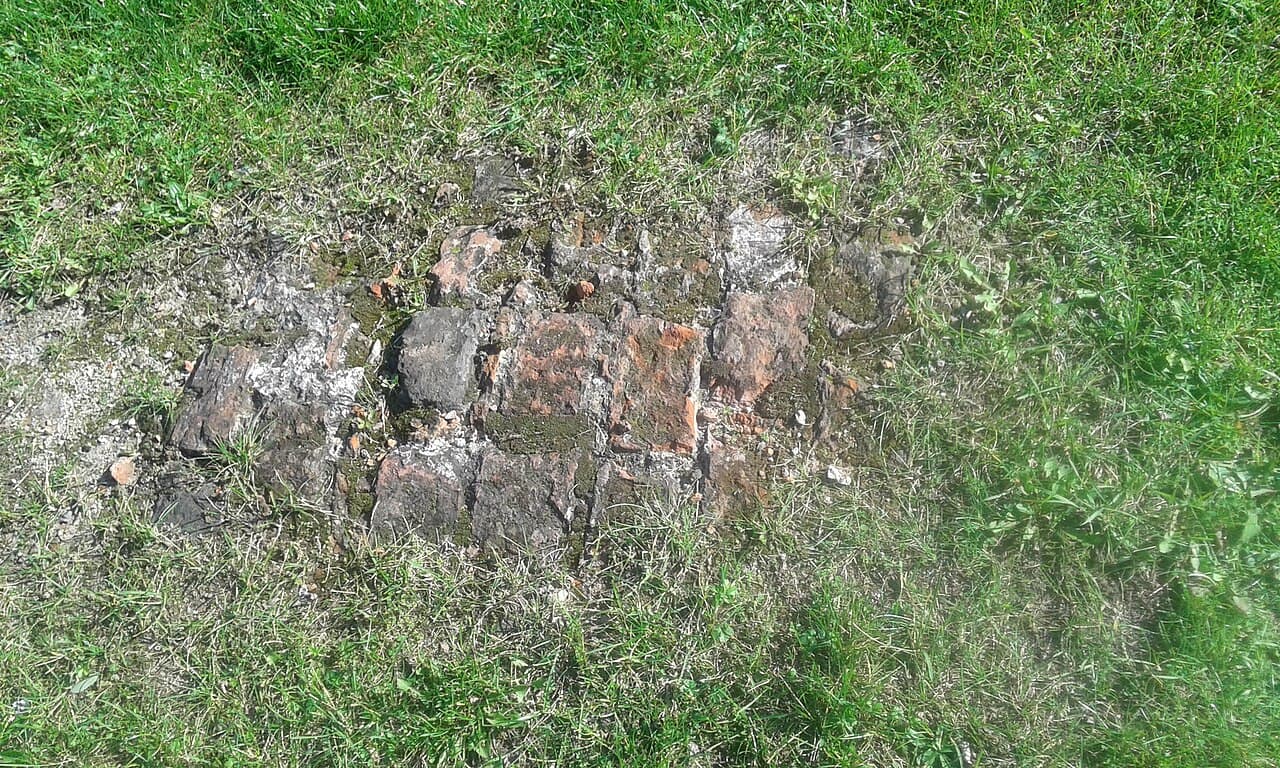
The castle's design reflects the military architectural trends of the high medieval period and the need for robust defense mechanisms. It occupied an irregular quadrilateral plan, enclosed by thick brick walls covering approximately 1,500 square meters. The main residential building was situated in the southeast corner, a rectangular structure measuring about 12.3 by 14.9 meters, possibly designed as a tower house. Opposite this, in the northwest corner, stood a free-standing quadrangular residential tower measuring 10.5 by 13 meters, which likely served as a key defensive and residential feature.
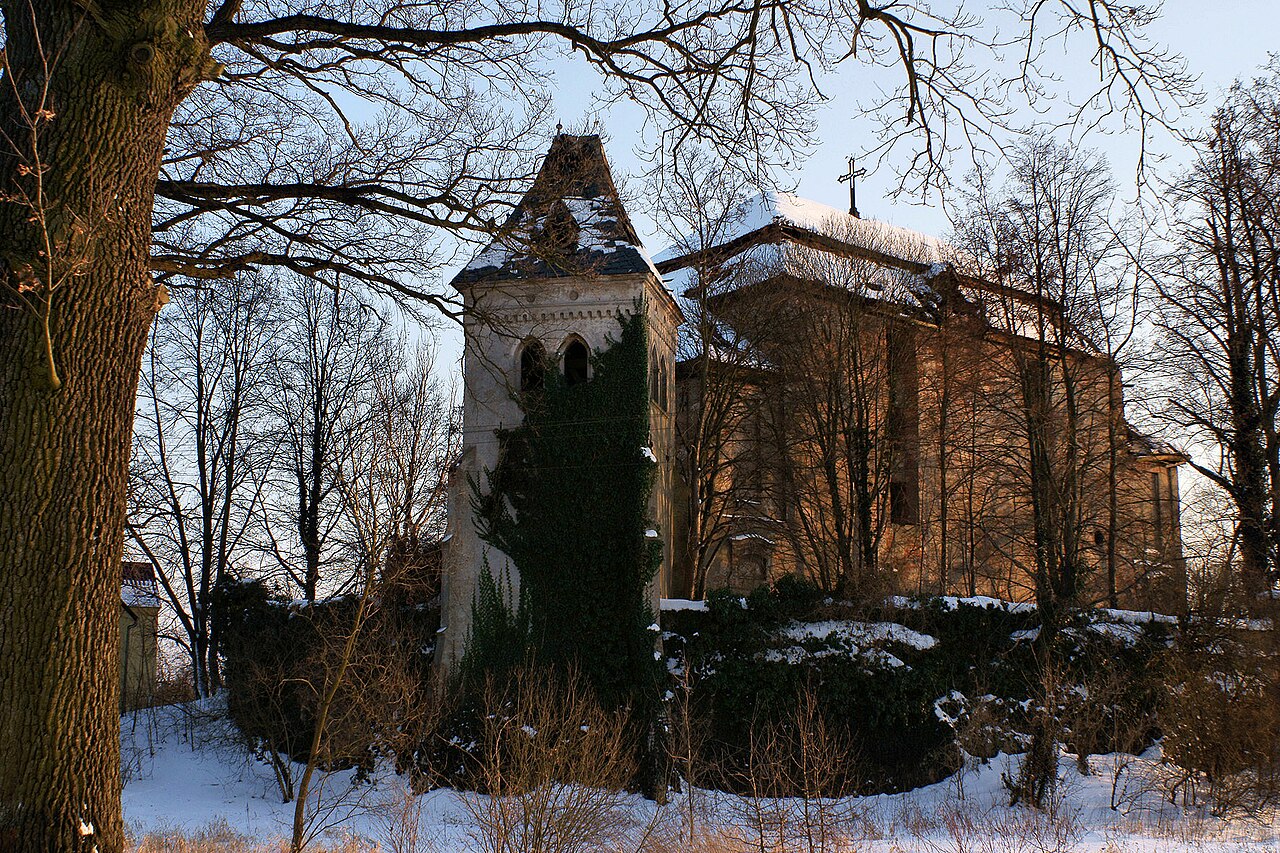
Access to the castle was controlled by a western gatehouse, approached via a drawbridge spanning the moat. This gatehouse projected outward from the curtain wall, providing a strong defensive position. Adjacent to the gate, on the initiative of Ludwik I, a one-nave castle chapel was constructed to the south, oriented east-west with a square western tower. This chapel, dating back to the mid-14th century, remains the only surviving element of the original fortress and is renowned for its Gothic architectural details, including a pointed arch portal adorned with sculptural reliefs from 1349.
Historical significance and events
Lubin Castle played a central role in the regional power struggles of Silesian dukes. After the six-year conflict with his brother, Ludwik I secured not only Lubin but also additional territories and financial compensation, which enabled him to move his court to Brzeg. Although the castle lost its status as the primary ducal residence, it remained a key military and administrative center. The town of Lubin, fortified with stone and brick walls under Ludwik's rule, was among the best-defended in Silesia, successfully resisting two Hussite invasions in 1428 and 1431.
The castle's decline began during the Thirty Years' War. In 1631, Swedish forces devastated Lubin and its fortress. While the castle itself was left in ruins and never fully restored, the chapel survived and underwent Baroque renovations in 1663, including the addition of a polygonal presbytery and a side chapel. Later modifications in the 19th century adapted the chapel for Catholic worship and eventually for use as a diocesan library until 1908.
The surviving castle chapel
Today, the castle chapel is the sole remnant of Lubin Castle's medieval grandeur. Despite suffering damage during World War II and a subsequent fire in 1945, the chapel was preserved through restoration efforts initiated in the late 20th century. The chapel's Gothic portal is particularly notable for its detailed stone carvings depicting Christ in Majesty, Saint Hedwig, Mary Magdalene, and the castle's founder Ludwik I with his wife Agnieszka. The Latin inscription on the archivolt commemorates the chapel's foundation, underscoring its historical and cultural importance.
Since 1990, the restored chapel has served as the Castle Gallery, hosting exhibitions and cultural events that celebrate the region's heritage. The establishment of the Wzgórze Zamkowe Cultural Center in 1988 marked a renewed commitment to preserving and promoting the castle's legacy within the community.
Lubin castle's place in silesian heritage
Lubin Castle exemplifies the evolution of medieval fortifications in Silesia, transitioning from early wooden strongholds to sophisticated bastioned fortresses. Its strategic location, architectural innovations, and role in regional dynastic conflicts highlight its importance in Polish history. Although the main fortress no longer stands, the surviving chapel offers a tangible link to the past and a focal point for cultural preservation. Visitors to Lubin can explore this unique site to appreciate the blend of military architecture and religious art that characterizes the castle's enduring legacy.
In summary, Lubin Castle is a remarkable example of a high medieval bastioned fortress whose history spans from the early 12th century to the present day. Its architectural features, historical events, and surviving Gothic chapel make it a significant cultural landmark in Lower Silesia and a must-visit for enthusiasts of medieval architecture and Polish history.
Frequently asked questions (FAQ)
- What is the historical significance of Lubin Castle?
- Lubin Castle, with roots dating back to the 13th century, is a testament to the region's medieval history and architectural evolution. It has served various purposes over the centuries, including as a noble residence and a military stronghold, reflecting the turbulent history of Silesia.
- When was Lubin Castle built?
- The construction of Lubin Castle began in the early 14th century, with significant modifications made in subsequent years. The castle's design features typical Gothic elements, showcasing the architectural style of its time.
- Can I visit Lubin Castle?
- Yes, Lubin Castle is open to visitors who wish to explore its rich history and stunning architecture. Guided tours are available, providing insights into the castle's past and its role in the local heritage.
- What are the opening hours for Lubin Castle?
- Lubin Castle is typically open to visitors from 10 AM to 5 PM, with extended hours during the summer months. It's advisable to check the official website or contact the castle directly for any seasonal changes or special events.
- Is it possible to access Lubin Castle with mobility issues?
- While Lubin Castle is a historical site, efforts have been made to improve accessibility for visitors with mobility challenges. However, due to its ancient structure, some areas may still pose difficulties, so it's recommended to inquire in advance about specific accommodations.
- What are the ticket prices for Lubin Castle?
- Ticket prices for Lubin Castle are quite reasonable, typically ranging from 10 to 20 PLN for adults, with discounted rates available for students and seniors. Special family tickets and group rates may also be offered, enhancing accessibility for all visitors.
- When is the best time to visit Lubin Castle?
- The best time to visit Lubin Castle is during the late spring and early autumn months when the weather is pleasant and ideal for exploring the grounds. Additionally, visiting during these times allows you to enjoy various outdoor events and activities that the castle may host.
- What nearby attractions can I explore while visiting Lubin Castle?
- In addition to Lubin Castle, visitors can explore the charming town of Lubin itself, which offers quaint shops and local eateries. Nearby attractions include the picturesque parks and the fascinating museums that showcase the region's rich heritage.
Photo gallery

Information
Loading map...
Visitor reviews
No reviews yet. Been here? Write the first review and help other travelers!
Write the first reviewVisited this castle? Share your experience
Your review helps other travelers and adds first-hand knowledge to our encyclopedia.