Preslav Fortress
Preslav Fortress, located in Veliki Preslav, Bulgaria, was the capital of the First Bulgarian Empire during the 9th and 10th centuries. Established in the 9th century AD under the reign of Knyaz Boris I, it rose to prominence after the Preslav Council of 893 as the political, cultural, and spiritual center of medieval Bulgaria. Situated along the Golyama Kamchia River and approximately 30 kilometers from Pliska, the empire's initial capital, Preslav became a fortified town that played a vital role in the region's history for over a millennium.
Historical significance and cultural prominence
During the reign of Tsar Simeon I (893–927), Preslav reached its zenith as a capital city and a hub of the Bulgarian Golden Age. This period saw an unprecedented flourishing of literature, art, and architecture, firmly establishing Preslav as a spiritual and literary center of Southeastern Europe. The city was renowned for its grand palaces, religious edifices, and cultural institutions that reflected the prosperity and power of the Bulgarian state.
The city's significance was also political and military. Preslav was a symbol of Bulgarian sovereignty and resilience, enduring several sieges and occupations. In 970, it was captured by Knyaz Svetoslav I of Kiev, who briefly made it the capital of Kievan Rus'. The following year, in 971, the city fell to the Byzantine Emperor Ioan I Tzimiskes, who renamed it Ioanopolis. It remained under Byzantine control until the late 12th century when the uprising led by the boyars Asen and Peter restored Bulgarian rule and Preslav's status as a fortress city.
Fortress architecture and layout
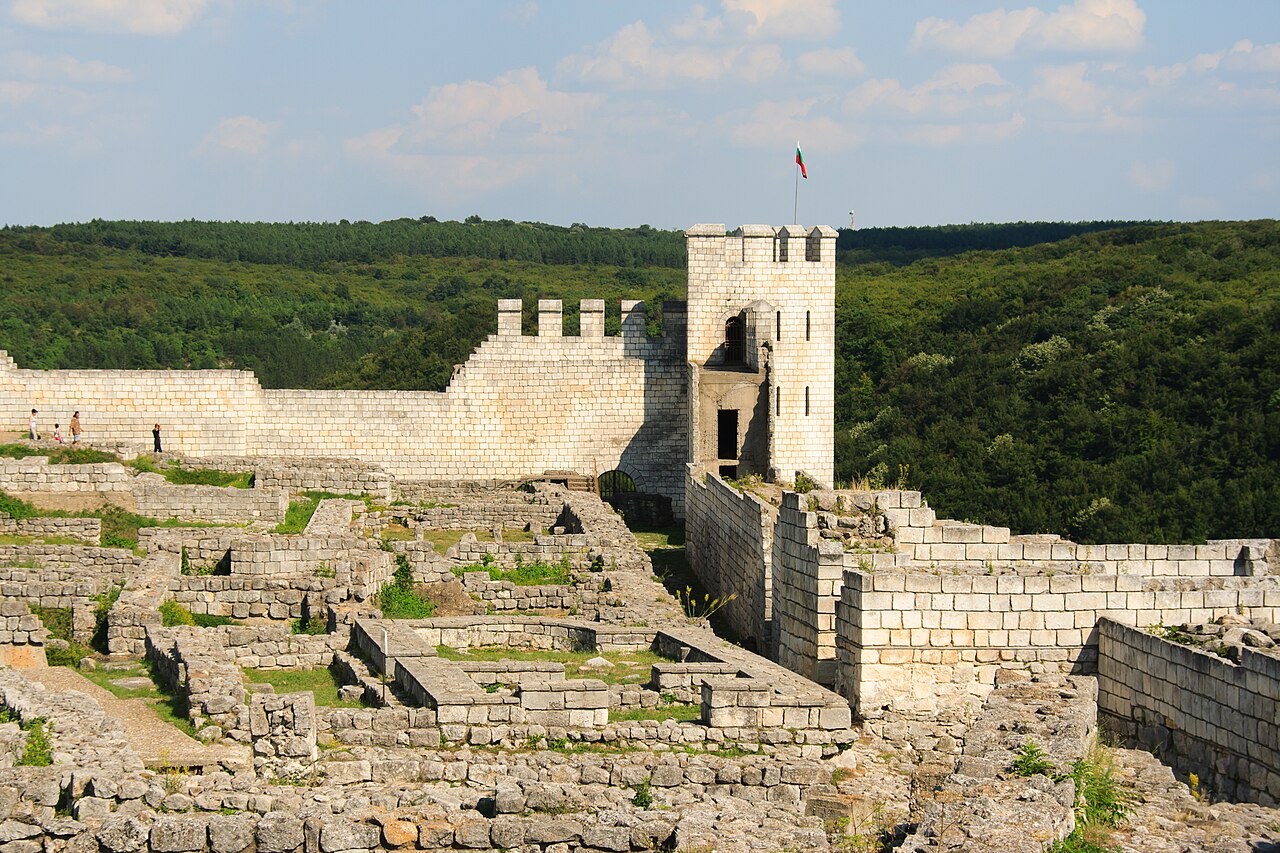
The fortress of Preslav featured a complex defensive system similar to that of its predecessor, Pliska. It consisted of inner and outer fortifications designed to protect the city from invasions. The inner fortress was an R-shaped structure fortified with both round and square towers, strategically placed to maximize defense. This inner citadel formed the core of the Inner Town, which housed the most important buildings and served as the administrative center.
The fortress was situated on a plateau, which provided a natural defensive advantage. Within the fortified area lay the Big Palace and the Western Palace, both well-preserved examples of medieval Bulgarian architecture. These palaces demonstrated advanced construction techniques and artistic decoration, reflecting the wealth and status of the Bulgarian rulers.
Defensive features
The fortress walls were constructed with thick stone blocks and reinforced with towers that allowed defenders to monitor and repel attackers effectively. The combination of round towers, which helped deflect projectiles, and square towers, which provided strong platforms for archers and artillery, was a notable feature of Preslav's military architecture.
In addition to the walls, the fortress included gates and barbicans designed to control access and provide additional layers of defense. The layout of the fortress was carefully planned to integrate natural terrain with man-made fortifications, creating a formidable stronghold.
Architectural and cultural landmarks
Among Preslav's most remarkable architectural achievements is the Golden Church, built during the reign of Tsar Simeon I. Located on a high terrace near the palaces, this church stands out as a unique monument of First Bulgarian Empire architecture. The church's design includes intricate mosaics and elaborate stone carvings, showcasing the artistic skill and religious devotion of the period.
Excavations have also uncovered the ruler's temple, a large religious structure linked to either Tsar Simeon I or his successor Tsar Peter. This temple's impressive dimensions and ornate decorations highlight the importance of religion in the political and cultural life of Preslav.
Preslav was also known for its contributions to the Preslav Literary School, which played a critical role in the development of Slavic literature and the spread of the Cyrillic alphabet. The city's cultural heritage includes numerous artifacts, manuscripts, and architectural remnants that continue to inform scholars about medieval Bulgarian civilization.
Preservation and archaeological significance
Today, Preslav Fortress stands as an archaeological site that offers valuable insights into medieval Bulgarian history and architecture. Excavations have revealed extensive remains of the city's fortifications, palaces, churches, and residential areas. These findings provide a comprehensive picture of urban planning, defensive strategies, and cultural life during the First Bulgarian Empire.
The site is partially preserved, with ongoing archaeological work aimed at uncovering more details about the city's layout and historical development. Visitors to Preslav can explore the ruins and learn about the city's role in shaping Bulgarian national identity and medieval European history.
Information
Loading map...
Visitor reviews
No reviews yet. Been here? Write the first review and help other travelers!
Write the first reviewVisited this castle? Share your experience
Your review helps other travelers and adds first-hand knowledge to our encyclopedia.