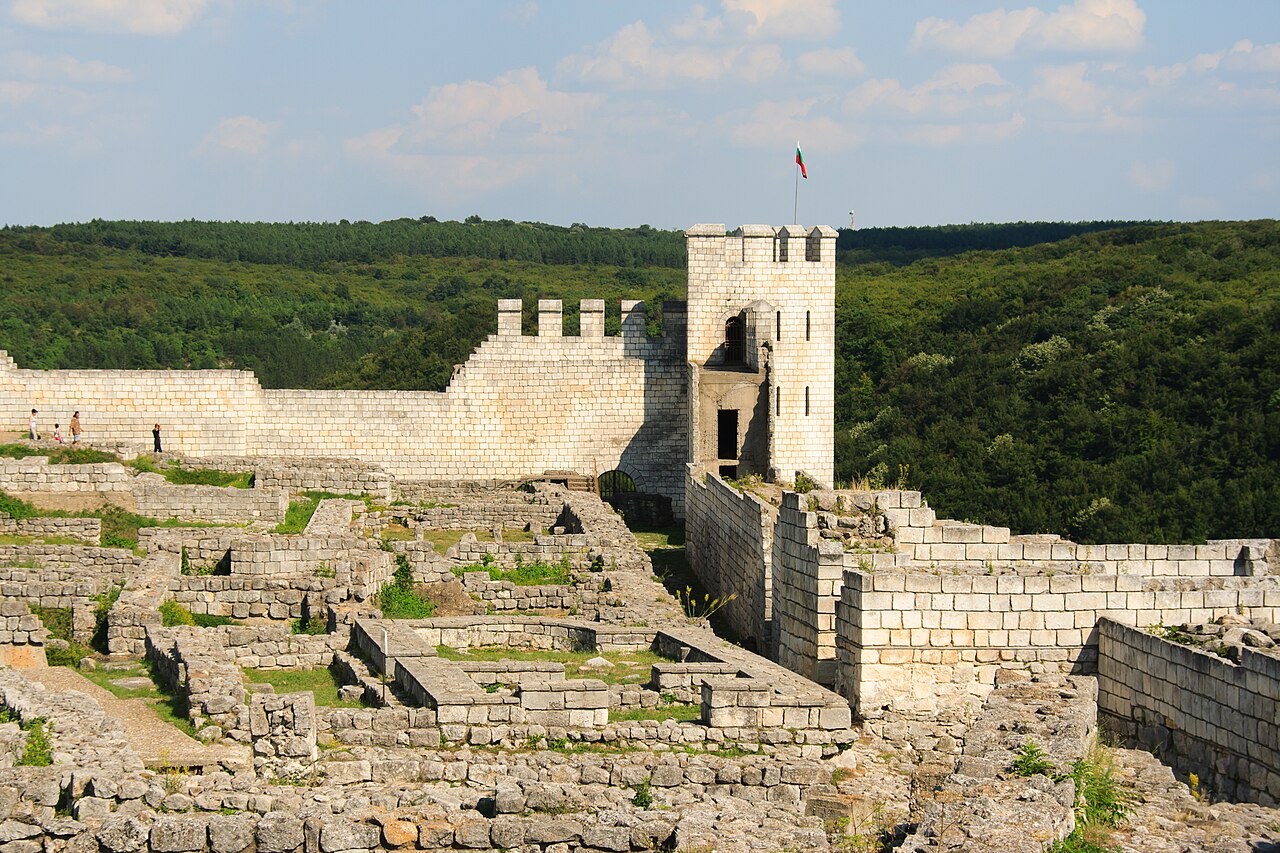
Ovech Fortress
Ovech Fortress is a significant stone stronghold situated east of the town of Provadia in Bulgaria. This fortress occupies a strategic rocky plateau, commanding views over the surrounding landscape, which made it a vital military and administrative center through multiple historical periods. Archaeological research has revealed that the site was initially used from the 3rd century AD, continuing through the first decades of the 7th century, and then reoccupied from the 10th to the 11th centuries until the late 17th century. This long span of use reflects the fortress's importance across different eras and cultures.
Historical significance and cultural succession
The fortress was inhabited successively by several major civilizations: Thracians, Romans, Byzantines, Bulgarians, and Ottoman Turks. Each culture left its imprint on the fortress's structure and function. The site is closely linked to notable historical events and figures, such as the reign of Tsar Ivaylo (1277–1280), a Bulgarian ruler known for his peasant uprising and defense of the Bulgarian state. The fortress also played a role during the crusade of Amadeus IV, Count of Savoy in 1366 and the crusade of Vladislav Varnenchik in 1444, marking its strategic military importance in medieval conflicts.
Architectural features and layout
Ovech Fortress is characterized by its impressive stone fortifications adapted to the natural rock formations of the plateau. It has three main entrances, each with unique features:
- The eastern entrance retains its original form, including stairs carved directly into the rock, providing a rugged and authentic access route that is still usable today, especially for visitors arriving by private transport.
- The western entrance connects to the town of Provadia via a distinctive spiral staircase consisting of 111 steps, showcasing medieval engineering adapted to the terrain.
- The northern entrance serves as the main gateway to the fortress. A 150-meter-long bridge structure links this entrance to the adjacent Tabiite Plateau, facilitating access and defense.
Key internal structures
Inside the fortress, several notable features attract visitors and historians alike:
- The 79-meter-deep well, known as the "talking well," was a crucial water source during sieges and remains a remarkable example of medieval engineering.
- The bishop’s church reflects the religious significance of the fortress during its peak periods.
- The knight’s prison and the tower with the devil’s path highlight the military and defensive aspects of the fortress.
- The Friars’ holes are another intriguing feature, possibly used for refuge or storage.
The golden age of Ovech Fortress
The fortress reached its zenith between the 12th and 14th centuries, when it functioned as a multifaceted center encompassing military, religious, economic, and administrative roles. During this period, it was a key stronghold in the region, contributing to the defense and governance of the surrounding territories.
Visiting Ovech Fortress today
The fortress is open year-round to visitors, offering a rich historical experience. Access is facilitated by the preserved entrances and stairways, and a guide from the Museum of History of Provadia is available to provide detailed explanations of the site's history and features. Visitors can also find informational materials and souvenirs on site, enhancing the educational and cultural value of the visit.
Ovech Fortress stands as a well-preserved testament to Bulgaria's medieval heritage, combining natural rock formations with human ingenuity in fortification architecture. Its layered history and diverse cultural influences make it a valuable destination for those interested in medieval military architecture and Bulgarian history.
Frequently asked questions (FAQ)
- How do I get to Ovech Fortress from Provadia?
- Ovech Fortress is located just east of Provadia and can be reached by a short drive or a hike. The western entrance is accessible via a 111-step spiral staircase from the town, while the eastern entrance is suitable for visitors arriving by private transport.
- What historical periods does Ovech Fortress cover?
- The fortress was used from the 3rd century through the early 7th century and then again from the 10th to the 17th century. It was inhabited by Thracians, Romans, Byzantines, Bulgarians, and Turks, reflecting a broad historical timeline.
- What are the main features to see inside Ovech Fortress?
- Visitors can explore the 79-meter-deep talking well, the bishop’s church, the knight’s prison, the tower with the devil’s path, and the Friars’ holes, all of which illustrate the fortress's military and religious significance.
- Is there a guide available at Ovech Fortress?
- Yes, a guide assigned by the Museum of History of Provadia is available to provide detailed information about the fortress's history and architecture.
- When was the golden age of Ovech Fortress?
- The fortress's golden age was during the 12th to 14th centuries when it served as a military, religious, economic, and administrative center of the region.
Information
Opening hours
Open year-round
Current owner
Museum of History of Provadia
Loading map...
Visitor reviews
No reviews yet. Been here? Write the first review and help other travelers!
Write the first reviewVisited this castle? Share your experience
Your review helps other travelers and adds first-hand knowledge to our encyclopedia.