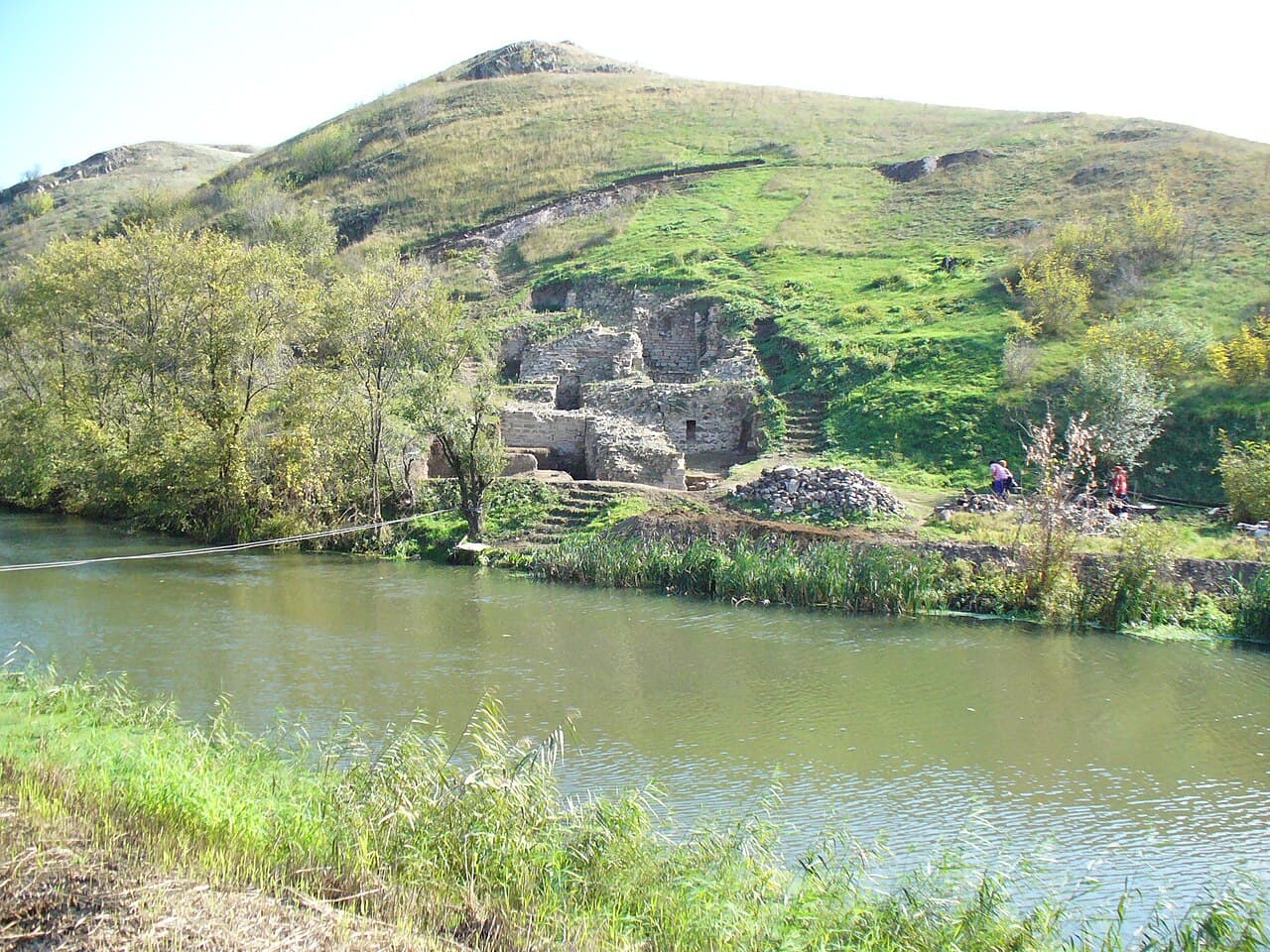
Markeli — Bulgaria castle

Markeli

Markeli fortress ruins in Bulgaria

Markeli (Bulgarian: Маркели; Greek: Μαρκέλλαι, Markellai; Latin: Marcellae) is a significant archaeological site featuring the remains of a medieval Byzantine and Bulgarian frontier fortress. Located in the Karnobat Municipality of Burgas Province, southeastern Bulgaria, this stronghold dates back to Late Antiquity. The castle ruins lie approximately 7.5 kilometres (4.7 miles) from the modern town of Karnobat, positioned strategically to control the surrounding region and serve as a defensive bulwark between the Byzantine Empire and the Bulgarian state.

Historical significance and military role

Markeli fortress was a key military installation during the turbulent centuries of Byzantine-Bulgarian conflicts. It served as a frontier stronghold, guarding important routes and acting as a base for military operations and border defense. The site is historically notable for being the location of two important medieval battles: the Battle of Marcellae in 756 and the Battle of Marcellae in 792, both fought between Byzantine and Bulgarian forces. These battles were part of the ongoing struggle for regional dominance between the two powers during the early medieval period.

Architectural features and layout

The fortress was constructed during Late Antiquity, reflecting the military architectural trends of the time. Although now in ruins, the remains indicate a complex defensive system typical of frontier fortifications. The site includes remnants of stone walls designed to withstand sieges and attacks, along with traces of towers and gates that would have controlled access and provided vantage points for defenders. The layout likely included an inner fortress or citadel area, surrounded by outer defensive walls, creating a layered defense system to protect against invaders.

Defensive structures

The surviving ruins show evidence of thick curtain walls built with large stone blocks and mortar, designed to resist battering and scaling. Defensive towers were positioned at key points along the walls, enabling archers and soldiers to cover the approaches to the fortress effectively. The fortress's location on slightly elevated terrain enhanced its defensive capabilities, allowing visibility over the surrounding lands and early warning of approaching enemy forces.

Archaeological research and preservation

Today, Markeli stands as an archaeological site with ruins that offer valuable insights into the military architecture and frontier defense strategies of the Byzantine and Bulgarian states in the early medieval period. Excavations have uncovered structural remains, artifacts, and other material culture that help reconstruct the fortress's historical context and usage. The site is protected as part of Bulgaria's cultural heritage, though it remains in a state of ruins with limited preservation.

Geographical and strategic context

The fortress's position in southeastern Bulgaria was critical for controlling the borderlands between the Byzantine Empire and the Bulgarian Khanate. Its proximity to major routes facilitated both military movements and trade, making it a vital point of control. The terrain around Markeli includes rolling hills and river valleys, which influenced the fortress's design and defensive orientation. Its location also contributed to its role in the military campaigns and battles fought in the region during the 8th century.

Legacy and cultural importance

Markeli is recognized as an important historical and cultural monument reflecting the complex interactions between the Byzantine Empire and medieval Bulgaria. The fortress's ruins serve as a tangible link to the military and political history of the region, illustrating the strategic importance of frontier fortifications in medieval warfare. Visitors and scholars alike value the site for its archaeological significance and the insights it provides into early medieval military architecture.

Frequently asked questions (FAQ)

What is the historical significance of Markeli Castle?
Markeli Castle, located in Bulgaria, dates back to the medieval period and played a crucial role in the defense against invasions. It is an important archaeological site that provides insights into the region's history and architecture during the Middle Ages.
When was Markeli Castle built?
Markeli Castle was constructed in the 5th century and has undergone several renovations over the centuries. Its strategic location made it a vital fortress during various conflicts throughout Bulgarian history.
How do I get to Markeli Castle?
Markeli Castle is accessible by car or public transport from major cities in Bulgaria. It is situated near the town of Kjustendil, and visitors can follow local signs to reach the site easily.
What are the opening hours for Markeli Castle?
Markeli Castle is open to visitors from 9 AM to 6 PM, Tuesday through Sunday. It is closed on Mondays, so planning your visit accordingly will ensure you have the opportunity to explore the site.
Can I take guided tours of Markeli Castle?
Yes, guided tours are available at Markeli Castle, providing visitors with in-depth knowledge about its history and architecture. These tours enhance the experience and allow for a deeper understanding of the castle's significance.
Is there an entrance fee for Markeli Castle?
Yes, there is a small entrance fee to visit Markeli Castle, which helps maintain the site. It is advisable to check the latest ticket prices on the official website or at the entrance before your visit.
What is the best time to visit Markeli Castle?
The best time to visit Markeli Castle is during the spring and early autumn months when the weather is mild and pleasant. This allows for a comfortable exploration of the castle and its surroundings.
Are there any nearby attractions to visit along with Markeli Castle?
Yes, nearby attractions include the town of Kjustendil, known for its mineral springs and historical sites. Visitors can also explore the scenic nature reserves in the area, making it a perfect day trip.
Is Markeli Castle accessible for people with disabilities?
Unfortunately, Markeli Castle has limited accessibility for individuals with disabilities due to its historical structure and terrain. Visitors are encouraged to contact the site beforehand to inquire about specific accommodations.

Photo gallery

Markeli
Click to view

Photo by Mitakinen at Bulgarian Wikipedia•CC BY-SA 3.0

1 photo • Click any image to view in full screen

Information

Archaeological Site / Ruins

Loading map...

Visitor reviews

No reviews yet. Been here? Write the first review and help other travelers!

Write the first review

Visited this castle? Share your experience

Your review helps other travelers and adds first-hand knowledge to our encyclopedia.

Write a review

(5/5)

0/2000 characters

Your review will be visible after admin approval

Nearby castles

46.3 km

Tuida Castle

Sliven, Bulgaria

Tuida Castle is a significant early Byzantine and medieval fortress located on the hill of Hisarlaka in the northeastern part of Sliven, Bulgaria. This strategic location offers commanding views of the Sinite kamani mountain range and the city below, underscoring its military importance throughout history. The castle forms part of an extensive mountain fortification system that played a crucial role in the defense of the Roman Empire, the early Byzantine Empire, and later the medieval Bulgarian state.Originally constructed in the 4th century AD, Tuida Castle was designed as a fortified stronghold to guard vital routes and territories in the region. Its construction reflects the military architectural principles of the late Roman period, emphasizing robust defensive walls and strategic positioning on elevated terrain. The fortress remained in active use until the 13th century, adapting through various historical periods marked by shifting political and military dynamics.Historical significance and developmentThe fortress of Tuida emerged during a time when the Roman Empire was fortifying its frontiers against increasing threats from migrating tribes and internal unrest. Its position on Hisarlaka hill allowed for surveillance and control over the surrounding landscape, making it a linchpin in the defense network protecting the empire's Balkan provinces.During the early Byzantine period, Tuida continued to serve as a military bastion. The Byzantine administration reinforced the fortress to withstand sieges and raids, reflecting the empire's efforts to maintain control over its European territories amidst the rise of new powers and incursions by Slavic and Bulgar groups.In the medieval era, Tuida Castle became an integral part of the Bulgarian state's defensive system. It witnessed numerous historical events, including military campaigns and territorial disputes, as the Bulgarian rulers sought to consolidate and defend their lands. The castle's fortifications were likely modified and expanded to meet evolving military technologies and tactics.Architectural features and layoutTuida Castle's remains reveal a complex fortress layout typical of late Roman and early medieval military architecture. The walls were constructed using large stone blocks, designed to resist attacks and provide a strong defensive perimeter. The fortress included multiple towers positioned to cover all approaches, enhancing its defensive capabilities.The castle's design incorporated a central courtyard, surrounded by the defensive walls and towers, which would have housed essential facilities such as barracks, storage rooms, and command centers. The elevated location not only offered natural defense but also facilitated communication via signal fires or other means with nearby fortifications in the mountain system.Archaeological excavations have uncovered remnants of gates, walls, and towers, providing insight into the construction techniques and strategic planning of the fortress. These findings highlight the castle's role as a military hub and its adaptation over centuries to meet the demands of defense and control.Preservation and cultural importanceToday, the ruins of Tuida Castle stand as a testament to the region's layered history, attracting visitors and scholars interested in Byzantine and medieval fortifications. The site offers panoramic views and a tangible connection to the past, illustrating the military and political significance of the fortress.Efforts to preserve and study Tuida Castle contribute to understanding the broader historical context of Balkan fortifications and the interplay between Roman, Byzantine, and Bulgarian influences. The castle is recognized as an important cultural heritage site within Bulgaria, reflecting centuries of historical transformation and architectural evolution.Visiting Tuida CastleVisitors to Tuida Castle can explore the hill of Hisarlaka, where the fortress ruins provide a glimpse into early medieval military architecture. The site is accessible from Sliven and offers walking trails that lead to the castle remains. Interpretive signs and local guides help contextualize the fortress's history and significance.The castle's elevated position makes it a favored spot for sightseeing, combining natural beauty with historical intrigue. It is recommended to wear appropriate footwear for the uneven terrain and to visit during daylight hours to fully appreciate the views and the archaeological remains.

Early Medieval (5th–10th c.)
Details
56.9 km

Preslav Fortress

Veliki Preslav, Bulgaria

Preslav Fortress, located in Veliki Preslav, Bulgaria, was the capital of the First Bulgarian Empire during the 9th and 10th centuries. Established in the 9th century AD under the reign of Knyaz Boris I, it rose to prominence after the Preslav Council of 893 as the political, cultural, and spiritual center of medieval Bulgaria. Situated along the Golyama Kamchia River and approximately 30 kilometers from Pliska, the empire's initial capital, Preslav became a fortified town that played a vital role in the region's history for over a millennium. Historical significance and cultural prominence During the reign of Tsar Simeon I (893–927), Preslav reached its zenith as a capital city and a hub of the Bulgarian Golden Age. This period saw an unprecedented flourishing of literature, art, and architecture, firmly establishing Preslav as a spiritual and literary center of Southeastern Europe. The city was renowned for its grand palaces, religious edifices, and cultural institutions that reflected the prosperity and power of the Bulgarian state. The city's significance was also political and military. Preslav was a symbol of Bulgarian sovereignty and resilience, enduring several sieges and occupations. In 970, it was captured by Knyaz Svetoslav I of Kiev, who briefly made it the capital of Kievan Rus'. The following year, in 971, the city fell to the Byzantine Emperor Ioan I Tzimiskes, who renamed it Ioanopolis. It remained under Byzantine control until the late 12th century when the uprising led by the boyars Asen and Peter restored Bulgarian rule and Preslav's status as a fortress city. Fortress architecture and layout The fortress of Preslav featured a complex defensive system similar to that of its predecessor, Pliska. It consisted of inner and outer fortifications designed to protect the city from invasions. The inner fortress was an R-shaped structure fortified with both round and square towers, strategically placed to maximize defense. This inner citadel formed the core of the Inner Town, which housed the most important buildings and served as the administrative center. The fortress was situated on a plateau, which provided a natural defensive advantage. Within the fortified area lay the Big Palace and the Western Palace, both well-preserved examples of medieval Bulgarian architecture. These palaces demonstrated advanced construction techniques and artistic decoration, reflecting the wealth and status of the Bulgarian rulers. Defensive features The fortress walls were constructed with thick stone blocks and reinforced with towers that allowed defenders to monitor and repel attackers effectively. The combination of round towers, which helped deflect projectiles, and square towers, which provided strong platforms for archers and artillery, was a notable feature of Preslav's military architecture. In addition to the walls, the fortress included gates and barbicans designed to control access and provide additional layers of defense. The layout of the fortress was carefully planned to integrate natural terrain with man-made fortifications, creating a formidable stronghold. Architectural and cultural landmarks Among Preslav's most remarkable architectural achievements is the Golden Church, built during the reign of Tsar Simeon I. Located on a high terrace near the palaces, this church stands out as a unique monument of First Bulgarian Empire architecture. The church's design includes intricate mosaics and elaborate stone carvings, showcasing the artistic skill and religious devotion of the period. Excavations have also uncovered the ruler's temple, a large religious structure linked to either Tsar Simeon I or his successor Tsar Peter. This temple's impressive dimensions and ornate decorations highlight the importance of religion in the political and cultural life of Preslav. Preslav was also known for its contributions to the Preslav Literary School, which played a critical role in the development of Slavic literature and the spread of the Cyrillic alphabet. The city's cultural heritage includes numerous artifacts, manuscripts, and architectural remnants that continue to inform scholars about medieval Bulgarian civilization. Preservation and archaeological significance Today, Preslav Fortress stands as an archaeological site that offers valuable insights into medieval Bulgarian history and architecture. Excavations have revealed extensive remains of the city's fortifications, palaces, churches, and residential areas. These findings provide a comprehensive picture of urban planning, defensive strategies, and cultural life during the First Bulgarian Empire. The site is partially preserved, with ongoing archaeological work aimed at uncovering more details about the city's layout and historical development. Visitors to Preslav can explore the ruins and learn about the city's role in shaping Bulgarian national identity and medieval European history.

Early Medieval (5th–10th c.)
Details
68.3 km

Nesebar Fortifications

Nesebar, Bulgaria

Nesebar fortifications represent a remarkable example of ancient military architecture spanning several historical periods on the Bulgarian Black Sea coast. The fortifications were originally constructed by the Thracians in the 8th century BCE, making them some of the oldest defensive structures in the region. These early walls and gates, built to protect the first inhabitants of the Nesebar peninsula, laid the foundation for a complex system of fortifications that evolved over more than two millennia. Thracian origins and early fortifications The initial fortifications at Nesebar were established by the Thracian tribes who settled the area in the 8th century BCE. Archaeological evidence reveals the remains of a fortified wall and gate from this period, constructed primarily from local stone materials. These early defenses were crucial for protecting the settlement from rival tribes and seaborne threats. The peninsula’s natural geography, surrounded by the sea on three sides, provided a strategic advantage that was enhanced by these man-made fortifications. Roman and Byzantine enhancements With the expansion of the Roman Empire, Nesebar (known historically as Mesembria) became an important urban center. Although the Roman period saw some maintenance of the walls, it was during the early Byzantine era in the 5th century AD that significant reconstruction work was undertaken. The Byzantine builders employed the opus mixtum technique, a distinctive construction style characterized by alternating layers of bricks and stone. This method not only strengthened the walls but also gave them a unique aesthetic appearance. The Byzantine fortifications included robust walls and towers designed to withstand sieges and attacks. The best-preserved sections of these walls are located near the city gate, where visitors today can observe the intricate masonry and defensive features. The Byzantines continued to maintain and repair the fortifications throughout the Middle Ages, adapting them to evolving military technologies and threats. Medieval period and ongoing defense During the medieval period, Nesebar’s fortifications remained vital for the town’s defense against frequent incursions by various enemies. The early Byzantine construction techniques were retained, and damaged sections of the walls were promptly rebuilt following attacks. The fortifications included multiple towers and gates that controlled access to the town and provided vantage points for defenders. Decline after Ottoman conquest The strategic importance of Nesebar’s fortifications diminished significantly after the Ottoman conquest in 1453. With the region becoming part of the Ottoman Empire, the walls lost their military relevance and were gradually abandoned. Over time, natural decay and lack of maintenance led to the fortifications falling into ruin. Architectural features and legacy The surviving sections of Nesebar’s fortifications illustrate the evolution of defensive architecture from the Early Medieval period through the Byzantine era. The use of opus mixtum masonry is particularly notable, demonstrating advanced construction techniques of the time. The walls’ alternating brick and stone layers not only enhanced structural integrity but also provided resistance against siege engines and environmental wear. The fortifications included numerous towers positioned at strategic intervals, allowing defenders to monitor and repel attackers effectively. Gates served as controlled entry points, often fortified with additional defensive mechanisms. The remnants visible today offer valuable insight into the military and urban planning strategies employed by ancient and medieval builders in the Black Sea region. Visiting Nesebar fortifications today Today, Nesebar’s ancient walls and towers are part of a UNESCO World Heritage site, attracting tourists interested in history and architecture. Visitors can explore the well-preserved sections near the city gate and walk along parts of the old walls that outline the peninsula. The fortifications provide a tangible connection to Nesebar’s long history as a fortified settlement and maritime hub. The site’s combination of natural landscape and historical architecture offers a unique experience for those interested in the evolution of defensive structures from the 8th century BCE through the Byzantine and medieval periods. Interpretive signage and guided tours help contextualize the significance of the fortifications within the broader history of the region.

Early Medieval (5th–10th c.)
Details

