Pottenburg Castle
Pottenburg Castle stands as a testament to medieval military architecture and regional power struggles in Austria. Located in the municipality of Wolfsthal near the Austrian-Slovak border, this hill castle played a crucial role in guarding the Hainburger Pforte, a vital passage through the Lower Carpathians. Its strategic position atop the rocky Königswarte hill allowed it to oversee and control key routes, making it a significant border fortress from the late medieval period.
The castle's origins are subject to scholarly debate, with some historians proposing initial fortifications as early as 990 to 1025, a turbulent era marked by Hungarian invasions. The earliest known owner was Count Poto, son of Count Palatine Hartwig of Regensburg, linking the site to early medieval nobility. However, more securely documented references date the castle's foundation to the early 13th century, with written records appearing by 1256. This timeline aligns with the broader European trend of castle-building during the High Middle Ages, reflecting the need for fortified border defenses.
Historical ownership and political significance
Throughout its existence, Pottenburg Castle experienced numerous changes in ownership, reflecting the shifting political landscape of the region. After Count Poto's rebellion and loss of control in 1054, the castle passed to the Bishop of Eichstätt. By the early 12th century, it was held by the Asparn family, until their lineage ended, after which it became a ducal fief in 1226, granted to Heinrich von Brunn. These transitions illustrate the castle's importance as a feudal asset and military stronghold.
In the mid-14th century, ownership shifted again when Count Konrad von Schaunberg acquired Pottenburg in 1343, only to return it to his ruler by 1351. The castle underwent significant rebuilding campaigns in 1359 and 1437, reflecting ongoing military and residential needs. Notably, in 1460, imperial forces forcibly removed Gamareth Fronauer, who had resisted surrendering the fortress, underscoring its strategic value.
King Matthias Corvinus of Hungary seized Pottenburg in 1482, holding it for a decade to bolster Hungary's border defenses against Austria. After its recapture, the castle was managed by a ducal steward but gradually lost its military function around 1500 as the nature of warfare and border defense evolved.
In 1517, Emperor Maximilian I sold the castle to Wilhelm II of Zelking. The first Turkish invasion of 1529 saw Pottenburg fall with minimal resistance, after which it was abandoned and left to deteriorate. The estate passed to the Counts of Walterskirchen in 1544, who retained it into modern times, marking the transition from a fortress to a noble estate in decline.
Architectural features and layout
Pottenburg Castle occupies a quadrangular plateau on a rocky spur near the summit of Königswarte hill, commanding panoramic views of the surrounding landscape. The castle's design centers on a square inner bailey, which served as the fortified core of the complex. To the north lies an outer bailey functioning as an economic courtyard, supplemented by a northwestern outwork, creating layered defenses.
The entire site is encircled by earthworks and stone fortifications, including ditches carved into the rock on the northwest, east, and south sides. A central rampart reinforces the southern approach, enhancing the castle's defensive capabilities. The outer defensive wall, dating from the mid-13th century, is constructed primarily from rubble stone, featuring beam holes that once supported a battlement walkway. Projecting corbels held defensive turrets and latrines, illustrating the castle's functional design.
A notable defensive feature is a semicircular tower on the eastern flank, likely added around 1500, which strengthened the outer wall. Access to the outer bailey is through a Gothic-style portal made of squared stone blocks, entering via a depressed round arch through the northwestern outwork. Within this area are remains of a residential building with a courtyard and well, showing evidence of construction from the 1437 rebuilding phase.
The bergfried: the castle's dominant keep
The most prominent architectural element within the inner bailey is the bergfried, a tall tower approximately 26.5 meters high with six stories. Built in the second quarter to mid-13th century, it rests on walls about 3.5 meters thick, constructed from rubble stone with carefully shaped corner stones for added strength. Narrow arrow slits set in funnel-shaped recesses provided defensive positions for archers.
The bergfried's upper platform was once surrounded by corbels and decorative gargoyles, serving both defensive and aesthetic purposes. Access was gained through an elevated doorway on the east side, a common medieval defensive feature to hinder attackers. Inside, the lower levels feature robust ribbed vaults supporting the upper floors, with staircases ingeniously built into the thick walls where space was limited, demonstrating advanced medieval engineering.
Palas and living quarters
East of the bergfried lie the remains of the palas, or main residential building, which may have also served as a chapel. The west wall of the palas includes an elevated doorway aligned with the bergfried's entrance, suggesting the existence of a connecting bridge between these two key structures. Below this entrance is a pointed arch portal, a hallmark of medieval Gothic architecture.
Cultural and historical context
Pottenburg Castle's multiple names, including Hasenburg and Mädchenburg, reflect its varied history and local traditions. The castle was closely linked to the now-lost settlement of Amberg below it, highlighting the interdependence between medieval fortresses and surrounding communities. This relationship was typical of border castles, which functioned both as military bastions and centers of local governance and economy.
The castle's location near the Königswarte lookout tower situates it within a landscape rich in natural and historical significance. Local traditions note the surrounding game reserve, historically inhabited by wild boars, adding to the area's cultural heritage. Today, the ruins of Pottenburg offer valuable insights into medieval fortification techniques, feudal politics, and border defense strategies during a period of frequent conflict and shifting allegiances.
Current condition and preservation
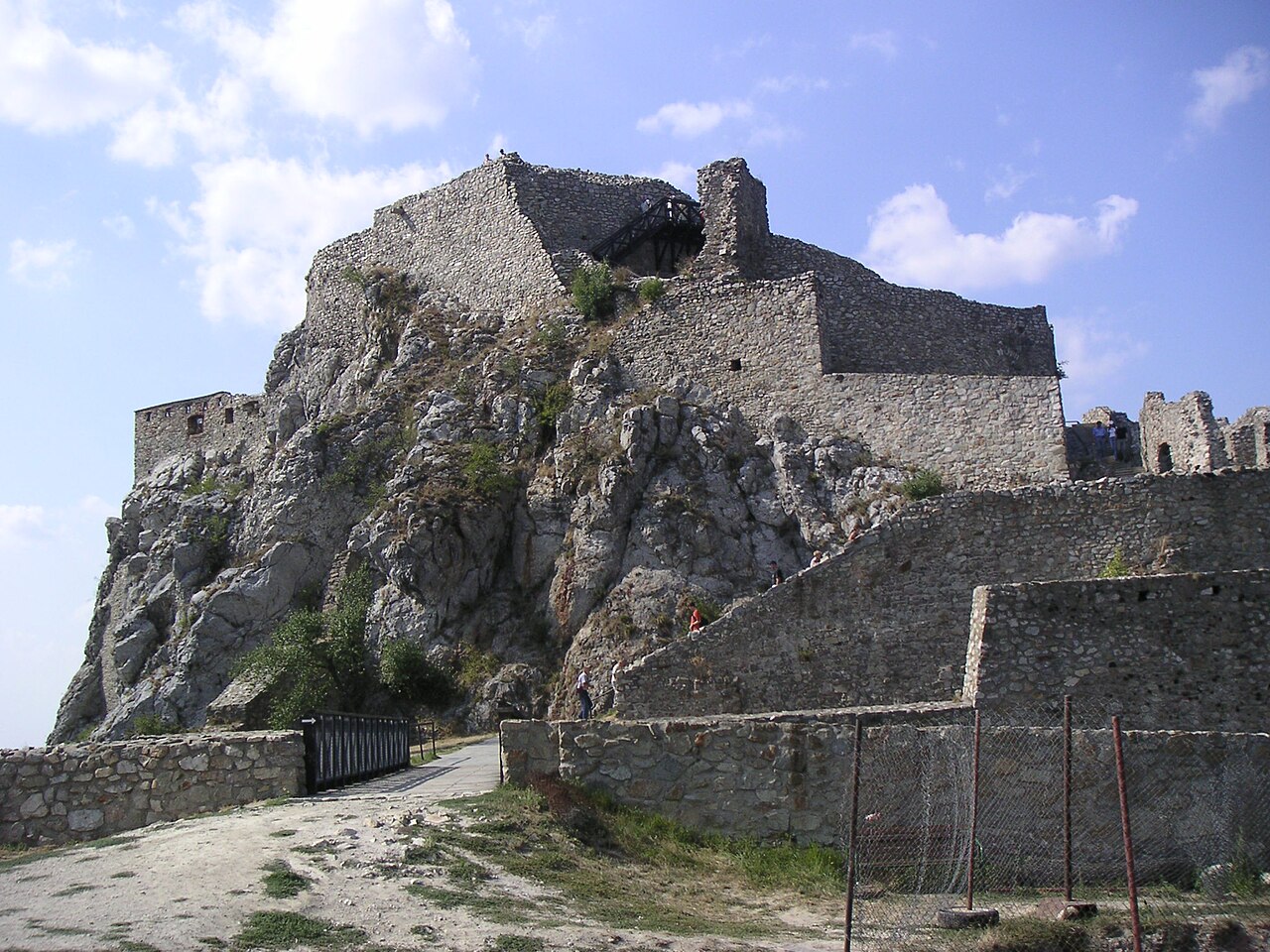
Currently, Pottenburg Castle exists as partially preserved ruins. The surviving structures, including the bergfried, outer walls, and remnants of residential buildings, provide a tangible connection to its medieval past. The site’s earthworks and stone fortifications remain visible, allowing visitors to appreciate the castle's original defensive layout.
Preservation efforts focus on maintaining the integrity of the ruins and making the site accessible for historical and cultural tourism. The castle's dramatic hilltop setting and architectural remains continue to attract historians, archaeologists, and visitors interested in medieval military architecture and Austrian history.
Frequently asked questions (FAQ)
- How do I reach Pottenburg Castle?
- Pottenburg Castle is located near the town of Wolfsthal in Lower Austria. Visitors can reach the site by car or local transport, followed by a hike up Königswarte hill to the castle ruins.
- What is the historical significance of Pottenburg Castle?
- Pottenburg Castle was a strategic border fortress guarding key routes through the Lower Carpathians. It played a critical role in medieval military defense and regional power struggles between Austria and Hungary.
- Can I explore the ruins of Pottenburg Castle?
- Yes, visitors can explore the partially preserved ruins of Pottenburg Castle, including the bergfried, outer walls, and remnants of residential buildings, offering insight into medieval architecture.
- When was Pottenburg Castle built?
- The castle was likely founded in the 13th century, with some evidence suggesting earlier fortifications around 990-1025. Most surviving structures date from the late medieval period.
- Is Pottenburg Castle accessible year-round?
- The castle ruins are generally accessible year-round, but visitors should check local conditions and weather, as access involves hiking on uneven terrain.
Information
Current owner
Private owner
Loading map...
Visitor reviews
No reviews yet. Been here? Write the first review and help other travelers!
Write the first reviewVisited this castle? Share your experience
Your review helps other travelers and adds first-hand knowledge to our encyclopedia.