Potiri Castle
Potiri Castle (Greek: Κάστρο Ποτήρι) is a significant medieval fortress located on the western slopes of Mount Ochthonia, in the central part of the Greek island of Euboea. This hill castle occupies a strategic position southeast of the village of Avlonari, overseeing the surrounding landscape and historically controlling access routes across this part of the island.
Historical background and strategic importance
The earliest documented mention of Potiri Castle dates back to 1426, when it was recorded as "castel de comun dito Potiris" under Venetian control. This period corresponds to the late medieval era, during which the Venetian Republic fortified various locations in the Aegean to secure its maritime and territorial interests. Potiri served as the seat of one of the two local captains governing the district, the other being stationed at the Castle of Cuppa. This highlights its administrative and military importance within Venetian Euboea.
Architectural features and layout
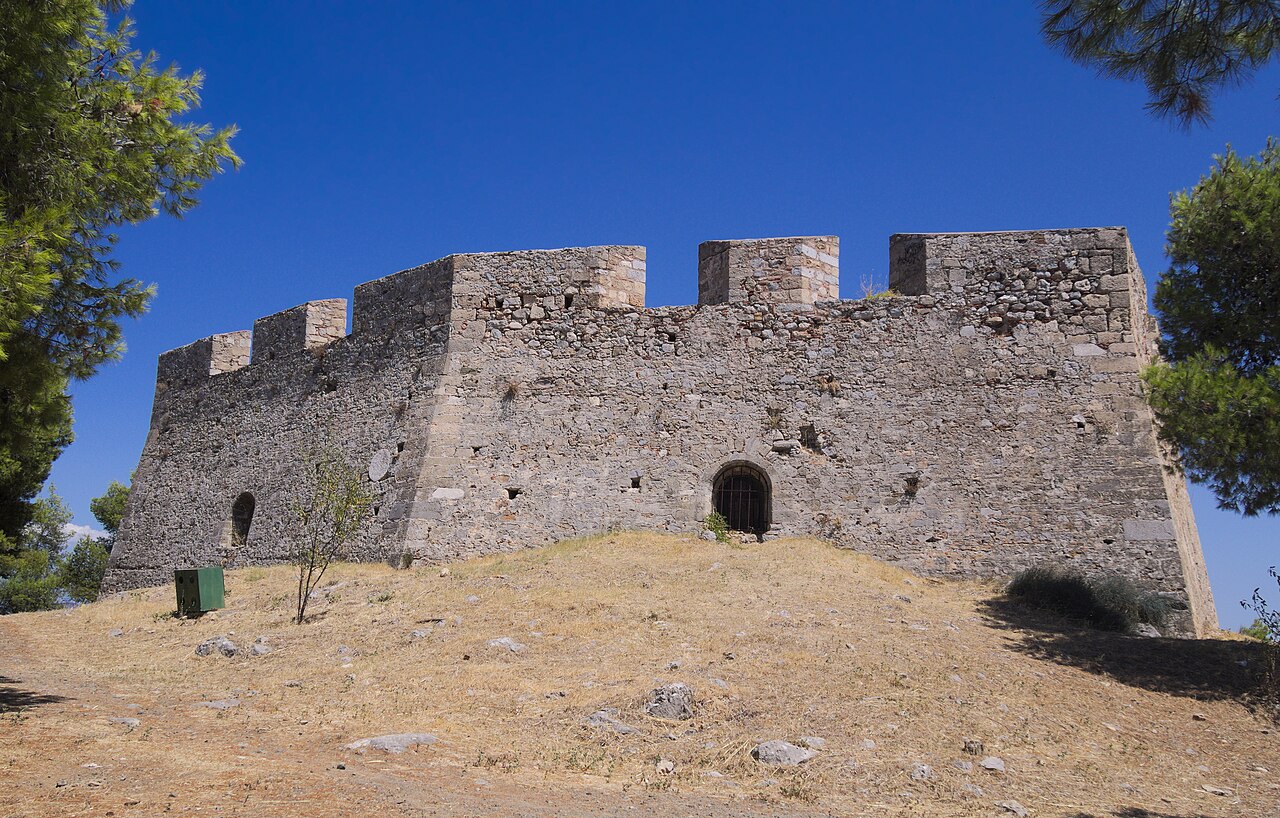
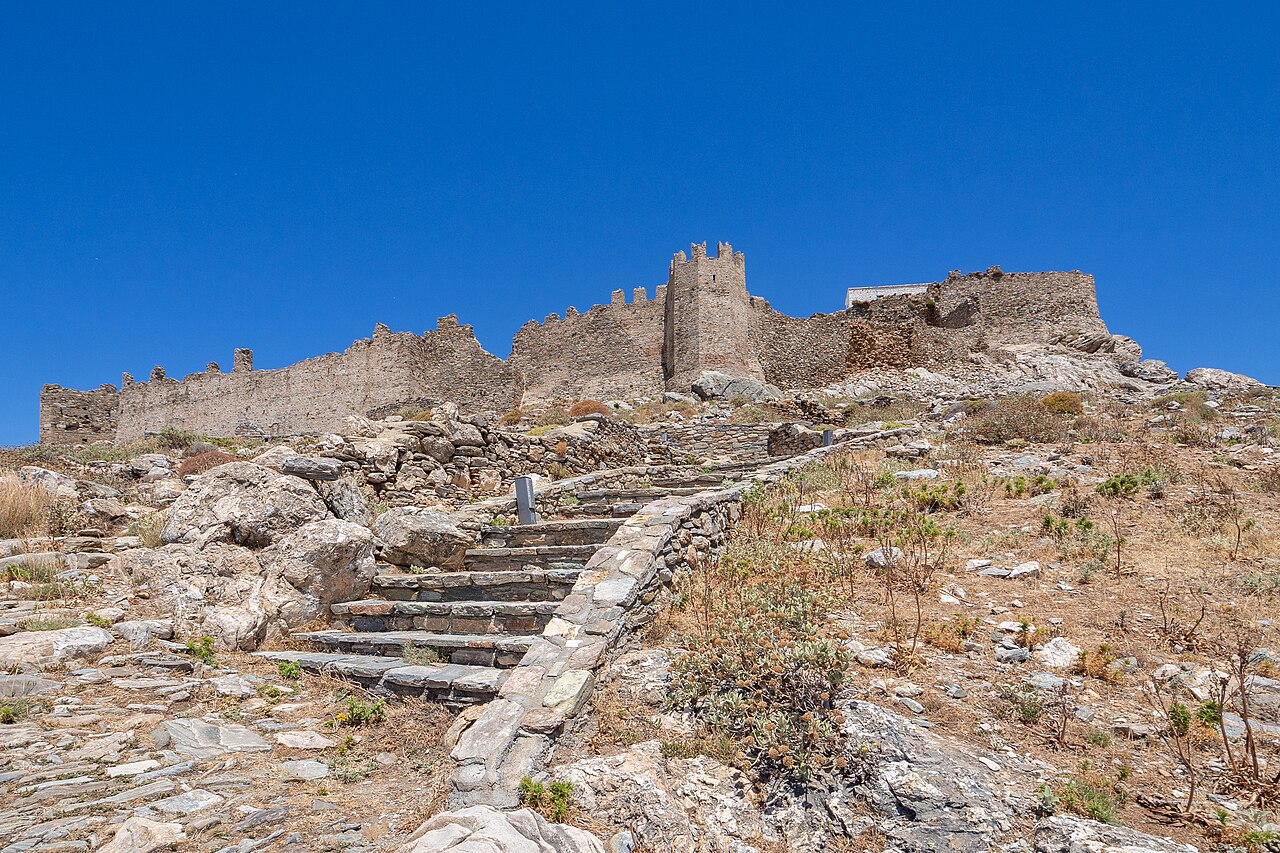
The castle's remains include substantial fragments of the curtain wall, which once enclosed the inner ward, providing defense against invaders. A prominent tower survives, which would have functioned as a lookout and a stronghold during sieges. The castle’s defensive structures are typical of hill castles of the 15th century, designed to exploit the natural terrain for enhanced protection.
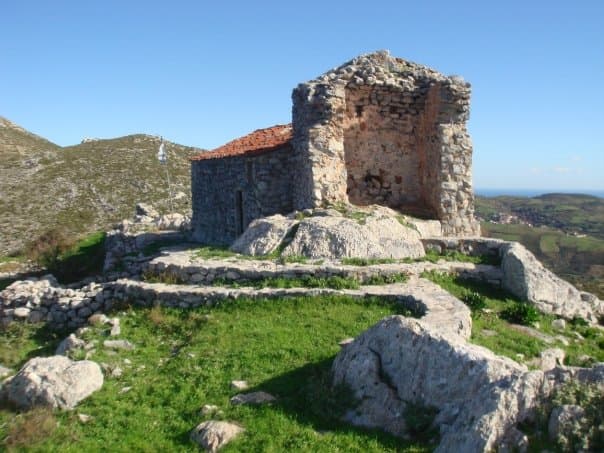
Within the castle grounds lies a church dedicated to the Panagia (Virgin Mary), indicating the religious dimension of the fortress complex. This church would have served both the garrison and local population, reflecting the integration of spiritual life within military installations of the period.
Construction and materials
The castle was constructed primarily from local stone, with masonry techniques characteristic of late medieval fortifications in the region. The walls were built thick to withstand artillery and siege engines, a necessity during the turbulent times of Venetian-Ottoman conflicts. The surviving tower and walls exhibit robust construction, with evidence of repairs and modifications that likely occurred during the castle's active use.
Potiri castle in the context of Euboean fortifications
Potiri Castle forms part of a network of fortresses that protected Euboea, an island of considerable strategic value in the Aegean Sea. Its location complements other nearby castles such as the Castle of Cuppa, creating a defensive system that allowed Venetian authorities to monitor and control movement across the island. These castles collectively contributed to the defense against Ottoman expansion and piracy during the late medieval period.
Current condition and archaeological significance
Today, Potiri Castle stands in a partially preserved state. Visitors can explore the remaining sections of the curtain wall and the tower, as well as the church of the Panagia. While much of the original structure has been lost or deteriorated over time, these remnants provide valuable insights into the military architecture and local history of late medieval Euboea.
Archaeological studies of the site have helped clarify the castle's role and construction phases, contributing to a broader understanding of Venetian fortifications in Greece. The castle remains an important cultural heritage site, attracting historians and tourists interested in medieval military architecture and Venetian history.
Frequently asked questions (FAQ)
- What is the historical significance of Potiri Castle?
- Potiri Castle was a Venetian fortress first mentioned in 1426, serving as the seat of a local captain and part of a defensive network on Euboea island during the late medieval period.
- What remains can visitors see at Potiri Castle today?
- Visitors can see parts of the curtain wall, a tower, and a church dedicated to the Panagia, reflecting the castle's military and religious functions.
- Where is Potiri Castle located on Euboea island?
- The castle is situated on the western slopes of Mount Ochthonia, southeast of the village of Avlonari in central Euboea, Greece.
- Can I visit the church within Potiri Castle?
- Yes, the church dedicated to the Panagia is part of the castle remains and can be visited, offering insight into the religious aspects of the fortress.
- Is Potiri Castle easily accessible to visitors?
- While the castle is partially preserved and accessible, visitors should be prepared for uneven terrain typical of hill castles and check local access conditions before planning a visit.
Photo gallery

Information
Loading map...
Visitor reviews
No reviews yet. Been here? Write the first review and help other travelers!
Write the first reviewVisited this castle? Share your experience
Your review helps other travelers and adds first-hand knowledge to our encyclopedia.