Phyle fortress is a significant ancient stronghold located in Greece, notable for its strategic position and historical importance. Though often classified as an early medieval bastioned fortress, its origins trace back to the 4th century BC, making it a site of long-standing military and architectural relevance. The fortress was constructed to control access routes and provide defense against invasions, reflecting the military strategies of its time.
Historical background and strategic importance
The fortress of Phyle was originally built in the classical period of ancient Greece, around the 4th century BC. It sits on a commanding hilltop overlooking the surrounding landscape, which allowed it to serve as a critical defensive position. The location was chosen for its natural advantages, including steep cliffs and panoramic views, which made it difficult for enemies to approach unnoticed.
Phyle played a role in various historical conflicts, including the struggles between Athens and its adversaries during the classical era. The fortress was part of the defensive network protecting the region and served as a refuge and military outpost. Over time, it underwent modifications and reinforcements, particularly during the early medieval period, when bastions and other fortification features were added to adapt to evolving military technologies.
Architectural features and fortifications
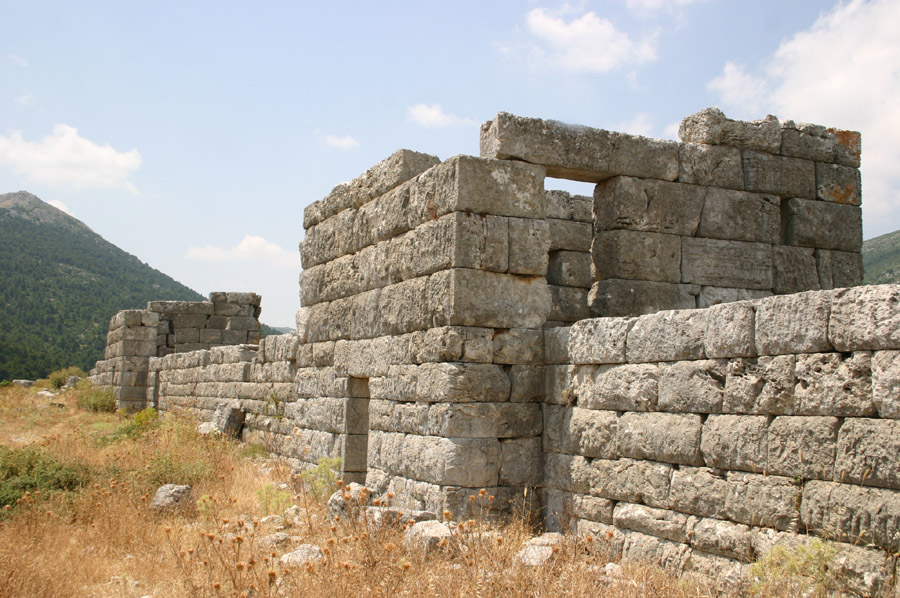
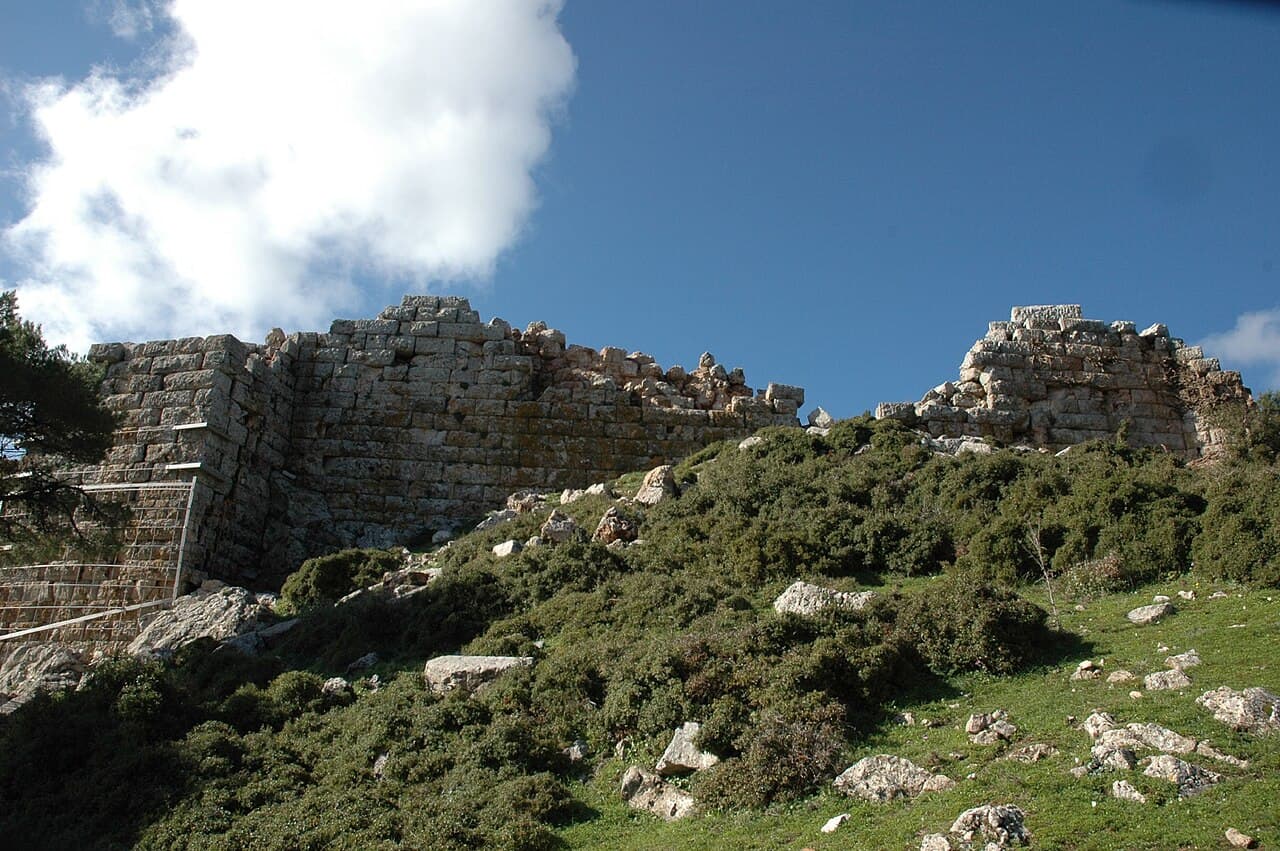
The fortress is characterized by its bastioned fortifications, which include thick stone walls and strategically placed bastions that allowed defenders to cover multiple angles of attack. The walls were built using local stone and exhibit the masonry techniques of both classical and medieval periods, reflecting the fortress's long history of use and renovation.
Key architectural elements include:
- Bastions: Projecting structures that provided flanking fire and enhanced the defensive capabilities of the fortress.
- Curtain walls: Thick and high walls connecting the bastions, designed to resist siege engines and assaults.
- Gates and access points: Carefully designed entryways that could be heavily defended and controlled.
- Watchtowers: Elevated points for surveillance and early warning of approaching enemies.
These features demonstrate the adaptation of the fortress to the changing demands of warfare from the classical through the early medieval periods.
Current condition and archaeological significance
Today, Phyle fortress remains partially preserved, with substantial sections of its walls and bastions still visible. The site provides valuable insights into ancient and medieval military architecture in Greece. Archaeological investigations have uncovered various artifacts and structural details that help historians understand the fortress's construction phases and its role in regional defense.
Visitors to Phyle can explore the ruins and appreciate the commanding views that made the fortress a formidable defensive position. The site is of interest not only to historians and archaeologists but also to those fascinated by the evolution of fortification design over centuries.
Phyle in the context of Greek fortifications
Phyle is one among many ancient fortresses in Greece that illustrate the strategic importance of fortified sites throughout Greek history. Its combination of classical origins and medieval modifications exemplifies the continuity and adaptation of defensive architecture in response to changing military threats and technologies.
The fortress contributes to a broader understanding of how Greek city-states and later medieval powers secured their territories. Its bastioned design, while more commonly associated with later periods, shows the layering of architectural styles and defensive concepts over time.
Visiting Phyle fortress
While the exact city location is not specified, Phyle fortress is accessible to visitors interested in ancient military architecture and Greek history. The site offers a tangible connection to the past and an opportunity to explore the remains of a fortress that has stood for over two millennia.
Visitors should prepare for uneven terrain and limited facilities, as the site is primarily an archaeological ruin. It is advisable to wear suitable footwear and bring water, especially in warmer months.
Frequently asked questions (FAQ)
- How do I get to Phyle Castle?
- Phyle Castle is located about 30 kilometers northwest of Athens, making it easily accessible by car or public transportation. If traveling by bus, you can take a route that connects to nearby towns, followed by a short hike to the castle.
- What is the historical significance of Phyle Castle?
- Phyle Castle, built in the 4th century BC, was a strategic fortress used during the Hellenistic period. It played a crucial role in the defense of the region and was associated with notable historical figures such as the philosopher Plato.
- When was Phyle Castle constructed?
- Phyle Castle was constructed in the 4th century BC, showcasing the military architecture of ancient Greece. The site has been significant throughout various historical periods, reflecting the evolution of defensive structures over time.
- Can I explore the ruins of Phyle Castle?
- Yes, visitors are welcome to explore the ruins of Phyle Castle. While some areas may be unmarked, the site offers a fascinating glimpse into ancient military architecture and provides beautiful views of the surrounding landscape.
- Why is Phyle Castle a popular destination for visitors?
- Phyle Castle is popular due to its rich history and stunning views of the surrounding valley. Visitors appreciate the blend of historical significance and natural beauty, making it a great spot for both history enthusiasts and nature lovers.
- Is it possible to visit Phyle Castle year-round?
- Yes, Phyle Castle is open to visitors year-round, although the best time to visit is during the spring and fall when the weather is mild. Summer can be quite hot, so planning your visit during cooler months is advisable for a more comfortable experience.
- What are the opening hours for Phyle Castle?
- Phyle Castle does not have specific opening hours, as it is generally accessible to the public at all times. However, it’s recommended to visit during daylight hours to fully appreciate the site and ensure a safe exploration.
- Are there nearby attractions to visit when I go to Phyle Castle?
- Yes, there are several nearby attractions, including the ancient site of Eleusis and the scenic Mount Parnitha. These sites offer additional historical context and outdoor activities, making it easy to plan a full day of exploration.
- What are the ticket prices for visiting Phyle Castle?
- There is no entrance fee to visit Phyle Castle, making it an affordable destination for travelers. Visitors can enjoy the site without the constraints of ticket prices, allowing for a more relaxed exploration of the ruins.
Photo gallery

Information
Loading map...
Visitor reviews
No reviews yet. Been here? Write the first review and help other travelers!
Write the first reviewVisited this castle? Share your experience
Your review helps other travelers and adds first-hand knowledge to our encyclopedia.