Portus Lemanis
Portus Lemanis, also known as Stutfall Castle, stands as a significant historical site in Lympne, England, embodying a remarkable continuum from Roman military engineering to medieval fortified manor architecture. This site originally hosted one of the notable Saxon Shore forts, a series of coastal fortifications constructed during the late Roman Empire to guard against invasions across the English Channel. Strategically positioned, Portus Lemanis was part of a defensive network responding to increasing threats from Germanic tribes and the fracturing stability of Roman authority in Britain during the 4th century AD.
The fort's construction reflects the Roman military's urgent need to protect the southeastern coast of Britannia. Built with robust stone walls and featuring a rectangular layout typical of Roman forts, Portus Lemanis was garrisoned by Roman legionaries until the withdrawal of Roman forces around 407 AD. Although the fort was likely never tested in battle against Saxon invaders, who later colonized Britain, its presence underscores the military and political tensions of the era. Over subsequent centuries, natural and human-driven changes transformed the surrounding landscape, including the reclamation of land from the sea to form the Romney Marsh.
Transition from roman fort to medieval castle
Following the decline of Roman rule, the site of Portus Lemanis entered a new phase during the medieval period. In the 1080s, a manor house was established on the site for the Archdeacons of Canterbury, marking a shift from military defense to ecclesiastical administration and residence. This early medieval structure was fortified, reflecting the turbulent nature of the era and the need for secure lodgings for high-ranking church officials.
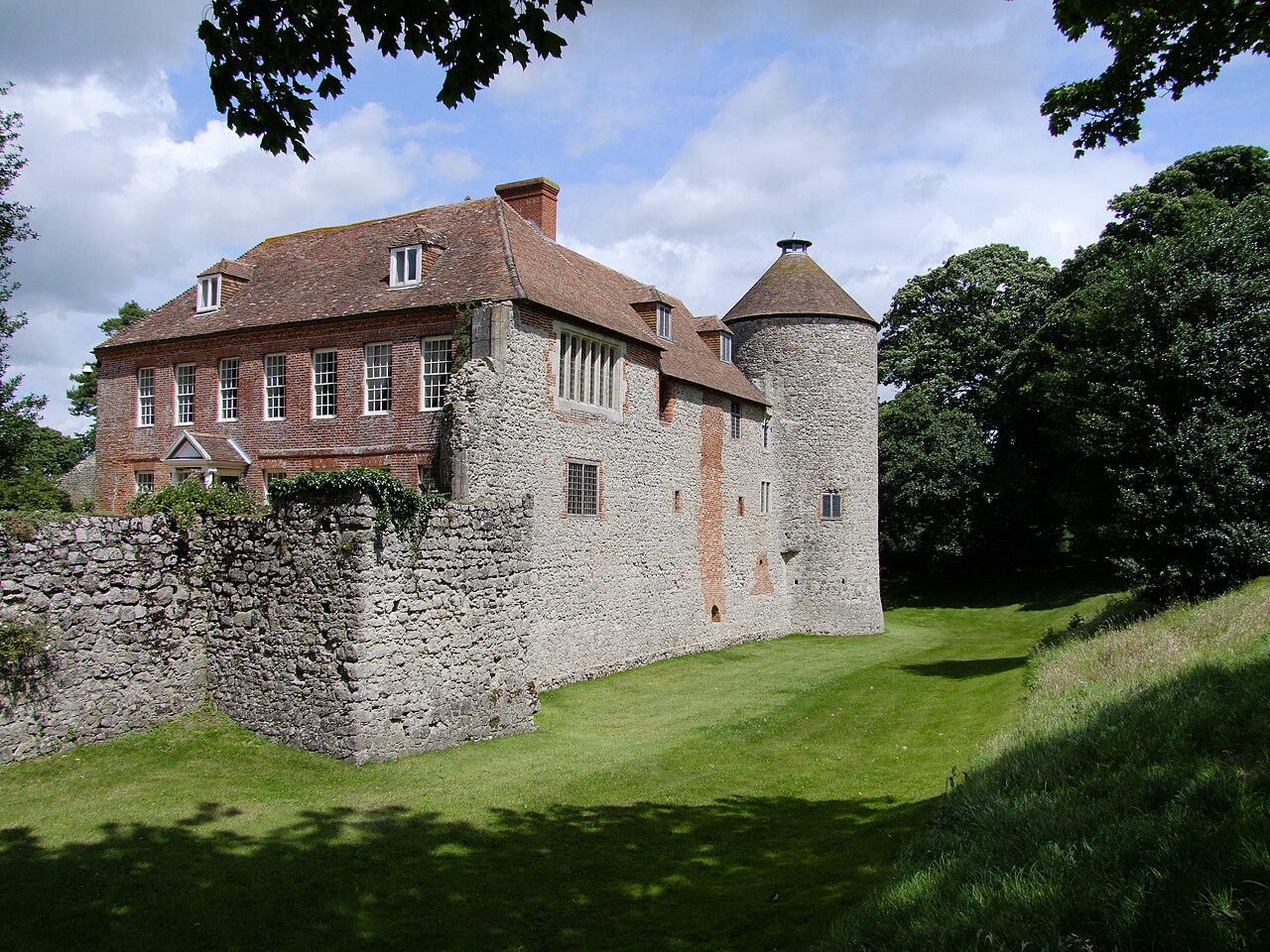
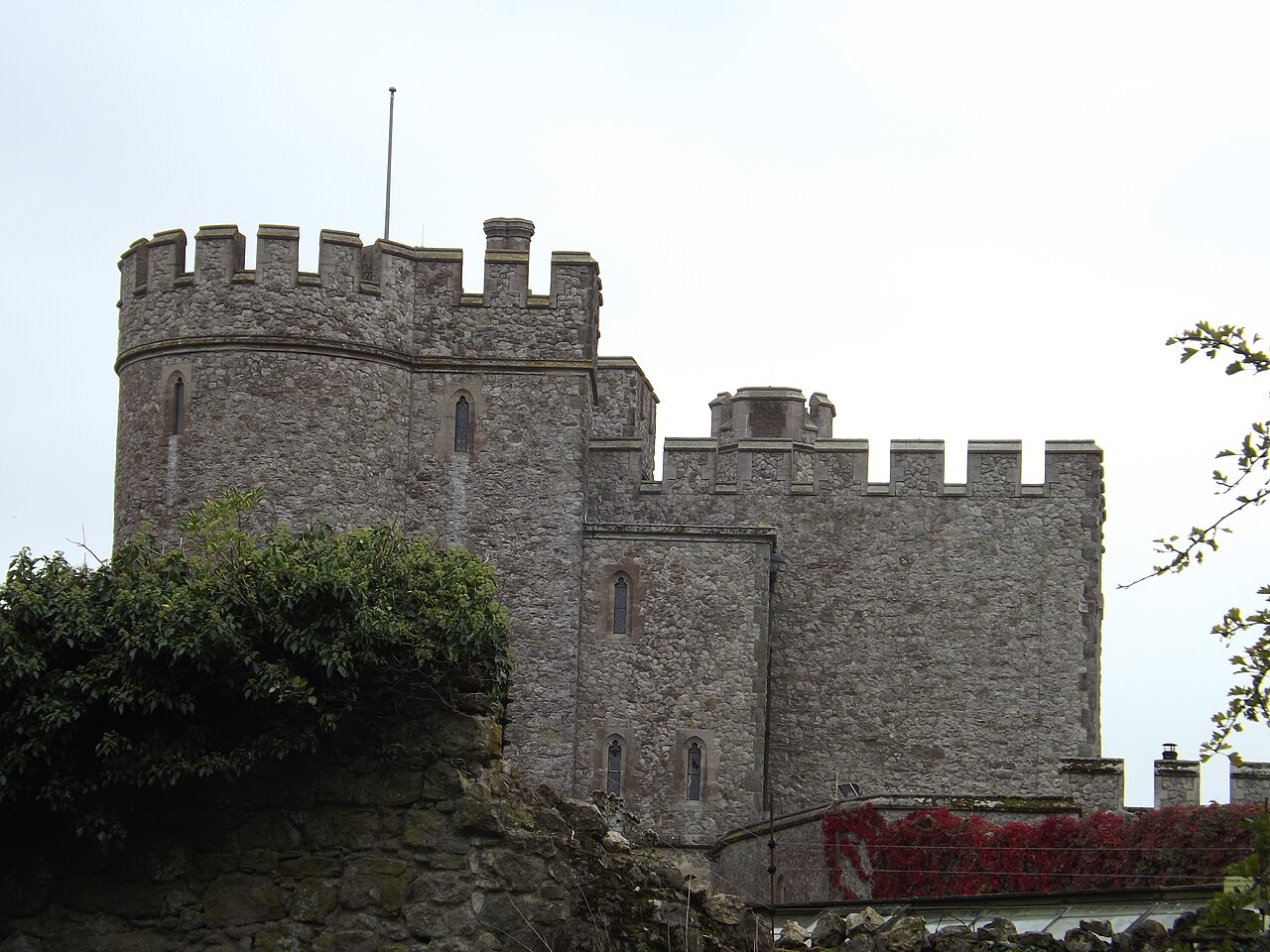
Significant rebuilding occurred in the 1360s, when the manor was expanded and fortified into what is now known as Lympne Castle. The addition of towers at both ends of the building enhanced its defensive capabilities and residential comfort. The castle served as the Archdeacon's residence for nearly eight centuries, illustrating its enduring importance in the region's religious and social history.
Architectural features and modifications
Structure and materials
Lympne Castle is a two-story stone building covering approximately 18,862 square feet, situated on a rocky outcrop overlooking the Romney Marsh. Notably, some of the castle's masonry incorporates stones reused from the original Roman fort, physically linking the medieval structure to its ancient predecessor. The castle's position about 103 meters above sea level offers commanding views across the marsh and, on clear days, towards the French coast.
Towers and great hall
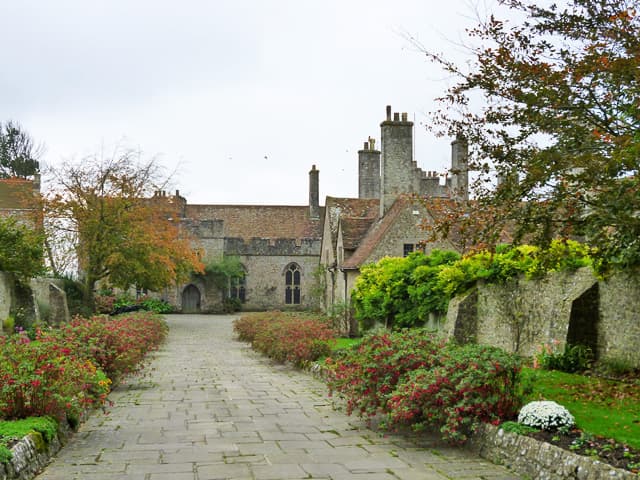
The castle features a square tower at one end with a vaulted chamber, a medieval architectural technique providing structural strength and aesthetic appeal. The opposite end includes the Crown Post Chamber, likely the Archdeacon's bedroom, highlighting the building's residential function. Between these towers lies the great hall or Rittersaal, which retains partial wood paneling and exposed wooden roof beams. The hall's Gothic pointed arch windows and doors allow ample light and ventilation, while an unusually high parapet in front of the hall's windows provided additional protection against attack.
Later alterations
During the Tudor period, modifications to the great hall included replacing the central hearth with an open fireplace, reflecting evolving domestic heating practices. The castle saw further expansions with additional wings built in the 15th century and again in the 19th century. Early 20th-century restoration and additions, including an East Wing added by Henry Beecham between 1907 and 1918, were overseen by architect Robert Lorimer, who sought to revive and preserve the castle's medieval character.
Historical significance and later uses
Throughout its history, Lympne Castle has served various roles beyond its initial defensive and residential purposes. After the Archdeacon ceased residence in 1860, the castle fell into partial disrepair and was repurposed as a farmhouse. During World War II, it was reactivated for military use as an observation post, a role that caused some structural wear. Post-war restoration efforts began promptly in 1945 to preserve the building's integrity.
In a unique cultural episode, the castle was used as a recording venue by the band Wings in 1978, illustrating its adaptability and continued relevance. Today, under private ownership by a Canadian couple, Lympne Castle has been refurbished and is utilized as a venue for weddings and events, maintaining its tradition as a place of gathering and significance.
Preservation and public access
Lympne Castle is recognized as a Grade I listed building by English Heritage, signifying its exceptional architectural and historical importance. The castle's preservation has been carefully managed to maintain its structural condition and historical features. Seasonal public access allows visitors to experience the castle's layered history and appreciate its unique blend of Roman and medieval architecture.
The castle's location on elevated terrain near England's southeast coast, combined with its architectural features such as the vaulted chambers, Gothic windows, and high parapets, make it a compelling example of adaptive reuse across centuries. Its continuous evolution from a Roman coastal fortress to a fortified medieval manor encapsulates significant chapters of British history and architectural development.
Frequently asked questions (FAQ)
- What is the historical significance of Portus Lemanis?
- Portus Lemanis is an important archaeological site that represents a Roman fort and settlement located in Lympne, UK. It played a crucial role in the defense of the Roman Empire along the southern coast of Britain, serving as a strategic port for military and trade activities.
- When was Portus Lemanis built?
- Portus Lemanis was constructed in the early Roman period, around AD 43, shortly after the Roman conquest of Britain. The site showcases the Roman military architecture and urban planning of that era, reflecting the strategic importance of coastal defenses.
- Can I visit Portus Lemanis?
- Yes, Portus Lemanis is open to visitors who wish to explore its fascinating history and archaeological remains. Guided tours are often available, providing insights into the site's significance and the lifestyle of its ancient inhabitants.
- What are the opening hours for Portus Lemanis?
- Portus Lemanis typically opens to visitors from 10 AM to 5 PM, but it is advisable to check the official website for current hours and any seasonal variations. Special events or guided tours may have different schedules, so planning ahead is recommended.
- Is it possible to access Portus Lemanis with mobility aids?
- Portus Lemanis strives to be accessible to all visitors, including those with mobility aids. While some areas may have uneven terrain, efforts have been made to ensure that essential paths and facilities are navigable for everyone.
- What is the best time to visit Portus Lemanis?
- The best time to visit Portus Lemanis is during the spring and summer months when the weather is pleasant, and the site is fully operational. This period also offers various activities and events that enhance the visitor experience.
- Are there any nearby attractions to Portus Lemanis?
- Yes, visitors to Portus Lemanis can explore nearby attractions such as the Lympne Castle and the beautiful Romney Marsh. The surrounding area also features picturesque walking trails and opportunities for birdwatching, making it a great destination for history and nature enthusiasts alike.
- What are the ticket prices for Portus Lemanis?
- Ticket prices for Portus Lemanis generally vary based on age and group discounts, with reduced rates for children and seniors. It's best to check the official website for the most current pricing and any special offers available during your visit.
Photo gallery

Information
Website
Visit websiteSources & official resources
Verify the information above using these authoritative references.
Loading map...
Visitor reviews
No reviews yet. Been here? Write the first review and help other travelers!
Write the first reviewVisited this castle? Share your experience
Your review helps other travelers and adds first-hand knowledge to our encyclopedia.