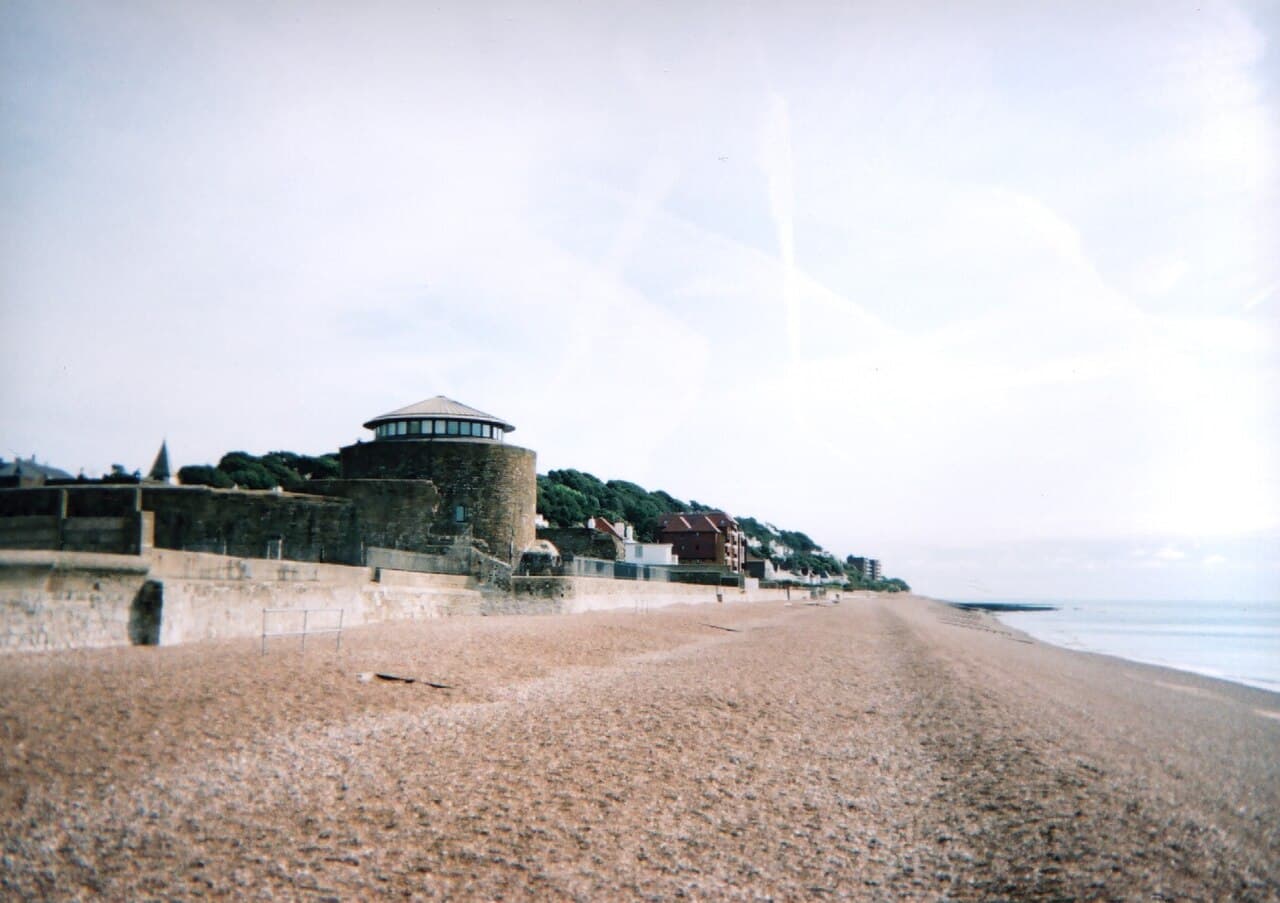
Sandgate Castle
Sandgate Castle stands as a remarkable example of a Tudor device fort constructed in the early 16th century along the vulnerable Kent coastline in England. Built between 1539 and 1540 under the orders of King Henry VIII, this coastal fortress was part of a strategic chain of fortifications designed to defend England against the threat of invasion from France and the Holy Roman Empire. Its location near the beachfront at Sandgate village was chosen to protect a critical point along the cliffs, where the coastline was particularly exposed.
The castle's construction was prompted by the political and religious upheaval following Henry VIII's break with the Catholic Church in 1533. His annulment of marriage to Catherine of Aragon angered powerful European monarchs, leading to an alliance between France and Spain against England in 1538. In response, Henry initiated the building of 17 fortifications, known collectively as the Device Forts or Henrician castles, to bolster coastal defenses.
Architectural design and defensive features
Sandgate Castle was designed with a distinctive triangular layout consisting of an inner and outer ward, each enclosed by curtain walls. The core of the castle featured a circular keep complemented by three ovoid towers and bastions, along with a fortified gatehouse. This design maximized defensive coverage and allowed for overlapping fields of fire.
The fortress was equipped to hold up to four tiers of artillery, with an impressive total of 142 firing points for cannons and handguns. This extensive artillery capacity was a significant advancement in military architecture at the time, reflecting the transition from medieval fortifications to artillery-based defense systems. The castle's walls and towers were built robustly to withstand bombardment, and its position overlooking the sea allowed defenders to monitor and repel naval threats effectively.
Comparison with other Device Forts
Sandgate Castle shares many features with other Device Forts such as Deal Castle and Walmer Castle, which were also constructed along the Kent coast. However, Sandgate's unique triangular plan and combination of circular and ovoid towers distinguish it architecturally. The castle's design reflects the Renaissance military engineering principles introduced to England during Henry VIII's reign, blending traditional medieval elements with innovative artillery fortification concepts.
Historical significance and military use
Although the anticipated invasion by France and Spain never materialized during Henry VIII's lifetime, Sandgate Castle remained a vital defensive site throughout the 16th and 17th centuries. It was actively garrisoned and upgraded during the reign of Elizabeth I, particularly in response to the ongoing conflict with Spain, including the threat posed by the Spanish Armada in 1588.
During the turbulent period of the English Civil Wars, Sandgate Castle played a notable role. In 1642, at the outbreak of the First English Civil War, it was seized by Parliamentary forces. Later, in 1648, during the Second English Civil War, it was captured by pro-Royalist insurgents. These events underscore the castle's continued strategic importance well beyond its initial Tudor context.
Modifications during the Napoleonic Wars
Between 1805 and 1808, in response to the renewed threat of French invasion during the Napoleonic Wars, Sandgate Castle underwent extensive redesign. Its height was significantly reduced, and the original keep was converted into a Martello tower, a type of small defensive fortification common along the British coast during this period. This adaptation reflects the evolution of military architecture and the castle's enduring role in coastal defense.
Impact of coastal erosion and preservation efforts
From the early 17th century onwards, coastal erosion began to threaten the structural integrity of Sandgate Castle. By the mid-19th century, the receding coastline had encroached perilously close to the castle walls. Due to the escalating costs of repairs and the diminishing strategic value of the site, the castle was decommissioned and sold into private ownership in 1888.
Continued erosion led to the destruction of the southern part of the castle by the 1950s. However, in the latter part of the 1970s, the remaining structure was consolidated and partly restored by its private owners. Today, Sandgate Castle remains partially preserved and is privately owned, no longer serving as a residence but being used by a company. Its interior is not open to the public, limiting direct access to its historic spaces.
Sandgate Castle in modern context
Despite its modest size, Sandgate Castle holds a rich historical narrative spanning several centuries. It encapsulates the transition from medieval fortifications to Renaissance artillery forts and later Napoleonic defensive adaptations. The castle's survival amidst ongoing coastal erosion is a testament to its robust original construction and the efforts of preservationists.
Its location along the seafront promenade makes it a visible landmark, though its private ownership restricts public visitation. The castle's layered history—from Tudor military innovation, through Civil War conflict, to Napoleonic modification and World War II use as a bomb shelter—makes it a significant cultural and architectural monument within the Kent region.
Sandgate Castle exemplifies the evolution of English coastal defense architecture and remains a valuable subject of study for historians and enthusiasts of military fortifications. Its combination of Renaissance military design, strategic importance, and ongoing challenges from natural forces highlight the dynamic relationship between human heritage and the environment.
Frequently asked questions (FAQ)
- How do I get to Sandgate Castle?
- Sandgate Castle is located on Castle Road in the United Kingdom of Great Britain and Northern Ireland. You can reach it by public transport or by car, with parking available nearby. Public transport options include local buses and trains that connect to nearby towns and cities.
- What is the historical significance of Sandgate Castle?
- Sandgate Castle was built in the late 19th century as a coastal defense structure and is known for its unique architectural design. It played a vital role in protecting the area during various conflicts, particularly in the 20th century. Today, it stands as a testament to the military history of the region.
- When was Sandgate Castle built?
- Construction of Sandgate Castle began in 1857 and was completed in 1859. The castle was designed to be a part of the coastal defense system, reflecting the military needs of the time. Its establishment marked a significant development in the area's fortifications.
- Can I visit Sandgate Castle year-round?
- Yes, Sandgate Castle is open for visitors throughout the year, although hours may vary by season. It is advisable to check the official website for the latest information on opening times and any special events. Guided tours are often available to enhance your experience.
- Why is Sandgate Castle an architectural gem?
- Sandgate Castle features a distinctive Victorian design that combines both functionality and aesthetics. The use of local materials and innovative construction techniques reflect the era's architectural trends. Its well-preserved structure provides a glimpse into 19th-century military architecture.
- Is it possible to access Sandgate Castle for those with limited mobility?
- Sandgate Castle strives to be accessible to all visitors, including those with limited mobility. There are designated paths and ramps to help navigate the site, though some areas may have challenging terrain. It is recommended to contact the castle staff in advance for specific accessibility inquiries.
- What is the best time to visit Sandgate Castle?
- The best time to visit Sandgate Castle is during the spring and early autumn months when the weather is mild and pleasant. These seasons also offer fewer crowds, allowing for a more enjoyable experience. Special events and guided tours are often scheduled during these times, enhancing your visit.
- Are there any nearby attractions to visit along with Sandgate Castle?
- Yes, there are several nearby attractions worth exploring, including beautiful coastal walks and historical sites. The charming village of Sandgate itself offers quaint shops and cafes. Additionally, nearby towns such as Folkestone provide more cultural and recreational opportunities.
- What are the ticket prices for visiting Sandgate Castle?
- Ticket prices for Sandgate Castle vary depending on the type of tour and any special events. Generally, adult tickets are reasonably priced, with discounts available for children and seniors. It's best to check the official website for the most current pricing and any available packages.
- What are the opening hours for Sandgate Castle?
- Sandgate Castle typically opens at 10 AM and closes at 5 PM, but these hours may change seasonally. It's advisable to verify the exact opening times on the official website before planning your visit. Special hours may apply during holidays or events.
Photo gallery

Photo by The original uploader was Jamesedits at English Wikipedia.•Public domain
Information
Website
Visit websiteSources & official resources
Verify the information above using these authoritative references.
Loading map...
Visitor reviews
No reviews yet. Been here? Write the first review and help other travelers!
Write the first reviewVisited this castle? Share your experience
Your review helps other travelers and adds first-hand knowledge to our encyclopedia.



