Castelo de Torre de Coelheiros
The Castelo de Torre de Coelheiros stands as a remarkable example of a medieval manor house rather than a traditional fortress, located in the parish of Torre de Coelheiros within the municipality of Évora, Portugal. This historic estate reflects the architectural and social evolution of noble residences from the 14th century onward, showcasing a blend of defensive elements and residential comfort that marked the period.
Its origins trace back to around 1357, when Fernão Gonçalves, serving as meirinho-mor (chief officer) under King Afonso IV, initiated the construction of the estate. This foundation coincided with the establishment of the morgado system at Quinta da Fonte dos Coelheiros, a legal framework designed to preserve noble estates intact through inheritance. The royal diploma granted to Fernão Gonçalves Cogominho and D. Maria Anes formalized this status, underscoring the estate's significance as a family seat and symbol of noble lineage.
In 1387, the estate's ownership passed to Rodrigues Álvares Pimentel, an illegitimate son of Álvaro Gonçalves Pimentel, a knight of the influential military-religious Order of Avis. This transfer, authorized by King João I, highlights the estate's connections to chivalric orders and the political dynamics of late medieval Portugal.
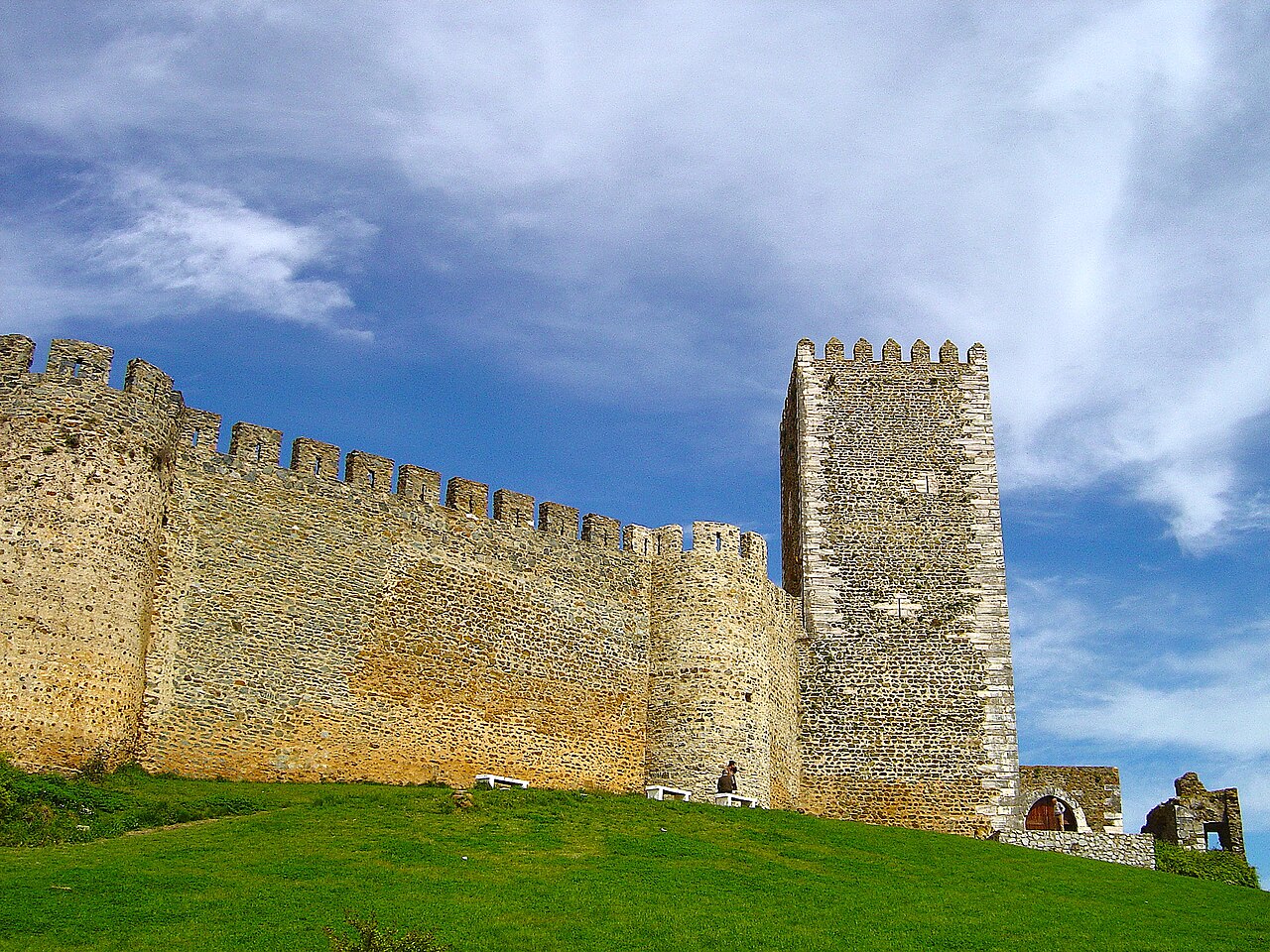
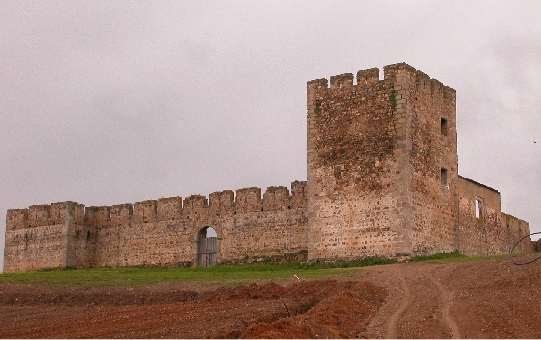
The formal institution of the morgado on January 22, 1395, by Fernão Gil Cogominho and his wife Maria Annes, likely coincided with the construction of the manor's central tower. This quadrangular stone tower, rising approximately 15 meters, stands as the architectural centerpiece of the estate. Built primarily of robust stone masonry, the tower features distinctive merlons along its parapet, crafted in a style influenced by Moorish architecture. These upright sections provided a battlemented silhouette, reminiscent of fortification designs yet adapted for a noble residence.
Structural integrity is reinforced by granite cornerstones or quoins, emphasizing durability and craftsmanship. Defensive features include paired loopholes—narrow vertical slits used for observation or archery—and machicolations (locally termed mata-cães), which are overhanging openings designed for dropping objects on potential attackers. These elements, carved meticulously from finely worked granite blocks, reflect a blend of defensive readiness and aesthetic detail uncommon in purely residential buildings.
Architectural evolution and expansions
Extending from the tower are two rectangular wings that form the manor's main living quarters. Each wing consists of a ground and upper floor, illustrating the estate's adaptation to residential needs over time. The northern wing remains relatively well-preserved and is notable for its large chimney topped with a rounded dome-like finish, an architectural feature characteristic of late medieval Portuguese manor houses. Windows framed in granite further emphasize the building's noble status and attention to detail.
The western wing represents a later phase of expansion, dating from the 18th century. This addition, however, has suffered from partial collapse and is in a poorer state of preservation compared to the northern wing. Despite this, the overall complex has benefited from continuous use, which has contributed to the conservation of much of its historical fabric.
Historical significance and legacy
The Castelo de Torre de Coelheiros is a testament to the evolution of Portuguese noble estates, balancing elements of fortification with residential comfort. Its origins during the medieval period and connections to prominent figures such as Fernão Gonçalves and the Order of Avis highlight its importance within the social and political landscape of Portugal.
The estate's designation as a property of public interest in 1957 reflects recognition of its cultural and architectural value. Today, the manor house serves the community as the location of the local primary school and parish council, ensuring its ongoing preservation and adaptive reuse.
Architectural features and defensive elements
The manor's quadrangular tower is particularly significant, combining residential and defensive characteristics. The merlons along the parapet, influenced by Moorish design, provide a distinctive silhouette while the machicolations allowed defenders to protect the base of the tower effectively. The use of granite masonry throughout the structure underscores the durability and craftsmanship of medieval Portuguese builders.
The presence of loopholes indicates a preparedness for defense, although the manor's primary function was residential rather than military. The integration of these features suggests a nuanced approach to security, reflecting the turbulent political climate of the time.
Preservation and current use
After a period of neglect in the early 20th century, which led to partial structural collapse around 1920, efforts to preserve the site have ensured its survival. The manor's use as a school and parish council headquarters has helped maintain its structural integrity and historical character.
Visitors to the Castelo de Torre de Coelheiros can appreciate the layered history embodied in its walls, from its medieval origins to later adaptations. The site remains a valuable cultural landmark within the region of Alentejo, offering insights into the architectural and social history of Portuguese noble estates.
Visiting information and accessibility
While the manor is primarily used for community functions, its historical significance makes it a point of interest for those exploring the heritage of Évora and the surrounding region. Visitors interested in medieval architecture and Portuguese noble history will find the site noteworthy for its unique blend of residential and defensive features.
Access may be limited due to its current use, so potential visitors are advised to check local resources or contact the parish council for visiting opportunities and guided tours.
Frequently asked questions (FAQ)
- How do I get to Castelo de Torre de Coelheiros?
- You can reach Castelo de Torre de Coelheiros by car or public transport from Évora. The castle is approximately 15 kilometers from the city center, making it a convenient day trip for visitors.
- What is the historical significance of Castelo de Torre de Coelheiros?
- Castelo de Torre de Coelheiros dates back to the 13th century and played a crucial role in the defense of the region during medieval times. Its architecture reflects the military importance and historical heritage of the area.
- When was Castelo de Torre de Coelheiros built?
- The construction of Castelo de Torre de Coelheiros began in the 13th century, during a period of significant fortification in Portugal. The castle has undergone various renovations over the centuries, preserving its historical essence.
- Can I visit Castelo de Torre de Coelheiros year-round?
- Yes, Castelo de Torre de Coelheiros is open to visitors throughout the year, but it's advisable to check specific opening hours before your visit. The castle's accessibility can vary depending on the season.
- Why is the architecture of Castelo de Torre de Coelheiros noteworthy?
- The architecture of Castelo de Torre de Coelheiros is noteworthy for its blend of military and civilian styles, showcasing the defensive features typical of medieval castles. Its well-preserved structures and panoramic views of the surrounding landscape make it a fascinating site for history enthusiasts.
- Is it possible to take guided tours of the castle?
- Yes, guided tours are available at Castelo de Torre de Coelheiros, providing visitors with insights into its history and architecture. These tours enhance the experience and offer a deeper understanding of the castle's significance.
- What are the ticket prices for visiting Castelo de Torre de Coelheiros?
- Ticket prices for Castelo de Torre de Coelheiros are generally affordable, with discounts available for students and seniors. It's best to check the official website or contact the castle directly for the most up-to-date pricing information.
- What are the opening hours for Castelo de Torre de Coelheiros?
- The opening hours for Castelo de Torre de Coelheiros may vary seasonally, typically ranging from 9 AM to 6 PM. Visitors should verify the current hours before planning their trip to ensure a smooth visit.
- When is the best time to visit Castelo de Torre de Coelheiros?
- The best time to visit Castelo de Torre de Coelheiros is during the spring and fall when the weather is mild and pleasant for exploring. Additionally, these seasons tend to have fewer crowds, allowing for a more enjoyable experience.
- Are there any nearby attractions to visit after Castelo de Torre de Coelheiros?
- Yes, there are several nearby attractions to explore after visiting Castelo de Torre de Coelheiros, including the historic city of Évora, a UNESCO World Heritage site. Other notable sites include the Roman Temple of Évora and the Chapel of Bones, making for a rich cultural experience.
Information
Loading map...
Visitor reviews
No reviews yet. Been here? Write the first review and help other travelers!
Write the first reviewVisited this castle? Share your experience
Your review helps other travelers and adds first-hand knowledge to our encyclopedia.