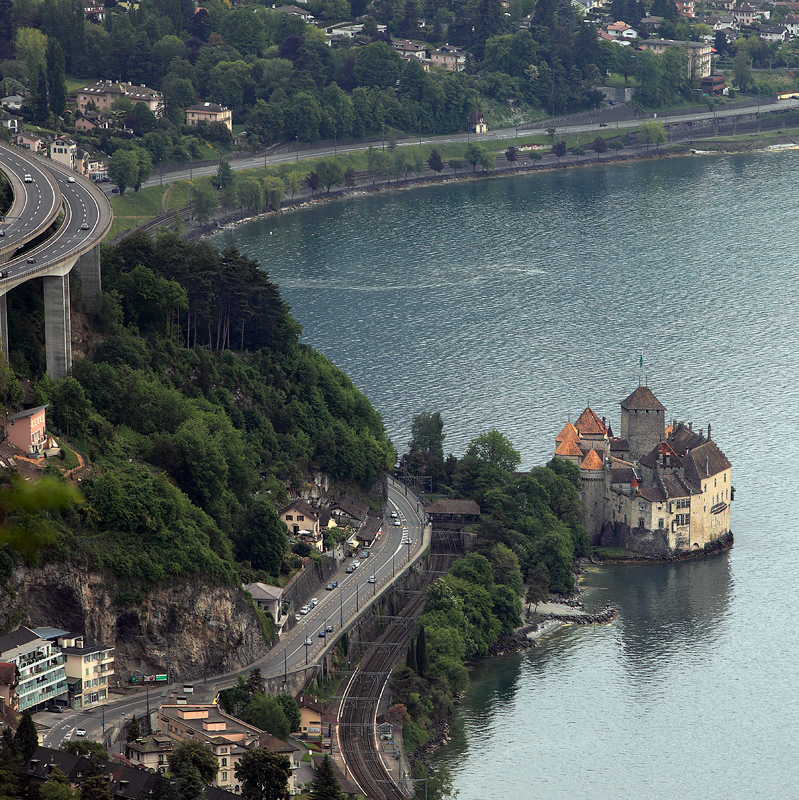
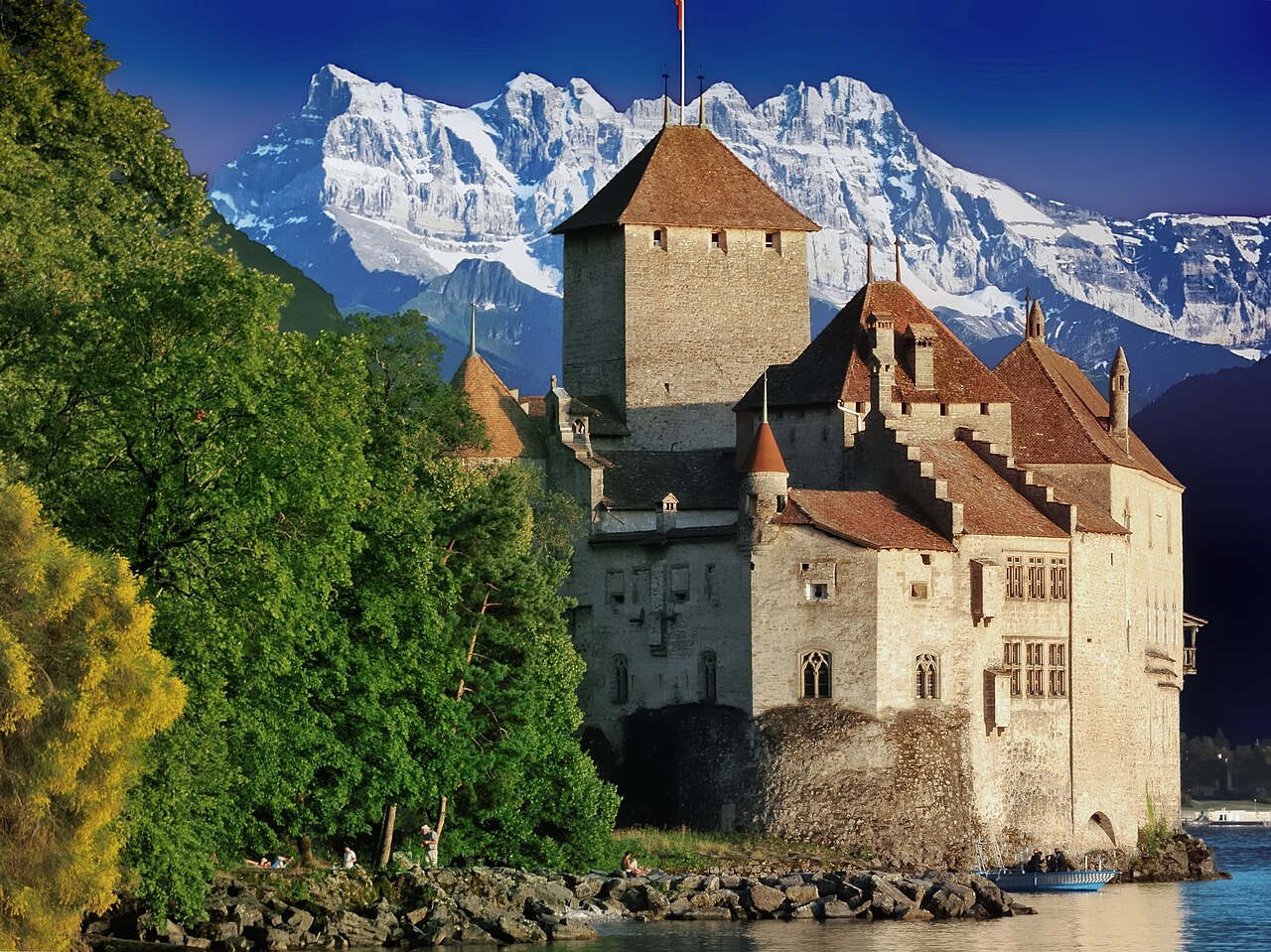
Porte du Scex Castle

Porte du scex castle in vouvry, switzerland
Vouvry, Valais, Switzerland
Renaissance (15th–17th c.)
Well Preserved

Porte du Scex Castle stands as a notable example of Renaissance military architecture in the region of Vouvry, Switzerland. Originally constructed to safeguard the territory of Vouvry and to serve as a toll collection point, the castle played a strategic role in controlling passage through the area. Its location was chosen for defensive advantages, overseeing key routes and enabling the monitoring of trade and travel during the late 16th century.

Historical context and ownership

During the Middle Ages, the castle was under the control of the House of Savoy, a powerful ruling family that held extensive territories in the region. Ownership later passed to the Tavelli de la Tour family, who were influential local nobility. The castle's history reflects the shifting political and territorial dynamics of the Chablais region, situated near the borderlands of modern Switzerland and France.

Architectural evolution and reconstruction

The original structure underwent significant rebuilding between 1591 and 1609, a period during which many fortifications were updated to respond to new military technologies and threats. This phase of construction reinforced the castle’s defensive capabilities, adapting it to the Renaissance style which emphasized both functionality and aesthetic elements.

Further renovations took place in 1678, reflecting ongoing strategic importance and maintenance needs. These successive rebuildings contributed to the castle’s current form, which includes robust stone walls, fortified gatehouses, and defensive battlements designed to withstand artillery advances of the period.

Museum and cultural significance

In 2008, Porte du Scex Castle was transformed into a museum, opening its doors to the public to showcase the region's rich heritage. The museum features an interactive 3D model of the Chablais region, offering visitors an immersive experience that highlights the geographical and historical context of the castle and its surroundings.

Additional exhibition spaces within the castle host temporary displays focused on the history and cultural heritage of Vouvry and the wider region. These exhibitions change approximately every two years, ensuring a dynamic cultural program that attracts both local visitors and tourists interested in Swiss history.

Architectural features and layout

The castle's layout includes typical elements of Renaissance fortifications, such as thick defensive walls, a gatehouse equipped with defensive mechanisms, and strategically placed towers for surveillance. The use of stone as the primary building material provides durability and resistance against attacks.

The interior spaces have been adapted to serve museum functions, but still retain architectural details from the original and reconstructed phases. Visitors can explore the courtyards, halls, and chambers that reflect the castle’s historical role as a military and administrative center.

Location and accessibility

Located in the municipality of Vouvry in the Swiss canton of Valais, Porte du Scex Castle is accessible to visitors interested in exploring Swiss Renaissance fortifications. The castle’s position near the Rhône valley offers scenic views and a connection to the broader historical landscape of the region.

The museum’s opening hours and ticket prices vary seasonally, with information available on-site or through local tourism offices. The castle is an important cultural asset for the community, contributing to the preservation and dissemination of regional history.

Frequently asked questions (FAQ)

What is the historical significance of Porte du Scex Castle?
Porte du Scex Castle, located in Vouvry, Switzerland, is a remarkable example of medieval architecture that dates back to the 13th century. It served as a strategic fortification during various conflicts and has witnessed significant historical events in the region. Today, it stands as a testament to the rich cultural heritage of Switzerland.
When was Porte du Scex Castle built?
Porte du Scex Castle was constructed in the early 13th century, around the year 1230. Its design reflects the military architectural style of the period, aimed at both defense and residence. Over the centuries, the castle has undergone several renovations, preserving its historical integrity.
How do I visit Porte du Scex Castle?
Visitors can access Porte du Scex Castle by traveling to Vouvry, which is conveniently located near major transport links. The castle is open to the public during the summer months, and guided tours are available for a more in-depth experience. It is advisable to check the official website for specific visiting hours and tour availability.
Is it possible to book a guided tour of Porte du Scex Castle?
Yes, guided tours of Porte du Scex Castle can be booked in advance, providing visitors with a comprehensive understanding of its history and architecture. These tours typically include access to various parts of the castle that are not open to the general public. Be sure to check the castle's website for booking details and tour schedules.
What are the opening hours for Porte du Scex Castle?
Porte du Scex Castle typically opens its doors to visitors from May to October, with specific hours varying by month. Generally, it operates from 10 AM to 5 PM on weekdays and may have extended hours during weekends. It’s recommended to verify current hours on the castle's official website before your visit.
Can I take photographs inside Porte du Scex Castle?
Yes, photography is allowed inside Porte du Scex Castle, but visitors are encouraged to be respectful of the space and other guests. Capturing the stunning architecture and beautiful surroundings is a great way to remember your visit. However, always check for any specific restrictions that may apply during your tour.
What is the best time to visit Porte du Scex Castle?
The best time to visit Porte du Scex Castle is during the summer months, particularly from June to August, when the weather is pleasant and the castle hosts various events. Spring and early fall can also be lovely, with fewer crowds and beautiful scenery. Regardless of when you visit, check the schedule for any special activities or tours.
Are there any nearby attractions to Porte du Scex Castle?
Yes, there are several nearby attractions, including the picturesque town of Vouvry and the stunning landscapes of the Valais region. Nature enthusiasts can explore nearby hiking trails and enjoy the scenic beauty of the Swiss Alps. Additionally, the region is known for its vineyards and local cuisine, making it a delightful area to explore.
What are the ticket prices for visiting Porte du Scex Castle?
Ticket prices for Porte du Scex Castle are generally affordable, with discounts available for children, students, and seniors. Entry fees help support the maintenance and preservation of the castle. For the most accurate and up-to-date pricing, please visit the castle's official website before your visit.

Information

Hill Castle

Loading map...

Visitor reviews

No reviews yet. Been here? Write the first review and help other travelers!

Write the first review

Visited this castle? Share your experience

Your review helps other travelers and adds first-hand knowledge to our encyclopedia.
Write a review

(5/5)

0/2000 characters

Your review will be visible after admin approval

Nearby castles

7.8 km
Aigle Castle — Switzerland castle

Aigle Castle

Aigle, Switzerland

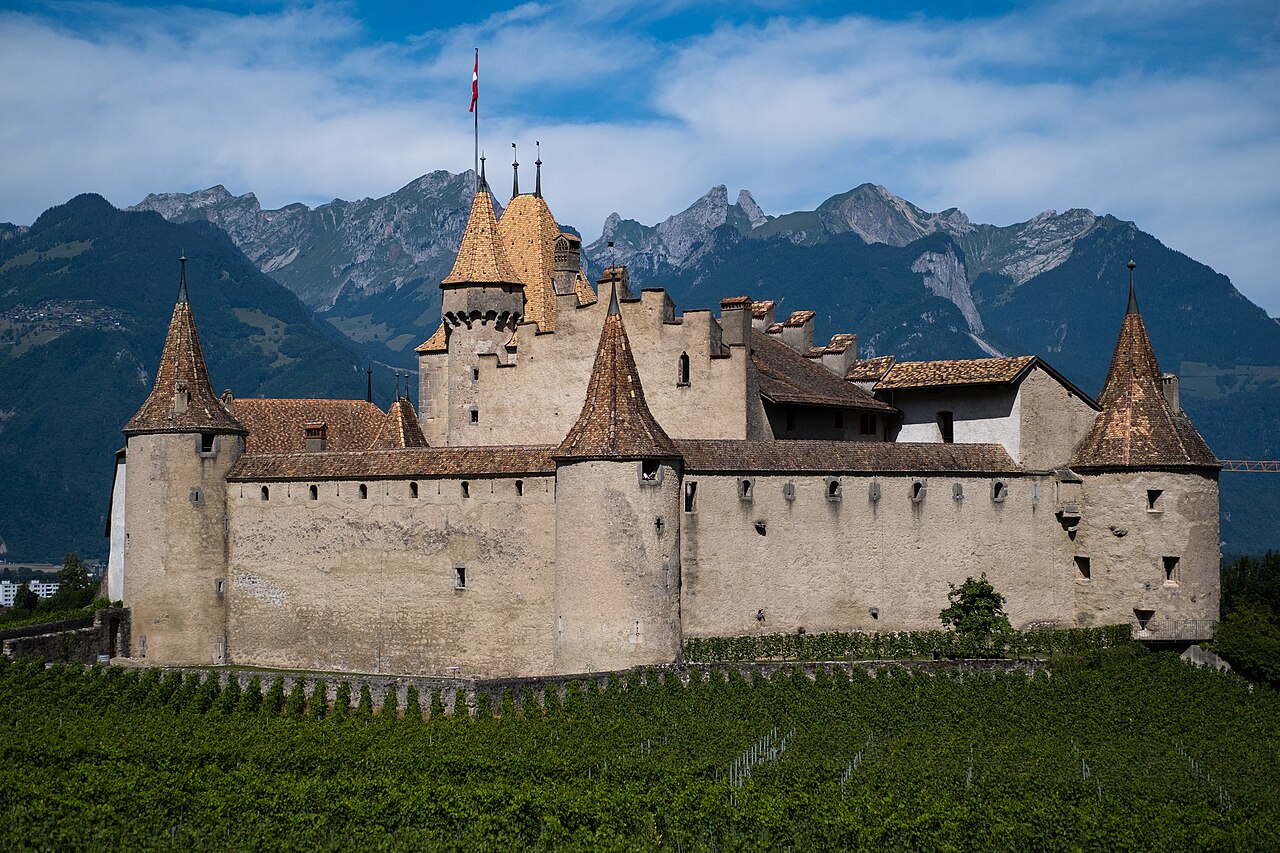
Aigle Castle stands prominently in the town of Aigle, nestled within the picturesque Vaud region of Switzerland. This hill castle dates back to the high medieval period, specifically the 13th century, and has evolved through centuries of strategic military and administrative use. Today, it is celebrated not only as an exceptional example of medieval fortification but also as a cultural hub dedicated to the region's rich viticultural heritage. The castle's origins trace to the late 12th century when the Barons of Aigle first established a small fortification to oversee vital mountain passes such as the Col du Pillon and Col des Mosses. These passes were crucial routes through the Rhone Valley, making the site strategically significant for controlling trade and military movements. The earliest structures included two large towers, one dating to the 12th century, which formed the core of the initial defensive complex. Medieval expansion and savoyard influence By the early 13th century, the powerful House of Savoy had acquired rights over Aigle, incorporating it into their expanding domain that bridged present-day Italy and Switzerland. Count Thomas of Savoy played a pivotal role in this transition, granting the castle as a fief in 1232 to the brothers Jacob and Peter of Saillon. This family was closely connected to the original barons and undertook significant rebuilding efforts, including the construction of a fortified donjon and imposing curtain walls. The late 13th century also saw the granting of a city charter to Aigle, reflecting its growing importance as a settlement and defensive stronghold. The castle's fortifications were enhanced to protect the burgeoning town and secure the trade routes linking the fairs of Turin and Lyon via the Mont Cenis Pass and later the Great St. Bernard Pass. This network underscored the castle's role in controlling alpine crossings and facilitating commerce between northern and southern Europe. Lords of compey and architectural developments In the 14th century, the Lords of Compey inherited the castle and transformed it into their principal residence. Their tenure marked a period of architectural refinement, including the addition of turrets and a massive square tower built around 1450 at the castle's southern corner. This tower exemplifies the late French donjon architectural style, characterized by its robust rectangular form designed to serve both defensive and residential purposes. The castle's military significance was tested during the Burgundian Wars (1474–1477). The conflict pitted the Swiss Confederation against Duke Charles the Bold of Burgundy, with the House of Savoy siding with Burgundy. In 1475, Bernese forces attacked and devastated Aigle Castle, ending Savoyard control and forcing the Compey family into exile. Following the war, Bern undertook a comprehensive reconstruction in 1488, reinforcing the castle as a provincial administrative center. Bernese administration and later uses Under Bernese rule, Aigle Castle became the seat of a provincial governor and the administrative heart of one of Bern's first French-speaking districts. The castle functioned as a government center until the upheavals of the French invasion in 1798, which led to the establishment of the Helvetic Republic and the end of Bernese dominance. In the 19th century, the castle adapted to various civic roles, including serving as a court and prison. The prison cells, known as casemates, bear inscriptions from former inmates, providing a poignant glimpse into this chapter of the castle's history. The castle also functioned as a hospital until 1832 and offered refuge to the poor during difficult times. Restoration and cultural significance Restoration efforts commenced in the 1970s to preserve the castle's structural integrity and historical features. Since 1975, the castle has housed the Musée de la Vigne et du Vin (Vine and Wine Museum), celebrating the region's long-standing tradition of viticulture. The museum's exhibits include large wooden wine presses, an oak-barrel-lined wine cellar, and displays of historical wine-making tools and bottles. Interactive exhibits educate visitors on the process of transforming grapes into wine. Adjacent to the castle gates stands the Maison de la Dîme, a historic tithe barn dating from 1587. This building now hosts the Musée de l’Étiquette (Wine-Labels Museum), which features nearly 800 wine labels from 52 countries spanning almost two centuries. Since 2009, it has also served as a venue for art exhibitions. Architectural features and layout The castle's layout reflects its layered history, evolving from a modest medieval fortification to a formidable fortified residence. The original square tower, akin to structures found on nearby Saint-Triphon hill, anchors the complex. Surrounding curtain walls and turrets were added in the 14th and 15th centuries, enhancing defense and residential comfort. The imposing 15th-century square tower in the southern corner stands as a testament to the castle's strategic and architectural evolution. Its design embodies the principles of late medieval military architecture, balancing the needs for defense, surveillance, and habitation. Surrounding the castle, the vineyards underscore the area's historic connection to wine production, a tradition that continues to this day. The castle's preservation as a museum and cultural site ensures that both its architectural grandeur and its role in regional history remain accessible to the public. Visiting aigle castle today Today, Aigle Castle is a well-preserved monument open to visitors interested in medieval architecture, Swiss history, and viticulture. The castle and its museums offer a unique combination of historical insight and cultural experience. Visitors can explore the castle's fortified walls, towers, and prison cells, as well as enjoy extensive exhibits on wine-making traditions. The castle's location amidst the vineyards provides a scenic backdrop that enhances the visitor experience. The adjacent museums, including the Wine-Labels Museum, add depth to the understanding of the region's wine heritage.

High Medieval (11th–13th c.)
Details
7.9 km
Fort de Chillon — Switzerland castle

Fort de Chillon

Montreux, Switzerland

The Fort de Chillon is a prominent 20th-century bastioned fortress situated on the shores of Lake Geneva in Switzerland, immediately adjacent to the famed medieval Château de Chillon. Constructed during the turbulent years of the early to mid-20th century, this fortification was a key element in Switzerland's defensive strategy, particularly as part of the Swiss National Redoubt, a comprehensive system designed to protect the country's mountainous interior from invasion. Strategically positioned to secure the vital road and rail lines that trace the lakeshore from Lausanne eastwards toward the mountainous heart of Switzerland, the Fort de Chillon served as an advanced work guarding the approaches to the Fortress Saint-Maurice. This location was crucial for controlling access to the interior valleys and passes that lead deeper into the Swiss Alps. Historical context and military significance Built in the 20th century, the Fort de Chillon was part of Switzerland's broader effort to modernize its defenses in response to the evolving nature of warfare, particularly with the rise of mechanized armies and aerial threats. The fort's construction reflects the military architectural trends of the era, emphasizing bastioned fortifications capable of withstanding artillery bombardment and providing overlapping fields of fire. During its operational period, the fort was integrated into the national defense network, specifically designed to delay or repel any hostile forces attempting to penetrate the critical transport corridors along Lake Geneva. Its role was defensive rather than offensive, focusing on control and protection of key infrastructure. Architectural features and design The Fort de Chillon exemplifies the characteristics of a bastioned fortress, featuring reinforced concrete walls and underground galleries that provided protection against heavy artillery and aerial attacks. The layout includes artillery casemates, observation posts, and defensive gun emplacements strategically placed to cover the approaches along the lakeshore and the adjacent transport routes. Its proximity to the medieval Château de Chillon creates a striking contrast between centuries of military architecture, with the fort representing modern defensive engineering while the château reflects medieval fortification techniques. The fort's design prioritizes concealment and integration with the natural terrain, minimizing its visibility from the lake and surrounding areas. Defensive structures and armaments The fort's armaments were typical of mid-20th-century defensive positions, including artillery pieces housed within protected casemates, machine gun nests, and anti-tank obstacles. The defensive perimeter was reinforced with bastions that allowed crossfire coverage, enhancing the fort's ability to defend against infantry and armored assaults. Deactivation and current status After decades of military use, the Fort de Chillon was deactivated in 1995 as advancements in military technology and changes in strategic defense reduced the necessity for such fixed fortifications. Since its decommissioning, the fort has passed into private ownership and has been converted into a museum, offering visitors insight into Switzerland's 20th-century military history and fortification architecture. The museum preserves much of the fort's original structure and armaments, providing educational tours that highlight the fort's role in national defense and its architectural features. Its location near the Château de Chillon allows visitors to explore two distinct periods of military architecture in one visit. Access and visitor information While the Fort de Chillon is privately owned, it is accessible to the public during specific visiting hours, which are typically arranged by appointment or during special open days. Visitors can explore the underground galleries, artillery positions, and learn about the fort's strategic importance through guided tours and exhibits. The site offers a unique perspective on Switzerland's military preparedness during the 20th century, complementing the historical narrative provided by the neighboring medieval castle. Its preservation as a museum ensures that this chapter of Swiss military architecture remains accessible for future generations.

Contemporary (20th–21st c.)
Details
8.6 km
Chillon Castle — Switzerland castle

Chillon Castle

Veytaux, Switzerland

Chillon Castle stands as one of the most iconic and best-preserved medieval castles in Europe, attracting thousands of visitors annually as Switzerland's most visited historic monument. Nestled on a small limestone island in Lake Geneva, the castle's strategic location between Montreux and Villeneuve in the Swiss Alps allowed it to control vital trade and military routes from northern to southern Europe for centuries. Unlike many European castles, Chillon has never been destroyed, maintaining its structural integrity and historical authenticity through careful preservation and restoration efforts. The origins of the site date back to the Bronze Age and Roman times, when it served as a Roman outpost guarding the critical Alpine passes. The earliest fortifications visible today were constructed in the 10th and 11th centuries, marking the beginning of its transformation into a formidable medieval fortress. The castle first appears in written records in 1150, when Count Humbert III of Savoy asserted control, establishing Chillon as the oldest Savoyard stronghold north of Lake Geneva. Architectural evolution and layout Chillon Castle occupies an oblong island approximately 110 meters long and 50 meters wide, rising about eight meters above the lake surface. The castle complex comprises around 25 buildings and 40 interior rooms arranged over several levels, enclosed by two concentric defensive walls. Its architectural design is uniquely adapted to the oval shape of the rocky island, blending harmoniously with the natural landscape. Defensive structures The castle's defenses include a large rectangular donjon (main tower) rising about 25 meters high, several semi-circular towers, and thick curtain walls featuring machicolations—openings for dropping projectiles on attackers—and narrow arrow slits. The 13th century saw the addition of a second defensive wall with three half-round towers on the landward side, enhancing protection against siege warfare. The moat surrounding the island was originally water-filled, serving as a natural barrier, and was restored to this state in the early 20th century after being filled in during the 18th century. Residential and ceremonial spaces The castle's interior includes a series of significant rooms such as the great hall (aula nova), the Camera domini or ducal chamber, and a chapel adorned with 14th-century frescoes by Jean de Grandson depicting religious and heraldic themes. The residential quarters were expanded under the rule of Counts Thomas I, Peter II, and Amadeus VI of Savoy during the 12th to 14th centuries, reflecting the castle's dual role as both a military fortress and a noble residence. Historical significance and ownership For nearly four centuries, from the 12th to the early 16th century, Chillon Castle was the domain of the powerful House of Savoy. The castle functioned as a residence, administrative center, and toll station, controlling passage through the Alpine valleys and the lake. The Counts of Savoy invested in fortifying and embellishing the castle, making it a symbol of their regional power. In 1536, the castle was seized by Bernese forces from the House of Savoy during their expansion into the Pays de Vaud region. Under Bernese rule, Chillon became the seat of the bailiff of Vevey and underwent modifications to accommodate firearms, including the addition of gunports and defensive adaptations. The Bernese also added stables, an external clock tower with a 16th-century mechanism, and renovated the residential areas. By 1733, the bailiff relocated to Vevey, and the castle's military importance declined, transitioning into a prison and military depot. The castle was nationalized during the Vaudois Revolution in 1798 and has belonged to the Canton of Vaud since its foundation in 1803. Throughout the 19th century, it served variously as a military arsenal, prison, and storage facility. Cultural impact and literary inspiration Chillon Castle has inspired numerous writers, poets, and artists over the centuries. The British poet Lord Byron immortalized the castle in his poem The Prisoner of Chillon, recounting the imprisonment of the Catholic monk François Bonivard in the castle's dungeon during the early 16th century. This evocative underground prison, with its vaulted chambers and mysterious atmosphere, remains one of the castle's most captivating features, drawing visitors fascinated by its legends and history. Other notable figures inspired by Chillon include Jean-Jacques Rousseau, Henry James, and painters such as William Turner, Eugène Delacroix, and Gustave Courbet. The castle's picturesque setting on Lake Geneva and its well-preserved medieval architecture have made it a muse for Romantic and modern artists alike. Restoration and modern preservation Restoration efforts began earnestly in the late 19th century with the founding of the Association for the Restoration of Chillon. Between 1896 and 1898, architect and archaeologist Albert Naef led extensive excavations and scientific restorations, aiming to preserve the castle's medieval fabric while distinguishing new additions. These efforts have ensured that Chillon Castle remains a well-preserved monument and a testament to medieval architecture. Access to the castle is provided by a historic iron bridge built in 1861 over the railway line, one of Switzerland's oldest of its kind, with a roof added in 1937. The surrounding area includes a Savoyard park listed among Switzerland's historic gardens and a lakeside promenade connecting Montreux and Villeneuve. Modern visitor facilities, added in 2020, support the castle's preservation and enhance the visitor experience. Today, visitors to Chillon Castle can explore four great halls, three courtyards, numerous bedrooms, and the evocative underground dungeon. The castle's blend of military architecture, noble residences, and artistic heritage make it a unique cultural landmark and a vivid window into medieval European history.

High Medieval (11th–13th c.)
Details