Fort de Chillon
The Fort de Chillon is a prominent 20th-century bastioned fortress situated on the shores of Lake Geneva in Switzerland, immediately adjacent to the famed medieval Château de Chillon. Constructed during the turbulent years of the early to mid-20th century, this fortification was a key element in Switzerland's defensive strategy, particularly as part of the Swiss National Redoubt, a comprehensive system designed to protect the country's mountainous interior from invasion.
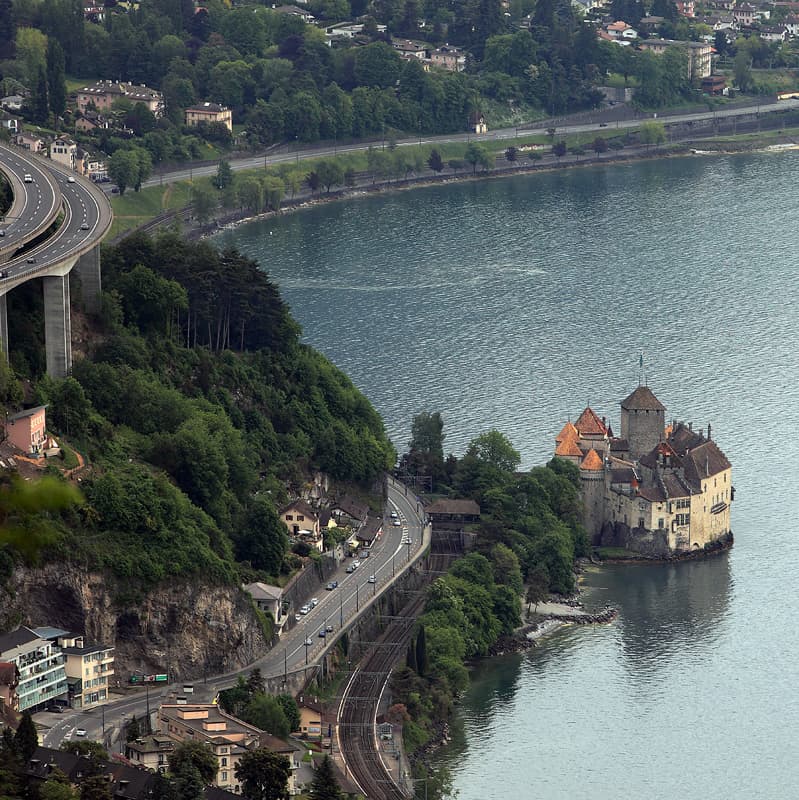
Strategically positioned to secure the vital road and rail lines that trace the lakeshore from Lausanne eastwards toward the mountainous heart of Switzerland, the Fort de Chillon served as an advanced work guarding the approaches to the Fortress Saint-Maurice. This location was crucial for controlling access to the interior valleys and passes that lead deeper into the Swiss Alps.
Historical context and military significance
Built in the 20th century, the Fort de Chillon was part of Switzerland's broader effort to modernize its defenses in response to the evolving nature of warfare, particularly with the rise of mechanized armies and aerial threats. The fort's construction reflects the military architectural trends of the era, emphasizing bastioned fortifications capable of withstanding artillery bombardment and providing overlapping fields of fire.
During its operational period, the fort was integrated into the national defense network, specifically designed to delay or repel any hostile forces attempting to penetrate the critical transport corridors along Lake Geneva. Its role was defensive rather than offensive, focusing on control and protection of key infrastructure.
Architectural features and design
The Fort de Chillon exemplifies the characteristics of a bastioned fortress, featuring reinforced concrete walls and underground galleries that provided protection against heavy artillery and aerial attacks. The layout includes artillery casemates, observation posts, and defensive gun emplacements strategically placed to cover the approaches along the lakeshore and the adjacent transport routes.
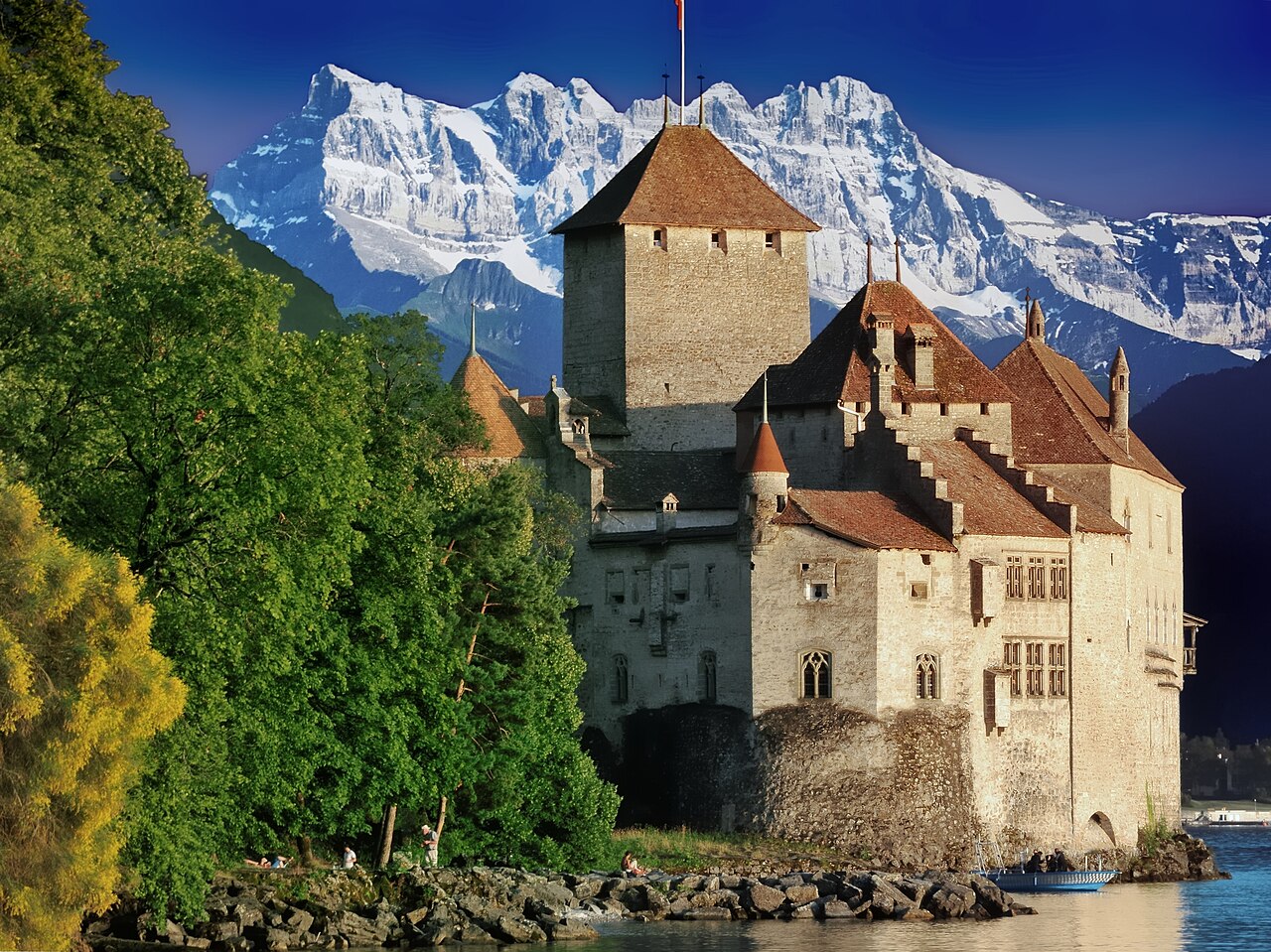
Its proximity to the medieval Château de Chillon creates a striking contrast between centuries of military architecture, with the fort representing modern defensive engineering while the château reflects medieval fortification techniques. The fort's design prioritizes concealment and integration with the natural terrain, minimizing its visibility from the lake and surrounding areas.
Defensive structures and armaments
The fort's armaments were typical of mid-20th-century defensive positions, including artillery pieces housed within protected casemates, machine gun nests, and anti-tank obstacles. The defensive perimeter was reinforced with bastions that allowed crossfire coverage, enhancing the fort's ability to defend against infantry and armored assaults.
Deactivation and current status
After decades of military use, the Fort de Chillon was deactivated in 1995 as advancements in military technology and changes in strategic defense reduced the necessity for such fixed fortifications. Since its decommissioning, the fort has passed into private ownership and has been converted into a museum, offering visitors insight into Switzerland's 20th-century military history and fortification architecture.
The museum preserves much of the fort's original structure and armaments, providing educational tours that highlight the fort's role in national defense and its architectural features. Its location near the Château de Chillon allows visitors to explore two distinct periods of military architecture in one visit.
Access and visitor information
While the Fort de Chillon is privately owned, it is accessible to the public during specific visiting hours, which are typically arranged by appointment or during special open days. Visitors can explore the underground galleries, artillery positions, and learn about the fort's strategic importance through guided tours and exhibits.
The site offers a unique perspective on Switzerland's military preparedness during the 20th century, complementing the historical narrative provided by the neighboring medieval castle. Its preservation as a museum ensures that this chapter of Swiss military architecture remains accessible for future generations.
Frequently asked questions (FAQ)
- What is the historical significance of Fort de Chillon?
- Fort de Chillon played a crucial role in Switzerland's 20th-century defense strategy as part of the Swiss National Redoubt, protecting vital transport routes along Lake Geneva.
- Can I visit Fort de Chillon?
- Yes, Fort de Chillon is open to the public as a museum, typically by appointment or during special open days, offering tours of its defensive structures and exhibits.
- How does Fort de Chillon compare to Château de Chillon?
- Fort de Chillon represents modern 20th-century military architecture with reinforced concrete bastions, contrasting with the medieval stone construction of Château de Chillon.
- When was Fort de Chillon deactivated?
- The fort was deactivated in 1995 following changes in military strategy and technology that made such fixed fortifications less necessary.
- Where is Fort de Chillon located?
- Fort de Chillon is located near Montreux in the Vaud region of Switzerland, on the edge of Lake Geneva adjacent to Château de Chillon.
Photo gallery

Information
Current owner
Private owner
Loading map...
Visitor reviews
No reviews yet. Been here? Write the first review and help other travelers!
Write the first reviewVisited this castle? Share your experience
Your review helps other travelers and adds first-hand knowledge to our encyclopedia.