Portas do Cerco
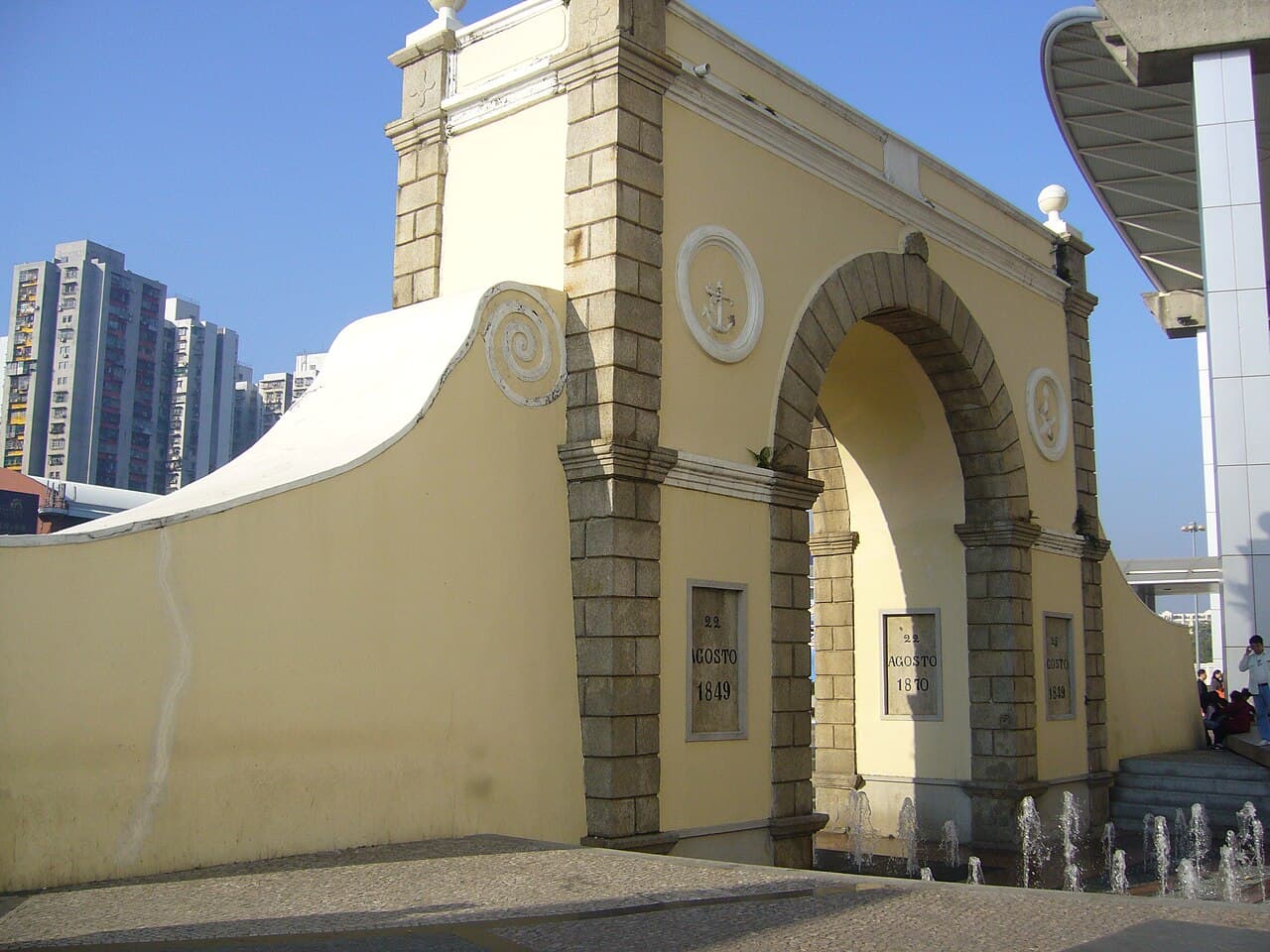
Portas do Cerco, also known as the Barrier Gate, is a significant historical and architectural landmark located at the northern tip of the Macau Peninsula in Macau, China. This 19th-century bastioned fortress was constructed by the Portuguese in 1849 to replace an earlier defensive wall originally built by the Chinese during the Ming dynasty in 1573. The site marks the traditional boundary between Macau and mainland China, specifically the city of Zhuhai.
Historical background and strategic significance
The original structure at the site was a garrisoned wall erected by the Chinese authorities to regulate and control the movement of people and goods between Macau and the Chinese mainland. This wall served both defensive and administrative purposes during the Ming dynasty. However, by the mid-19th century, the wall had deteriorated, prompting the Portuguese colonial administration to replace it with a more durable and symbolic gate.
The construction of the Portas do Cerco in 1849 coincided with a period of heightened tensions between the Qing dynasty and the Kingdom of Portugal. This culminated in the Passaleão incident, a conflict sparked by the assassination of Macau's governor, Ferreira do Amaral. The Portuguese forces, led by Colonel Mesquita, successfully defended Macau, resulting in an extension of its northern border. The new gate was erected at the limit of this expanded territory.
Architectural features and design
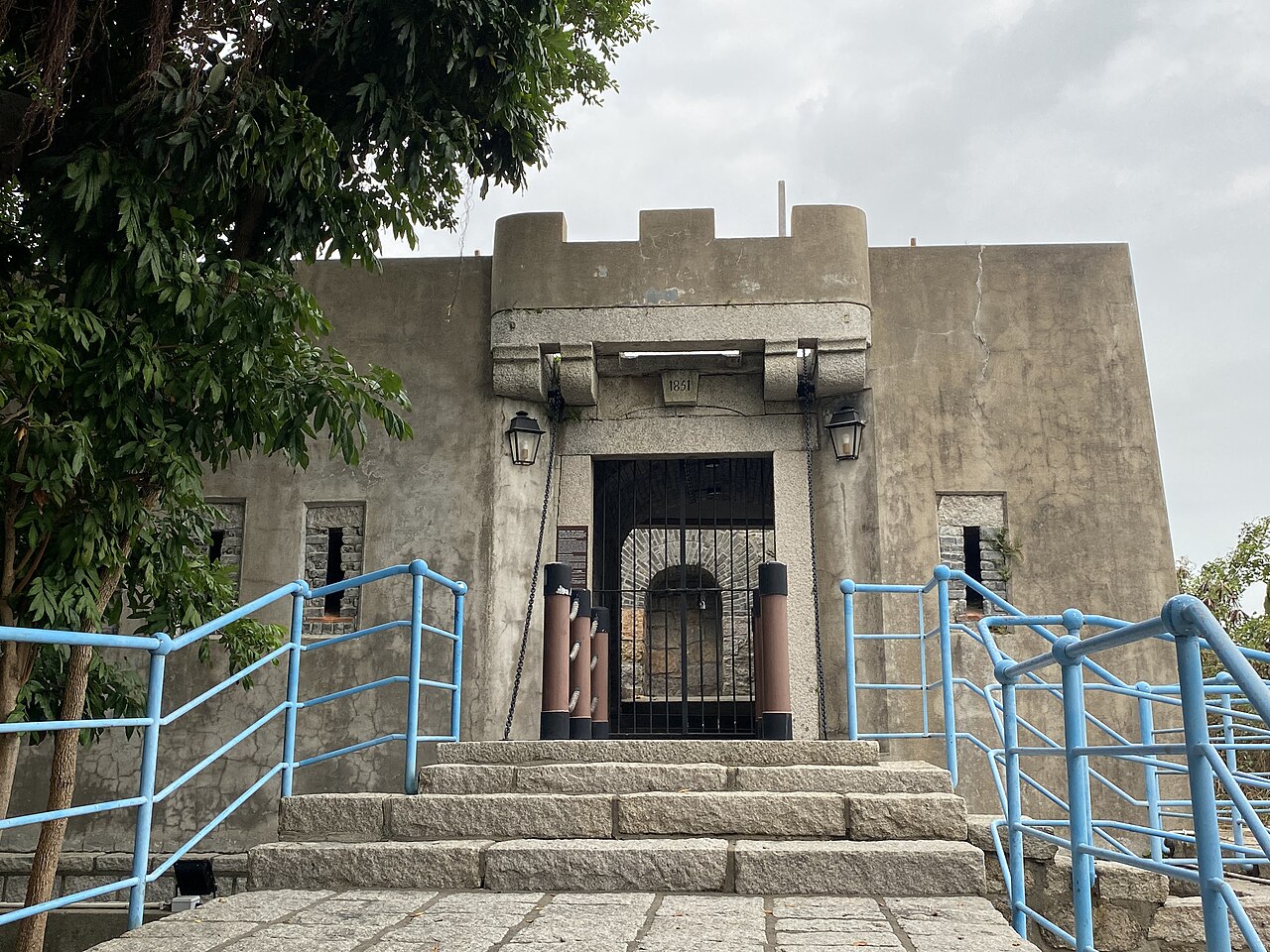
The Portas do Cerco is classified as a bastioned fortress gate, reflecting its military and defensive functions. The structure is characterized by a robust stone archway with battlemented walls designed to withstand potential assaults. The gate bears a prominent inscription on its inner arch: "A pátria honrai, que a pátria vos contempla", which translates to "Honor your fatherland, for your fatherland looks over you." This inscription underscores the patriotic and protective role the gate symbolized for the Portuguese administration and its inhabitants.
The gate's design integrates elements typical of 19th-century military architecture, including thick walls and defensive bastions that would have allowed for surveillance and protection against incursions. Although no longer functioning as a military fortification, the gate remains a potent symbol of Macau's colonial past and its complex relationship with mainland China.
The gate's role in Macau's border and modern developments
While the Portas do Cerco served as a de facto border marker for many years, the exact boundaries of Macau were never formally demarcated, leading to some ambiguity in territorial limits. Today, Macau is a special administrative region of China, and the historical gate stands as a cultural and historical monument rather than a functional border checkpoint.
Behind the old gate lies the Posto Fronteiriço das Portas do Cerco, a modern border crossing facility opened on 15 January 2004. This border post manages the flow of people and goods between Macau and Zhuhai, reflecting the contemporary political and economic integration between the two regions while preserving the historical significance of the original gate.
Legacy and cultural importance
The Portas do Cerco remains a key landmark in Macau, symbolizing the city's colonial history and its strategic importance as a gateway between China and the West. The gate is frequently visited by tourists and locals alike, offering insight into the region's complex past and the enduring legacy of Portuguese influence in Macau.
Its preservation as a well-preserved bastioned fortress gate allows visitors to appreciate the military architectural style of the period and understand the geopolitical dynamics that shaped Macau's development. The site also serves as a reminder of the historical conflicts and negotiations that defined the region's borders and sovereignty.
Frequently asked questions (FAQ)
- What is the historical significance of Portas do Cerco?
- Portas do Cerco marks the historic boundary between Macau and mainland China, built in 1849 after replacing a Ming dynasty wall. It symbolizes Portuguese colonial presence and the contested border with Qing China.
- Can I visit Portas do Cerco today?
- Yes, Portas do Cerco is a well-preserved historical site open to the public. Visitors can explore the gate and learn about its role in Macau's history, though it no longer functions as a border checkpoint.
- When was the modern border post near Portas do Cerco established?
- The modern Posto Fronteiriço das Portas do Cerco border crossing was opened on 15 January 2004 to manage travel between Macau and Zhuhai.
- What architectural style characterizes Portas do Cerco?
- Portas do Cerco is designed as a bastioned fortress gate, featuring thick stone walls and defensive battlements typical of 19th-century military architecture.
- Why was Portas do Cerco built in 1849?
- It was built to replace a crumbling Ming dynasty wall and to mark the expanded northern border of Macau following the Portuguese victory in the Passaleão incident against Qing forces.
Photo gallery

Information
Loading map...
Visitor reviews
No reviews yet. Been here? Write the first review and help other travelers!
Write the first reviewVisited this castle? Share your experience
Your review helps other travelers and adds first-hand knowledge to our encyclopedia.