Fort Dona Maria II — China castle

Fort Dona Maria II

Fort Dona Maria II in Macau, China
Macau, China
Modern (19th–20th c.)
Well Preserved

Fort Dona Maria II, also known as Fortaleza de Dona Maria II, is a prominent 19th-century bastioned fortress situated in Macau, China. This modern period fortification exemplifies the military architectural advances of its era, designed to protect the strategic port city of Macau, which was a significant trading hub under Portuguese administration.

Historical context and strategic importance

Constructed during the 19th century, Fort Dona Maria II was part of a broader effort by the Portuguese colonial government to strengthen Macau's coastal defenses against potential naval threats. Macau's position on the South China Sea made it a vital point for maritime trade and military control in the region. The fort's establishment reflects the geopolitical tensions and the need for enhanced fortifications during a period marked by increasing European imperial competition in Asia.

Architectural features and design

The fort is classified as a bastioned fortress, a style characterized by angular bastions projecting outward from the main walls, allowing defenders to cover adjacent walls with overlapping fields of fire. This design was a response to the evolution of artillery and siege warfare, providing improved defensive capabilities compared to earlier medieval castles.

Fort Dona Maria II features thick masonry walls constructed from local materials, designed to withstand cannon fire. The bastions are positioned to maximize coverage of the surrounding waters and land approaches. Inside, the fort includes gun emplacements, ammunition storage rooms, and soldiers' quarters, reflecting its primary function as a military installation rather than a residential palace.

Defensive layout

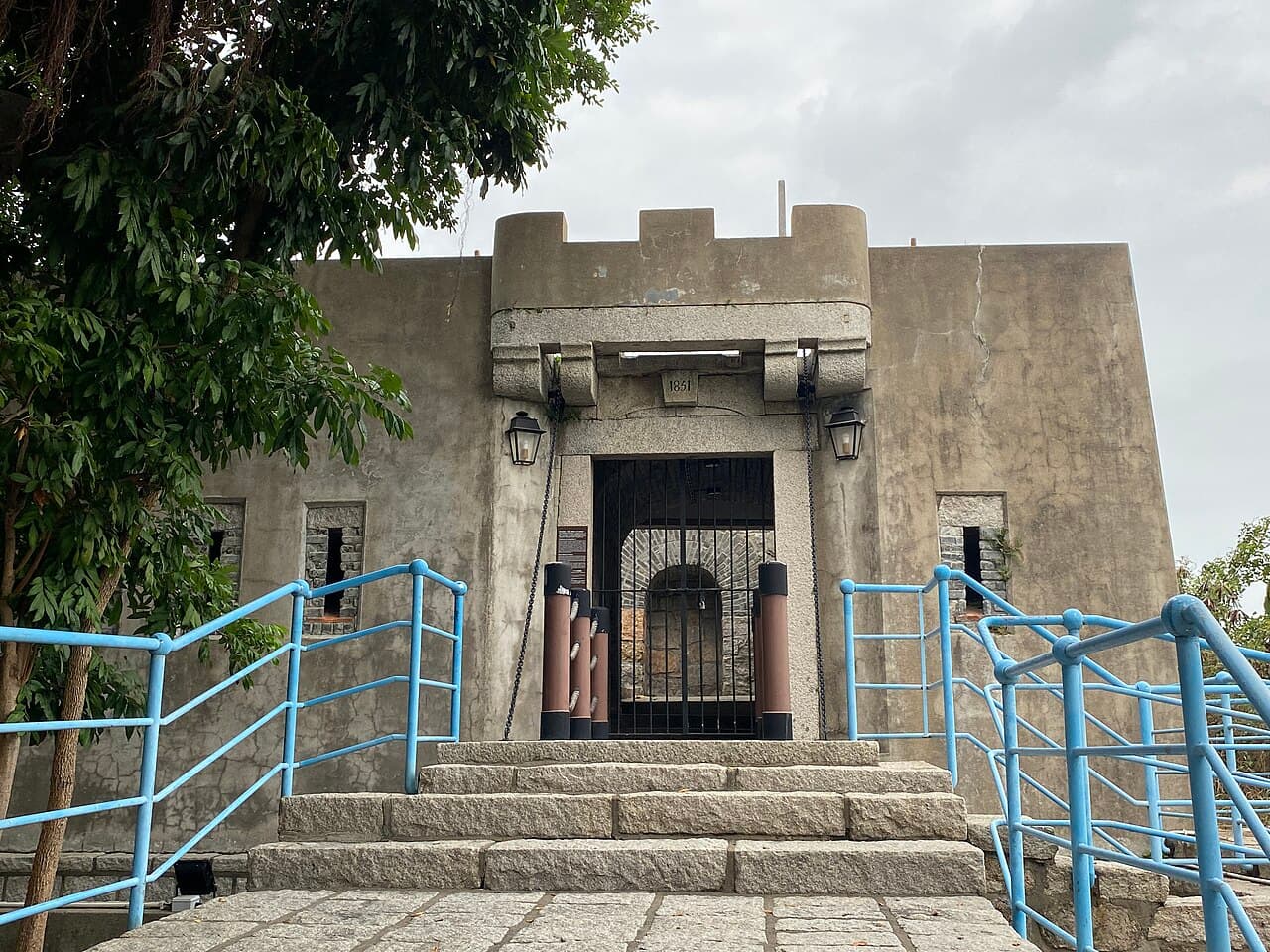
The layout incorporates a curved curtain wall connecting the bastions, with a moat or ditch likely surrounding the perimeter to hinder attackers. The entrance is fortified with a gatehouse, possibly featuring a drawbridge or heavy doors, typical of bastioned forts of this period.

Role during colonial Macau

Throughout its operational history, Fort Dona Maria II served as a key defensive structure protecting Macau from naval incursions and piracy. Its presence helped secure Portuguese interests in the region during a time when European powers were vying for influence in Asia. The fort was part of a network of fortifications that included other nearby forts and batteries, collectively ensuring the security of Macau's harbor.

Current condition and cultural significance

Today, Fort Dona Maria II remains a well-preserved example of 19th-century military architecture in Macau. While no longer active as a military installation, it stands as a cultural landmark reflecting Macau's colonial past and its strategic maritime heritage. The fort attracts visitors interested in military history and colonial architecture, offering insights into the defensive strategies of the period.

Preservation efforts

Efforts have been made to maintain the structural integrity of the fort, ensuring that its bastions, walls, and internal chambers remain intact for educational and touristic purposes. The site is accessible to the public, with interpretive materials available to explain its historical and architectural significance.

Frequently asked questions (FAQ)

What is Fort Dona Maria II?
Fort Dona Maria II is a 19th-century bastioned fortress located in Macau, China, built to defend the city during Portuguese colonial rule.
When was Fort Dona Maria II built?
The fort was constructed in the 19th century as part of Macau's coastal defense system.
What architectural style is Fort Dona Maria II built in?
It is designed as a bastioned fortress, featuring angular bastions and thick masonry walls typical of modern military architecture of the 19th century.
Is Fort Dona Maria II open to visitors?
Yes, the fort is accessible to the public and serves as a historical site showcasing Macau's colonial military heritage.
Where is Fort Dona Maria II located?
The fort is located in Macau, China, overlooking the South China Sea and the harbor area.

Photo gallery

Fort Dona Maria II
Click to view

Photo by LN9267•CC BY-SA 4.0

1 photo • Click any image to view in full screen

Information

Bastioned Fortress

Loading map...

Visitor reviews

No reviews yet. Been here? Write the first review and help other travelers!

Write the first review

Visited this castle? Share your experience

Your review helps other travelers and adds first-hand knowledge to our encyclopedia.
Write a review

(5/5)

0/2000 characters

Your review will be visible after admin approval

Nearby castles

0.9 km
Fortaleza de Mong Há — China castle

Fortaleza de Mong Há

Macau, China

Fortaleza de Mong Há, also known as Mong-Há Fort, stands prominently on Mong-Há Hill in the Nossa Senhora de Fátima parish of Macau, China. This 19th-century bastioned fortress was constructed as a strategic military installation to defend Macau's northern approaches, particularly against threats following the First Opium War (1839–1842). It forms part of a larger military complex known as the Bairro Militar de Mong-Há, which included the Quartel de Mong-Há barracks and other military facilities. Historical context and construction The fort's construction began in 1849 under the direction of Governor Ferreira do Amaral, a pivotal figure in Macau's colonial administration. The project was completed around 1864–1866, reflecting the military architectural trends of the mid-19th century. The primary purpose of the fort was to protect Macau from potential invasions, especially from Chinese forces, as tensions lingered after the Opium War. The fort's location on Mong-Há Hill provided a commanding view over the northern sector of Macau, enabling effective surveillance and defense. Architectural features and layout Fortaleza de Mong Há is classified as a bastioned fortress, a style characterized by angular bastions projecting from the main walls, designed to provide overlapping fields of fire and eliminate blind spots. The fort covers an area of approximately 650 square meters and is constructed primarily of brick walls, typical of military architecture of the period. It housed ten artillery pieces with a firing range sufficient to reach the Portas do Cerco, the historic border gate between Macau and mainland China. The fort complex included essential military structures such as a lookout post for early warning, a munitions dump for storing ammunition safely, and barracks for troops. Notably, the barracks accommodated Portuguese soldiers of African origin, known as Landins, reflecting the diverse composition of the colonial military forces. The bairro militar de mong-há and later developments The Bairro Militar de Mong-Há encompassed the fort and the adjacent Quartel de Mong-Há, which was constructed in the 1920s. The barracks covered an area of about 2244 square meters and showcased architectural influences from 1920s Southern European and Modernist styles. This combination of styles was typical of military buildings of the early 20th century, emphasizing functionality with restrained decorative elements. Following the Sino-Portuguese rapprochement in the mid-20th century, the Portuguese military presence in Macau was gradually reduced. By the 1960s, the fort and the military district were deactivated. Subsequently, the fort was transferred to the Instituto de Formação Turística de Macau during the 1980s, marking a shift from military use to educational and heritage purposes. In June 1997, the area around the fort was converted into the Jardim Municipal de Mong-Há, a public municipal garden, enhancing the site's accessibility and recreational value for residents and visitors. Modern changes and preservation status Despite its historical significance, parts of the military complex have been lost. The Quartel de Mong-Há and the nearby Escola Keang Peng were demolished by the Macau government in late 2008 to make way for public housing projects, reflecting urban development priorities and public security concerns. Today, the fort remains a well-preserved example of bastioned fortress architecture from the 19th century. Its brick walls and artillery placements offer insight into the defensive strategies employed by colonial powers in Macau during a period of regional tension and transition. Strategic importance and military role The fort's artillery was positioned to cover key approaches to Macau, particularly targeting the Portas do Cerco, the primary land gateway from mainland China. This strategic placement underscores the fort's role in controlling access and defending against incursions. The presence of a dedicated military district with barracks and associated facilities supported sustained garrisoning of troops, ensuring readiness and rapid response capabilities. The integration of lookout posts and munitions storage within the fort complex further highlights its comprehensive defensive design. Cultural and heritage significance Fortaleza de Mong Há is an important cultural landmark in Macau, representing the city's colonial military history and architectural heritage. It illustrates the adaptation of European military engineering principles to the local topography and geopolitical context of 19th-century East Asia. Its transformation from a military installation to a public garden and educational site reflects broader trends in heritage conservation and urban development in Macau. The fort remains a point of interest for historians, architects, and tourists seeking to understand the region's complex colonial past and its defensive structures.

Modern (19th–20th c.)
Details
1 km
Guia Fortress — China castle

Guia Fortress

Macau, China

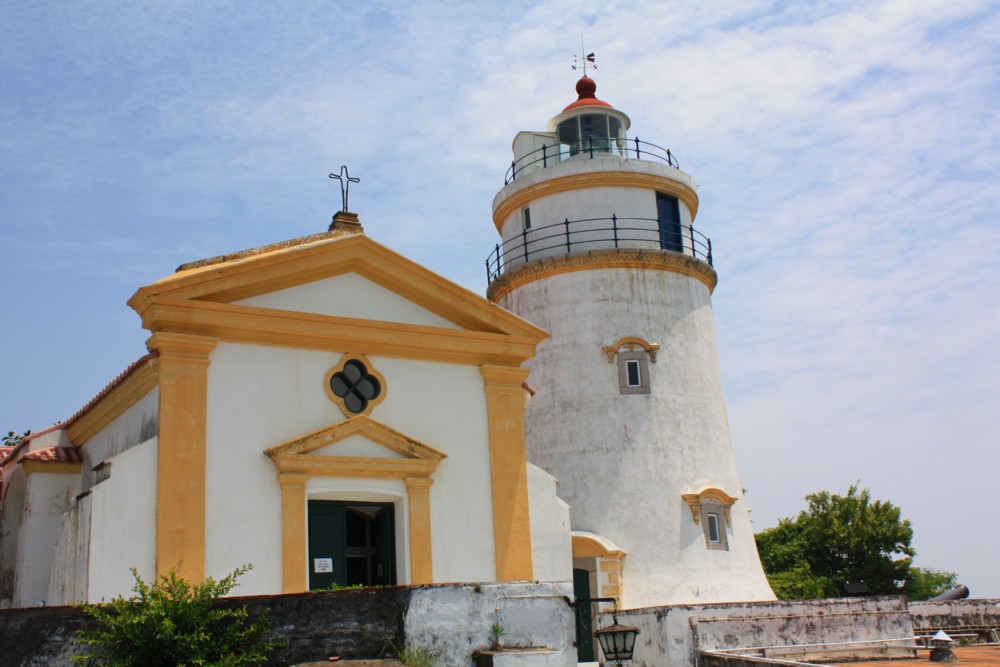
The Guia Fortress (Fortaleza da Guia in Portuguese; 東望洋炮台 in Chinese) is a prominent 17th-century bastioned fortress located in the São Lázaro district of Macau, China. This historic complex includes a military fort, a chapel, and a lighthouse, forming a unique architectural ensemble that reflects the colonial military and religious history of the region. It is an integral part of the UNESCO World Heritage Site Historic Centre of Macau, recognized for its cultural and historical significance. Historical background and strategic importance Constructed in the early 1600s, the Guia Fortress was built by the Portuguese colonial administration to protect Macau from potential naval attacks and pirate incursions. The fortress's location atop Guia Hill provided a commanding vantage point over the South China Sea and the city below, making it a critical defensive structure. Its design incorporates bastioned fortification principles, which were advanced military architectural techniques of the time, aimed at withstanding artillery bombardments and improving defensive capabilities. Architectural features and layout The fortress complex is notable for its combination of military, religious, and navigational structures. The bastioned walls are thick and robust, designed to resist cannon fire, and include angled bastions that allow defenders to cover all approaches with overlapping fields of fire. Within the fortress stands the Guia Chapel, a small but historically significant religious building that served the spiritual needs of the garrison. The chapel is decorated with traditional Portuguese azulejos (ceramic tiles) and features a simple yet elegant design. Adjacent to the chapel is the Guia Lighthouse, the first modern lighthouse on the Chinese coast. Built in the 1860s, the lighthouse is a cylindrical tower rising above the fortress walls, equipped with a powerful light that guided ships safely into Macau's harbor. This lighthouse remains operational and is a symbol of Macau's maritime heritage. Defensive structures The fortress's bastions and walls are arranged to maximize defensive coverage, with thick stone construction and embrasures for cannons. The design reflects European military engineering adapted to the local terrain and strategic needs. The fortress also includes a moat and a gatehouse, enhancing its defensive capabilities. Religious and navigational elements The Guia Chapel within the fortress is dedicated to Our Lady of Guia, reflecting the religious traditions brought by the Portuguese colonists. Its interior contains religious artworks and azulejo panels depicting biblical scenes. The lighthouse, constructed later, represents the technological advancement and importance of maritime navigation in Macau's development as a trading port. Conservation status and modern challenges The Guia Fortress is currently well preserved and maintained as a cultural heritage site under Macau's jurisdiction. However, since 2010, the view of the fortress and its lighthouse has been partially obscured by the construction of the Macau Liaison Office building. This development has sparked criticism from local citizens and heritage scholars who argue that urban planning decisions have compromised the visual integrity and conservation of this historic landmark. Despite these challenges, the fortress remains an important tourist attraction and a symbol of Macau's colonial past and cultural fusion. Efforts continue to balance urban development with heritage preservation in the rapidly changing cityscape. Visiting guia fortress Visitors to the Guia Fortress can explore its bastioned walls, the chapel, and the lighthouse. The site offers panoramic views of Macau and the surrounding sea, although some sightlines have been affected by modern buildings. The fortress is accessible by foot and is part of guided tours that highlight its military, religious, and maritime history. Opening hours and ticket prices vary, but the site is generally open to the public, providing educational materials and exhibits about its historical significance. The fortress is a key destination for those interested in colonial architecture, military history, and maritime navigation.

Modern (19th–20th c.)
Details
1.5 km
Portas do Cerco — China castle

Portas do Cerco

, China

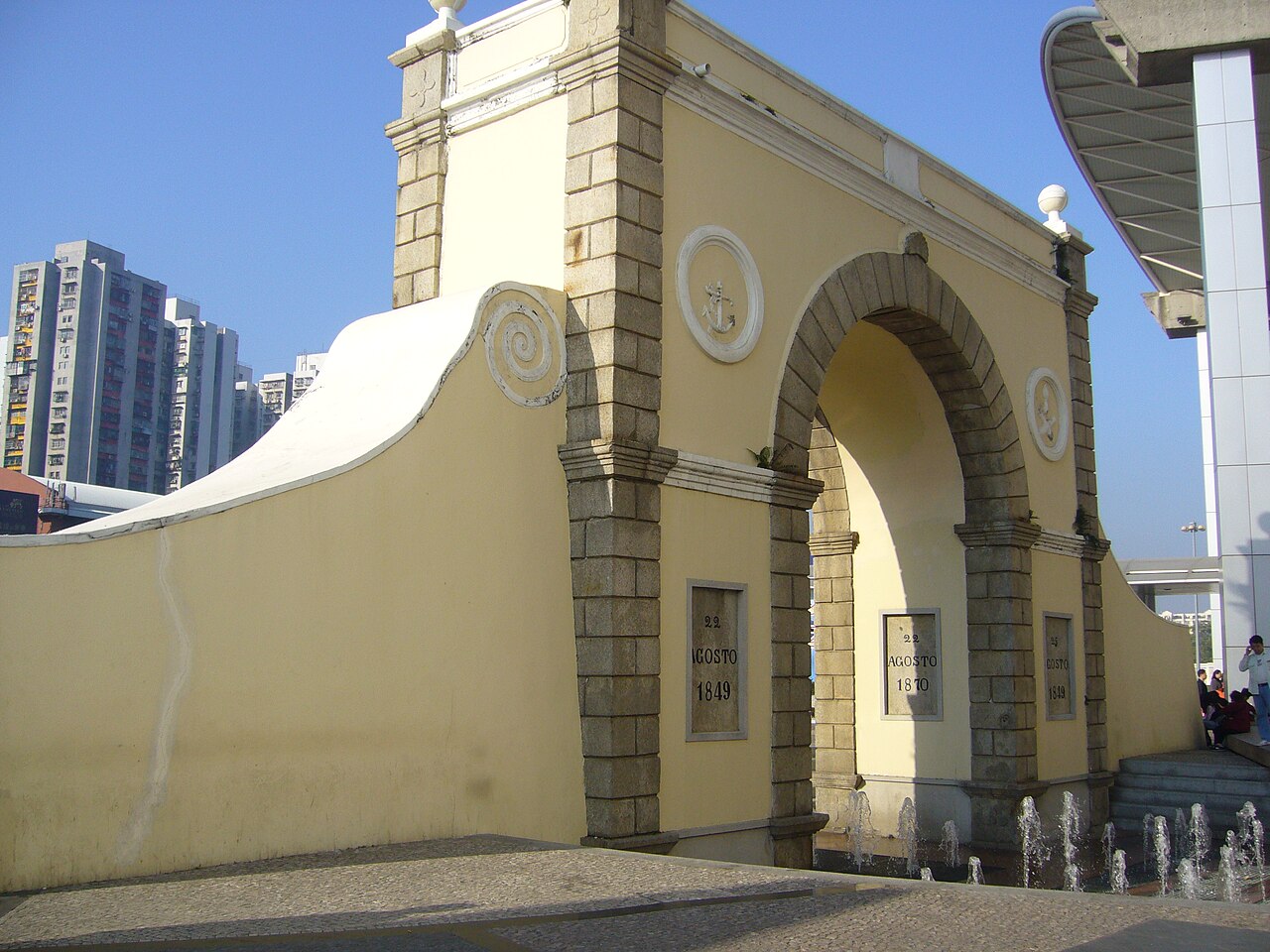
Portas do Cerco, also known as the Barrier Gate, is a significant historical and architectural landmark located at the northern tip of the Macau Peninsula in Macau, China. This 19th-century bastioned fortress was constructed by the Portuguese in 1849 to replace an earlier defensive wall originally built by the Chinese during the Ming dynasty in 1573. The site marks the traditional boundary between Macau and mainland China, specifically the city of Zhuhai. Historical background and strategic significance The original structure at the site was a garrisoned wall erected by the Chinese authorities to regulate and control the movement of people and goods between Macau and the Chinese mainland. This wall served both defensive and administrative purposes during the Ming dynasty. However, by the mid-19th century, the wall had deteriorated, prompting the Portuguese colonial administration to replace it with a more durable and symbolic gate. The construction of the Portas do Cerco in 1849 coincided with a period of heightened tensions between the Qing dynasty and the Kingdom of Portugal. This culminated in the Passaleão incident, a conflict sparked by the assassination of Macau's governor, Ferreira do Amaral. The Portuguese forces, led by Colonel Mesquita, successfully defended Macau, resulting in an extension of its northern border. The new gate was erected at the limit of this expanded territory. Architectural features and design The Portas do Cerco is classified as a bastioned fortress gate, reflecting its military and defensive functions. The structure is characterized by a robust stone archway with battlemented walls designed to withstand potential assaults. The gate bears a prominent inscription on its inner arch: "A pátria honrai, que a pátria vos contempla", which translates to "Honor your fatherland, for your fatherland looks over you." This inscription underscores the patriotic and protective role the gate symbolized for the Portuguese administration and its inhabitants. The gate's design integrates elements typical of 19th-century military architecture, including thick walls and defensive bastions that would have allowed for surveillance and protection against incursions. Although no longer functioning as a military fortification, the gate remains a potent symbol of Macau's colonial past and its complex relationship with mainland China. The gate's role in Macau's border and modern developments While the Portas do Cerco served as a de facto border marker for many years, the exact boundaries of Macau were never formally demarcated, leading to some ambiguity in territorial limits. Today, Macau is a special administrative region of China, and the historical gate stands as a cultural and historical monument rather than a functional border checkpoint. Behind the old gate lies the Posto Fronteiriço das Portas do Cerco, a modern border crossing facility opened on 15 January 2004. This border post manages the flow of people and goods between Macau and Zhuhai, reflecting the contemporary political and economic integration between the two regions while preserving the historical significance of the original gate. Legacy and cultural importance The Portas do Cerco remains a key landmark in Macau, symbolizing the city's colonial history and its strategic importance as a gateway between China and the West. The gate is frequently visited by tourists and locals alike, offering insight into the region's complex past and the enduring legacy of Portuguese influence in Macau. Its preservation as a well-preserved bastioned fortress gate allows visitors to appreciate the military architectural style of the period and understand the geopolitical dynamics that shaped Macau's development. The site also serves as a reminder of the historical conflicts and negotiations that defined the region's borders and sovereignty.

Modern (19th–20th c.)
Details