Porkuni Castle Tower — Estonia castle

Porkuni Castle Tower

Porkuni castle tower in Lääne-Virumaa, Estonia
Lääne-Virumaa, Estonia
Late Medieval (14th–15th c.)
Partially Preserved

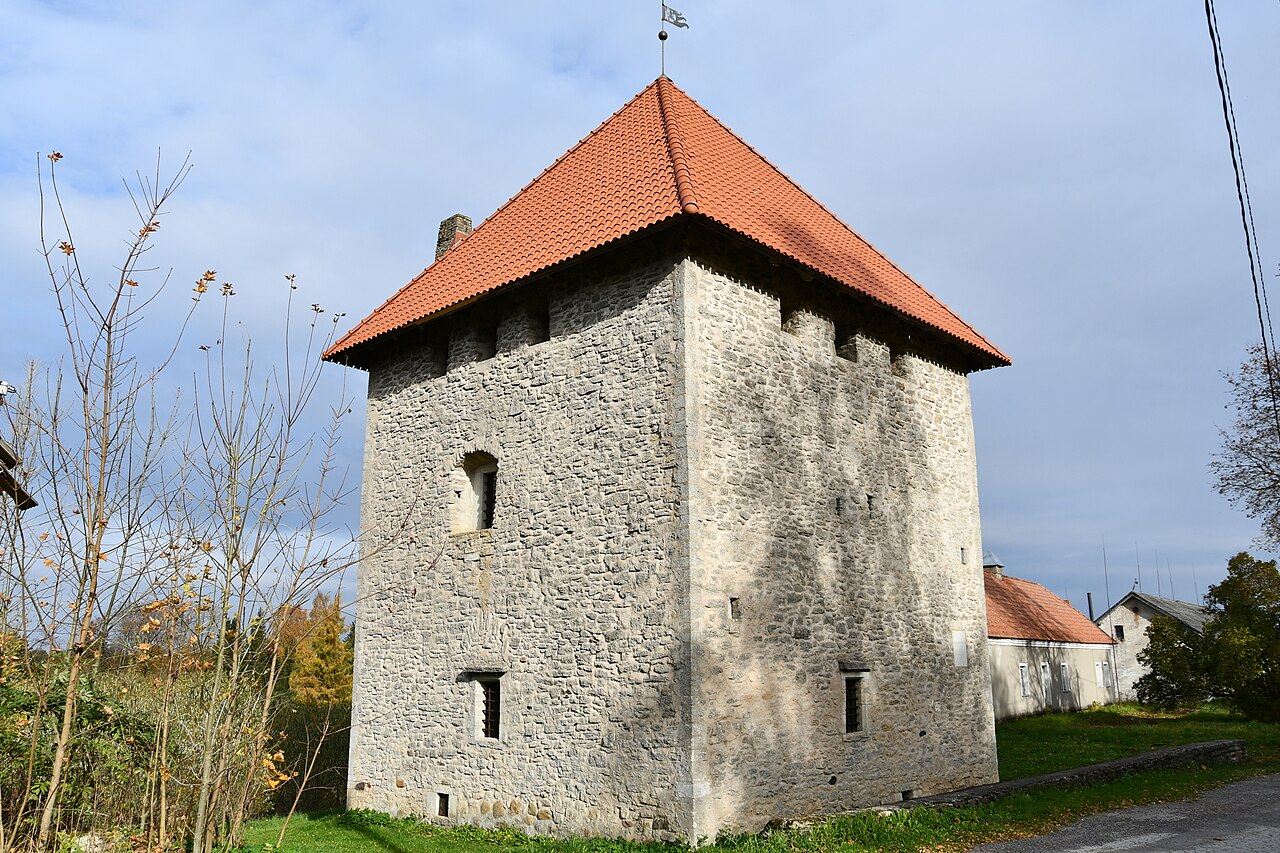
Porkuni Castle Tower is a notable example of a late-medieval hill castle located in Lääne-Virumaa, Estonia. Constructed in 1479 by Simon von der Borch, the castle was strategically positioned on a hill overlooking Porkuni Lake, providing both defensive advantages and scenic views. Originally, it functioned as a fortified manor, known as a Tafelgut, under the ownership of the Bishop of Tallinn. Today, only the foundations and one gate tower remain, offering valuable insight into medieval fortification techniques in the region.

Historical background and construction

The castle was erected during a turbulent period in the Baltic region's history. The late 15th century saw numerous conflicts involving the Livonian Order, local nobility, and emerging powers. Simon von der Borch, a prominent nobleman, commissioned the construction of Porkuni Castle Tower to serve both as a defensive stronghold and a residence. The castle's layout was an irregular rectangular shape, typical for fortified manor houses of the time, surrounded by a circular defensive wall with cannon towers positioned at the corners to maximize defensive coverage.

Architectural features

The surviving gate tower is architecturally distinctive, combining a rectangular base with an octagonal upper section. This design reflects the evolution of military architecture, blending functionality with stylistic elements. The tower is topped by a machicolation frieze, a defensive feature allowing defenders to drop projectiles on attackers below. However, this frieze dates from a later period, as evidenced by historical engravings from the 17th and 19th centuries, indicating modifications and enhancements over time.

The castle's walls and towers were likely constructed incrementally rather than simultaneously, adapting to changing military needs and available resources. The use of cannon towers illustrates the adaptation to gunpowder weaponry, marking a transition in fortification design during the late medieval period.

Impact of the Livonian War and subsequent history

Porkuni Castle Tower suffered significant damage during the Livonian War (1558–1583), a conflict that reshaped the political landscape of the Baltic region. The castle's defensive structures were compromised, and it ceased to function as a major military fortification. Over the centuries, the site fell into partial ruin, with only the gate tower and foundations surviving.

Despite its damaged condition, the castle remains a valuable cultural heritage site, reflecting the architectural and historical developments of medieval Estonia. The tower has been preserved and repurposed to house museums, offering visitors a glimpse into the region's past and the evolution of fortifications.

Current condition and visitor experience

Today, Porkuni Castle Tower stands as a partially preserved remnant of its former self, with the gate tower being the most prominent surviving structure. The site is accessible to visitors interested in medieval history, architecture, and Estonian heritage. The museums within the tower provide exhibitions on the castle's history, the Livonian War, and the local culture of Lääne-Virumaa.

The castle's location near Porkuni Lake adds to its appeal, offering scenic surroundings that complement the historical atmosphere. Visitors can explore the foundations and learn about the castle's construction phases, defensive features, and historical significance through informative displays.

Architectural significance

Porkuni Castle Tower exemplifies the transitional phase in castle architecture from traditional medieval fortifications to adaptations accommodating gunpowder artillery. The irregular rectangular layout, combined with circular walls and cannon towers, demonstrates strategic defensive planning. The unique gate tower, with its mixed rectangular and octagonal design, highlights architectural innovation in late medieval Estonia.

Preservation and cultural importance

The preservation of Porkuni Castle Tower contributes to understanding Estonia's medieval past and the broader history of the Baltic region. It serves as a tangible connection to the era of the Livonian Order and the complex political dynamics of the 15th and 16th centuries. The castle's museums play a crucial role in educating the public and promoting heritage tourism in Lääne-Virumaa.

Frequently asked questions (FAQ)

What is the historical significance of Porkuni Castle Tower?
Porkuni Castle Tower is a medieval fortress that dates back to the 14th century, showcasing the architectural style of the time. It served as a defensive stronghold and played a vital role in the regional power struggles during its operational years.
When was Porkuni Castle Tower built?
The construction of Porkuni Castle Tower began in the mid-14th century, around 1346. It was completed in subsequent years and has since become an important landmark in Lääne-Virumaa.
What are the opening hours for Porkuni Castle Tower?
Porkuni Castle Tower is typically open to visitors from May to September, with varying hours during these months. It’s best to check the official website or local tourism information for specific times before planning your visit.
Can I visit Porkuni Castle Tower year-round?
While the castle can be admired at any time of the year, the interior tours are generally only available during the warmer months. However, the surrounding grounds are accessible year-round for those who wish to explore the area.
Is it possible to take guided tours of Porkuni Castle Tower?
Yes, guided tours are available during the peak visiting season, providing insights into the castle's history and architecture. Booking in advance is recommended, especially for larger groups.
What is the best time to visit Porkuni Castle Tower?
The best time to visit Porkuni Castle Tower is during the summer months, from June to August, when the weather is pleasant and the full range of visitor services are available. Additionally, this time often features various cultural events and activities.
Are there any nearby attractions to Porkuni Castle Tower?
Yes, there are several attractions near Porkuni Castle Tower, including the picturesque village of Porkuni and the beautiful natural landscapes of Lääne-Virumaa. Visitors can also explore other historical sites and parks in the area.
How much do tickets cost for Porkuni Castle Tower?
Ticket prices for Porkuni Castle Tower are generally affordable, with discounts available for students and seniors. It's advisable to check the current pricing on the official website as they may vary by season or special events.
How do I get to Porkuni Castle Tower?
Porkuni Castle Tower is accessible by car, and there are public transport options available from larger cities in Estonia. Detailed directions can be found on various travel websites or local tourist information centers.

Photo gallery

Porkuni Castle Tower
Click to view

Photo by RobertRSMN•CC BY 3.0

1 photo • Click any image to view in full screen

Information

Hill Castle

Loading map...

Visitor reviews

No reviews yet. Been here? Write the first review and help other travelers!

Write the first review

Visited this castle? Share your experience

Your review helps other travelers and adds first-hand knowledge to our encyclopedia.
Write a review

(5/5)

0/2000 characters

Your review will be visible after admin approval

Nearby castles

9.5 km
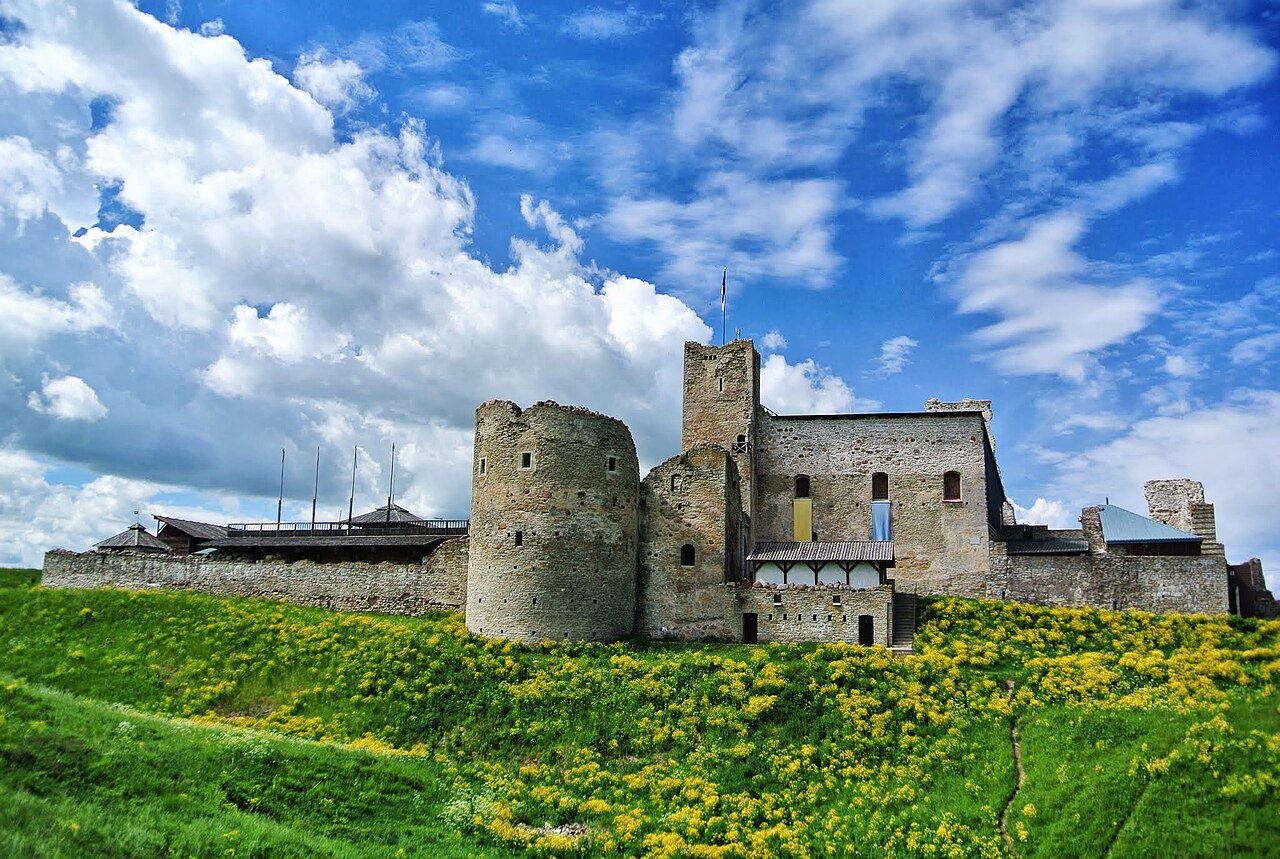
Vao Castle — Estonia castle

Vao Castle

Vao, Estonia

Vao Castle is a significant medieval fortress located in Estonia, classified as a hill castle due to its strategic elevated position. It stands as one of the best-preserved examples of Gothic architecture in the region and offers valuable insights into the military and residential design of the Late Medieval period. The historical context of Vao Castle Constructed in the 14th century, Vao Castle was initially built by the Teutonic Order or local Baltic nobility as a fortified manor house. Its primary function was to serve as a defensive stronghold and administrative center during a time of frequent conflicts and territorial disputes in the Baltic region. The castle's location on a hill provided natural defensive advantages, enabling control over surrounding lands and trade routes. Architectural features and design Fortifications and layout The castle features a robust stone curtain wall enclosing a central courtyard, with defensive towers positioned at key points to provide overlapping fields of fire. The design reflects typical Gothic military architecture of the Late Middle Ages, emphasizing verticality and strong fortifications. The walls are thick and built from local limestone, providing resistance against siege weapons of the period. Main structures and interiors Within the walls, the castle includes a keep or donjon that served as both a last refuge during attacks and as the lord's residence. The interiors originally contained a great hall, private chambers, and storage rooms. Although some original interior details have been lost or altered over time, the castle retains significant elements such as vaulted ceilings and narrow windows designed for defense. Historical significance and events Throughout its history, Vao Castle witnessed various military engagements and changes in ownership, reflecting the turbulent history of Estonia during the medieval and early modern periods. It was part of the network of fortifications that defended the region against raids and invasions. The castle also played a role in the administration of the surrounding estates and served as a symbol of feudal power. Preservation and current state Today, Vao Castle is well preserved and partially restored, allowing visitors to explore its medieval architecture and learn about its historical context. Conservation efforts have focused on stabilizing the stone walls and restoring key architectural features to maintain the castle's integrity. The site is accessible to the public and serves as a cultural heritage monument, attracting tourists interested in medieval history and architecture. Visiting Vao Castle Visitors to Vao Castle can explore the castle grounds, including the fortified walls, towers, and central courtyard. Interpretive panels provide historical information, and guided tours are occasionally available to enhance the visitor experience. The castle's hilltop location offers scenic views of the surrounding Estonian countryside. Accessibility and visitor information The castle is reachable by local roads and is open seasonally, with visiting hours typically during daylight. There is no entrance fee, making it an attractive destination for history enthusiasts and casual tourists alike. Nearby attractions include other medieval sites and natural parks, providing a well-rounded cultural visit.

Late Medieval (14th–15th c.)
Details
20 km
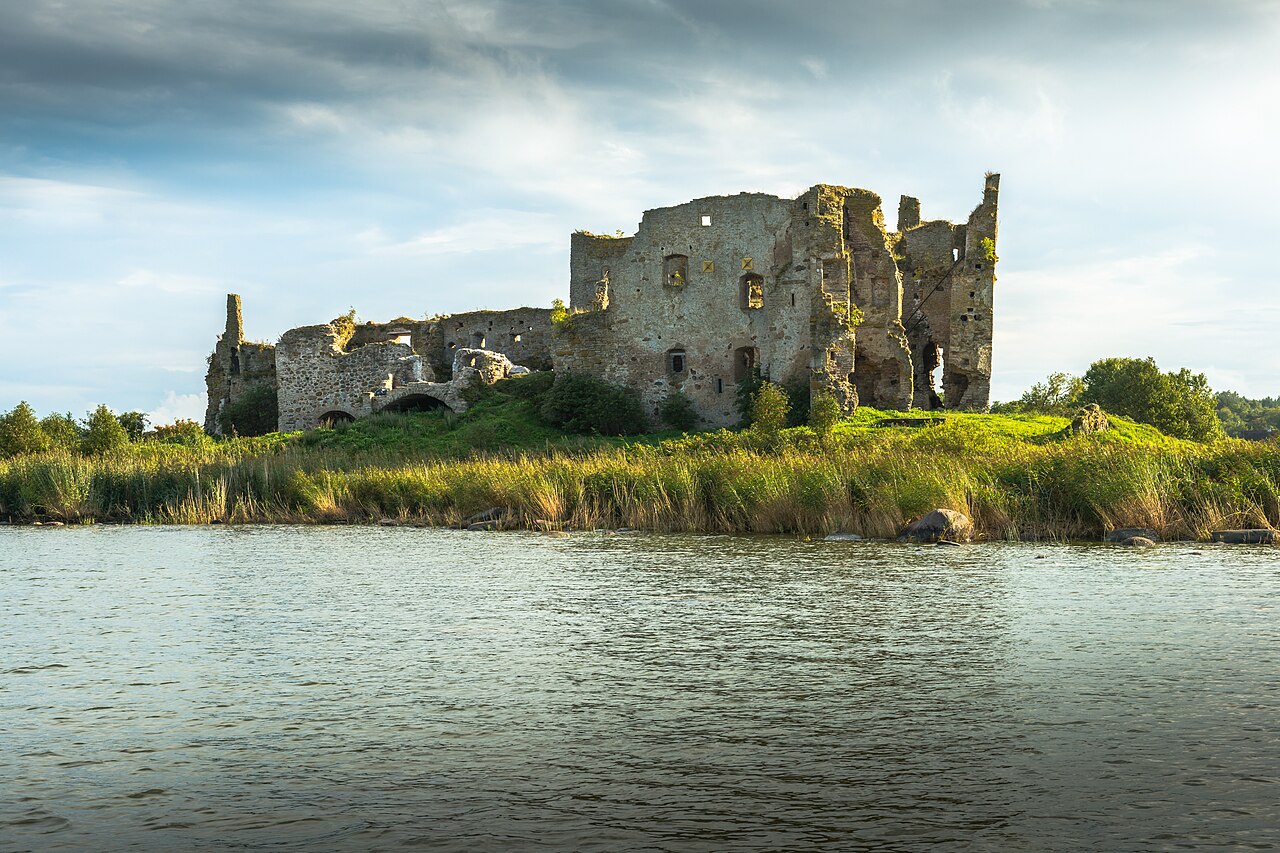
Rakvere Castle — Estonia castle

Rakvere Castle

Rakvere, Estonia

Rakvere Castle stands prominently on Castle Hill in Rakvere, Estonia, embodying a rich history that spans from the Viking Age through the High Medieval period and beyond. This hill castle has evolved from an ancient wooden stronghold into a complex stone fortress, reflecting the shifting tides of military technology, political power, and architectural style over centuries. The earliest archaeological evidence of human settlement at the site, known as Vallimäe, dates back to the 9th century with artifacts such as arrowheads and pottery from the Viking Age. More substantial records reveal a wooden stronghold called Tarvanpea existing by the 5th and 6th centuries, surrounded by a pine palisade. This early fortification marked the strategic importance of the site long before stone construction began. By the early 13th century, written records mention Tarvanpea, and the Danish name Wesenberg appears in 1252. The name Wesenberg, meaning "bull's head," is linked to the town seal and symbolizes the fortress's enduring identity. The castle's significance in regional power struggles is highlighted by its mention in the Russian Novgorod chronicles as Rakovor in 1268. Early fortifications and danish rule In 1226, the stronghold was captured by Johannes Dolenist, a vassal of the Bishop of Tartu, with papal support, marking a key moment in the castle's history. However, the Stensby Treaty of 1238 returned the castle to Danish control, where it became one of three royal castles in the Duchy of Estonia, alongside Tallinn and Narva. These castles formed a defensive network essential for Danish territorial control. Throughout the 13th century, the castle faced repeated military challenges, especially from Novgorod forces who unsuccessfully besieged it in 1268. Following these conflicts, the Danes initiated the transition from wooden fortifications to stone, constructing the first stone buildings in a modest convent house style. These early stone structures included half-cellars and curtain walls, marking the beginning of Rakvere's medieval stone fortress phase. Livonian order expansion and architectural development After the Livonian Order acquired Rakvere and the surrounding region in 1347, the castle underwent significant expansion and modernization. It became the administrative center for the Rakvere vogtei, with the vogt exercising military, judicial, and administrative authority. The castle's layout was expanded northward, incorporating new defensive walls, vaulted cellars, and a complex gate system. The Livonian Order's architectural influence is evident in the castle's rectangular main tower, convent house features with vaulted arcades, and multiple defensive towers. The castle's walls were thickened and raised several times to adapt to evolving military needs, including the use of artillery. The southwestern rondel, a round artillery tower, exemplifies these adaptations, providing a strategic platform for cannon fire. The eastern gate complex was a formidable defensive structure featuring a drawbridge, pitfall, inner portcullis, and a "wolf hole"—a defensive pit designed to trap attackers. Adjacent to the gatehouse stood a large semicircular tower with heated guardrooms, including hypocaust stoves for warmth, showcasing advanced medieval engineering. Livonian war and subsequent conflicts The Livonian War (1558–1583) brought intense conflict to Rakvere Castle. Captured by Russian forces in 1558, the castle's defenses were reinforced with wooden outer walls, palisades, and bastions to meet the demands of contemporary warfare. The Russians used Rakvere as a district center governed by appointed voyevodas, underscoring its strategic importance. Swedish attempts to retake the castle in 1573 and 1574 failed, but in 1581, under the command of Pontus de la Gardie, the Swedes successfully captured Rakvere, establishing it as the administrative center of the Swedish Rakvere county. The castle was further fortified with bastions and thickened walls, adapting to the era's military architecture. During the early 17th century, the castle changed hands amid the Polish-Swedish wars. The Polish-Lithuanian Commonwealth controlled Rakvere from 1602 to 1605 before retreating and deliberately destroying the fortress to prevent its use by Swedish forces. From 1635, the castle was officially removed from military service and integrated into the Rakvere manor estate. Architectural features and castle remains Rakvere Castle occupies a commanding hilltop position approximately 105 meters above sea level, rising 25 meters above the surrounding terrain. The castle's layout evolved from a wooden stronghold into a complex stone fortress with an irregular quadrangular curtain wall up to two meters thick. The western wall, reaching seven meters high, supports a battlement walkway and stone buttresses. The castle includes a rectangular western tower divided by an east-west wall, corner towers, and a large eastern gate complex with multiple defensive elements. The southern wing housed heated wooden buildings with stoves, while vaulted arcades enclosed the courtyard. The southwestern rondel is a distinctive artillery tower designed to accommodate cannon fire, reflecting the castle's adaptation to gunpowder weaponry. Under Russian rule, extensive wooden outer defenses were added, including palisades, blockhouses filled with stones, tall towers, and bastions. These outer works enclosed a large wooden settlement capable of housing several thousand men, highlighting Rakvere's role as a major military center. Among the castle's preserved artifacts are six historical cannons from various periods, including a 15th-century Burgundian cannon known as "Tont" and a Swedish field cannon called "Ööbik" from the late 17th to early 18th century. Black powder demonstrations of cannon firing continue to attract visitors. Modern preservation and cultural significance Today, Rakvere Castle is partially restored and open to the public as a museum and cultural site. The southern wing and corner towers are among the best-preserved sections, with the Estonian flag proudly flying from one of the towers. The site serves as a vivid testament to Estonia's layered history, showcasing architectural evolution from early medieval wooden fortifications to high medieval stone military architecture. The castle museum offers interactive exhibits, including tastings of Malvasia wine brewed according to medieval recipes, enriching visitors' understanding of the castle's historical lifestyle. Rakvere Castle remains a significant heritage landmark, illustrating the complex interplay of military, political, and cultural forces in Estonia's history.

High Medieval (11th–13th c.)
Details
41.7 km
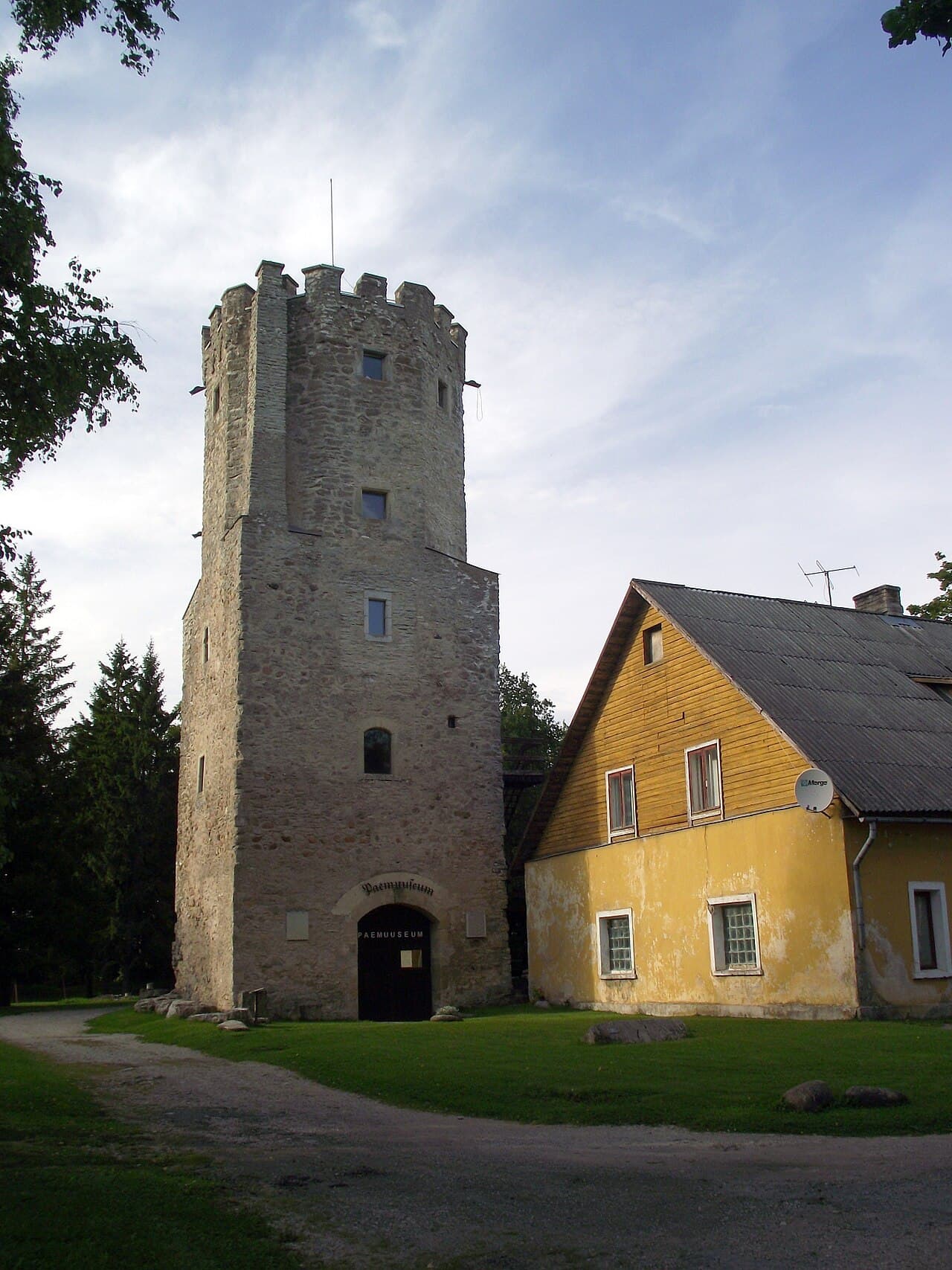
Toolse Castle — Estonia castle

Toolse Castle

Kunda, Estonia

Toolse Castle stands as a remarkable example of a late-medieval hill castle constructed by the Livonian Order in 1471. Located near the town of Kunda, Estonia, this fortress was strategically built to protect the important harbor of Toolse and its surrounding village from frequent pirate raids in the Gulf of Finland. Its position on a hill provided commanding views over the sea and land approaches, making it a critical defensive outpost during a turbulent period marked by regional conflicts and shifting powers.The castle's origins trace back to a manorial stronghold likely owned by the noble Wrangel family in the late 14th or early 15th century. However, the significant expansion into a formidable fortress occurred under the leadership of Johann Wolthus von Herse, the Livonian Order commander who independently initiated construction in 1471. Originally named Vredeborch (also spelled Fredeborch or Fredeborg), this fortress was intended to secure the harbor and serve as a military and administrative center. Despite von Herse's deposition shortly after, the castle remained a vital stronghold, renamed Tolsburg by his successor Berent von der Borch.Historical significance and military roleThroughout its history, Toolse Castle played a pivotal role in the defense of northern Estonia. During the Livonian War (1558–1583), it changed hands multiple times, reflecting the intense struggle for control between Russia, Sweden, and the Livonian Order. In 1558, Russian forces captured the fortress, holding it until the Treaty of Teusina in 1595 returned it to Swedish control. The capture of Toolse by the French mercenary Pontus de la Gardie in 1581 for Sweden marked a significant military achievement during this period.The castle's military importance declined after the Great Northern War (1700–1721), during which it was destroyed and subsequently abandoned. Since then, Toolse Castle has remained in a state of ruin, symbolizing the region's complex medieval past and the evolution of military architecture in response to emerging warfare technologies.Architectural evolution and featuresInitial construction and residential towerThe original structure centered on a tall, three-story living tower situated behind the western façade. This tower formed the heart of the castle's residential and administrative functions, accessible through a foot gate secured by a portcullis. The design reflects typical late-medieval defensive architecture aimed at controlling access and providing a secure residence for the local commander, the vogt.Defensive expansions and artillery adaptationsOver approximately two centuries, Toolse Castle underwent at least five major construction phases, adapting to the changing demands of military technology. Mid-15th-century expansions transformed the fortress into a bastion capable of withstanding early firearms. The addition of an outer courtyard with a broad eastern gate and an inner courtyard accessed through a pointed arch gate enhanced layered defense.Significant defensive features included rooms with firing slits and a secondary portcullis on the northern side, designed to repel attackers. The construction of a large square gate tower on the eastern side protected the northwestern corner. Furthermore, a round artillery tower with an open platform and battlements was added, highlighting the castle's adaptation to artillery warfare. Two projecting dansker towers on the northern wall provided additional protection and drainage functions.Outer fortifications and ring wallThe final construction phase enclosed the castle in a ring-walled forecourt featuring a gate tower on the eastern wing. This created a fortified camp, or laagerkastell, with walls approximately 14 meters tall and 2 meters thick, demonstrating the castle's formidable defensive capabilities.Preservation and current stateToday, Toolse Castle exists as a well-preserved ruin, with conservation efforts stabilizing key structures such as the gate tower's southern and northern facades. Repairs to the courtyard gates and structural reinforcements, including tie rods in the western residential tower and waterproofing of vaulted cellar ceilings, have helped maintain the site's integrity.Near the ruins, remnants of medieval wave breakers along the shore of Toolse Bay serve as a tangible connection to the castle's original role in protecting the harbor. These features, combined with the castle's extensive ruins, offer visitors insight into the military architecture and historical landscape of medieval Estonia.Cultural heritage and visitor experienceToolse Castle is a significant cultural monument reflecting the complex history of the Baltic region during the late medieval period. Its ruins attract historians, architects, and tourists interested in medieval fortifications and the Livonian Order's legacy. The site offers a compelling narrative of military strategy, architectural innovation, and regional power struggles that shaped northern Estonia's history.Visitors can explore the castle's layered courtyards, towers, and defensive walls while imagining the strategic importance this fortress held over centuries. The combination of architectural remains and natural coastal scenery creates an evocative atmosphere, making Toolse Castle a key destination for those seeking to understand Estonia's medieval past.

Late Medieval (14th–15th c.)
Details