Pontikokastro
Pontikokastro (Greek: Ποντικόκαστρο), also historically known as Beauvoir in French and Belveder in Italian, is a significant Byzantine hill castle located in Agios Andreas, Katakolo, on the Peloponnese peninsula of Greece. This fortress stands as an important example of medieval military architecture in the region, reflecting the strategic importance of the area during the late Middle Ages.
Historical context and significance
The castle's origins trace back to the Byzantine period, serving as a critical defensive stronghold overseeing the coast and controlling access to the surrounding land. Its position on a hill provided commanding views of the Ionian Sea and the adjacent territories, allowing its occupants to monitor maritime and land routes effectively. During the late Middle Ages, the castle was known by its Western European names, Beauvoir and Belveder, indicating its occupation or influence by Frankish and Italian forces following the Fourth Crusade and the fragmentation of the Byzantine Empire.
The castle played a role in the complex political and military struggles of the Peloponnese region, which saw frequent changes of control among Byzantine, Frankish, and later Ottoman powers. Its fortifications were adapted over time to meet evolving military needs and technologies.
Architectural features and layout
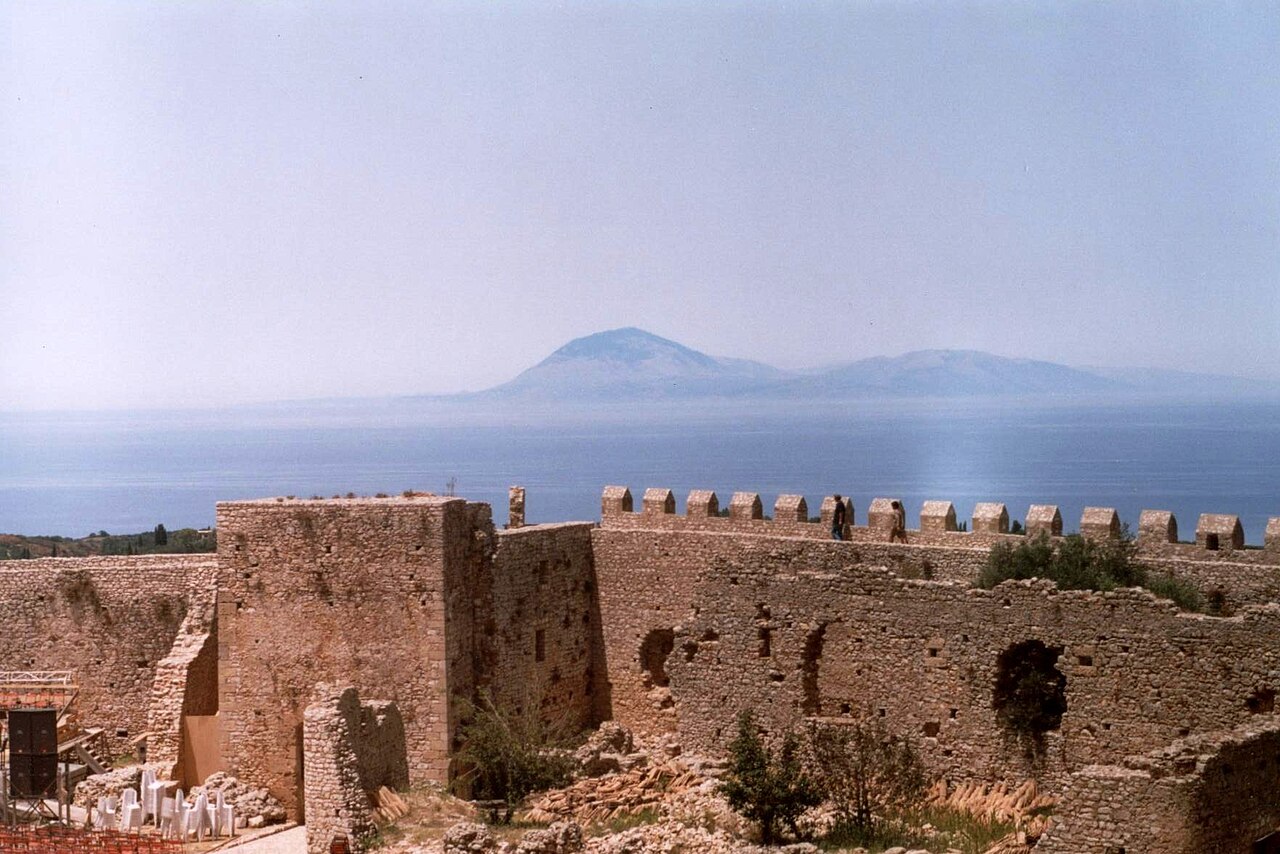
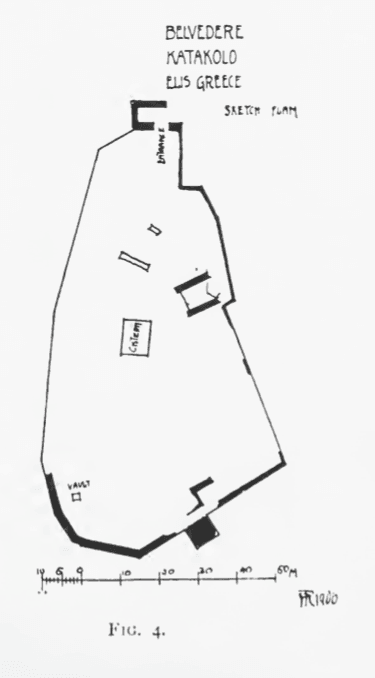
Pontikokastro is classified as a hill castle, built strategically atop elevated terrain to maximize defensive capabilities. The castle's design includes robust stone walls that follow the contours of the hill, enclosing a compact fortified area. The walls feature battlements and towers that provided vantage points for archers and lookouts.
The entrance to the castle was heavily fortified, typically including a gatehouse and possibly a drawbridge or portcullis to control access. Inside the walls, remnants of various defensive structures and residential quarters can be found, indicating the castle's dual role as a military fortress and a place of habitation.
Towers and defensive works
The castle's towers were integral to its defense system, positioned to cover blind spots and provide overlapping fields of fire. These towers also served as watchpoints for early warning against approaching enemies. The construction style reflects typical Byzantine military architecture, with thick walls and limited openings to withstand sieges.
Materials and construction techniques
The builders of Pontikokastro utilized local stone and traditional masonry techniques characteristic of Byzantine fortifications. The stonework includes carefully cut blocks and mortar binding, designed to endure both natural erosion and military assaults over centuries.
Later history and current condition
Following its medieval use, Pontikokastro experienced periods of decline and partial ruin, common to many castles in the region due to changing military technologies and political shifts. Today, it remains a partially preserved site, with significant portions of its walls and towers still standing, offering valuable insight into Byzantine and medieval fortification methods.
The castle is accessible to visitors interested in exploring Greece's medieval heritage and provides panoramic views of the surrounding landscape and coastline. Its enduring presence highlights the historical layers of control and cultural influences that have shaped the Peloponnese.
Visiting Pontikokastro
Visitors to Pontikokastro can explore the ruins and enjoy the scenic views from the hilltop. The site offers a tangible connection to the region's Byzantine past and its subsequent medieval history. While facilities may be limited, the castle's location near Katakolo makes it an attractive destination for those interested in history and architecture.
Frequently asked questions (FAQ)
- When was Pontikokastro castle built?
- Pontikokastro castle dates back to the Byzantine period, with significant development during the late Middle Ages.
- What is the architectural style of Pontikokastro castle?
- The castle exhibits typical Byzantine military architectural features, including thick stone walls and fortified towers.
- Can I visit Pontikokastro castle?
- Yes, Pontikokastro is accessible to visitors interested in exploring its ruins and enjoying panoramic views of the Peloponnese coast.
- Where is Pontikokastro castle located?
- Pontikokastro is located in Agios Andreas, near the town of Katakolo on the Peloponnese peninsula in Greece.
- What remains can be seen at Pontikokastro today?
- Visitors can see partially preserved walls, towers, and other defensive structures that highlight the castle's historical significance.
Photo gallery

Photo by Ramsay Traquair (1874-1952)•Public domain
Information
Address
Agios Andreas, Katakolo, Peloponnese, Greece
Loading map...
Visitor reviews
No reviews yet. Been here? Write the first review and help other travelers!
Write the first reviewVisited this castle? Share your experience
Your review helps other travelers and adds first-hand knowledge to our encyclopedia.