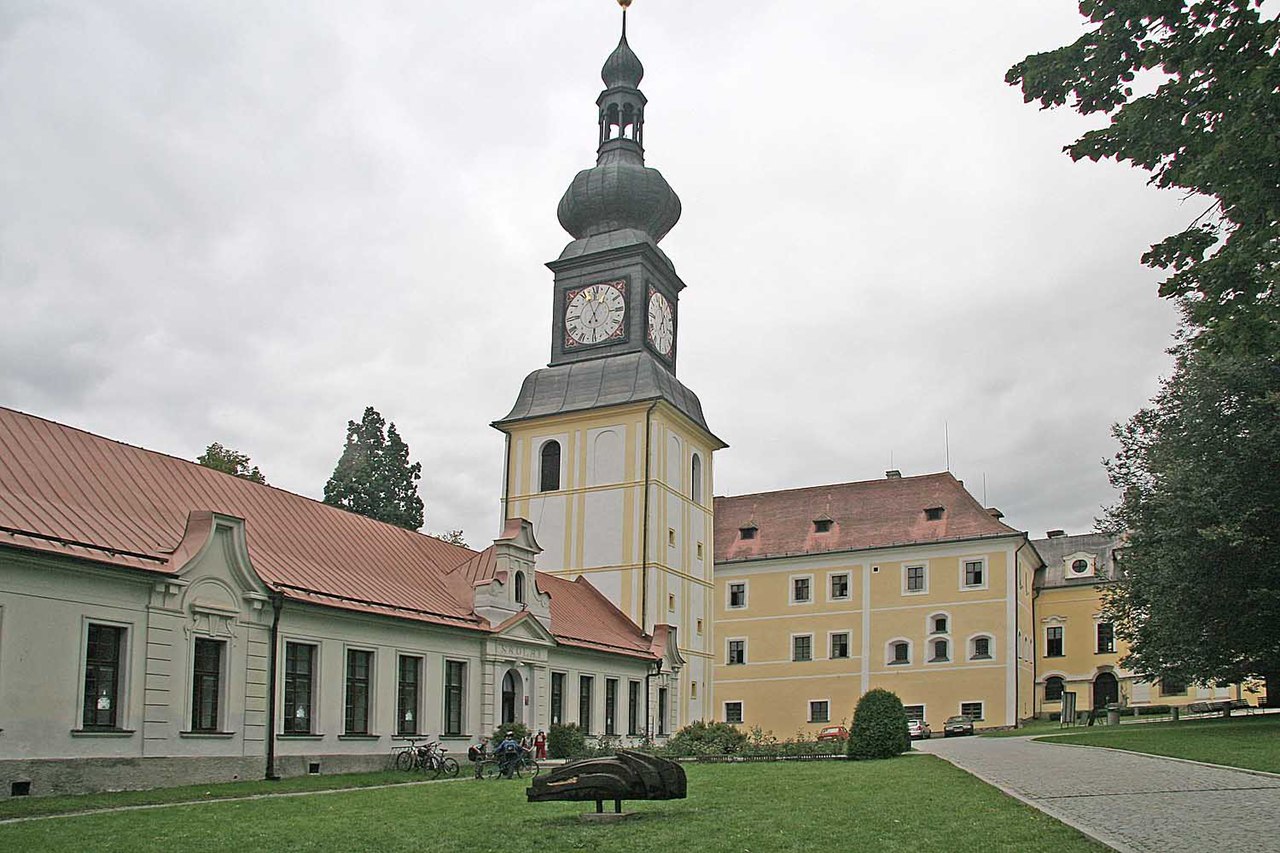
Polná Castle
Polná Castle stands as a remarkable testament to the layered history of medieval fortification and Renaissance architectural transformation in Czechia. Located in the historic town of Polná, the castle occupies a strategic position on a promontory overlooking the confluence of the Šlapanka stream and the Ochozský brook. Founded in the early 14th century, around 1320, by Jindřich of Lipé, the fortress was originally constructed to secure a vital land route, reflecting the military and administrative priorities of the Bohemian nobility during the High Medieval period.
The castle's earliest documented mention dates to 1356, when the estate was transferred from Čeněk of Lipé to Ješek Ptáček of Pirknštejn. This transition marks the beginning of a significant phase of expansion and fortification that would see Polná evolve into a large Gothic stronghold. Throughout the turbulent Hussite Wars of the 15th century, the castle remained under the control of the Lords of Pirknštejn, serving both as a military bastion and the administrative heart of the Polná-Pribyslav estate. Defensive enhancements during this era included the incorporation of nearby water bodies such as the Peklo pond, which still exists today.
Architectural evolution through medieval and renaissance periods
Gothic expansion and fortification
During the 15th century, Polná Castle underwent significant enlargement and fortification, characteristic of the Gothic architectural style. The castle was transformed into a formidable fortress with thick defensive walls, towers, and a complex layout centered around an inner courtyard. The western wing, reconstructed in the late 15th century under the ownership of the Knights of Kunštát, features a notable door portal adorned with the Kunštát family coat of arms. This wing also houses the knight’s hall, distinguished by its heraldic vaulted ceilings, which exemplify the castle’s noble and martial heritage.
Renaissance transformation and chateau development
Following a damaging fire in 1584, Polná Castle was extensively renovated in the Renaissance style, reflecting broader European trends in castle architecture that favored comfort and aesthetics alongside defense. The renovation included the refurbishment of the old palace and the Kunštát hall, the introduction of large Renaissance windows, and the construction of the Hradec House. This period marked the castle’s transition from a purely military fortress to a more residential chateau, with richly decorated chambers and improved living quarters. A 1622 report highlights the castle’s seven elaborately furnished rooms, a tower, and luxurious interiors befitting its noble occupants.
Baroque reconstruction and decline
The castle’s history in the 17th and 18th centuries was marked by conflict, destruction, and rebuilding. After suffering severe damage during the Swedish military incursions of 1645 and 1647, Polná Castle was reconstructed in the Baroque style between 1690 and 1693 under the direction of Ferdinand Ditrichštejn. This reconstruction introduced new eastern and southern wings around the inner courtyard, replacing buildings destroyed in the earlier conflicts. Enhancements included the installation of a stone fountain and an upgraded water supply system completed in 1693, which improved the castle’s functionality and comfort.
Despite further challenges such as a major fire in 1734 and military occupation by French forces in 1742, the castle was repaired and adapted for new uses. Architect František Antonín Grimm oversaw renovations in the mid-18th century, including the construction of a new entrance portal. By the mid-18th century, the castle ceased to serve as a noble residence and was repurposed for estate administration and housing officials.
Destruction, abandonment, and modern restoration
A catastrophic fire in 1794 devastated most of the Renaissance four-wing complex, sparing only the western wing. The fire led to the removal of the highest floors and the demolition of the castle chapel. The once-prominent Red Tower, a large cylindrical stone defensive structure depicted in a 1617 illustration by Joris Hoefnagel, was completely lost. Following the fire, the estate seat moved to Přibyslav in 1808, and Polná Castle gradually fell into disuse. It was repurposed for agricultural functions and residential apartments, with locals quarrying stone from the ruins for other building projects.
In the 20th century, the castle’s fate shifted towards preservation and cultural use. Purchased in 1922 by Václav Pojmon, the site was donated to the local Sokol organization and municipal museum association. Renovations led by architect K. Hilbert restored the first floor of the surviving western wing, creating three halls named after the castle’s prominent former owners: Pirknštejn, Hradec, and Kunštát. Since 1960, Polná Castle has functioned as a branch of the Vysočina Museum in Jihlava, hosting exhibitions on the Czech national revival, historical commerce, and traditional pharmacy.
Architectural features and surviving structures
The castle complex is organized around a central inner courtyard, which historically served as the focal point of the fortress. Visitors today can enter through the remains of an outer passage or the well-preserved gate tower facing the Kateřinské suburb. This three-story tower bears a Latin inscription commemorating the 17th-century reconstruction commissioned by Cardinal František of Ditrichštejn.
The surviving western wing is a two-story structure that once formed part of a larger four-wing Renaissance palace arranged in a cloister style. Archaeological excavations have revealed the foundations of the other wings, enabling a reconstruction of the castle’s original layout. The western wing’s first floor houses the three restored halls, with the Kunštát hall featuring an intricately decorated cross vault adorned with multiple heraldic coats of arms.
Defensive elements include a bastion at the northwest corner of the defensive wall enclosing the courtyard. The castle’s former northern wing, which contained a chapel and an arcaded corridor, now lies mostly underground, with extensive cellars surviving beneath the site. The castle grounds also feature cultural monuments such as a statue of the celebrated Czech writer Božena Němcová, sculpted by Jan Adolf Vítek.
Cultural significance and local legends
Polná Castle is steeped in local legend and cultural heritage. One notable story involves Jan Kašpar Khautz, a former estate manager who is said to have made a pact with the devil. According to tradition, Khautz escaped damnation by posing an unanswerable question to the devil. His burial site is located in the crypt of the Polná deanery church, and a plaque originally from his coffin is displayed in the castle museum, connecting visitors to the castle’s rich folklore.
Today, Polná Castle serves not only as a monument to the region’s medieval and Renaissance history but also as a cultural center preserving the memory of the noble families and historical events that shaped this part of Czechia. The castle’s layered architectural features, from Gothic fortifications to Baroque renovations, offer visitors a tangible link to the past and an opportunity to explore centuries of Central European history.
Frequently asked questions (FAQ)
- What is the historical significance of Polná Castle?
- Polná Castle, located in Czechia, dates back to the 13th century and serves as a remarkable example of Gothic and Renaissance architecture. It played a crucial role in the region's defense and has witnessed numerous historical events, making it a significant landmark in Czech history.
- When was Polná Castle built?
- Construction of Polná Castle began in the late 13th century, with significant expansions and modifications occurring over the centuries. The castle's architecture reflects various styles, showcasing its evolution from a medieval fortress to a Renaissance residence.
- Can I visit Polná Castle year-round?
- Yes, Polná Castle is open to visitors throughout the year, although specific tours and events may be limited during the winter months. It's recommended to check the official website for any seasonal changes in visiting hours.
- What are the opening hours for Polná Castle?
- Polná Castle typically opens its doors to visitors from 9 AM to 5 PM during the peak season, with reduced hours in the off-season. Be sure to verify the current opening hours on the castle’s website before your visit.
- Is Polná Castle accessible for visitors with disabilities?
- While Polná Castle strives to accommodate all visitors, some areas may pose challenges for those with mobility difficulties due to the castle's historic architecture. It's advisable to contact the castle administration ahead of your visit to inquire about accessibility options.
- What are the ticket prices for visiting Polná Castle?
- Ticket prices for Polná Castle vary depending on age and group sizes, with discounts often available for students and seniors. For the most accurate and current pricing, it's best to check the official website before planning your visit.
- When is the best time to visit Polná Castle?
- The best time to visit Polná Castle is during the spring and early autumn months when the weather is pleasant and ideal for exploring the castle grounds. Additionally, these seasons often feature special events and guided tours that enhance the visitor experience.
- Are there any nearby attractions to visit along with Polná Castle?
- Yes, nearby attractions include the charming town of Polná, with its historical buildings and local museums, as well as the picturesque landscapes of the Vysočina region. Visitors can easily plan a full-day itinerary that includes exploring both the castle and the surrounding area.
Information
Website
Visit websiteSources & official resources
Verify the information above using these authoritative references.
Loading map...
Visitor reviews
No reviews yet. Been here? Write the first review and help other travelers!
Write the first reviewVisited this castle? Share your experience
Your review helps other travelers and adds first-hand knowledge to our encyclopedia.