Polan Castle
Polan Castle is located in the village of Polán within the province of Toledo, Spain. This medieval fortress stands on level ground, a notable feature given its historical defensive purpose. The castle's strategic location and architectural remains offer insight into the military and noble history of the region during the late medieval period.
The historical background of Polan Castle
The site of Polan Castle holds significant historical importance dating back to the early 12th century. In 1116, the village of Polán was the scene of a battle between the Christian forces of Toledo and the Muslim forces from Oreja. The Muslim leader, Farax Abdali, was defeated near a castle that was under construction at that time, marking the location as a contested frontier during the Reconquista.
Although the castle was not fully completed during this early period, it laid the groundwork for the later fortified structure that emerged in the 14th century. The castle later came under the ownership of notable figures such as Don Lope de Zúñiga and the Marquesses of Cerralbo, reflecting its continued significance in the region's noble and military affairs.
Architectural features and layout
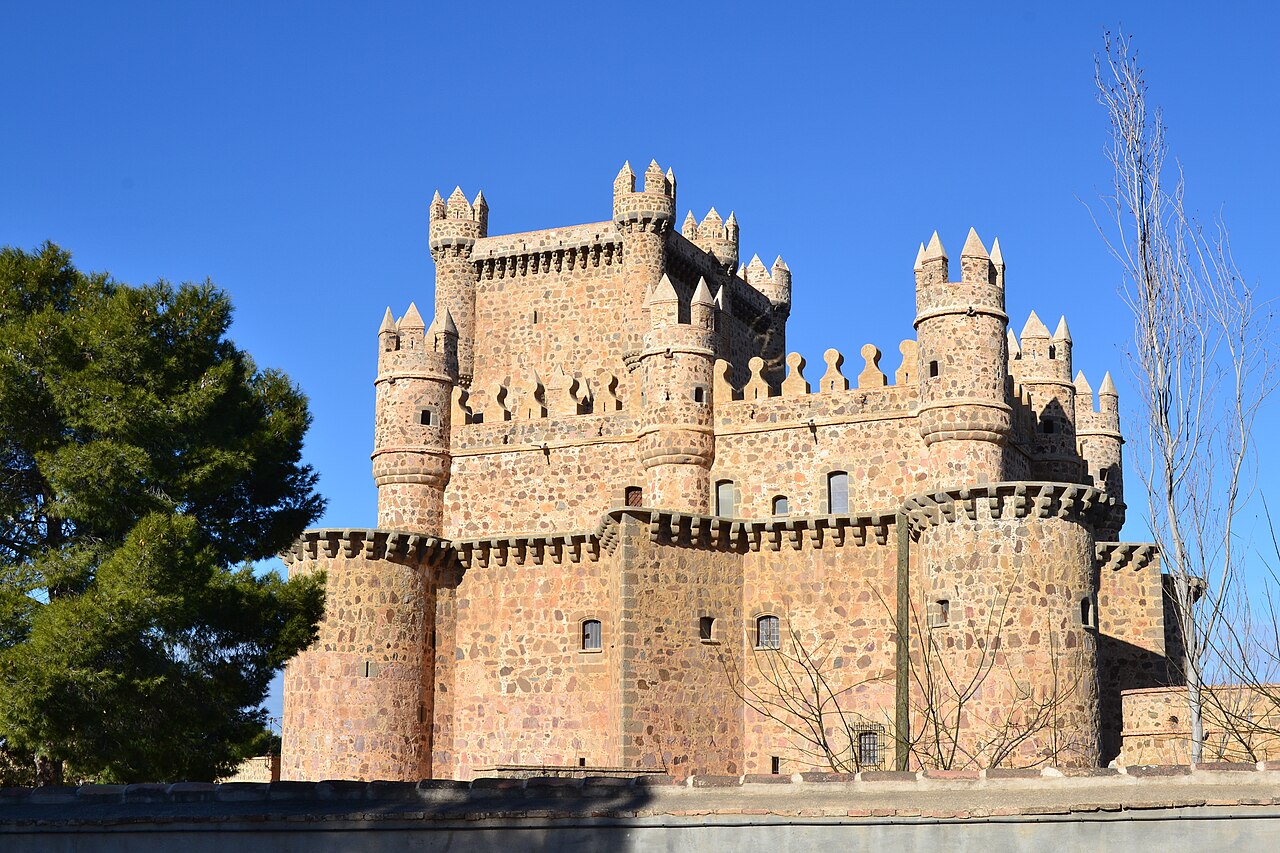
The remains of Polan Castle suggest a fortress of considerable size and complexity. The castle is unusual for a border fortress in that it is situated on flat terrain rather than elevated ground, though it was once protected by a moat. This defensive water feature would have enhanced its protection despite the lack of natural elevation.
The keeps
The castle's most prominent surviving elements are two large keeps. The first is a rectangular keep nearly 18 meters high, distinguished by cylindrical towers at its corners and along the center of its walls. This keep includes a cistern on the ground floor, an essential feature for water storage during sieges, and stairs embedded within the thickness of the walls, a typical defensive architectural element to protect movement within the fortress.
Just a few yards away stands the second keep, which is taller at approximately 25 meters but has only partially survived. The architectural details of this keep indicate it was constructed in the 14th century, aligning with the castle's main period of development. Its greater height would have provided a commanding view of the surrounding area.
Defensive structures and materials
The castle's walls and towers were likely constructed using local stone, a common practice in medieval Spanish fortifications. The presence of multiple towers and thick walls suggests that the castle was designed to withstand prolonged sieges and attacks. Although much of the castle is now in ruins, the surviving structures reveal careful medieval military engineering.
Ownership and historical significance
Polan Castle was historically owned by prominent noble families, including Don Lope de Zúñiga, a notable Castilian nobleman, and the Marquesses of Cerralbo. These owners reflect the castle's role not only as a military fortress but also as a noble residence and symbol of feudal power in the region.
The castle's location in the province of Toledo placed it near the frontier between Christian and Muslim territories during the Reconquista, underscoring its military and strategic importance. Its history is intertwined with the conflicts and power struggles that shaped medieval Spain.
Current condition and accessibility
Today, Polan Castle remains in a partially preserved state, with its two keeps standing as the most visible remnants. Unfortunately, the castle is not accessible to the public and does not serve any current functional use. Visitors can view the ruins from nearby roads, making it a point of historical interest for those traveling through the area.
The lack of public access means that the castle has not been developed as a tourist site, but its imposing ruins continue to attract attention for their architectural and historical value.
Frequently asked questions (FAQ)
- When was Polan Castle built?
- Polan Castle was primarily constructed in the 14th century, with earlier fortifications existing on the site during the early 12th century.
- What are the main architectural features of Polan Castle?
- The castle features two large keeps, one rectangular with cylindrical towers and a cistern, and another taller but partially ruined keep, both reflecting medieval military architecture.
- Is Polan Castle open to visitors?
- No, Polan Castle is not currently accessible to the public, but its ruins can be viewed from nearby roads.
- Why is Polan Castle historically significant?
- Polan Castle was the site of a 1116 battle during the Reconquista and was owned by notable noble families, highlighting its strategic and feudal importance in medieval Spain.
Information
Address
Calle Castillo, Polán, Toledo, Spain
Loading map...
Visitor reviews
No reviews yet. Been here? Write the first review and help other travelers!
Write the first reviewVisited this castle? Share your experience
Your review helps other travelers and adds first-hand knowledge to our encyclopedia.