Castillo de Gálvez
The Castillo de Gálvez stands as a notable example of medieval military architecture in Spain, located near the municipality of Gálvez. Constructed between the 12th and 14th centuries, this hill castle was strategically positioned on a hill historically known as Brígida or Vírgeda, offering commanding views over the surrounding landscape. Although specific records about its founders or early ownership are scarce, the castle's design and location suggest it played a role in the territorial defense during the turbulent Middle Ages on the Iberian Peninsula.
Historical context and significance
During the High to Late Medieval period, the Iberian Peninsula saw the rise of numerous fortifications as kingdoms and local lords sought to secure their borders and assert control over contested lands. The Castillo de Gálvez likely functioned as a military outpost or defensive stronghold in this milieu, though no detailed historical documents mention it until the 17th century. Its absence from early records may reflect its relatively minor role or the loss of archival materials over time.
The castle's location near the now-vanished settlement of Corralnuevo, adjacent to the Arroyo del Prado stream, underscores its connection to local population centers that once thrived in the area. As demographic shifts and economic changes led to the depopulation of the region, the castle's strategic importance diminished, culminating in its abandonment by the 18th century. Existing land ownership documents from that era confirm the castle's decline and the gradual ruination of its structures.
Architectural features and construction
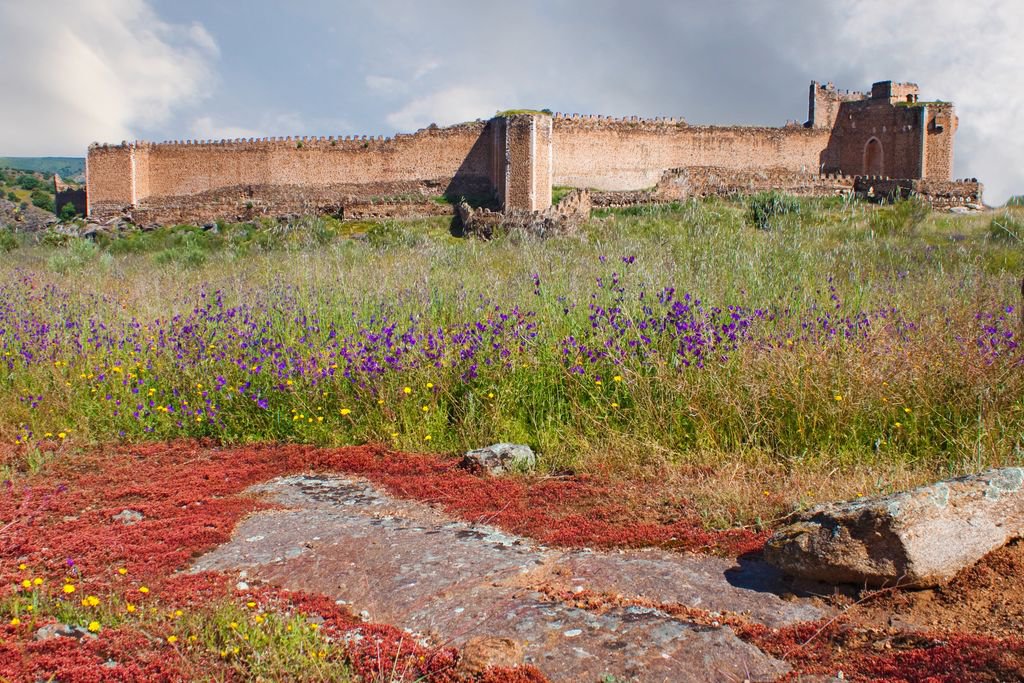
The Castillo de Gálvez exhibits a compact square layout, a common characteristic of medieval fortifications designed for efficient defense. Originally, the fortress included a square enclosure with a tower at each of its four corners, intended to provide overlapping fields of fire and surveillance in all directions.
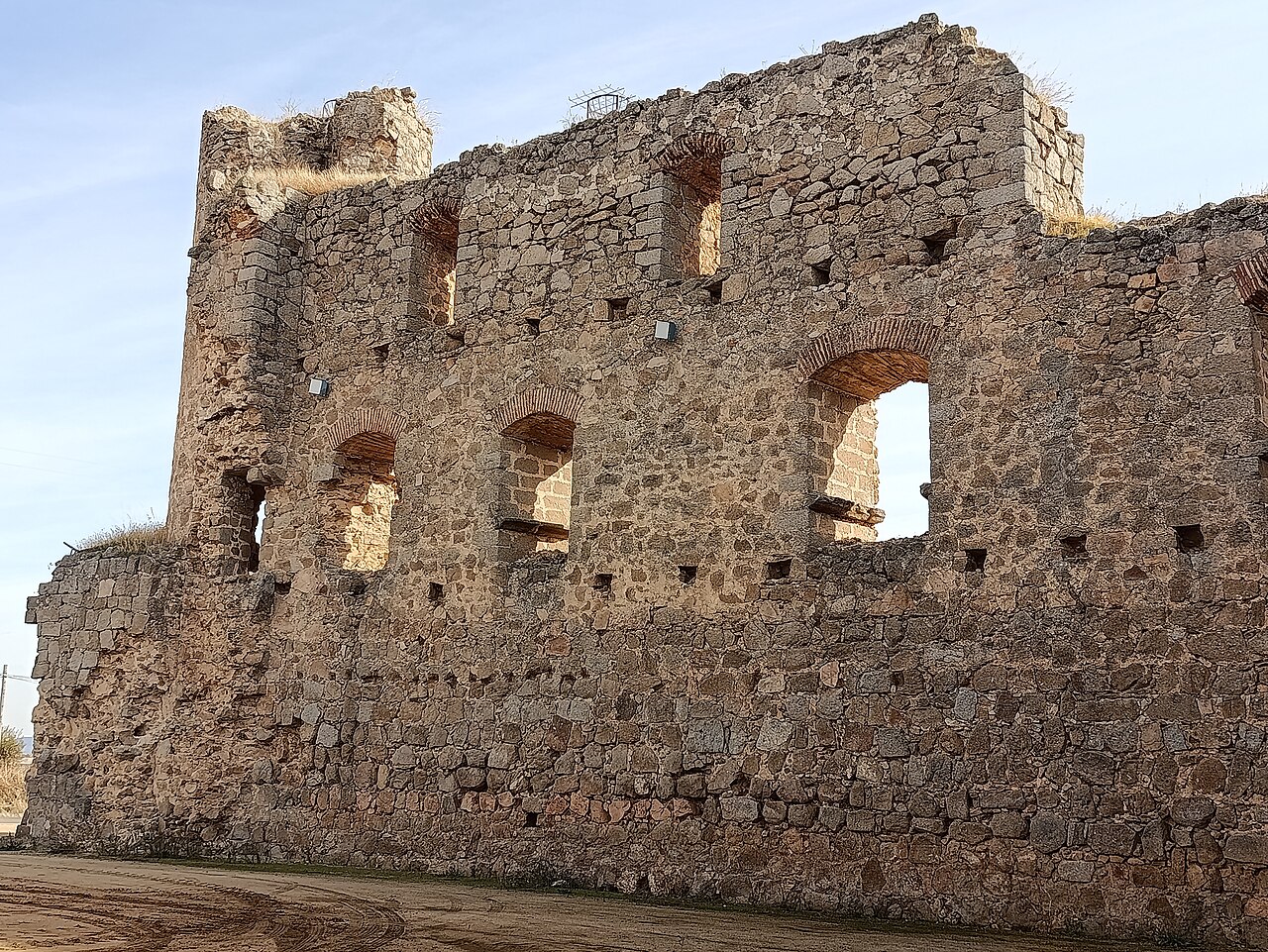
Today, three of these semicircular towers remain standing, while the connecting walls have largely disappeared. The towers were built using rubble stone masonry, a technique involving rough, irregular stones bonded together. The exterior surfaces are held with lime mortar, a traditional binder that offered durability and weather resistance, while the interiors were coated with a mixture of mud and gypsum plaster. This construction method was typical of the period but has contributed to the fragile condition of the ruins.
Some towers retain narrow arrow slits, designed to allow defenders to shoot arrows while minimizing exposure. A few windows survive, although the upper defensive elements such as battlements or parapets that once crowned the towers are no longer present. The castle covers an area of approximately 55 square meters and is situated at an elevation of about 712 meters above sea level, enhancing its defensive advantage.
Preservation and current condition
Due to the vulnerability of the construction materials and centuries of exposure to the elements, the Castillo de Gálvez has suffered significant deterioration. The loss of the connecting walls and upper defensive features has left the fortress largely in ruins. However, the surviving towers provide valuable insight into the medieval defensive architecture of the region.
The ruins serve as an important cultural heritage site, illustrating construction techniques and military strategies employed during the Middle Ages in Spain. Efforts to stabilize and preserve the remains could enhance understanding of the castle's historical role and architectural significance.
Geographical and strategic importance
Perched on a hill overlooking the surrounding terrain, the Castillo de Gálvez occupied a strategic vantage point. Its elevation of approximately 712 meters allowed for early detection of approaching forces and control over nearby routes. The proximity to the Arroyo del Prado stream and the former settlement of Corralnuevo highlights the castle's role in protecting local communities and resources.
Such hill castles were integral to the medieval defensive network across Spain, providing security in contested borderlands and serving as symbols of feudal authority. The castle's position reflects common medieval military planning principles, emphasizing natural topography to enhance fortification effectiveness.
Architectural legacy and regional context
The design of Castillo de Gálvez aligns with other contemporary fortifications in the Iberian Peninsula, where square enclosures with corner towers were prevalent. The use of semicircular towers was a defensive improvement over earlier square towers, as their shape better deflected projectiles and reduced blind spots.
The castle's masonry techniques, combining rubble stone with lime mortar and plaster, were standard for the era and region, reflecting available materials and construction knowledge. While the castle lacks elaborate ornamental features, its functional design provides insight into the priorities of medieval military architecture focused on defense and surveillance.
Visiting and cultural significance
Today, the Castillo de Gálvez stands as a ruin that attracts visitors interested in medieval history and architecture. Although access may be limited due to its condition and location, the site offers a tangible connection to Spain's medieval past and the military strategies of the time.
Preserving such sites is crucial for understanding the historical landscape of the region and the evolution of fortification techniques. The castle's remains contribute to the cultural heritage of the province and serve as a point of interest for scholars and tourists alike.
Frequently asked questions (FAQ)
- What is the historical significance of Castillo de Gálvez?
- Castillo de Gálvez is an important landmark that reflects the rich history of the region, dating back to the medieval period. It served as a defensive fortress and has played a crucial role in various historical events, showcasing the architectural styles and military strategies of its time.
- When was Castillo de Gálvez built?
- The construction of Castillo de Gálvez began in the late 15th century and was completed in the early 16th century. This period marks the transition from the late Gothic style to the Renaissance, evident in the castle's intricate design and fortifications.
- Can I visit Castillo de Gálvez year-round?
- Yes, Castillo de Gálvez is open to visitors throughout the year. However, it's advisable to check the specific opening hours and any seasonal closures before planning your visit to ensure a smooth experience.
- What are the opening hours for Castillo de Gálvez?
- The castle typically opens at 10 AM and closes at 6 PM, but hours may vary depending on the season or special events. Visitors should verify the current schedule on the official website or contact local tourism offices for the most accurate information.
- Is it possible to access Castillo de Gálvez with a wheelchair?
- Castillo de Gálvez has made significant efforts to improve accessibility for all visitors. However, due to its historical architecture, some areas may be challenging to navigate, so it is recommended to check in advance about specific accessibility features.
- What is the best time to visit Castillo de Gálvez?
- The best time to visit Castillo de Gálvez is during the spring and fall when the weather is mild and pleasant for sightseeing. Additionally, these seasons typically see fewer crowds, allowing for a more enjoyable and intimate experience.
- Are there nearby attractions to visit after Castillo de Gálvez?
- Yes, there are several nearby attractions that can enhance your visit, including local museums, scenic parks, and other historical sites. Exploring the surrounding area can provide a deeper understanding of the cultural and historical context of Gálvez.
- How much does it cost to enter Castillo de Gálvez?
- The ticket prices for Castillo de Gálvez are generally affordable, with discounts available for students, seniors, and groups. It's best to check the official website for the most current ticket prices and any special promotions.
Information
Loading map...
Visitor reviews
No reviews yet. Been here? Write the first review and help other travelers!
Write the first reviewVisited this castle? Share your experience
Your review helps other travelers and adds first-hand knowledge to our encyclopedia.