Puerta del Cambrón
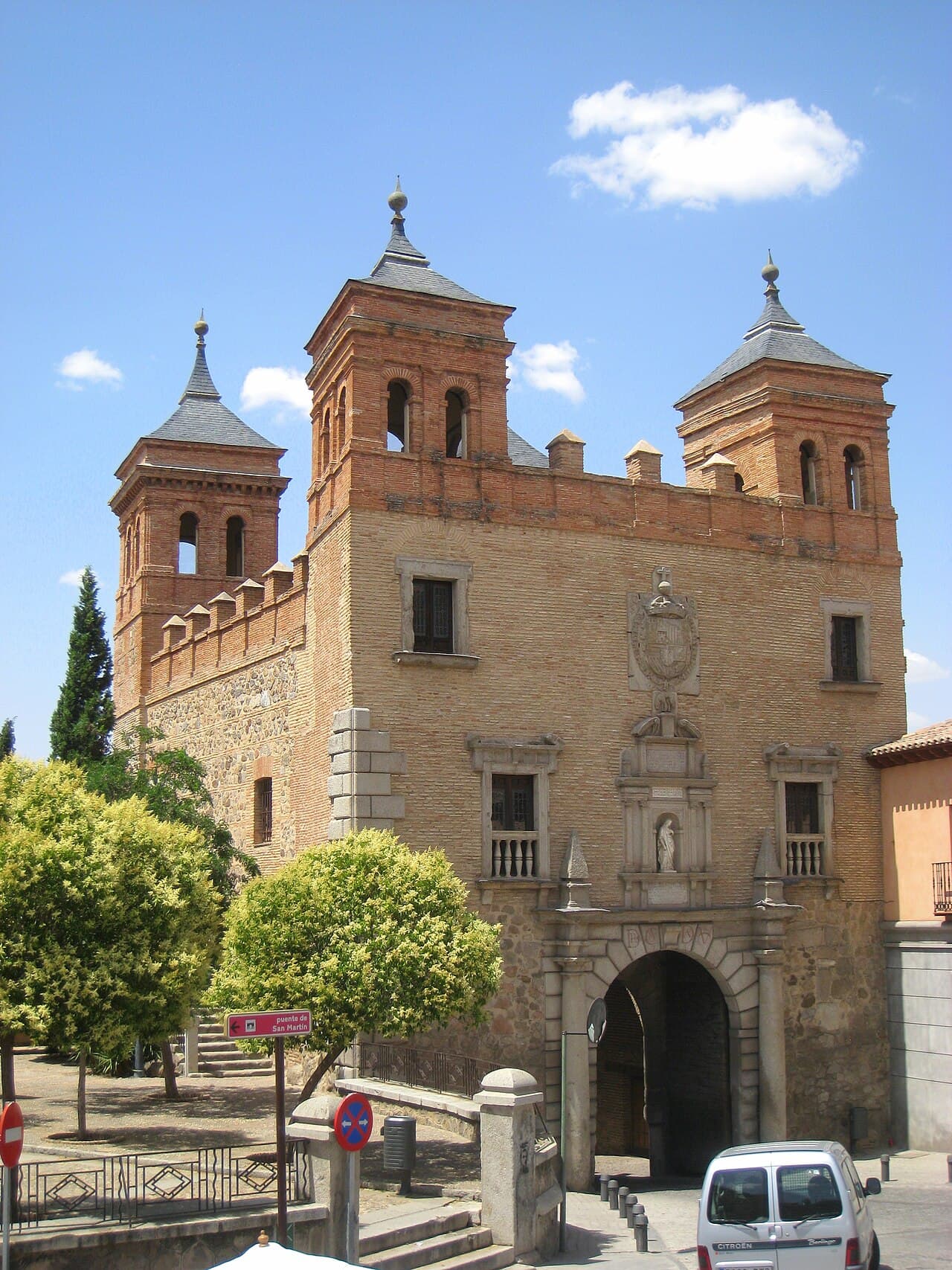
The Puerta del Cambrón is a significant historic gate located in the western part of Toledo, within the autonomous community of Castile-La Mancha, Spain. This gate, also historically known as the "Gate of the Jews" or the "Gate of Saint Leocadia," serves as an important example of military architecture from the Renaissance period. It is classified as a bastioned fortress, reflecting its defensive purpose during an era when artillery warfare was becoming increasingly important.
Historical background and significance
The name Puerta del Cambrón is believed to have originated from a thorn bush or similar plant (cambrón in Spanish) that grew atop the ruins of one of the gate's towers before its last major reconstruction in 1576. This reconstruction was part of efforts to strengthen Toledo's fortifications during the late 16th century, a period marked by military and political challenges in Spain. The gate's earlier names, "Gate of the Jews" and "Gate of Saint Leocadia," reflect the cultural and religious history of Toledo, a city known for its diverse communities and rich heritage.
Architectural features and design
The Puerta del Cambrón is a notable example of Renaissance military architecture with bastioned elements designed to withstand cannon fire and sieges. The gate features robust stone construction with thick walls and angular bastions that project outward to provide defensive coverage. These bastions allowed defenders to cover the approaches to the gate with gunfire, a key innovation in fortress design during the 16th century.
The gate's design includes a large arched entrance flanked by fortified towers, which would have served as lookout points and defensive positions. The use of bastions around the gate indicates an adaptation to the evolving nature of warfare, where artillery required new forms of fortification beyond traditional medieval walls.
Cultural heritage and preservation
The Puerta del Cambrón is protected under the Spanish heritage designation Bien de Interés Cultural, recognizing its importance as a cultural monument. This status helps ensure the preservation and maintenance of the gate as part of Toledo's historic fabric. The gate remains a prominent landmark within the city, attracting visitors interested in its architectural and historical significance.
Location and context within Toledo
Situated in the western sector of Toledo, the Puerta del Cambrón historically served as one of the main entrances to the city. Toledo itself is renowned for its complex history as a former capital of Spain and a melting pot of Christian, Jewish, and Muslim cultures. The gate's proximity to the old Jewish quarter and its alternative name, "Gate of the Jews," underscore its role in the city's multicultural past.
Strategic importance
As part of Toledo's defensive system, the gate was crucial for controlling access and defending the city against potential invaders. Its bastioned design reflects the military engineering advances of the Renaissance, aimed at countering the threat posed by artillery and siege tactics.
Visiting Puerta del Cambrón
Today, the Puerta del Cambrón stands as a well-preserved monument accessible to the public. Visitors can admire its robust fortifications and appreciate the blend of historical layers visible in its structure. The gate is often included in walking tours of Toledo's historic center, providing insight into the city's defensive architecture and cultural history.
While there is no formal ticketing system for visiting the gate itself, it is recommended to explore it alongside other nearby landmarks in Toledo to fully experience the city's rich heritage.
Frequently asked questions (FAQ)
- What is the historical significance of Puerta del Cambrón?
- Puerta del Cambrón is one of the most iconic gates of Toledo, Spain, originally built in the 10th century. It served as a vital entry point into the city during the medieval period and showcases the rich architectural heritage of Islamic influence in the region.
- When was Puerta del Cambrón constructed?
- The construction of Puerta del Cambrón dates back to the 10th century, during the time of the Taifa of Toledo. This historical gate has undergone various renovations and restorations throughout the centuries, reflecting the changing architectural styles of the city.
- What are the opening hours for Puerta del Cambrón?
- Puerta del Cambrón is accessible to visitors year-round, typically open from 8 AM to 8 PM. However, it is advisable to check local resources or official websites for any seasonal changes in opening hours.
- Can I take photos at Puerta del Cambrón?
- Yes, visitors are welcome to take photographs at Puerta del Cambrón. The stunning architecture and historical surroundings provide a perfect backdrop for memorable pictures.
- Is it possible to access Puerta del Cambrón with a wheelchair?
- Yes, Puerta del Cambrón is generally accessible for wheelchair users, though some areas may present challenges due to the historic nature of the site. It is recommended to check ahead for specific accessibility guidelines.
- What is the best time to visit Puerta del Cambrón?
- The best time to visit Puerta del Cambrón is during the spring and fall when the weather is mild and comfortable for exploring. Early morning or late afternoon visits can also help you avoid crowds and enjoy a more peaceful experience.
- Are there any nearby attractions to visit after Puerta del Cambrón?
- Yes, after exploring Puerta del Cambrón, you can visit other nearby attractions such as the Alcázar of Toledo and the Toledo Cathedral. The area's rich history and architecture make it a perfect spot for a full day of sightseeing.
- What are the ticket prices for visiting Puerta del Cambrón?
- There is no ticket price to enter Puerta del Cambrón as it is an open public space. Visitors can freely enjoy the gate and its surroundings without any cost.
Photo gallery

Photo by Daderot•Public domain
Information
Loading map...
Visitor reviews
No reviews yet. Been here? Write the first review and help other travelers!
Write the first reviewVisited this castle? Share your experience
Your review helps other travelers and adds first-hand knowledge to our encyclopedia.