Podsreda Castle — Slovenia castle

Podsreda Castle

Podsreda Castle: a Romanesque hill castle in Slovenia
Podsreda, Slovenia
High Medieval (11th–13th c.)
Restored

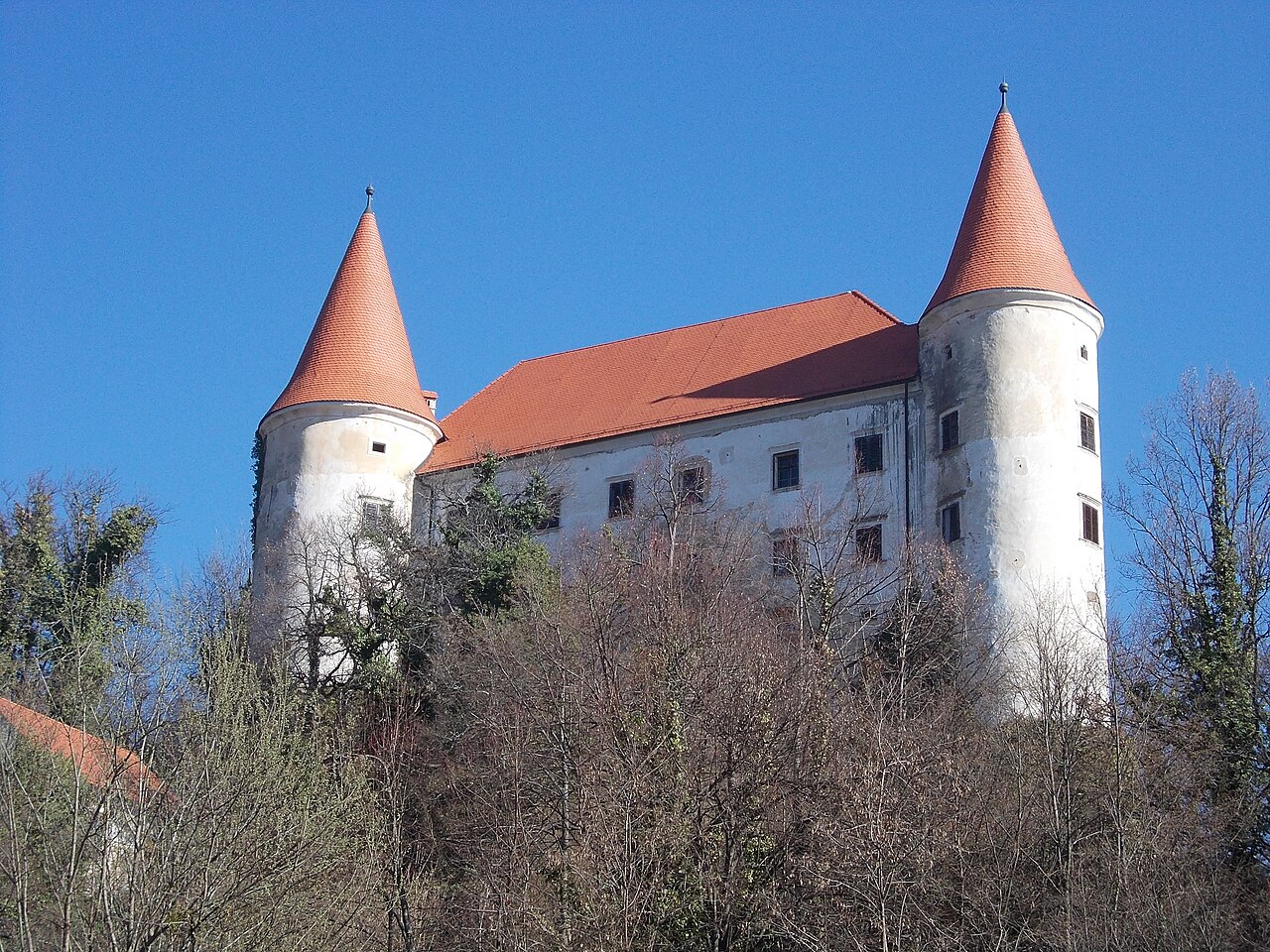
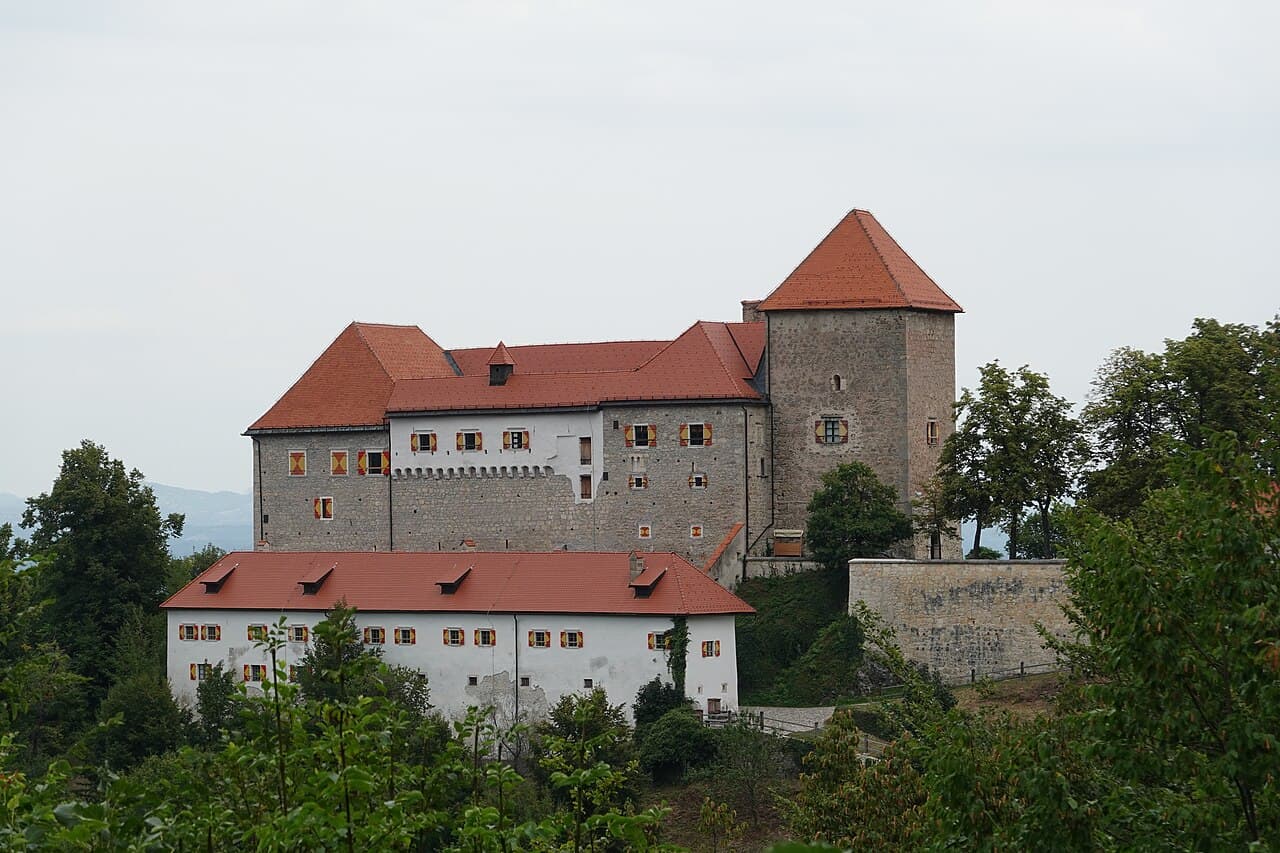
Podsreda Castle, located in the Kozje region of Slovenia, is one of the finest surviving examples of secular Romanesque architecture in the country. Constructed around 1150, this hill castle features a well-preserved 12th-century defensive tower (keep), a Romanesque chapel, and two wings built in the same period, all arranged in a characteristic rectangular plan typical of the late Romanesque style. The castle's architecture reflects the military and residential needs of the High Medieval period, combining defensive features with domestic spaces.

Architectural features and layout

The castle's defensive tower is a prominent feature, designed to provide a vantage point over the surrounding landscape. Its robust stone construction and narrow openings exemplify medieval defensive strategies. The Romanesque chapel within the castle complex is notable for its architectural purity and historical significance, preserving elements such as Romanesque double windows and chiselled window and door frames that were rediscovered during renovation works. The two wings, built contemporaneously with the tower and chapel, contribute to the castle's orderly and symmetrical appearance.

Historical ownership and significance

Throughout its history, Podsreda Castle has been owned by several noble families, including the counts of Celje and the counts of Ptuj. These families played important roles in the region during the High Medieval period, and their ownership reflects the castle's strategic and political importance. Originally known as Hörberg or Herberch, the castle served as a fortified residence and local administrative center.

Damage, neglect, and restoration efforts

During the Second World War, the castle suffered significant damage and was nearly destroyed. After the war, it was neglected for several decades, leading to further deterioration. However, starting in 1983, the Kozje Park Public Institute undertook extensive renovation efforts that lasted until 2015. These restoration works uncovered many forgotten features, including remains of medieval paintings and architectural details that had been obscured over time. The restoration preserved the castle's historical integrity while adapting it for modern use.

Cultural role and current use

Today, Podsreda Castle is open to visitors during the summer months and serves as a popular venue for weddings and cultural events. Its well-preserved state offers insight into High Medieval castle architecture and the lifestyle of the nobility during that era. The castle's location on a hill provides scenic views of the Slovenian countryside, enhancing its appeal as a historic site and tourist destination.

The castle in the context of slovenian heritage

As one of the best-preserved Romanesque castles in Slovenia, Podsreda Castle holds a significant place in the country's architectural heritage. Its preservation allows scholars and visitors alike to study the evolution of medieval fortifications and residential structures in the region. The castle's combination of military and religious architecture exemplifies the multifunctional nature of medieval castles.

Architectural details uncovered during renovation

The renovation revealed Romanesque double windows characterized by paired openings separated by a slender column, a hallmark of the period's style. The chiselled frames of windows and doors display the craftsmanship of medieval stonemasons. Additionally, traces of medieval frescoes were found, offering clues about the castle's decorative schemes and the cultural influences at the time of its construction.

Visiting podsreda castle

Visitors to Podsreda Castle can explore its historic rooms, including the chapel and defensive tower, and enjoy the surrounding natural landscape. The castle's summer opening hours make it accessible for tourists interested in medieval architecture and Slovenian history. Guided tours often highlight the castle's architectural features and its role in regional history.

Frequently asked questions (FAQ)

How do I get to Podsreda Castle?
Podsreda Castle is located in the picturesque village of Podsreda, Slovenia. It is accessible by car, with parking available nearby, and is also reachable by public transportation, with local bus services connecting it to larger cities.
What is the historical significance of Podsreda Castle?
Podsreda Castle dates back to the 12th century and is an important example of medieval architecture in Slovenia. It has served various roles throughout history, including as a defensive fortress and noble residence, reflecting the region's rich cultural heritage.
When was Podsreda Castle built?
Podsreda Castle was originally constructed in the late 12th century, making it one of the oldest castles in Slovenia. Over the centuries, it has undergone several renovations, preserving its historical essence while adapting to changing architectural styles.
Can I visit Podsreda Castle year-round?
Yes, Podsreda Castle is open to visitors throughout the year, although opening hours may vary by season. It is recommended to check the official website or contact the castle for specific visiting hours before planning your trip.
Why is the architecture of Podsreda Castle noteworthy?
The architecture of Podsreda Castle showcases a blend of Romanesque and Gothic styles, which is characteristic of medieval fortifications. Its towers, walls, and courtyards provide a glimpse into the architectural practices of the time, making it a fascinating site for history and architecture enthusiasts.
Is it possible to take guided tours of Podsreda Castle?
Yes, guided tours are available at Podsreda Castle, providing visitors with in-depth insights into its history and architecture. These tours are led by knowledgeable guides who can share fascinating stories and details about the castle's past.
What are the ticket prices for visiting Podsreda Castle?
Ticket prices for Podsreda Castle are generally affordable, with discounts available for students and seniors. It is advisable to check the official website for the latest pricing and any special offers before your visit.
When is the best time to visit Podsreda Castle?
The best time to visit Podsreda Castle is during the spring and early autumn months when the weather is mild and the surrounding landscape is at its most beautiful. This allows visitors to enjoy both the castle and its scenic grounds fully.
Are there any nearby attractions to Podsreda Castle?
Yes, Podsreda Castle is located near several attractions, including the stunning natural landscapes of the Savinja Valley and other historical sites in the region. Visitors can explore nearby towns and enjoy local cuisine, making it a perfect day trip destination.

Photo gallery

Podsreda Castle
Click to view

Photo by Janezdrilc•CC0

1 photo • Click any image to view in full screen

Information

Hill Castle

Sources & official resources

Verify the information above using these authoritative references.

Loading map...

Visitor reviews

No reviews yet. Been here? Write the first review and help other travelers!

Write the first review

Visited this castle? Share your experience

Your review helps other travelers and adds first-hand knowledge to our encyclopedia.

Write a review

(5/5)

0/2000 characters

Your review will be visible after admin approval

Nearby castles

4.4 km

Pisece Castle

Pišece, Slovenia

Pišece Castle is a notable late medieval fortress located in Pišece, Slovenia. The castle first appeared in written records in 1329, marking its significance during the 14th century. Originally constructed to serve the Archbishopric of Salzburg, it functioned as a key administrative and feudal seat overseeing the archbishops' estates in the region. The archbishops retained feudal rights over the castle until 1803, despite changes in ownership. Historical ownership and legal disputes In 1595, the castle was purchased by the prominent Moscon family, a noble lineage influential in the area. However, the transition of ownership was not straightforward. A legal dispute over rightful possession lasted for decades, culminating in a lawsuit resolved in 1637 that confirmed the Moscon family's ownership. The family maintained possession of the castle until the end of World War II, witnessing numerous historical events and transformations within its walls. Architectural evolution and renovations The castle has undergone several significant renovations reflecting evolving architectural styles and the needs of its inhabitants. Notably, reconstruction efforts were carried out in 1568, which likely introduced Renaissance influences. Later modifications during the Baroque era enhanced the castle's aesthetic and structural character, aligning with contemporary tastes. Further restoration took place in the 19th century, adapting the castle to modern requirements while preserving its historical essence. Structural features and design While specific architectural details of Pišece Castle's original medieval construction are limited, its longevity and renovations suggest a complex structure combining defensive and residential elements. The castle's layout would have included fortified walls, residential quarters, and administrative spaces typical of late medieval castles. The Baroque renovations likely added decorative elements and improved living conditions, reflecting the shift from purely defensive to more comfortable noble residences. Gardens and parkland Below the castle's park lies a terraced garden, a feature indicative of Renaissance or Baroque landscaping principles emphasizing symmetry and order. Surrounding this garden is an English landscape style park, characterized by its naturalistic design that contrasts with formal gardens. The park contains a variety of trees of foreign origin, such as sequoias, plane trees, catalpas, honey locusts, and ginkgos, which contribute to its botanical diversity and scenic appeal. This park is freely accessible to visitors, offering a tranquil environment that complements the historical ambiance of the castle. Current status and visitor information Presently, Pišece Castle is undergoing renovation to preserve its structural integrity and historical value. Due to ongoing works, visits to the castle are possible only by prior arrangement, requiring visitors to announce their arrival in advance. This controlled access helps protect the site while allowing interested individuals to experience its heritage. The castle remains an important cultural monument reflecting the region's medieval and post-medieval history. Significance in Slovenian heritage As a castle with origins in the 14th century and connections to the Archbishopric of Salzburg, Pišece Castle represents a significant historical link between religious authorities and local nobility. Its architectural transformations mirror broader European trends from medieval fortifications to Baroque residences. The surrounding parkland with exotic trees adds ecological and aesthetic value, making the castle a multifaceted heritage site in Slovenia.

Late Medieval (14th–15th c.)
Details
8.2 km
Bizeljsko Castle — Slovenia castle

Bizeljsko Castle

Bizeljska Vas, Slovenia

Bizeljsko Castle, located in Bizeljska Vas in southeastern Slovenia, is a notable example of a hill castle with a complex architectural history spanning several centuries. First mentioned in written sources in 1404, the castle's origins trace back to the 14th century, with the oldest visible structures reflecting its late medieval beginnings. Over time, the castle evolved through multiple phases of construction and renovation, incorporating Gothic and Baroque elements that illustrate its adaptation from a fortified residence to a noble estate with both defensive and residential functions. Architectural layout and defensive features The castle is divided into two main parts: a residential core and an outer defensive zone. The residential section forms the heart of the complex and includes a Baroque chapel dedicated to St. Hieronymus, built in 1623. This chapel stands as a prominent feature within the castle grounds, representing the shift towards more refined, religious architectural additions during the early modern period. The outer part of the castle was designed for defense, featuring a surrounding wall and several towers. Although parts of this defensive perimeter have fallen into ruin, traces remain that speak to the castle's military purpose in a contested border region. The strategic position on a hill provided natural defense advantages, typical of hill castles constructed in the medieval period. Historical ownership and significance Bizeljsko Castle has a documented history of ownership by notable noble families. In 1532, the castle came into the possession of the Tattenbach family, who maintained control until 1671. Following them, the castle was owned by the Windisch-Graetz family, a prominent noble house with significant influence in the region. These families contributed to the castle's architectural evolution and its role as a regional power center. Architectural styles and interior features The castle preserves elements of its Gothic heritage, visible in the pointed arches and the overall layout of the inner courtyard. The courtyard itself is modest in scale and features an arcade from the 17th century. These arcades are decorated with painted motifs, although some additions were made later that do not harmonize well with the original design. The residential parts consist of diverse tracts surrounding the courtyard, reflecting the gradual expansion and adaptation of the castle to changing needs and tastes over the centuries. The combination of defensive and residential architecture illustrates the dual function of the castle in its historical context. Preservation and current condition Today, Bizeljsko Castle remains partly preserved. The residential section, including the chapel and courtyard, is in relatively good condition, while the outer defensive walls and towers are partially in ruins. This state of preservation offers insight into the castle's layered history and the challenges of maintaining such historic structures. Location and cultural context Situated in the village of Bizeljska Vas within the Municipality of Brežice, the castle occupies a strategic position in southeastern Slovenia. The region has a rich history of border conflicts and noble estates, making Bizeljsko Castle an important cultural landmark that reflects the area's medieval and early modern heritage. Architectural significance in Slovenian heritage Bizeljsko Castle represents a significant example of medieval fortification adapted through the Renaissance and Baroque periods. Its combination of Gothic defensive elements with later Baroque residential features provides valuable insight into the evolution of castle architecture in Slovenia. The chapel of St. Hieronymus is particularly notable for its artistic and religious value within the castle complex. Visitor experience and accessibility While the castle is not fully restored, visitors can explore the well-preserved residential areas and appreciate the historic arcades and chapel. The partially ruined defensive walls add to the atmosphere, offering a tangible connection to the castle's medieval past. The site is accessible from the village of Bizeljska Vas and contributes to the cultural tourism of the Brežice region.

Late Medieval (14th–15th c.)
Details
10.5 km

Rajhenburg Castle

Brestanica, Slovenia

Rajhenburg Castle is a historic fortress located in Brestanica, Slovenia, with origins tracing back to the 9th century. While the earliest structure was demolished in the early 10th century, the castle as it stands today largely derives from renovations undertaken between 1131 and 1147 under the direction of Bishop Konrad of Salzburg. This period marks the beginning of the castle's Romanesque architectural elements, particularly evident in the robust perimeter walls and the original chapel portal, which have survived through centuries of modification and reconstruction.The early history and medieval originsThe site of Rajhenburg Castle was initially fortified in the 9th century, a time when fortifications were crucial for controlling local territories and trade routes. The original fortress was destroyed in the early 900s, but its strategic importance led to its reconstruction in the High Medieval period. The castle was significantly rebuilt in the 12th century, with the Romanesque style dominating its early architectural features. The thick perimeter walls from this era demonstrate the medieval emphasis on defense and durability.Renaissance transformation and artistic heritageAround 1600, Rajhenburg Castle underwent a major transformation into a Renaissance residence. This period introduced a more refined architectural style, focusing on comfort and artistic expression alongside military functions. One of the castle's most remarkable features is the discovery of 16th-century frescoes, dating from the 1520s. These frescoes are among the oldest surviving castle paintings in Slovenia and depict allegorical representations of Christian virtues. On the first floor, visitors can find a nearly hidden secular fresco created by the Master from Marija Gradec around 1530, illustrating the cultural richness of the castle during the Renaissance.Architectural features and interior detailsThe castle's Romanesque perimeter walls remain a significant architectural feature, showcasing the construction techniques of the 12th century with their massive stonework and defensive design. The castle chapel retains its original Romanesque portal, a rare survival that connects visitors to the medieval origins of the site, despite the chapel itself being sturdily reconstructed in the 16th century. Inside, the castle contains several profiled timber work ceilings and terraced walls, adding to its architectural complexity. A unique aspect of Rajhenburg Castle is the architectural decoration of the inner façades, which reflects the blend of medieval fortification and Renaissance residential aesthetics.Notable owners and historical rolesThroughout its history, Rajhenburg Castle was owned by several prominent families and groups, including the Rajhenburg noble family, the Moscon noble family, the Knights Gradeneck, the Barons Gall Galenstein, and the Counts Attems. Each of these owners contributed to the castle's development and its role in regional politics and society.20th-century history and modern useIn 1884, the castle became home to Trappist monks, who established a chocolate and liqueur production facility within its walls. However, the castle's role shifted dramatically during World War II. In April 1941, the German forces converted Rajhenburg Castle into a central camp for deporting Slovenes. Approximately 45,000 Slovenes were sent into exile from this location during the war. After the conflict, the castle was repurposed as a women's prison, reflecting its continued use as a site of confinement and control.In 1968, Rajhenburg Castle was transformed into the Museum of Political Prisoners, Internees and Deportees, affiliated with the National Museum of Contemporary History. This permanent exhibition operated until 2011. Following a comprehensive renovation, the castle reopened in 2013 with a new exhibition dedicated to the Trappist order, highlighting the religious and cultural history of the monastic community that once inhabited the site.Visiting Rajhenburg Castle todayToday, Rajhenburg Castle stands as a well-preserved historical monument that offers visitors insight into medieval fortifications, Renaissance art, and 20th-century history. Its combination of architectural styles and layers of history make it a significant cultural landmark in Slovenia. The castle's exhibitions provide educational opportunities about its varied past, from noble residence to monastic production site, wartime deportation camp, and museum.

High Medieval (11th–13th c.)
Details