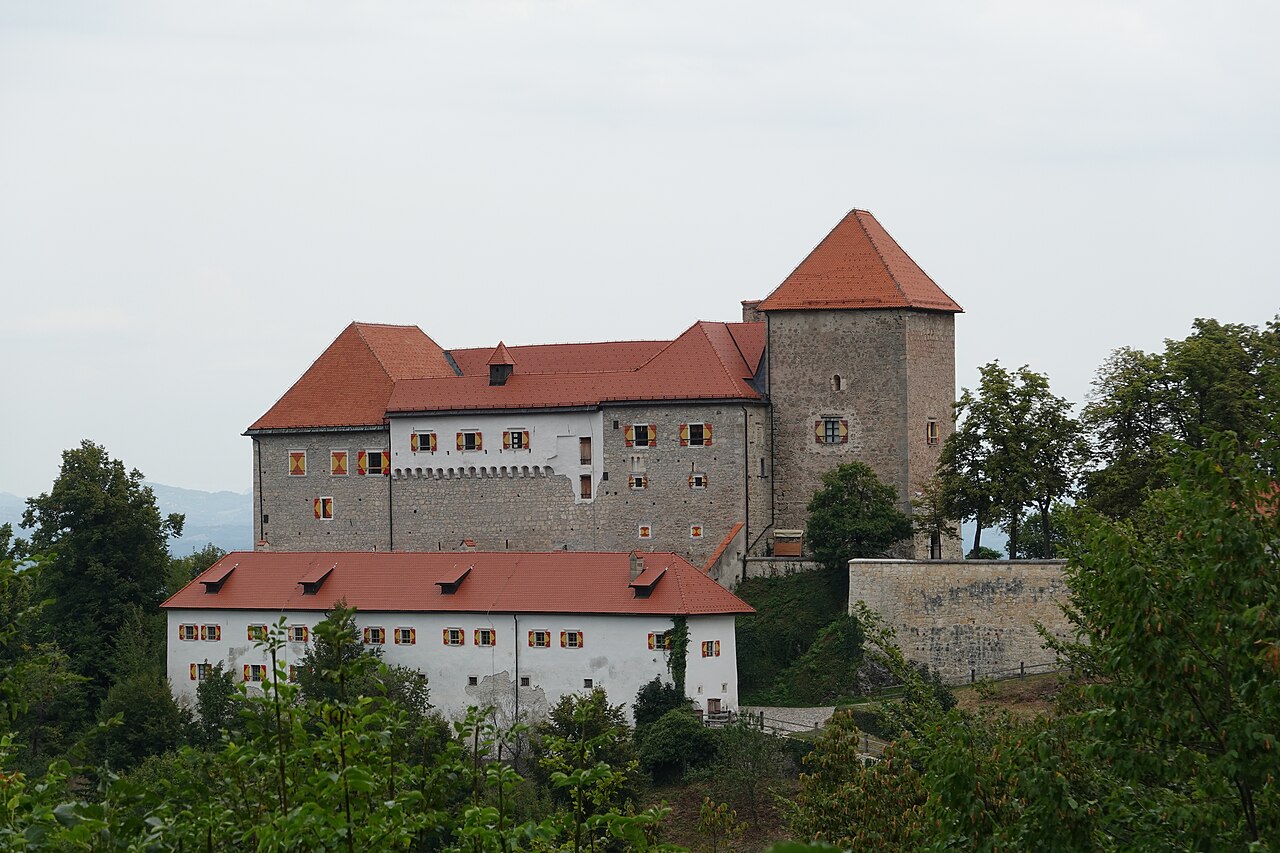
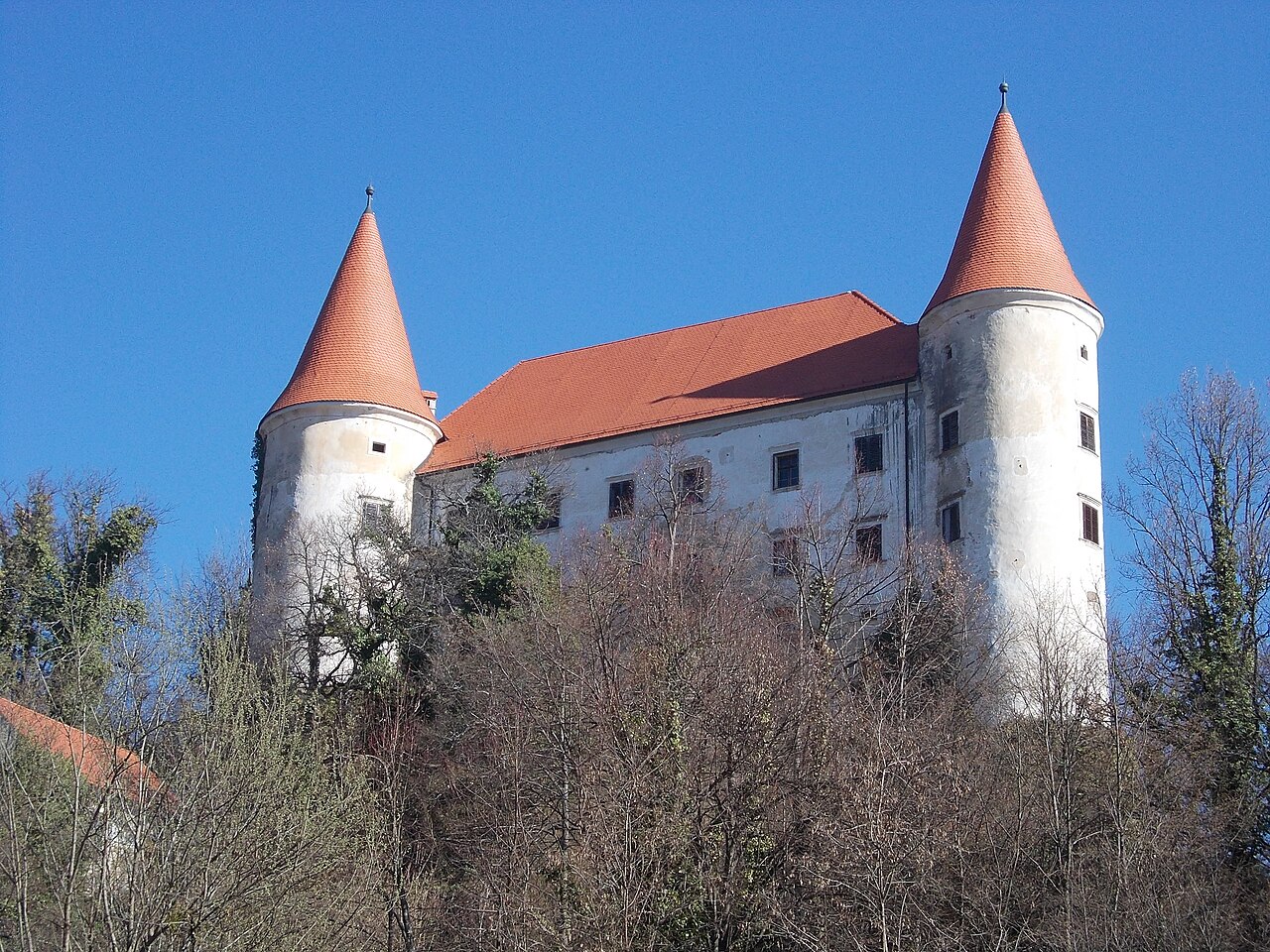
Pišece Castle is a notable late medieval fortress located in Pišece, Slovenia. The castle first appeared in written records in 1329, marking its significance during the 14th century. Originally constructed to serve the Archbishopric of Salzburg, it functioned as a key administrative and feudal seat overseeing the archbishops' estates in the region. The archbishops retained feudal rights over the castle until 1803, despite changes in ownership.
Historical ownership and legal disputes
In 1595, the castle was purchased by the prominent Moscon family, a noble lineage influential in the area. However, the transition of ownership was not straightforward. A legal dispute over rightful possession lasted for decades, culminating in a lawsuit resolved in 1637 that confirmed the Moscon family's ownership. The family maintained possession of the castle until the end of World War II, witnessing numerous historical events and transformations within its walls.
Architectural evolution and renovations
The castle has undergone several significant renovations reflecting evolving architectural styles and the needs of its inhabitants. Notably, reconstruction efforts were carried out in 1568, which likely introduced Renaissance influences. Later modifications during the Baroque era enhanced the castle's aesthetic and structural character, aligning with contemporary tastes. Further restoration took place in the 19th century, adapting the castle to modern requirements while preserving its historical essence.
Structural features and design
While specific architectural details of Pišece Castle's original medieval construction are limited, its longevity and renovations suggest a complex structure combining defensive and residential elements. The castle's layout would have included fortified walls, residential quarters, and administrative spaces typical of late medieval castles. The Baroque renovations likely added decorative elements and improved living conditions, reflecting the shift from purely defensive to more comfortable noble residences.
Gardens and parkland
Below the castle's park lies a terraced garden, a feature indicative of Renaissance or Baroque landscaping principles emphasizing symmetry and order. Surrounding this garden is an English landscape style park, characterized by its naturalistic design that contrasts with formal gardens. The park contains a variety of trees of foreign origin, such as sequoias, plane trees, catalpas, honey locusts, and ginkgos, which contribute to its botanical diversity and scenic appeal. This park is freely accessible to visitors, offering a tranquil environment that complements the historical ambiance of the castle.
Current status and visitor information
Presently, Pišece Castle is undergoing renovation to preserve its structural integrity and historical value. Due to ongoing works, visits to the castle are possible only by prior arrangement, requiring visitors to announce their arrival in advance. This controlled access helps protect the site while allowing interested individuals to experience its heritage. The castle remains an important cultural monument reflecting the region's medieval and post-medieval history.
Significance in Slovenian heritage
As a castle with origins in the 14th century and connections to the Archbishopric of Salzburg, Pišece Castle represents a significant historical link between religious authorities and local nobility. Its architectural transformations mirror broader European trends from medieval fortifications to Baroque residences. The surrounding parkland with exotic trees adds ecological and aesthetic value, making the castle a multifaceted heritage site in Slovenia.
Frequently asked questions (FAQ)
- How do I arrange a visit to Pišece Castle?
- Visits to Pišece Castle are possible only by prior arrangement. You need to announce your arrival in advance to gain access, as the castle is currently under renovation.
- What is the historical significance of Pišece Castle?
- Pišece Castle was built in the 14th century to serve the Archbishopric of Salzburg and later owned by the Moscon family. It reflects medieval and Baroque architectural influences and regional history.
- What architectural styles can be seen at Pišece Castle?
- The castle features a mix of styles due to renovations in the Renaissance, Baroque era, and the 19th century, blending medieval fortification elements with later decorative and residential modifications.
- Is the park around Pišece Castle open to the public?
- Yes, the park surrounding Pišece Castle is freely accessible and features an English landscape style with exotic trees like sequoias and ginkgos.
- When was Pišece Castle first mentioned in historical records?
- Pišece Castle first appeared in written sources in 1329, marking its documented history from the early 14th century.
Information
Loading map...
Visitor reviews
No reviews yet. Been here? Write the first review and help other travelers!
Write the first reviewVisited this castle? Share your experience
Your review helps other travelers and adds first-hand knowledge to our encyclopedia.