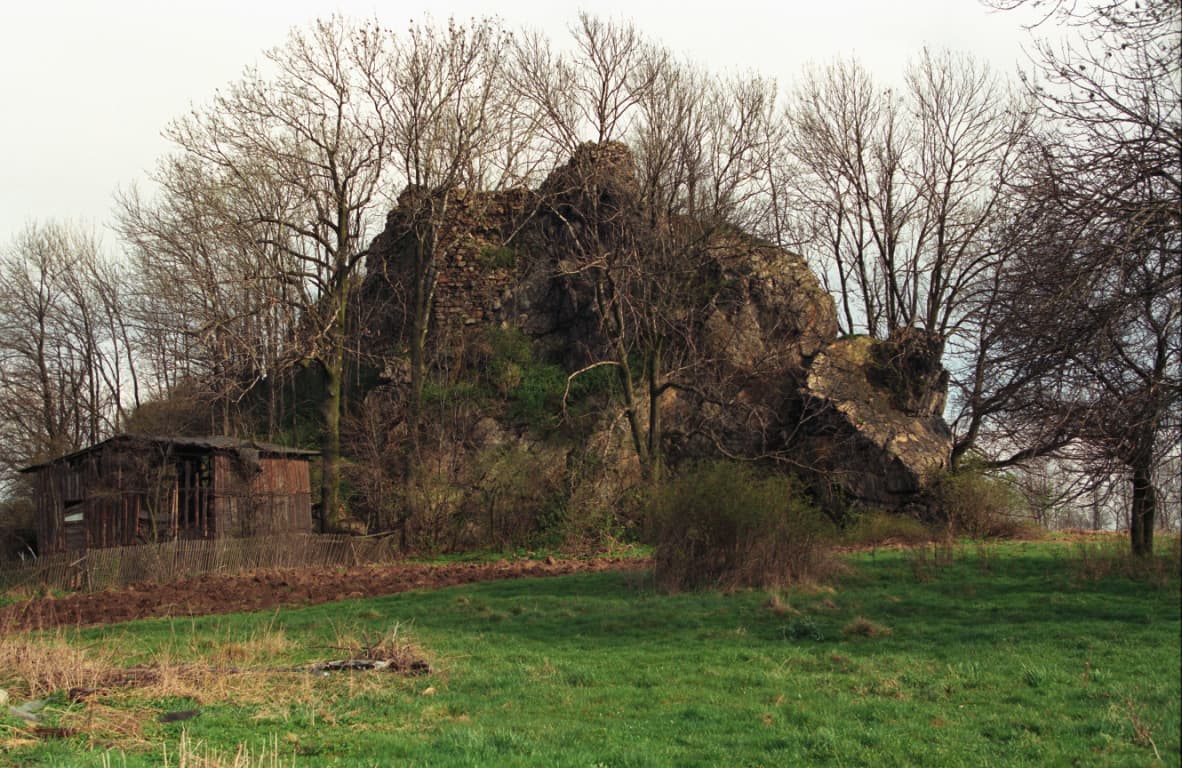
Podskale Castle, located in the village of Rząsiny within the historical region of Lower Silesia, Poland, stands as a significant medieval fortress whose ruins offer insight into the turbulent feudal era of Central Europe. This bastioned fortress was strategically built on a narrow rocky ridge known as the Talkenstein, utilizing the natural steep slopes for defense. Its origins trace back to the late 14th or early 15th century, with the earliest confirmed ownership by the noble von Talkenberg family, who likely initiated its construction to control borderlands and protect vital trade routes.
Historical background and ownership
The site of Podskale Castle may have hosted a princely stronghold as early as the 13th century, guarding the frontier of the Silesian duchies, although archaeological evidence to confirm this is lacking. The first reliable documentary evidence dates to 1367 when the castle was recorded as property of the brothers Reintsch and Nickel von Talkenberg. Nickel von Talkenberg appears as sole owner between 1385 and 1387, indicating the family's established control during the high medieval period.
During the 15th century, the castle became infamous as a base for the robber knight Bernhard von Talkenberg, who preyed on merchants and townspeople in the region. This lawlessness prompted intervention by King Matthias Corvinus of Hungary, who ruled Silesia from 1469. In 1476, royal forces led by Georg von Stein besieged and destroyed Podskale Castle by undermining its walls and using explosives, effectively ending its military role.
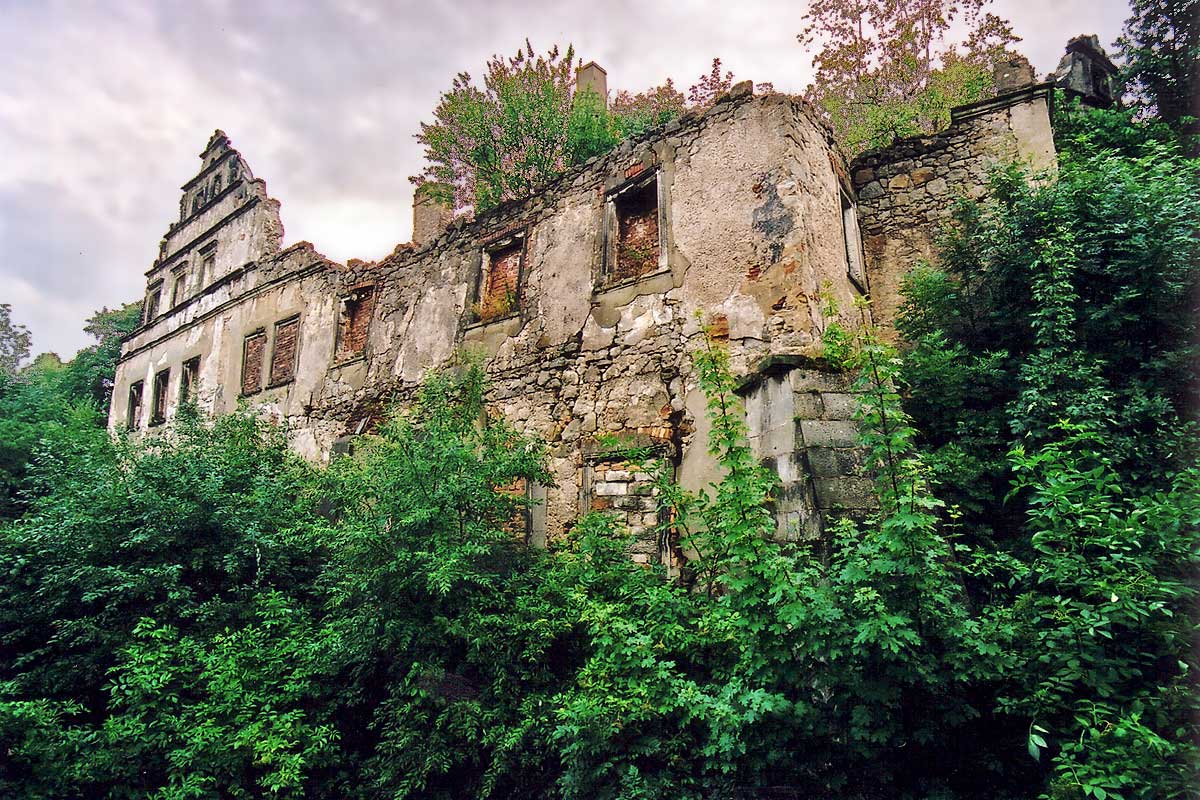
Following its destruction, the castle was never rebuilt. The von Talkenberg family shifted residence to a Renaissance manor in nearby Płakowice. Over subsequent centuries, the ruins changed hands among noble families such as the von Lest, von Poser, and von Schmettau clans. In the early 19th century, Russian Field Marshal Hans Karl von Diebitsch-Sabalkanski, then owner of the estate, halted further dismantling of the ruins in 1830, preserving the remains from complete loss.
Architectural features and layout
Podskale Castle exemplifies medieval fortress architecture adapted to challenging topography. It occupies a rocky ridge approximately 25 meters high and 100 paces long, with steep slopes on most sides and a gentler western approach serving as the entrance. The castle's irregular plan reflects the natural contours of the site, divided into two main sections: the upper castle and the lower castle or bailey.
Upper castle
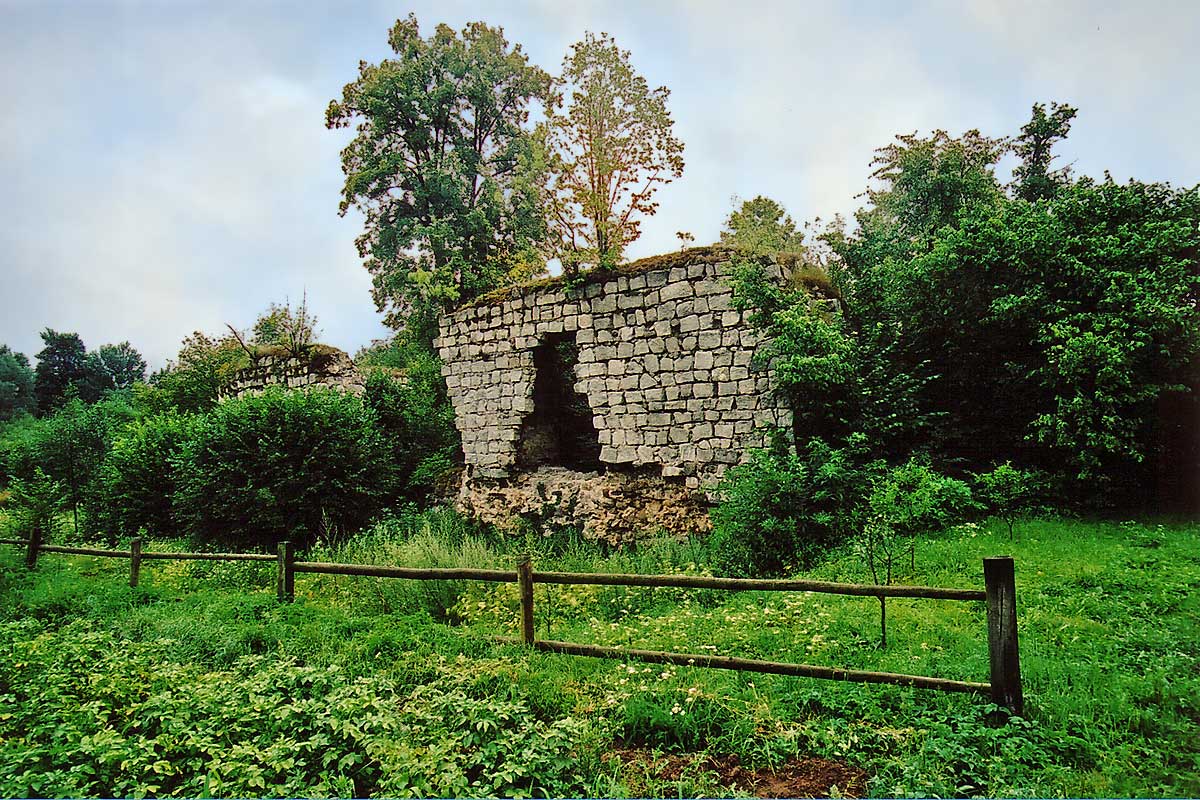
The upper castle crowns the summit on a plateau about seven meters wide. It likely housed the main residential building, surrounded by defensive rubble stone walls pierced by arrow slits for archers. These walls demonstrate the castle's primary defensive measures, leveraging the steep drops on three sides for natural protection. Surviving fragments suggest the presence of living quarters and functional spaces within this enclosure.
Lower castle and ancillary structures
The lower castle is situated on the gentler western slope and served as the main access point. It contains remnants of a vaulted cellar, indicating storage or service functions. The masonry throughout the site uses roughly shaped stones bonded with mortar, typical of medieval construction that harmonizes with the rugged rock foundation.
Decline and preservation
After its destruction in the late 15th century, Podskale Castle fell into ruin and was never reconstructed. In the late 18th century, local inhabitants began dismantling the ruins to reuse stone materials for other building projects. This practice was interrupted in 1830 by Field Marshal Diebitsch-Sabalkanski, who recognized the historical value of the site and protected its remains.
Today, visitors can observe partial stone walls with arrow slits atop the summit and the remains of the vaulted cellar below, offering tangible links to the castle's medieval past. The site remains a valuable cultural heritage monument reflecting the region's feudal conflicts and architectural adaptation to natural terrain.
Podskale castle in the context of silesian medieval fortifications
Podskale Castle represents a typical example of a bastioned fortress in Silesia, built to secure strategic border areas and control trade routes during the high to late medieval periods. Its history of ownership, conflict, and destruction illustrates the volatile nature of feudal power struggles, particularly the challenge posed by robber knights disrupting commerce and royal authority.
The castle's fate under King Matthias Corvinus epitomizes the efforts of central rulers to impose order and curtail the autonomy of unruly nobles. Its ruins today serve as a testament to these historical dynamics and the architectural ingenuity employed in fortress construction on difficult terrain.
Visiting podskale castle today
Although Podskale Castle exists only as ruins, it remains an intriguing destination for history enthusiasts and those interested in medieval architecture. The site offers a glimpse into the defensive strategies and living conditions of a medieval fortress adapted to a rocky outcrop. Visitors can explore the remnants of walls, arrow slits, and vaulted cellars that evoke the castle's past prominence.
The castle is accessible via hiking trails in the area, with interpretive signage providing historical context. Preservation efforts have stabilized the ruins to prevent further decay, allowing continued appreciation of this cultural landmark within Lower Silesia.
Frequently asked questions about podskale castle
- When was Podskale Castle built? The castle was likely constructed in the late 14th or early 15th century, with earlier origins possible but unconfirmed.
- Who built Podskale Castle? The noble von Talkenberg family is credited with building or acquiring the castle during the 14th century.
- What is the architectural style of Podskale Castle? The castle exhibits medieval fortress architecture adapted to a rocky ridge, featuring rubble stone walls and arrow slits.
- Why was Podskale Castle destroyed? It was destroyed in 1476 by royal forces under King Matthias Corvinus to suppress robber knight activities.
- Can I visit the ruins of Podskale Castle? Yes, the ruins are accessible to the public and offer insights into medieval fortification techniques.
- What remains of Podskale Castle today? Partial stone walls with arrow slits and a vaulted cellar remain visible on the rocky summit and slope.
- Is there an entrance fee to visit Podskale Castle? Typically, there is no entrance fee as the site is open-air ruins accessible via public trails.
- What is the best time to visit Podskale Castle? Spring through autumn offers favorable weather for exploring the outdoor ruins and surrounding landscape.
Frequently asked questions (FAQ)
- When was Podskale Castle built?
- Podskale Castle was likely constructed in the late 14th or early 15th century, although some hypotheses suggest earlier origins that remain unconfirmed due to lack of archaeological evidence.
- Who built Podskale Castle?
- The castle was built or acquired by the noble von Talkenberg family, who were the first known owners and likely initiators of its construction during the 14th century.
- Why was Podskale Castle destroyed?
- Podskale Castle was destroyed in 1476 by royal forces under King Matthias Corvinus to end the robber knight activities of its owner, Bernhard von Talkenberg.
- What remains of Podskale Castle today?
- Today, visitors can see partial stone walls with arrow slits on the summit and the vaulted cellar remains on the lower slope, reflecting the castle's medieval defensive and residential structures.
- Can I visit Podskale Castle?
- Yes, the ruins of Podskale Castle are accessible to the public, offering a historical experience of medieval fortification adapted to a rocky ridge.
- Is there an entrance fee to visit Podskale Castle?
- Typically, there is no entrance fee as the site consists of open-air ruins accessible via hiking trails.
- What is the best time to visit Podskale Castle?
- The best time to visit is from spring to autumn when weather conditions are favorable for exploring the ruins and surrounding landscape.
Photo gallery

Information
Sources & official resources
Verify the information above using these authoritative references.
Loading map...
Visitor reviews
No reviews yet. Been here? Write the first review and help other travelers!
Write the first reviewVisited this castle? Share your experience
Your review helps other travelers and adds first-hand knowledge to our encyclopedia.