Plympton Castle
Plympton Castle stands as a notable example of Norman military architecture in the United Kingdom, located in the Plympton area of Plymouth. Constructed originally in the early 12th century, this motte-and-bailey castle reflects the strategic fortification methods introduced by the Normans following their conquest of England. Its historical trajectory spans centuries of conflict, reconstruction, and adaptive reuse, illustrating the evolving role of castles in medieval and early modern England.
Early construction and the anarchy
The castle’s origins trace back to a wooden fortress established by either Richard de Redvers or his son Baldwin de Redvers. This initial structure was typical of early Norman defensive designs, featuring a raised earthwork mound known as a motte topped with a wooden keep, and an enclosed courtyard or outer bailey. In 1136, during the turbulent period of civil war known as The Anarchy, King Stephen seized and destroyed this wooden stronghold. The conflict between Stephen and Empress Matilda for the English crown led to widespread military actions, including the destruction of key fortifications like Plympton Castle.
Stone reconstruction and medieval significance
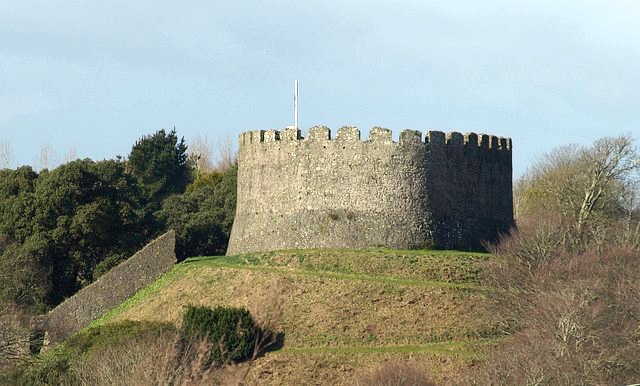
Following Baldwin de Redvers’ elevation as Earl of Devon, the castle was rebuilt in stone beginning in 1141. This transition from wood to stone was part of a broader trend in castle construction during the high medieval period, aimed at improving defensive capabilities and asserting noble authority. The stone keep of Plympton Castle was roughly circular, about 15 meters in diameter, and originally rose to approximately 10 meters in height. Its rubble stone walls included a wehrgang or battlement walkway, allowing defenders to patrol and defend the perimeter effectively.
Throughout the 13th century, Plympton Castle maintained its military importance. In 1224, it was held by Falkes de Bréauté, a notable figure allied with rebellious barons against King Henry III. After a 15-day siege led by Sheriff Robert de Courtenay, royal forces recaptured the castle, reaffirming the crown’s control. The castle’s ongoing relevance is further evidenced by a recorded visit from Edward, the Black Prince, in 1370, highlighting its status as a significant stronghold during the medieval era.
Decline and civil war destruction
By the 16th century, Plympton Castle’s military role diminished, and it gradually fell into disuse. The defensive walls remained standing, but many buildings deteriorated. During the English Civil War, Royalist troops occupied the castle in 1643 amid the Siege of Plymouth. The castle was captured by Parliamentarian forces in 1644, and in 1647 it was deliberately slighted—partially demolished—to prevent further military use.
Post-medieval use and preservation
In the 18th and 19th centuries, the castle’s outer bailey was repurposed as a public festival ground, integrating the historic site into local community life. The ruins entered municipal ownership in 1922 and have been preserved as a protected heritage site. Plympton Castle is now a Grade II* listed building and a Scheduled Monument, ensuring its conservation for future generations.
Architectural features and site layout
Plympton Castle exemplifies the Norman motte-and-bailey design, with an artificial mound (motte) supporting the central keep and an adjacent enclosed courtyard (outer bailey) to the west. The keep’s circular form and rubble stone construction are characteristic of 12th-century military architecture. Defensive ditches surrounded the castle, remnants of which remain visible through archaeological evidence.
The main entrance was situated on the western side, providing access through the outer bailey to the keep. While no residential or service buildings from the bailey survive above ground today, their former presence is indicated by archaeological findings. The site sits approximately 30 meters above sea level, about two kilometers east of the River Plym, near the Plympton Pathfields park.
The keep
The castle’s keep was a roughly circular tower approximately 15 meters across and originally about 10 meters tall. Its thick rubble stone walls included a wehrgang, a battlement walkway around the top, which allowed defenders to patrol the perimeter. Today, only fragments of the keep’s walls survive, reaching up to four meters in height, but these remains offer insight into the castle’s original defensive strength.
Outer bailey and defenses
The outer bailey served as the administrative and service area of the castle, enclosed by defensive walls and ditches. Though no buildings survive above ground, this area would have contained essential structures such as barracks, stables, and workshops. Defensive ditches around the motte and bailey enhanced the castle’s protection against siege warfare.
Frequently asked questions (FAQ)
- How do I get to Plympton Castle?
- Plympton Castle is located in the town of Plympton in Devon, United Kingdom. It is easily accessible by car, with parking available nearby, and can also be reached via public transport, including buses and trains to the nearest stations.
- What is the historical significance of Plympton Castle?
- Plympton Castle dates back to the 13th century and played a crucial role in the defense of the region during medieval times. It served as a royal residence and was associated with notable figures, such as the Plantagenet kings, emphasizing its importance in English history.
- When was Plympton Castle built?
- Plympton Castle was originally constructed in the early 13th century, with significant alterations made in the subsequent years. The castle's architecture reflects the style and defensive needs of the period, making it a fascinating site for history enthusiasts.
- Can I explore the interior of Plympton Castle?
- Currently, the interior of Plympton Castle is not fully accessible for exploration, as much of it remains in ruins. However, visitors can enjoy walking around the castle grounds and appreciate the stunning views and historical context of the site.
- Why is Plympton Castle a popular tourist attraction?
- Plympton Castle attracts visitors due to its rich history, impressive ruins, and scenic location. It offers a glimpse into medieval life and architecture, making it a popular destination for history buffs and families alike.
- Is it possible to visit Plympton Castle year-round?
- Yes, Plympton Castle is open to visitors throughout the year, although specific opening hours may vary by season. It is advisable to check the official website for the most current visiting times and any seasonal events that may enhance your visit.
- What are the ticket prices for visiting Plympton Castle?
- Admission to Plympton Castle is typically free, allowing visitors to explore the grounds without a ticket fee. Special events or guided tours may have associated costs, so it's best to check in advance for any specific activities you might want to join.
- What is the best time to visit Plympton Castle?
- The best time to visit Plympton Castle is during the spring and summer months when the weather is pleasant and the gardens are in full bloom. This is also when most special events and guided tours take place, providing a richer experience for visitors.
- Are there any nearby attractions to visit along with Plympton Castle?
- Yes, there are several nearby attractions to enhance your visit, including the beautiful Plympton St. Maurice and the scenic Dartmoor National Park. Additionally, the vibrant city of Plymouth is just a short drive away, offering further historical sites and cultural experiences.
Information
Website
Visit websiteSources & official resources
Verify the information above using these authoritative references.
Loading map...
Visitor reviews
No reviews yet. Been here? Write the first review and help other travelers!
Write the first reviewVisited this castle? Share your experience
Your review helps other travelers and adds first-hand knowledge to our encyclopedia.