Crownhill Fort
Crownhill Fort is a significant example of a 19th-century bastioned fortress built during the Victorian era as part of the extensive defensive network commissioned by the British government to protect the naval base at Plymouth. Constructed in the 1860s under the direction of the Royal Commission on the Defence of the United Kingdom, it forms a key element of what is commonly known as Palmerston's forts, a series of fortifications designed to defend against the threat of French invasion during the reign of Queen Victoria.
Historical context and strategic importance
During the mid-19th century, the British government, alarmed by advances in artillery and the expansion of the French Navy under Napoleon III, initiated a comprehensive review of coastal defences. This led to the establishment of the Royal Commission in 1859, which recommended a ring of forts around key naval dockyards, including Plymouth, to prevent enemy forces from approaching by land. Crownhill Fort was one of the largest and most robust of these fortifications, strategically positioned on high ground to the north of Plymouth to guard the approaches to the city and its vital naval facilities.
Architectural features and design
The design of Crownhill Fort reflects the principles of a bastioned fortress, characterized by angular bastions projecting from the main walls, allowing defenders to cover all approaches with overlapping fields of fire. The fort's layout is polygonal, with thick masonry walls and earthworks designed to absorb artillery fire. The use of caponiers—covered passages projecting into the ditch—enabled defenders to fire along the ditch's length, preventing attackers from gaining a foothold.
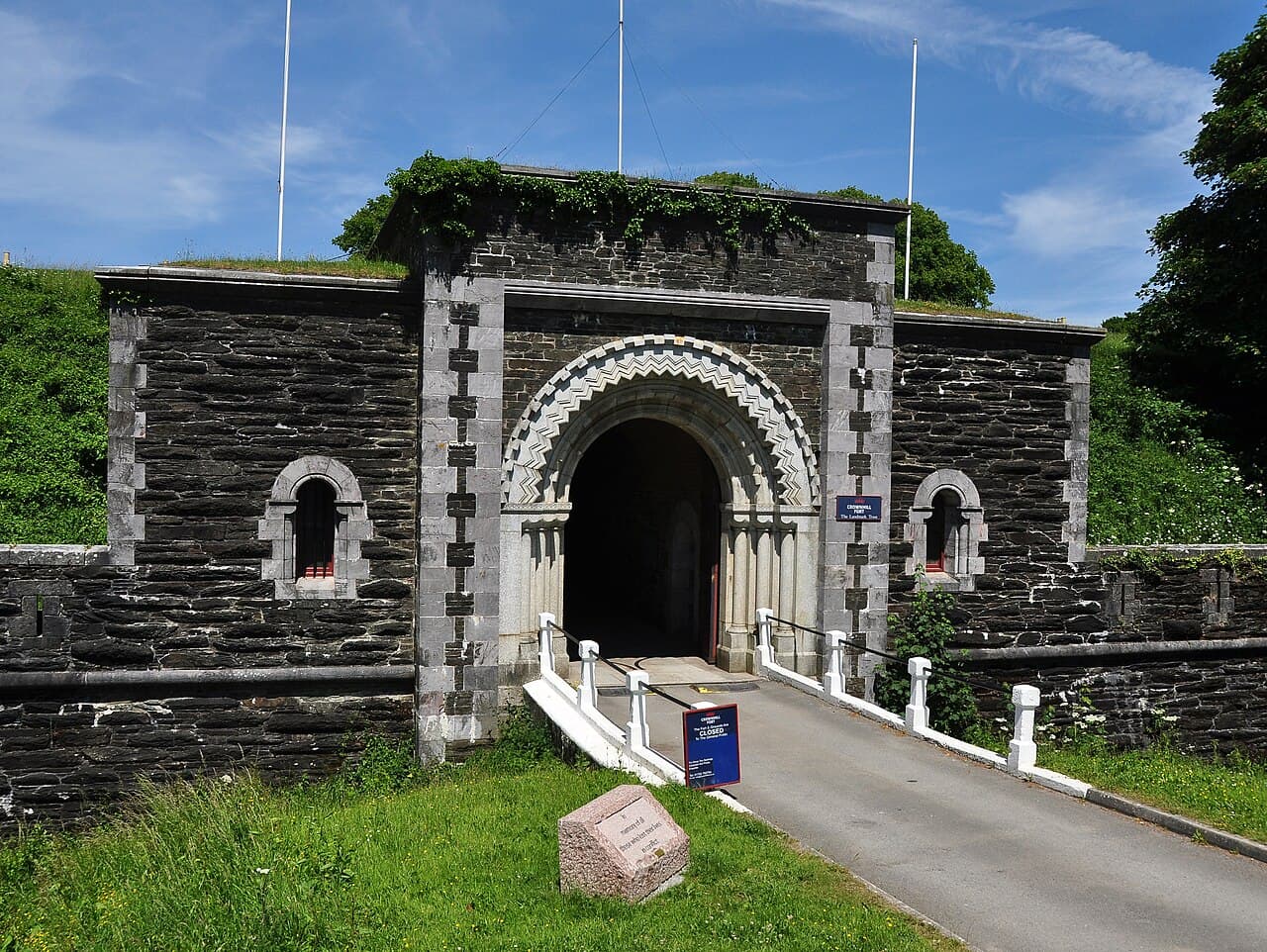
The fort includes a large dry moat surrounding the perimeter, enhancing its defensive capabilities. Inside, the fort contained barracks, magazines for ammunition storage, and gun emplacements designed to mount heavy artillery pieces. The fort's entrance was heavily fortified with a gatehouse and drawbridge, emphasizing security and controlled access.
Armament and military use
Originally, Crownhill Fort was armed with a mix of muzzle-loading and rifled artillery pieces, positioned to command the surrounding landscape and prevent enemy troops from advancing. Over time, as military technology evolved, the fort's armaments were updated to include more modern breech-loading guns. Despite never seeing combat, the fort served as a deterrent and a training facility for the British Army.
Restoration and current use
After falling out of military use in the 20th century, Crownhill Fort was restored by the Landmark Trust, a charity dedicated to preserving historic buildings. The restoration preserved the fort's structural integrity and many of its original features, making it one of the best-preserved examples of Victorian military architecture in the UK.
Today, the fort serves multiple purposes: it houses several small businesses, museums, and exhibitions that interpret its history and military significance. Visitors can explore the fort's extensive defensive works and learn about the broader context of Victorian coastal defences. Additionally, a holiday apartment within the fort accommodates up to eight guests, offering a unique experience of staying within historic military architecture.
Public access and educational programs
Crownhill Fort opens to the public on the last Friday of each month, providing guided tours and access to exhibitions. It also hosts educational tours for local schools and societies, fostering appreciation for military history and Victorian engineering. These programs highlight the fort's role in Britain's defensive strategy and its architectural innovations.
Architectural significance and preservation
The fort exemplifies the bastioned fortress style adapted to the challenges of 19th-century warfare, bridging traditional fortification methods with emerging military technologies. Its preservation offers valuable insights into the evolution of military architecture during the Modern period. The combination of masonry, earthworks, and artillery placements demonstrates the complexity and sophistication of Victorian defensive design.
As a well-preserved example of a Royal Commission fort, Crownhill Fort contributes to the understanding of Britain's coastal defence system and the geopolitical concerns of the era. Its ongoing use as a cultural and educational site ensures the fort remains relevant and accessible to contemporary audiences.
Frequently asked questions (FAQ)
- What is Crownhill Fort?
- Crownhill Fort is a historical fortress located in Plymouth, United Kingdom, built in the mid-19th century as part of the coastal defences for the naval base. It showcases Victorian military architecture and is a key example of the era's fortifications. The fort is now a popular attraction for those interested in history and military heritage.
- When was Crownhill Fort built?
- Construction of Crownhill Fort began in 1860 and was completed in 1872. It was designed to protect the naval base in Plymouth from potential invasions during a time of military tension. The fort played an active role in the defence of the region until it was decommissioned in the 20th century.
- What are the opening hours for Crownhill Fort?
- Crownhill Fort is generally open to the public on weekends and bank holidays, but it is advisable to check the official website for specific opening hours as they can vary seasonally. Guided tours may also be available at certain times, providing visitors with a deeper insight into the fort's history.
- Can I visit Crownhill Fort with children?
- Yes, Crownhill Fort is a family-friendly attraction and welcomes visitors of all ages. Children can explore the fort's extensive grounds and learn about its history through interactive displays and guided tours, making it an educational experience for the whole family.
- Is it possible to access Crownhill Fort by public transportation?
- Yes, Crownhill Fort is accessible by public transportation. Local bus services run nearby, making it convenient for visitors to reach the fort without the need for a car. Additionally, there may be parking facilities available for those who choose to drive.
- What is the best time to visit Crownhill Fort?
- The best time to visit Crownhill Fort is during the warmer months, from late spring to early autumn, when the weather is more pleasant for outdoor exploration. Special events and guided tours are often scheduled during this period, enhancing the visitor experience.
- Are there any nearby attractions to Crownhill Fort?
- Yes, Crownhill Fort is located near other notable attractions in Plymouth, including the historic Royal William Yard and the stunning Hoe, where you can find the iconic Smeaton's Tower lighthouse. Exploring these nearby sites can enhance your visit and provide a broader view of the area's rich maritime history.
- What are the ticket prices for Crownhill Fort?
- Ticket prices for Crownhill Fort can vary depending on the type of visit, such as guided tours or family tickets. It is recommended to check the official website for the most current pricing and any available discounts, including concessions for students and seniors.
Photo gallery

Information
Loading map...
Visitor reviews
No reviews yet. Been here? Write the first review and help other travelers!
Write the first reviewVisited this castle? Share your experience
Your review helps other travelers and adds first-hand knowledge to our encyclopedia.