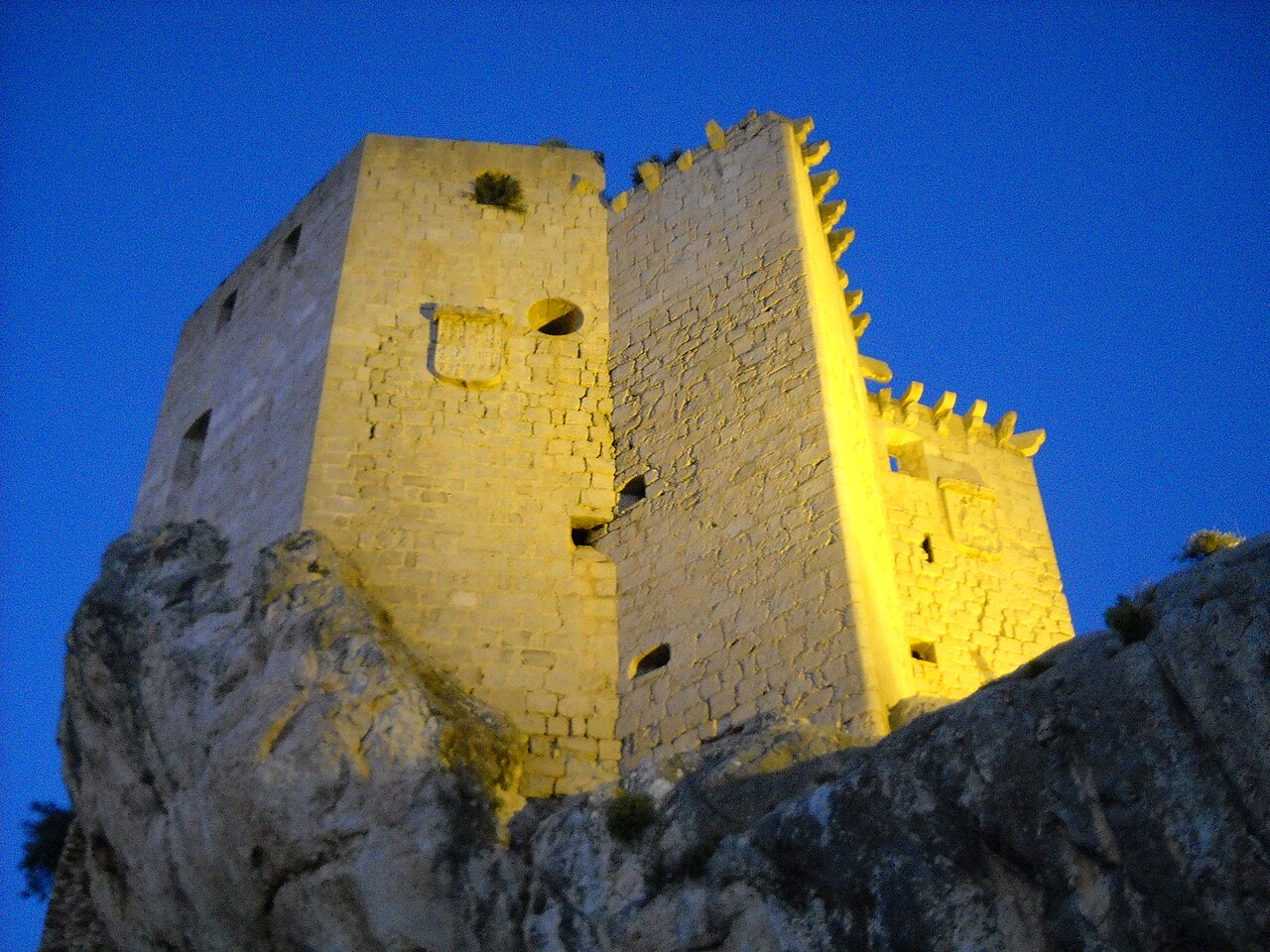
Pliego Castle
Pliego Castle, also known locally as Castillo de Pliego, is a historic fortress situated on a hill overlooking the town of Pliego in the Murcia region of Spain. This high medieval castle was constructed in the late 12th century by the Moors as a strategic defensive structure to protect the settlement of La Mota located beneath it. The castle's position on elevated terrain provided a commanding view of the surrounding landscape, which was crucial for surveillance and defense during a period of frequent conflict between Muslim and Christian forces on the Iberian Peninsula.
Historical background and significance
The origins of Pliego Castle are closely tied to the turbulent history of the Reconquista, the centuries-long series of campaigns by Christian kingdoms to reclaim territory from Muslim rulers. The castle was part of a network of fortifications built by the Moors to secure their hold on the region. The nearby remains of Las Paleras Castle are believed by some historians to be connected to the original settlement of La Mota, which the castle was intended to protect.
In 1243, following the Treaty of Alcaraz, the territory including Pliego was ceded by the Moors to the Kingdom of Castile. This treaty marked a significant turning point as it brought the area under Christian control while allowing the local Muslim population to remain under Castilian rule. Subsequently, Pliego Castle became an important military outpost for the Order of Santiago in the early 14th century. The Order appointed a warden to oversee the fortress, highlighting its continued strategic importance during this period.
By the early 16th century, the castle was abandoned and gradually fell into ruin. Its military relevance diminished as new forms of warfare and political stability reduced the need for such fortifications.
Architectural features and construction
Pliego Castle is notable for its construction using rammed earth, a technique involving compacted layers of soil to create sturdy walls. This method was common in the region during the medieval period due to the availability of materials and the practicality of the technique for rapid construction.
The castle’s layout features an almost quadrangular ground plan, designed to maximize defensive capabilities. It originally included six flanking towers strategically positioned around the perimeter to provide overlapping fields of fire and surveillance. A prominent keep served as the last line of defense and the residence of the castle’s commander or warden. Additionally, a cistern was incorporated within the castle to ensure a reliable water supply during sieges or droughts.
Although the castle is now in ruins, these elements reflect typical medieval military architecture adapted to the geographic and material conditions of the Murcia region.
Current condition and visitor information
Today, Pliego Castle stands as a ruined fortress accessible to the public without restrictions. While it may not be as visually imposing or well-preserved as other castles in Spain, it offers visitors a glimpse into the region’s medieval past and the architectural techniques used by the Moors and later Christian occupants.
The site is valued for its historical context and the panoramic views it offers of the surrounding countryside. Visitors interested in medieval military architecture or the history of the Reconquista will find Pliego Castle a worthwhile destination when exploring the Murcia area.
Pliego Castle in the context of Murcia's heritage
Murcia is home to several castles and fortifications dating from the medieval period, reflecting the region's role as a frontier zone between Muslim and Christian territories. Pliego Castle contributes to this rich heritage, illustrating the transition from Moorish to Christian control and the military strategies employed during this era.
Its rammed earth construction distinguishes it from many stone castles, providing insight into regional building practices and adaptations to local resources. The castle's history as an outpost of the Order of Santiago further connects it to the broader narrative of military orders in medieval Spain.
Architectural legacy and preservation challenges
The preservation of rammed earth castles like Pliego presents unique challenges due to the material’s susceptibility to erosion and weathering. Conservation efforts in the region focus on stabilizing the remaining structures to prevent further decay while maintaining the site's accessibility for educational and cultural purposes.
Despite its ruined state, Pliego Castle remains an important cultural landmark within Murcia, offering valuable insights into medieval fortification techniques and the complex history of the Iberian Peninsula during the Middle Ages.
Frequently asked questions (FAQ)
- How do I get to Pliego Castle?
- Pliego Castle is located near the town of Pliego in the Murcia region of Spain. It is accessible by local roads, and visitors can reach the site by car or on foot from the town center.
- What is the historical significance of Pliego Castle?
- Pliego Castle was built in the late 12th century by the Moors as a defensive fortress and later became a military outpost of the Order of Santiago after the area was ceded to the Kingdom of Castile in 1243.
- Can I visit Pliego Castle for free?
- Yes, the ruins of Pliego Castle are freely accessible to the public with no admission fee, making it an easy and affordable visit for those interested in medieval history.
- What remains can I see at Pliego Castle today?
- Visitors can see the ruins of the rammed earth walls, the foundations of six flanking towers, the keep, and the cistern that once supplied water during sieges.
- Is Pliego Castle suitable for families and children?
- Yes, the castle ruins are open to visitors of all ages. However, as it is a ruin, parents should supervise children closely due to uneven terrain and structural remains.
Information
Loading map...
Visitor reviews
No reviews yet. Been here? Write the first review and help other travelers!
Write the first reviewVisited this castle? Share your experience
Your review helps other travelers and adds first-hand knowledge to our encyclopedia.