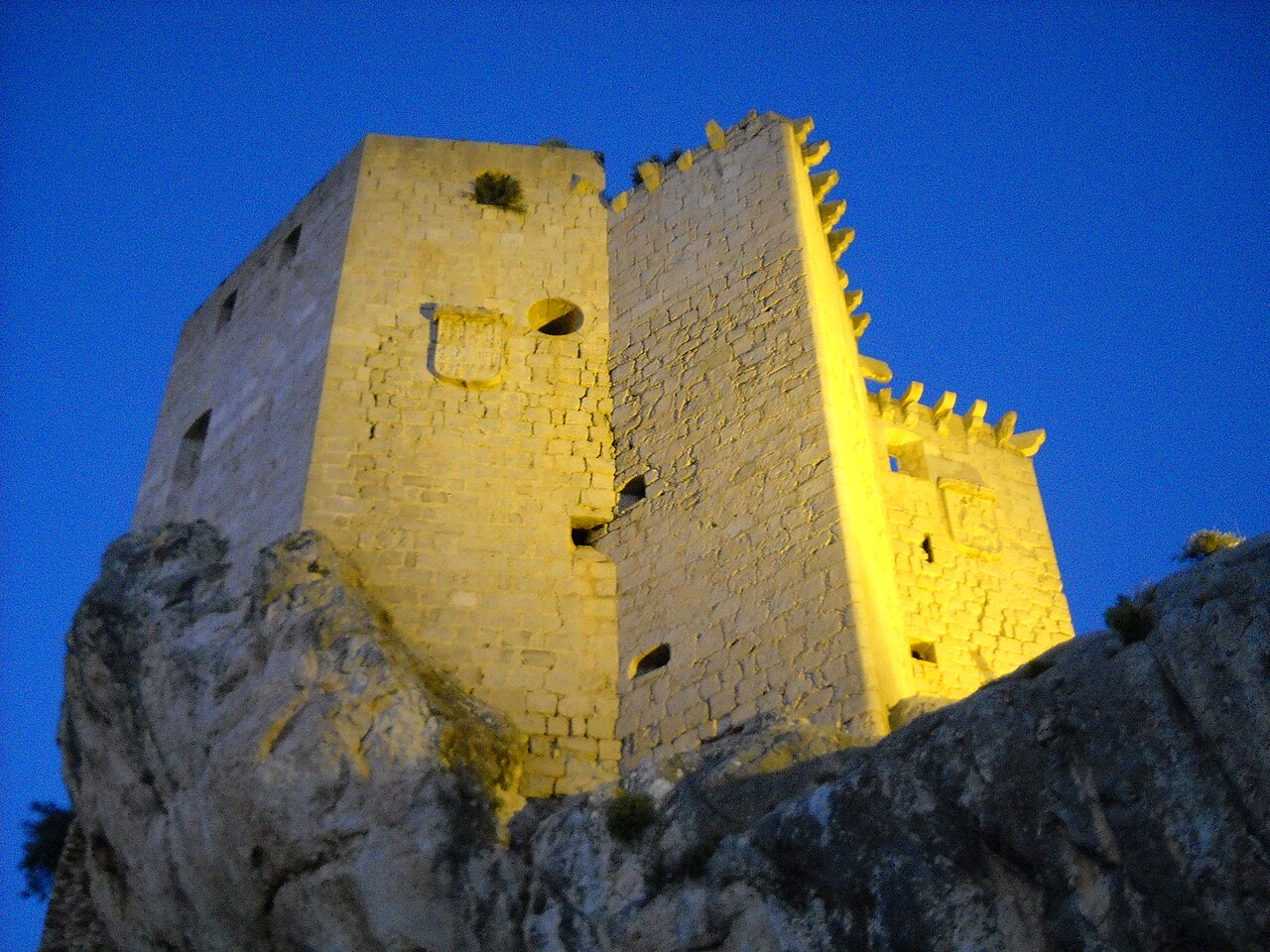
Las Paleras Castle
Las Paleras Castle, also referred to as Castillo de las Paleras, Castillo de la Mota, or Castillo de las Barracas, is a historic site located near the town of Pliego in the Murcia region of Spain. This castle stands beneath the more prominent Pliego Castle on a strategic hilltop nestled between two ravines, a location chosen for its natural defensive advantages.
Historical background and significance
The origins of Las Paleras Castle trace back to the High Medieval period, specifically the 12th century, during the era of Moorish rule in the Iberian Peninsula. The castle's construction is attributed to the Moors, who established it as a fortified site possibly serving as a walled settlement or a lookout point rather than a traditional castle. This is supported by the hypothesis that Las Paleras was known as La Mota, a term often used to describe a fortified mound or small stronghold.
Unlike many castles of its time, Las Paleras was built primarily using rammed earth techniques, a common construction method in Moorish architecture that involved compacting layers of earth to create sturdy walls. This method was well-suited to the local terrain and materials available in the Murcia region.
While historical records about the castle's specific role and events are scarce, archaeological evidence suggests that it was not subjected to any known sieges or destruction. The site likely fell out of use peacefully, possibly when the Moors either relocated to establish the modern town of Pliego or were displaced following the Christian Reconquista of the region.
Architectural features and construction
The castle's location on a hill between two ravines provided a natural defensive advantage, making it difficult for attackers to approach from multiple sides. The use of rammed earth walls reflects the adaptive strategies of Moorish builders in the region, balancing resource availability with defensive needs.
Though now largely in ruins and overgrown with vegetation, the remnants of the walls outline the perimeter of the former settlement. The absence of stone fortifications or extensive masonry suggests that Las Paleras functioned more as a fortified refuge or lookout rather than a heavily armed fortress.
Relationship with Pliego Castle
Pliego Castle, situated above Las Paleras, was likely constructed later as a more substantial fortification to protect the area. The proximity of the two sites indicates a strategic layering of defenses, with Las Paleras serving as an early warning or secondary defensive position.
This relationship underscores the evolving military architecture in the region during the transition from Moorish to Christian control, reflecting changes in defensive priorities and construction techniques.
Current condition and accessibility
Today, Las Paleras Castle is classified as ruins and is largely inaccessible due to dense overgrowth. The site offers limited visible remains, primarily earthworks and faint outlines of the original walls.
Visitors to the area often view Las Paleras from a distance, typically when visiting the nearby Pliego Castle. The site provides insight into the layered history of fortifications in Murcia, highlighting the modest scale and construction methods of earlier Moorish defensive works.
Preservation and heritage value
Despite its modest remains, Las Paleras Castle holds cultural and historical significance as a representation of High Medieval Moorish architecture in southeastern Spain. It contributes to the understanding of the region's military and settlement patterns during a period marked by complex interactions between Muslim and Christian forces.
Efforts to preserve such sites, even in their ruined state, are important for archaeological research and for educating the public about the diverse heritage of Murcia.
Frequently asked questions (FAQ)
- How do I get to Las Paleras Castle?
- Las Paleras Castle is located in Pliego, Spain, and can be easily reached by car or public transportation. If you're driving, take the A-7 motorway and follow signs to Pliego. There is parking available near the castle for visitors.
- What is the historical significance of Las Paleras Castle?
- Las Paleras Castle dates back to the 13th century and is an important example of medieval military architecture in the region. It played a crucial role during the Reconquista, serving as a defensive stronghold. The castle’s history reflects the cultural and political dynamics of Spain during that era.
- When was Las Paleras Castle built?
- The construction of Las Paleras Castle began in the early 13th century, around the time when the Moors were being pushed out of Spain. It underwent several modifications and restorations over the centuries, contributing to its unique architectural style. Today, it stands as a testament to both its historical and architectural significance.
- Can I visit Las Paleras Castle year-round?
- Yes, Las Paleras Castle is open to visitors throughout the year, although opening hours may vary by season. It’s advisable to check the official website or local tourist information for specific hours and any special events. Visiting during the off-peak season can provide a quieter experience.
- Why is Las Paleras Castle considered an architectural gem?
- Las Paleras Castle features a blend of Moorish and Christian architectural styles, showcasing the influences of both cultures. Its well-preserved walls, towers, and battlements offer a glimpse into medieval construction techniques. The castle's strategic position also enhances its historical and aesthetic appeal.
- Is it possible to take guided tours of Las Paleras Castle?
- Yes, guided tours are available at Las Paleras Castle, providing visitors with in-depth insights into its history and architecture. Tours are led by knowledgeable guides who can share fascinating stories and details that are not always available in written materials. It's recommended to book in advance, especially during the tourist season.
- What are the ticket prices for visiting Las Paleras Castle?
- Ticket prices for Las Paleras Castle are quite reasonable, typically ranging from €5 to €10, depending on whether you are an adult, child, or senior. Discounts may be available for groups or students, so it's worth inquiring at the ticket office. Keep in mind that prices may vary during special events or peak seasons.
- What is the best time to visit Las Paleras Castle?
- The best time to visit Las Paleras Castle is during the spring and fall months when the weather is pleasant and the crowds are smaller. These seasons provide ideal conditions for exploring the castle and enjoying the surrounding landscape. Summer can be quite hot, while winter may bring occasional rain, so plan accordingly.
- Are there any nearby attractions to explore after visiting the castle?
- Yes, after visiting Las Paleras Castle, you can explore the charming town of Pliego, known for its picturesque streets and local cuisine. Additionally, the Sierra Espuña Regional Park is nearby, offering beautiful hiking trails and nature experiences. This makes for a perfect day trip combining history and outdoor activities.
Information
Address
Avenida de los Castillos, Spain
Loading map...
Visitor reviews
No reviews yet. Been here? Write the first review and help other travelers!
Write the first reviewVisited this castle? Share your experience
Your review helps other travelers and adds first-hand knowledge to our encyclopedia.