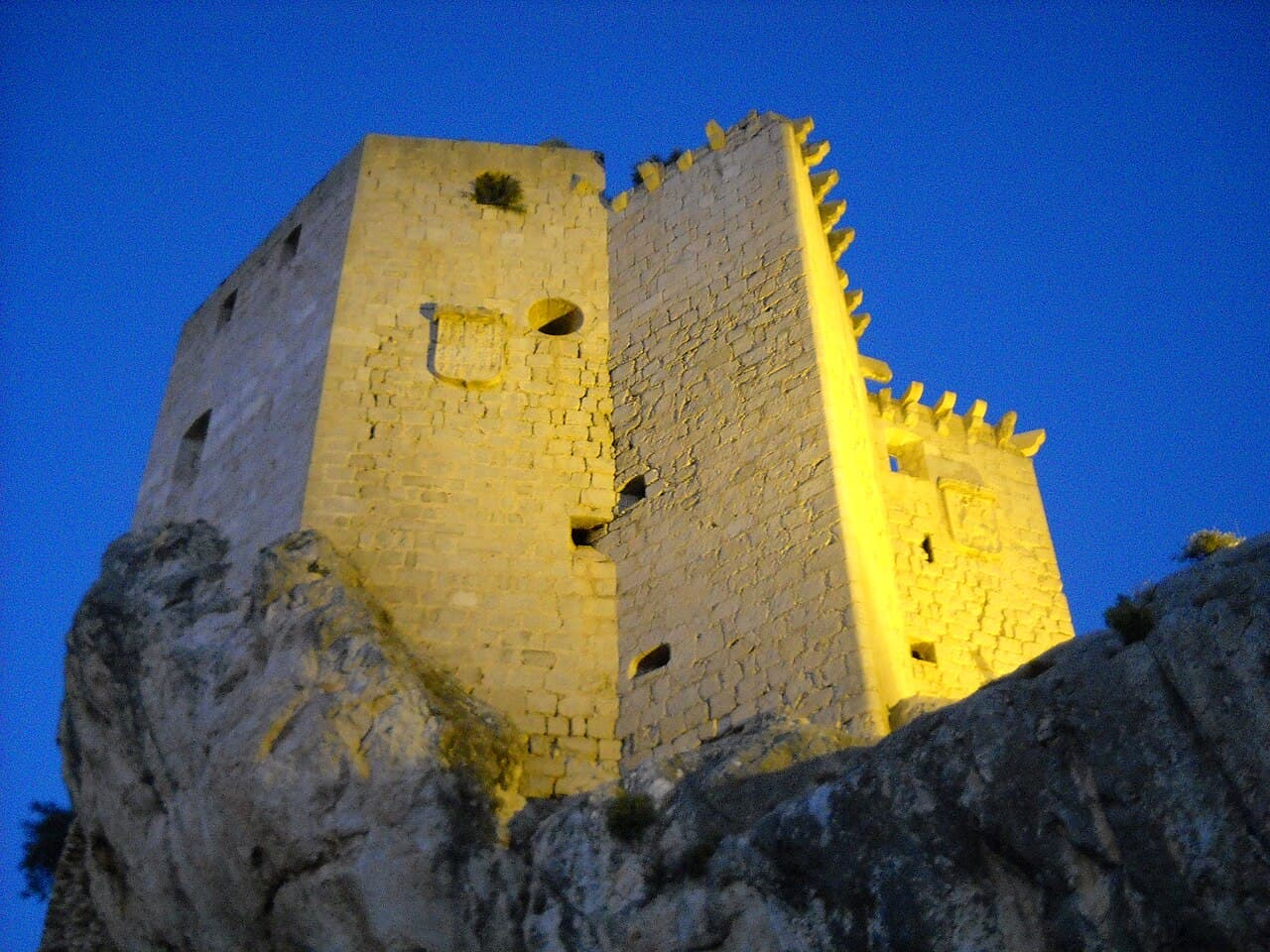
Mula Castle
Mula Castle, also known locally as Castillo de Mula or Castillo de los Vélez, is a remarkable Renaissance fortress perched on a rocky crag overlooking the town of Mula in the province of Murcia, Spain. This castle represents a fascinating blend of architectural styles and historical layers, combining medieval Islamic fortifications with 16th-century military Renaissance design. Its strategic position on a high rocky outcrop allowed it to dominate the surrounding landscape, including the town and the valley of the Mula River.
Historical background and origins
The origins of Mula Castle trace back to an earlier Islamic fortress established in the 8th century, during the period of Muslim rule in the Iberian Peninsula. This original Arab fortification was built to control the surrounding territory and protect the local population. Notably, the castle was mentioned by the 12th-century Arab geographer Al-Idrisi and referenced by King Alfonso X in the 13th century, highlighting its importance as a robust defensive stronghold.
During the medieval period, the castle not only served military functions but also safeguarded critical water sources and Christian parishes within the town's walls. In 1244, Fernando III granted privileges to the people of Mula, a fact that later contributed to tensions between the town and the ruling nobility.
The 16th-century reconstruction and the marquis of los vélez
Following a local uprising in 1520, the powerful nobleman Pedro Fajardo y Chacón, the 1st Marquess of Los Vélez, sought to reaffirm his authority over Mula by commissioning a new fortress. Construction began in 1524 atop the ruins of the older Islamic castle. Despite royal decrees by the Catholic Monarchs and later Emperor Charles I forbidding the building of new fortifications, the castle's construction was permitted through a clever ruse: a forged Roman inscription on the keep claimed the fortress was a restoration of an ancient imperial structure.
Under the supervision of Luis Fajardo, the castle was built in four distinct phases, incorporating remnants of the earlier Muslim defenses. The new fortress was designed primarily as a military installation with simple, functional lines, reflecting Renaissance military architecture rather than ornate noble residence aesthetics.
Architectural features and layout
Outer and inner baileys
The castle's layout includes an outer bailey and an inner bailey. Originally, access to the inner bailey was controlled by a drawbridge, protected by a box machicolation—a defensive structure that allowed defenders to drop objects on attackers below. Although the original drawbridge has been replaced by a concrete slab, the defensive concept remains evident in the castle's design.
The keep and defensive structures
At the heart of the castle stands the keep, or tower of homage, constructed during the second and third phases of building. This sturdy tower was initially accessed via a drawbridge, later replaced by a fixed bridge. The keep was designed to serve as the last line of defense, with a water tank (cistern or aljibe) nearby to ensure a reliable supply during sieges.
Interior spaces and functional design
The castle features a single vaulted nave with a stone barrel ceiling and a chimney, indicating it was designed to house soldiers comfortably during prolonged defenses. Adjacent to this nave is an annex with stairs leading to basement dungeons and the water cistern, highlighting the castle's dual role as both fortress and garrison.
The castle's interior is austere, with minimal decoration, emphasizing its military function. The only ornamental elements are eight heraldic shields belonging to the Fajardo and Silva families, symbolizing the noble lineage of its builders. Mason marks on the stonework provide insight into the castle's phased construction and the craftsmen involved.
Strategic importance and surrounding landscape
Perched on a rocky promontory, Mula Castle commands panoramic views of the town below and the Mula River valley to the north. This vantage point was crucial for monitoring and controlling the region, especially during periods of conflict. The castle also protected vital water sources and served as a symbol of the Marquess of Los Vélez's power over the rebellious town.
Access to the castle historically included the Albacar trail from the upper town near the Royal Encarnación Monastery, as well as a road leading from Mula to Caravaca. Today, signage directs visitors to the castle's base, although the site remains private property and is currently closed to the public.
Recent history and preservation efforts
After centuries of military use, Mula Castle fell into neglect and was closed to visitors for a time. More recently, local citizens have organized efforts to reclaim and restore this important cultural landmark. In 2024, the municipality of Mula acquired ownership of the castle with plans to preserve and rehabilitate its historic fabric, ensuring its legacy endures for future generations.
Despite its current inaccessibility, Mula Castle remains a significant monument reflecting the complex history of Murcia and the broader Iberian Peninsula. Its combination of Islamic and Renaissance military architecture offers valuable insights into the evolution of fortifications and noble power during a turbulent era.
Frequently asked questions (FAQ)
- How do I get to Mula Castle?
- Mula Castle is located above Calle Paleras in the town of Mula. Visitors can reach the castle base by following signs from the road to Caravaca or by the Albacar trail from the upper town near the Royal Encarnación Monastery.
- Is Mula Castle open to the public?
- Currently, Mula Castle is private property and not open to visitors. However, the municipality of Mula has plans for restoration and public access in the future.
- What is the historical significance of Mula Castle?
- Mula Castle was built in 1524 on the site of an 8th-century Arab fortress and served as a military stronghold for the Marquess of Los Vélez, symbolizing noble authority and defense.
- What architectural styles are present in Mula Castle?
- The castle combines medieval Islamic fortifications with Renaissance military architecture, featuring simple, functional lines and defensive elements like a keep, machicolations, and vaulted naves.
- Can I see views from Mula Castle?
- Yes, the castle offers commanding views over the town of Mula and the valley of the Mula River, highlighting its strategic location on a rocky promontory.
Photo gallery

Information
Sources & official resources
Verify the information above using these authoritative references.
Loading map...
Visitor reviews
No reviews yet. Been here? Write the first review and help other travelers!
Write the first reviewVisited this castle? Share your experience
Your review helps other travelers and adds first-hand knowledge to our encyclopedia.



