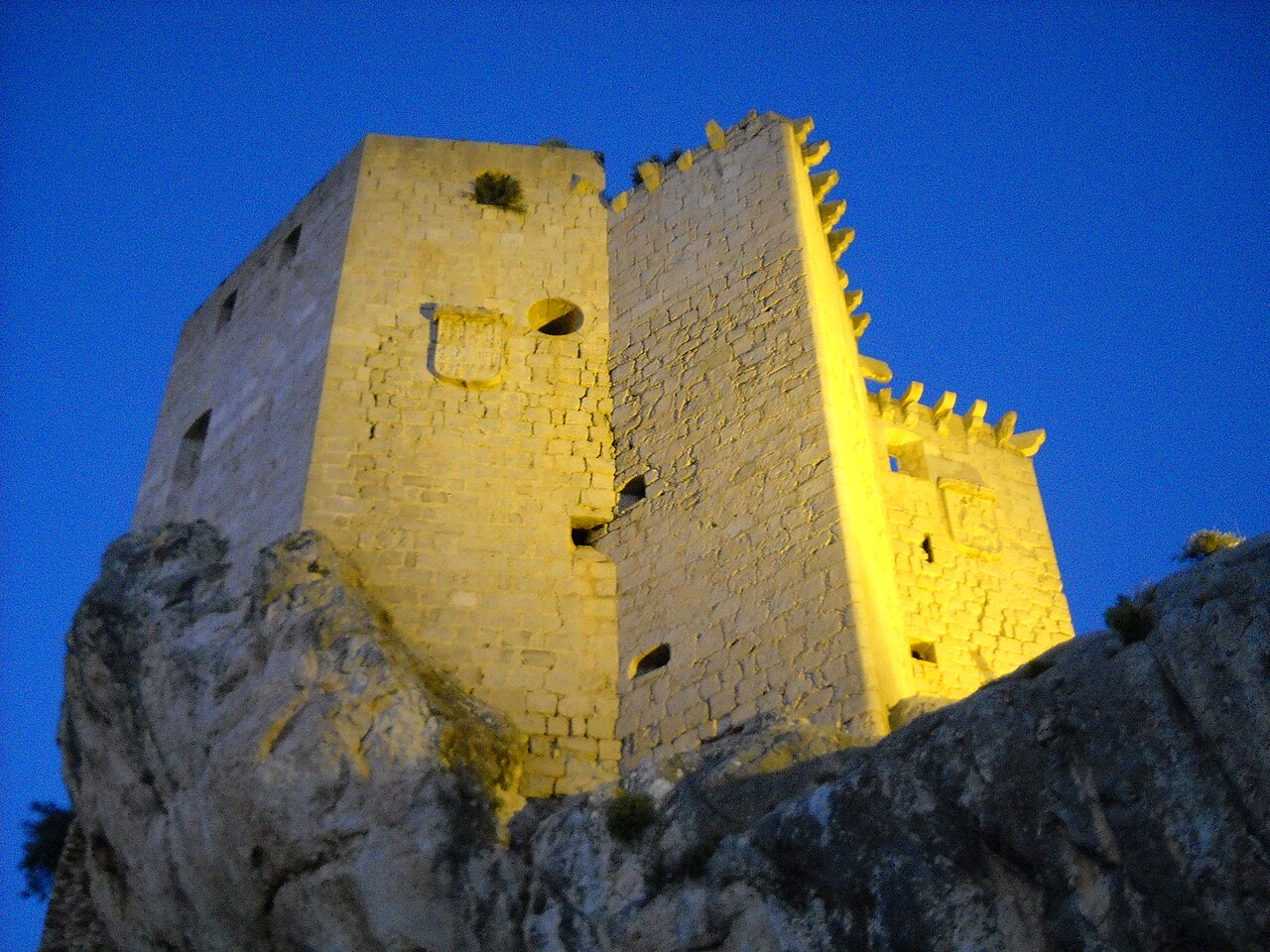
Alcalá Castle
Alcalá Castle, also known locally as Castillo de Alcalá or Castillo de La Puebla, is a historic fortress situated on a prominent limestone mountain south of the village of Puebla de Mula in the Region of Murcia, Spain. This castle occupies a strategic position overlooking the surrounding landscape, which was vital for controlling the former enclave of Mula during the medieval period.
Historical background and significance
The origins of Alcalá Castle trace back to the 8th century, during the Early Medieval period, when it was constructed by Muslim forces amid the Islamic expansion across the Iberian Peninsula. The castle served as a fortified garrison to oversee and secure the territory of Mula, an important enclave under Muslim control. Its commanding location provided both defensive advantages and a means of surveillance over the surrounding region.
Throughout the 14th century, during the process of the Kingdom of Murcia's incorporation into the Crown of Castile, Alcalá Castle maintained a significant military and administrative role. Historical records from after 1304 mention the castle as having an active garrison, highlighting its continued strategic importance. In the late 14th century, the castle was governed by appointed officials, reflecting its role as a local seat of power and defense.
Architectural features and layout
Alcalá Castle is built atop a flat-topped limestone mountain approximately 120 meters high, which provided natural fortification and visibility. The castle's remains include a large rectangular tower that also serves as the main entrance. This entrance is uniquely angled and appears to have undergone recent reconstruction using bricks, suggesting preservation efforts to maintain accessibility.
The fortress features stretches of defensive walls constructed primarily from rammed earth and rubble masonry, typical materials used in medieval fortifications in the region. Within the castle's enclosure are the remains of a deep well and twelve large cisterns, which would have been essential for water storage and supply during sieges or dry periods, underscoring the castle's preparedness for prolonged defense.
Defensive structures
The large rectangular tower likely functioned as a keep or stronghold, central to the castle's defense. The angled entrance design would have enhanced security by limiting direct access and creating a defensible chokepoint. The combination of natural elevation and man-made fortifications made Alcalá Castle a formidable stronghold in its time.
Geographical and cultural context
Located in the Region of Murcia, Alcalá Castle overlooks the surrounding terrain from its elevated position on the limestone mountain. This vantage point not only provided military advantages but also allowed control over important routes and the nearby village of Puebla de Mula.
The castle's presence reflects the historical layers of Muslim and Christian influence in southeastern Spain. It stands as a testament to the region's complex history of conquest, defense, and administration during the medieval period.
Current condition and visitor experience
Today, Alcalá Castle exists as a partially preserved ruin, with significant remains of its defensive walls, tower, and water storage facilities still visible. The castle's location offers visitors impressive panoramic views and a tangible connection to the region's medieval past.
While much of the structure is in ruins, the site’s natural setting and surviving architectural elements make it a compelling destination for those interested in medieval military architecture and Spanish history.
Frequently asked questions (FAQ)
- What is the historical significance of Alcalá Castle?
- Alcalá Castle, also known as Castillo de Alcalá, has a rich history dating back to the 12th century. It played a crucial role in the defense of the region during the Reconquista and served as a strategic military stronghold over the centuries.
- When was Alcalá Castle built?
- The construction of Alcalá Castle began in the early 12th century, reflecting the architectural styles of the period. Over the years, it has undergone several renovations and restorations, which showcase various elements of medieval architecture.
- What are the opening hours for Alcalá Castle?
- Alcalá Castle is typically open to visitors from 10 AM to 6 PM during the weekdays and 10 AM to 8 PM on weekends. However, it's advisable to check the official website for any seasonal changes in opening hours.
- Can I purchase tickets online for Alcalá Castle?
- Yes, tickets for Alcalá Castle can be purchased online through the official website or at the entrance. Buying tickets in advance is recommended, especially during peak tourist season, to avoid long waiting times.
- Is Alcalá Castle accessible for visitors with disabilities?
- Alcalá Castle has made efforts to improve accessibility for visitors with disabilities. Ramps and designated pathways are available, though some areas may still pose challenges due to the castle's ancient structure.
- When is the best time to visit Alcalá Castle?
- The best time to visit Alcalá Castle is during the spring and fall when the weather is mild and pleasant. Visiting during these seasons allows you to enjoy the castle's beautiful surroundings and avoid the summer crowds.
- What nearby attractions should I visit while at Alcalá Castle?
- While visiting Alcalá Castle, you can also explore the picturesque town of Alcalá, which is known for its charming streets and local cuisine. Other nearby attractions include historical sites and parks that enhance the cultural experience of your visit.
Information
Loading map...
Visitor reviews
No reviews yet. Been here? Write the first review and help other travelers!
Write the first reviewVisited this castle? Share your experience
Your review helps other travelers and adds first-hand knowledge to our encyclopedia.