Platamon Castle
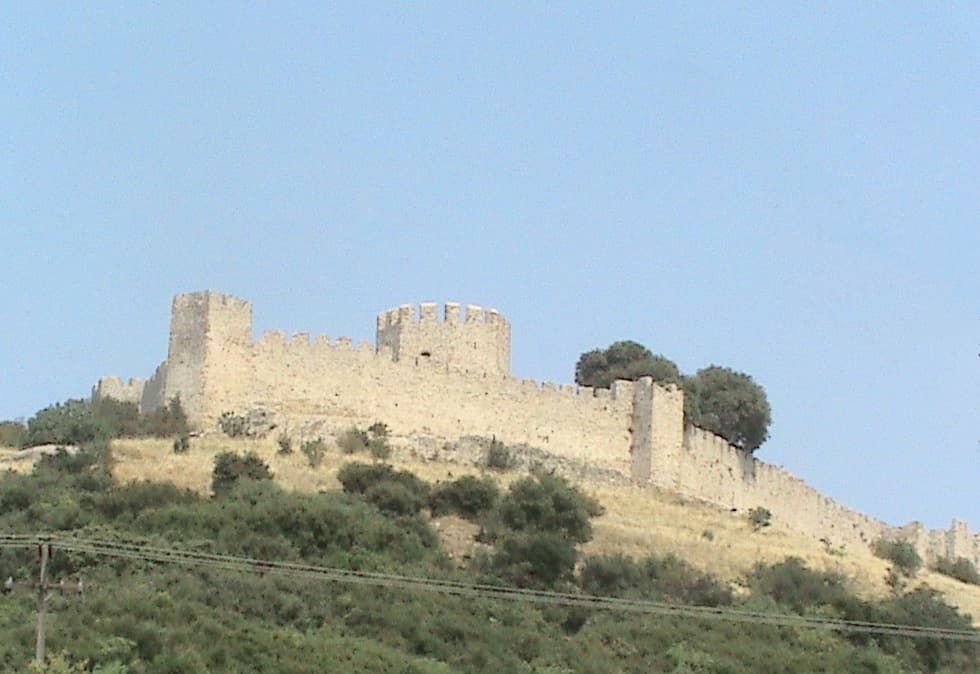
Platamon Castle stands as a monumental fortress located near the ancient city of Heraclia in the region of Thessaly, Greece. This castle occupies a commanding position overlooking the Aegean Sea and the vital coastal passage between Macedonia and Thessaly. Its strategic location has made it a significant military and defensive site throughout its long history, spanning from the Byzantine era through the Ottoman period.
The earliest known reference to the name "Platamon" appears in an imperial order dated to 1198, but archaeological and historical evidence suggests that a Byzantine castle already existed on this site from as early as the 10th century. This initial fortress was likely constructed to secure the important land and sea routes in the region, serving as a bulwark against invasions and raids.
Medieval origins and early history
Following the Fourth Crusade and the subsequent fall of Constantinople in 1204, Platamon Castle came under the control of Boniface of Montferrat, the king of Thessaloniki. He granted the castle to the Lombard knight Rolando Piska, who undertook significant reconstruction efforts. Piska rebuilt the castle on the foundations of the older Byzantine fortress, enhancing its defensive capabilities to reflect the military architecture of the early 13th century.
Despite these changes, Platamon soon reverted to Byzantine control. In 1218, the castle was captured by Theodoros Angelos, the despot of Epirus, marking a period of fluctuating control among regional powers. Later, after the Battle of Pelagonia in 1259, the fortress was taken by Michael Palaiologos of Nicaea, who would later ascend to the Byzantine throne as emperor. This period solidified Platamon's role as a key stronghold in the Byzantine defensive network.
Ottoman conquest and later history
In 1385, the castle fell to the Ottoman Turks, who recognized its strategic importance in controlling access to the northern Aegean coast and the interior regions of Thessaly and Macedonia. The Ottomans maintained and upgraded the castle's fortifications over the centuries, ensuring it remained a formidable defensive site.
Between 1425 and 1427, the castle briefly came under Venetian control during their efforts to expand influence in the region. However, the Turks soon retook Platamon and held it until the early 20th century, underscoring its enduring military value.
Modern era and world war ii significance
During World War II, Platamon Castle again found itself in the midst of conflict. In April 1941, a unit of New Zealand forces attempted to defend the fortress against the advancing German army. Despite their efforts, the castle was heavily bombed by German forces, forcing the defenders to withdraw. This episode highlights the castle's continued strategic relevance even in modern warfare.
Architectural features and layout
Platamon Castle exemplifies a typical Byzantine hill castle adapted and expanded through successive periods of occupation. The fortress is situated on a steep rocky hill, which provides natural defensive advantages. Its walls are constructed primarily of local stone, featuring thick curtain walls punctuated by towers and battlements designed for archers and artillery.
The castle's layout includes a series of defensive walls enclosing an inner courtyard, with a prominent keep or donjon serving as the last line of defense. The entrance gate is fortified with additional defensive works, such as a barbican and arrow slits, to repel attackers. The Ottoman modifications included repairs and enhancements to the walls and towers, reflecting evolving military technologies.
Cultural and heritage importance
Today, Platamon Castle is recognized as a significant cultural and historical monument in Greece. It offers visitors a glimpse into the complex history of the region, showcasing the architectural styles and military strategies of the Byzantine, Frankish, Venetian, and Ottoman periods. The castle's commanding views of the surrounding landscape and the Aegean Sea add to its appeal as a tourist destination.
Efforts have been made to preserve the castle's remains, which are partially preserved, allowing for exploration of its walls, towers, and courtyards. The site is accessible to the public and serves as an educational resource for understanding medieval fortifications in Greece.
Frequently asked questions (FAQ)
- What is the historical significance of Platamon Castle?
- Platamon Castle is a strategic medieval fortress that controlled key land and sea routes in Thessaly, Greece, from the Byzantine era through the Ottoman period.
- When was Platamon Castle originally built?
- The earliest fortifications date back to the 10th century Byzantine period, with significant rebuilding in the early 13th century after the Fourth Crusade.
- Can visitors explore Platamon Castle today?
- Yes, the castle is partially preserved and open to the public, allowing visitors to explore its walls, towers, and courtyards.
- How did World War II affect Platamon Castle?
- In April 1941, New Zealand forces attempted to defend the castle from German bombing, but the defenders were forced to withdraw after heavy attacks.
- What architectural styles are present in Platamon Castle?
- The castle features a mix of Byzantine, Frankish, Venetian, and Ottoman architectural elements due to its varied history of occupation.
Photo gallery

Information
Loading map...
Visitor reviews
No reviews yet. Been here? Write the first review and help other travelers!
Write the first reviewVisited this castle? Share your experience
Your review helps other travelers and adds first-hand knowledge to our encyclopedia.