Pittarthie Castle
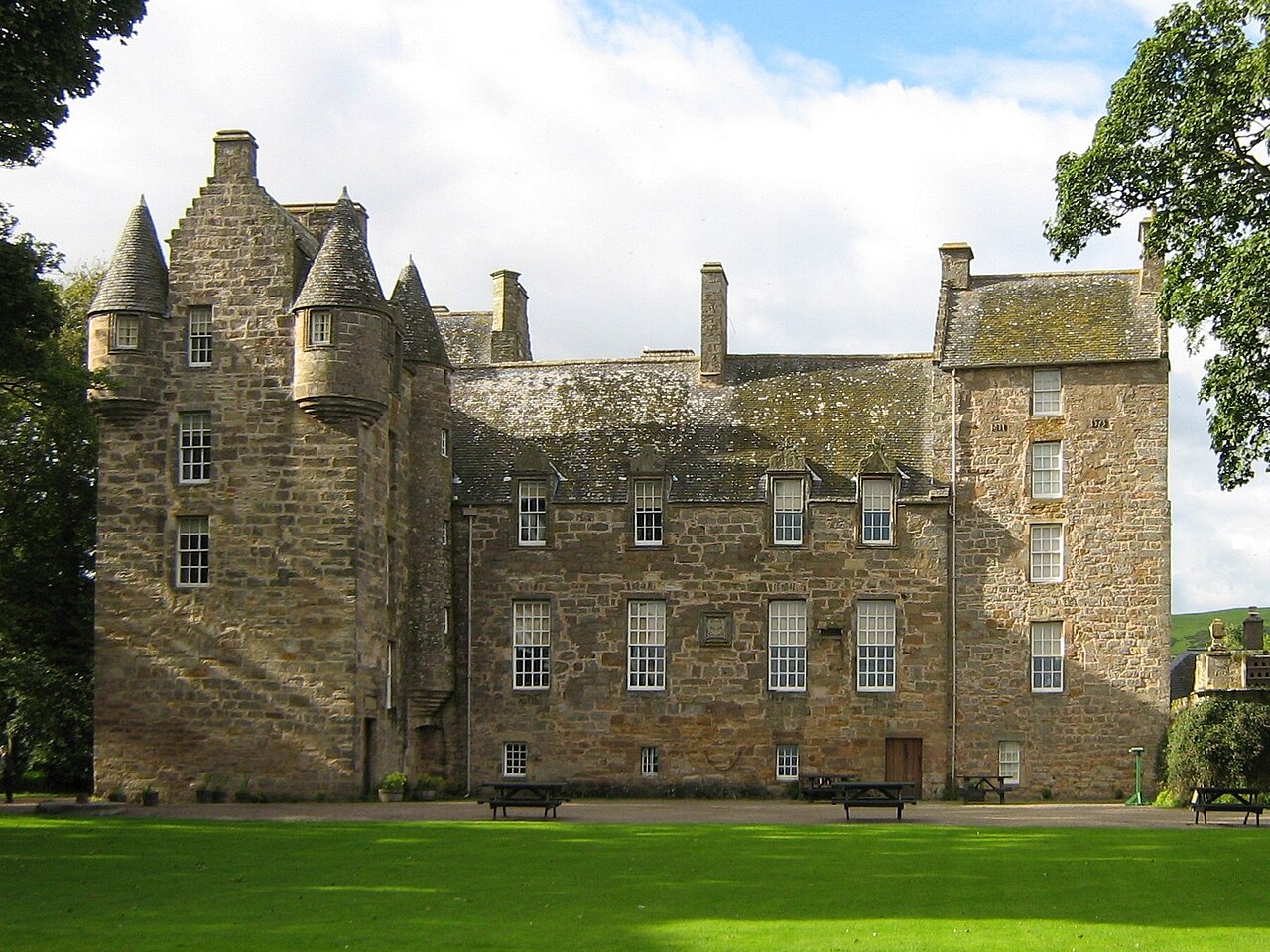
Pittarthie Castle stands as a notable example of a late 16th-century Renaissance fortified house in Fife, Scotland. Built around 1580 for James Monypenny of Pitmilly, this castle reflects the architectural transition from medieval defensive structures to more comfortable laird's residences, blending functionality with ornamental features.
Architectural layout and defensive features
The castle is constructed on a hilltop location, typical for defensive advantages during its period. It is designed in an 'L' plan, a common layout for Scottish tower houses and fortified houses of the Renaissance era. The main block is complemented by a jamb with a bowed northwest corner attached to its southwest side, creating a distinctive silhouette. Within the inner angle of the 'L' plan, there is a stair tower providing vertical circulation between floors.
The masonry primarily consists of good quality rubble stonework with ashlar dressings, indicating skilled craftsmanship. Interestingly, the south wall's lower section features coarser masonry, which may be remnants of an earlier structure predating the 1580 construction.
Despite its later residential use, the castle retains decorative defensive elements that are now largely symbolic. These include a gunloop beside the roll-moulded main door and pistol holes beneath the window sills around the building. Such features illustrate the lingering need for defense in the turbulent Scottish late 16th and 17th centuries, even as architectural styles evolved.
Later modifications and stylistic details
A significant date, 1682, is carved on a segmental pediment above the south window of the first-floor hall. This pediment also bears the arms and initials of William Bruce, who likely undertook renovations or additions at this time. The windows themselves exhibit rounded arrises typical of the late 17th century, marking a stylistic evolution from the original Renaissance features.
The castle's interior, now in a derelict state, once included functional spaces such as a kitchen with a large north-facing fireplace located in the tunnel-vaulted jamb. A water inlet in the west wall suggests provisions for domestic water supply. Additionally, a north stair turret was probably added in the late 17th century, enhancing access and possibly reflecting changing residential needs.
Historical context and significance
Pittarthie Castle exemplifies the Scottish Renaissance approach to fortified domestic architecture, balancing defense with comfort and status display. The Monypenny family, prominent landowners in Fife, commissioned the house during a period of relative peace following the turbulent medieval centuries, allowing for more ornate and less purely defensive designs.
The castle's combination of decorative gunloops and pistol holes with elegant stonework and later stylistic updates reflects the gradual shift in Scottish noble residences from fortress to manor house. The presence of the Bruce family arms in the 17th century indicates continued occupation and modification by influential local families.
Current condition and preservation
Today, Pittarthie Castle remains a substantial ruin with significant architectural elements still visible. The hilltop location offers commanding views of the surrounding Fife countryside, though the interior is largely derelict and not fully accessible. The preservation of the tunnel-vaulted jamb and its kitchen fireplace provides valuable insight into the domestic arrangements of the period.
While the castle is not fully restored, its remains contribute to understanding the evolution of Scottish fortified houses and the social history of the region. The site is of interest to historians, archaeologists, and visitors fascinated by Renaissance architecture and Scottish heritage.
Information
Loading map...
Visitor reviews
No reviews yet. Been here? Write the first review and help other travelers!
Write the first reviewVisited this castle? Share your experience
Your review helps other travelers and adds first-hand knowledge to our encyclopedia.