Ardross Castle
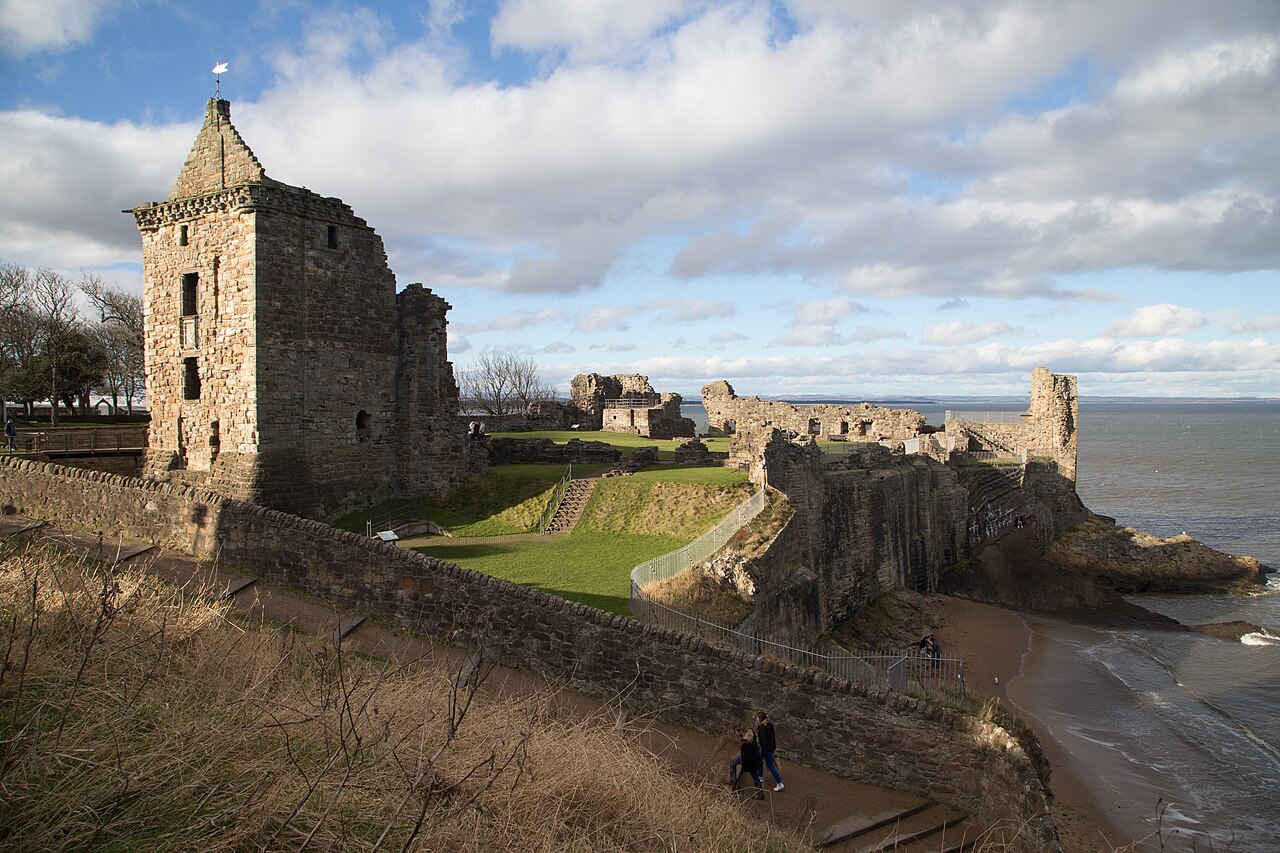
Ardross Castle stands as a historic ruin on the rugged sandstone cliffs overlooking a sandy beach along the Fife coast of Scotland. Though now a fragmentary site, the castle's origins trace back to the high medieval period, with construction believed to have begun in the 13th century. The castle's location provided a strategic defensive advantage, commanding views over the coastline and controlling access to the surrounding lands.
Early origins and medieval significance
The earliest recorded association with the site dates to the mid-12th century, with the first documentary mention of Ardross. The lands were granted to a Northumbrian knight named Merleswain in 1068, marking the beginning of its medieval lineage. The castle is traditionally attributed to Sir William Dishington, the Sheriff of Fife, who likely initiated the first fortifications during the 13th century. Sir William is also noted for commissioning the construction of St Monans Church under the reign of David II in the mid-14th century, indicating the family's regional prominence.
Architectural development and features
While the current ruins are fragmentary, architectural analysis suggests that the castle underwent significant modifications and extensions during the 15th and 16th centuries. The surviving stonework, although weathered, reflects typical medieval defensive structures such as thick curtain walls, remnants of towers, and a possible gatehouse. The castle's position on sandstone cliffs necessitated robust construction to withstand coastal weather and potential sieges.
Defensive position and layout
Ardross Castle's elevated position on the cliffs provided natural defenses on multiple sides, with steep drops to the beach below limiting approaches by attackers. The castle likely included a courtyard surrounded by curtain walls and internal buildings for residential and administrative functions. Although detailed plans are unavailable due to the ruinous state, the site fits the profile of a hill castle adapted to a coastal environment.
Ownership history and decline
The castle remained the seat of the Dishington family for several centuries until it was sold in 1607 to Sir William Scott of Elie. During this period, the castle may have seen further alterations to accommodate changing needs or tastes. In the late 17th century, ownership passed to Sir William Anstruther. Following this transfer, the castle's military and residential importance diminished, and it fell into disuse.
Quarrying and ruin
By the 18th century, Ardross Castle was largely abandoned. Historical evidence suggests that the castle was used as a quarry, with its stonework repurposed for buildings in the nearby hamlet of Ardross. This practice contributed significantly to the castle's current ruined condition, leaving only fragments of walls and foundations visible today.
Cultural and historical significance
Despite its ruinous state, Ardross Castle offers valuable insight into medieval Scottish coastal fortifications and the evolution of noble residences in Fife. The castle's connection to prominent families such as the Dishingtons, Scotts, and Anstruthers reflects the shifting political and social landscape of Scotland from the Middle Ages through the early modern period.
Archaeological interest and preservation
The site remains of interest to archaeologists and historians studying medieval Scottish castles. Its dramatic setting and surviving masonry provide a tangible link to Scotland's feudal past. Efforts to preserve what remains are important for maintaining the cultural heritage of the Fife region.
Visiting Ardross castle today
Today, Ardross Castle is accessible to visitors who appreciate historic ruins and scenic coastal landscapes. The castle's cliff-top location offers panoramic views of the Fife coastline and the North Sea. While there are no formal visitor facilities or guided tours, the site is a popular destination for walkers and history enthusiasts exploring the area.
Visitors should exercise caution due to the uneven terrain and exposed cliff edges. The castle ruins provide an evocative experience of medieval Scotland's defensive architecture and the passage of time on coastal fortifications.
Frequently asked questions (FAQ)
- When was Ardross Castle originally built?
- Ardross Castle was originally constructed in the 13th century during the high medieval period, likely initiated by Sir William Dishington, Sheriff of Fife.
- What remains of Ardross Castle can visitors see today?
- Visitors can see the ruins of Ardross Castle, including fragments of curtain walls and foundations, situated on sandstone cliffs overlooking the coast.
- Is Ardross Castle accessible to the public?
- Yes, Ardross Castle is accessible to the public as an open ruin, but there are no formal visitor facilities or guided tours at the site.
- Why is Ardross Castle in ruins?
- The castle fell into disuse after the 17th century and was subsequently used as a quarry, with stones repurposed for local buildings, leading to its current ruined condition.
- What families historically owned Ardross Castle?
- The castle was originally held by the Dishington family, then sold to Sir William Scott of Elie in 1607, and later to Sir William Anstruther in the late 1600s.
Information
Loading map...
Visitor reviews
No reviews yet. Been here? Write the first review and help other travelers!
Write the first reviewVisited this castle? Share your experience
Your review helps other travelers and adds first-hand knowledge to our encyclopedia.