Pioz Castle
Pioz Castle stands in the tranquil village of Pioz in the southern part of the province of Guadalajara, Spain. This late medieval hill castle is notable for its unique blend of defensive features and palace-like qualities, reflecting the ambitions of its original patron, Cardinal Don Pedro González de Mendoza. Built primarily in the 15th century, the castle represents an intriguing architectural synthesis inspired by Italian castle-palaces, designed to be both a luxurious residence and a secure fortress.
Historical background and construction
The origins of Pioz Castle date back to the mid-15th century when construction was initiated in 1468 under the direction of Cardinal Pedro González de Mendoza, one of the most influential figures in Castile during the late medieval period. Mendoza envisioned a castle-palace that combined the grandeur and comfort of Italian noble residences with the defensive necessities of a medieval fortress. His initial plans were ambitious, aiming to create a stately home that would also serve as a symbol of his power and prestige.
However, the construction was halted in 1469 when Mendoza shifted his focus to other strategically more important locations, such as the nearby castles of Jadraque and Maqueda, which already had established fortifications better suited to his military and political objectives. This decision left Pioz Castle incomplete for a time.
Following this pause, the castle was transferred as part of an exchange agreement to Álvar Gómez de Ciudad Real, a prominent nobleman and secretary to King Enrique IV. The Gómez family resumed and completed the castle by the end of the 15th century. Under their stewardship, the castle functioned primarily as a noble residence rather than a military stronghold. Despite its defensive features, it never witnessed warfare or sieges, serving instead as a symbol of aristocratic status and governance.
Architectural design and defensive features
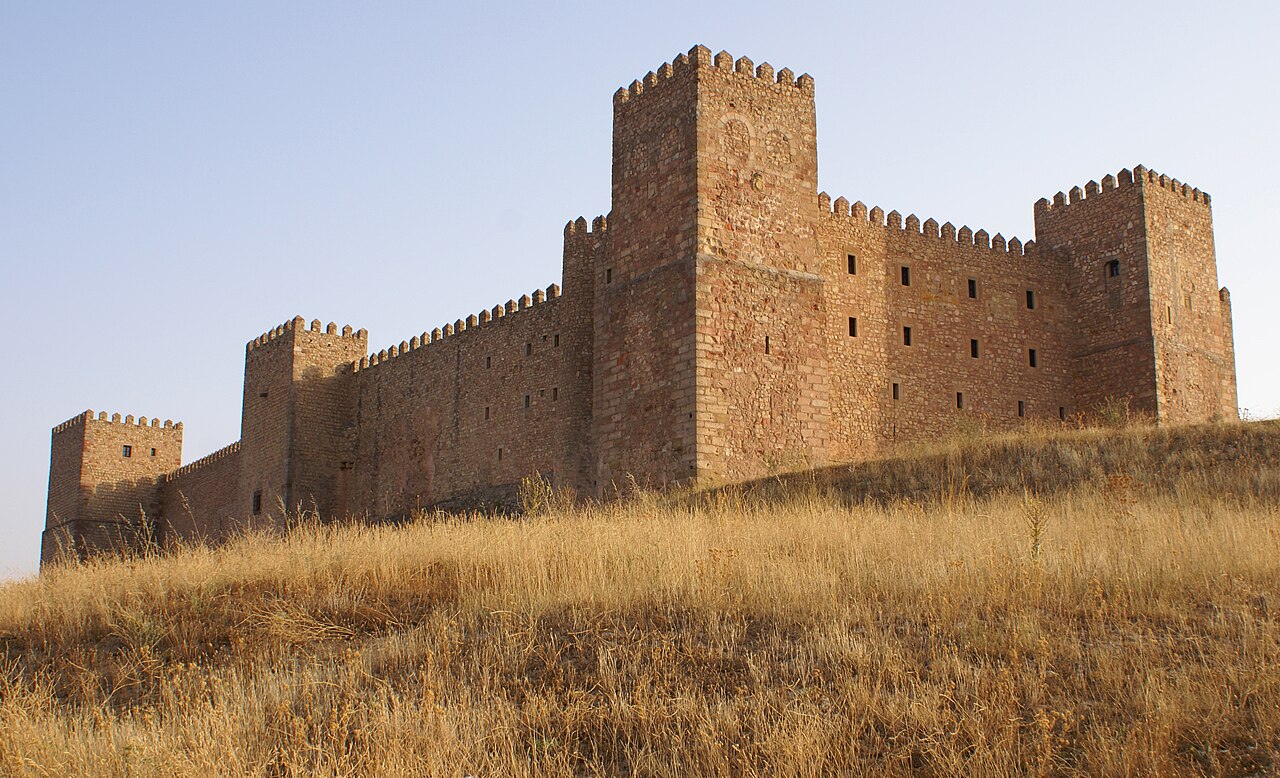
Pioz Castle is strategically situated on a flat plateau in the Alcarria region, commanding views of the surrounding landscape. The castle’s layout is a square plan surrounded by robust stone ashlar walls made of carefully cut stone blocks. These thick exterior walls rest on gentle slopes, enhancing their stability and defensive strength.
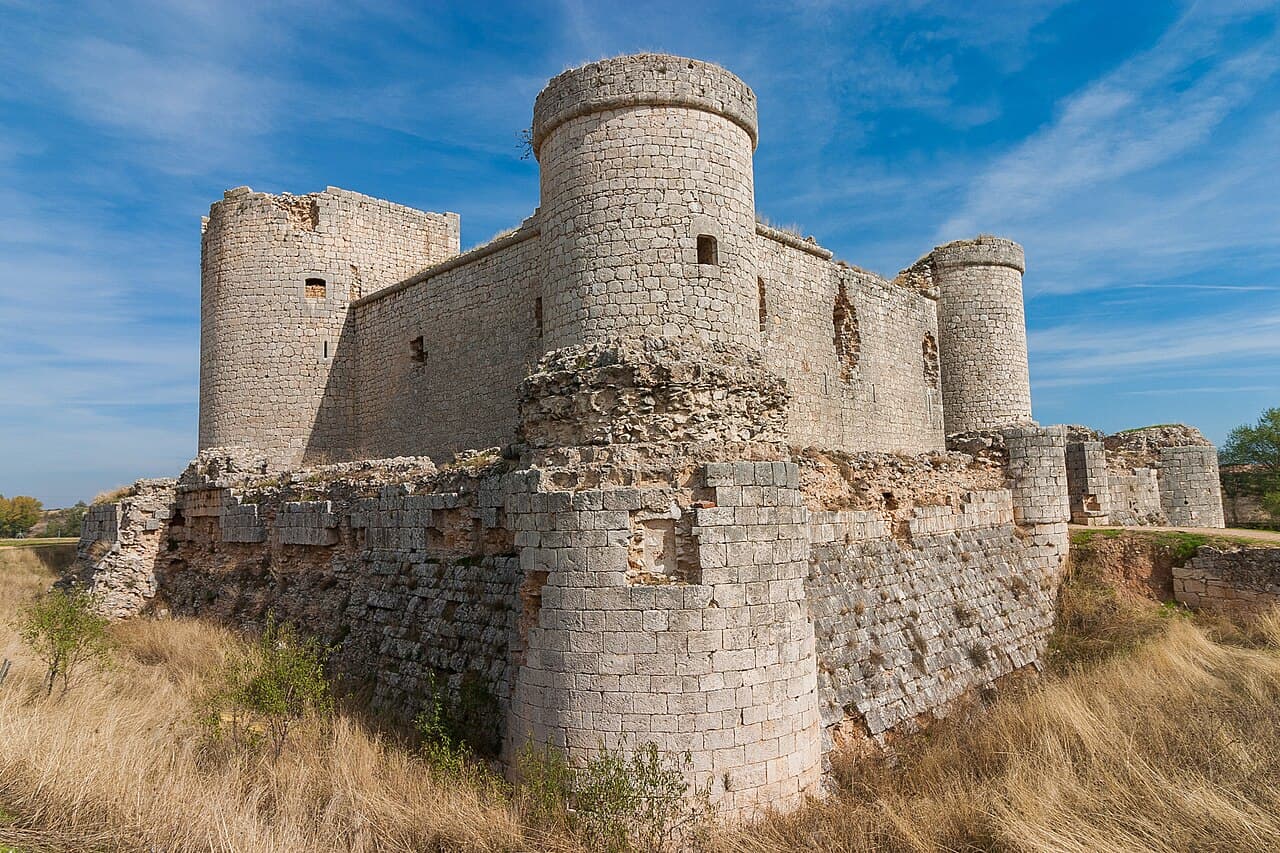
Encircling the castle is a dry moat and a barbican, a low outer defensive wall originally topped with battlements, designed to provide an additional layer of protection. The moat and barbican reflect the castle’s defensive intentions, even though its primary function was residential.
The castle’s perimeter is marked by three cylindrical corner towers located on the north, east, and south sides, which provided vantage points for surveillance and defense. The western corner features the castle’s most distinctive element: a large D-shaped keep tower with an irregular form—round on the outside but square within. This keep was accessed via a drawbridge leading to a spiral staircase, allowing secure vertical movement and defense within the tower.
The main entrance is on the southeast side, fortified by two towers flanking a drawbridge that once spanned the moat. This gate was the primary controlled access point, designed to withstand assault. A secondary postern gate on the northwest side, accessed by a zigzagging staircase, allowed for discreet movement and was strategically designed to slow attackers.
Interior and residential aspects
Inside the castle walls, the residential quarters were designed with palace-like qualities. The interiors featured high ceilings and large windows, emphasizing comfort and status over purely military utility. Although much of the interior has not survived, the foundations and bases of columns suggest spacious halls and chambers that would have accommodated the noble family and their retinue.
Decorative elements were modest, with some remnants of plasterwork found on the towers, indicating an understated elegance consistent with the castle’s dual function as a residence and fortress.
Later history and preservation
Throughout the 18th century, the castle remained in use and was maintained by appointed stewards known as alcaldes. However, as the strategic importance of the castle diminished, it was eventually sold to private owners who conducted minor restoration efforts. Despite these interventions, the castle was ultimately abandoned and fell into disrepair.
By the late 20th century, Pioz Castle was recognized for its cultural and historical significance. In 1990, the local municipality acquired the property with plans for restoration, and that same year it was declared a Bien de Interés Cultural, granting it legal protection as a heritage monument under Spanish law. This designation followed earlier protections established in 1949 and reinforced in 1985.
Today, the castle stands in a state of partial ruin. Sections of the walls have collapsed, battlements are missing, and the main drawbridge is blocked. Some towers and defensive features have been altered or rebuilt during previous restoration attempts. The castle remains closed to the public to protect both visitors and the fragile structure, but it continues to be an important cultural landmark, reflecting the architectural and historical legacy of late medieval Spain.
Architectural significance and cultural heritage
Pioz Castle is a rare example of a late medieval hill castle that blends the defensive characteristics of a fortress with the elegance of a noble palace. Its design, influenced by Italian castle-palaces, represents an important architectural transition during the 15th century when castles began to serve more as luxurious residences than purely military structures.
The castle’s robust walls, towers, moat, and barbican illustrate the defensive technologies of the era, including adaptations for early artillery use, such as arrow slits and thick stone construction. Simultaneously, the residential quarters with high ceilings and large windows highlight the evolving role of castles as status symbols and comfortable homes for the aristocracy.
As a protected heritage site, Pioz Castle offers valuable insights into the social, political, and architectural history of Castile during the late medieval period. Its preservation, despite its current condition, allows for ongoing study and appreciation of the cultural landscape of Spain.
Visiting information and accessibility
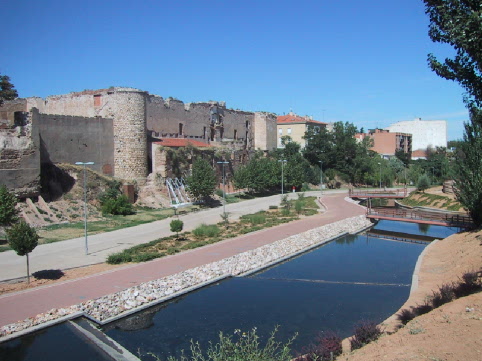
Currently, Pioz Castle is closed to visitors to safeguard the structure and ensure visitor safety due to its fragile state. The castle is located adjacent to the village marketplace, making it easily accessible for viewing from the outside. Visitors interested in medieval architecture and Spanish history can appreciate its imposing silhouette and defensive features from the surrounding area.
Efforts to restore and maintain the castle continue, and future reopening may provide opportunities for guided tours and educational programs. For now, the castle remains a striking historical landmark visible within the peaceful setting of the village of Pioz.
Frequently asked questions (FAQ)
- How do I get to Pioz Castle?
- Pioz Castle is located at Camino del Castillo in Spain, easily accessible by car. Public transportation options may be limited, so it is recommended to drive or use a taxi service for convenience.
- What is the historical significance of Pioz Castle?
- Pioz Castle, built in the 15th century, is known for its strategic location and well-preserved architecture. It served as a defensive fortress and residence, reflecting the medieval history of the region.
- When was Pioz Castle built?
- Construction of Pioz Castle began in the late 15th century and was completed in the early 16th century. Its architecture showcases the transition from Gothic to Renaissance styles, making it an important historical landmark.
- Can I take guided tours of Pioz Castle?
- Yes, guided tours are available at Pioz Castle, providing visitors with in-depth knowledge of its history and architecture. Reservations are recommended, especially during peak tourist seasons.
- Why is Pioz Castle a popular tourist attraction?
- Pioz Castle is popular for its stunning views, rich history, and architectural beauty. Visitors are drawn to its unique features, including towers and battlements, which make for excellent photography opportunities.
- Is it possible to visit Pioz Castle year-round?
- Yes, Pioz Castle is open to visitors throughout the year, although opening hours may vary based on the season. It’s advisable to check the official website or local tourist information for the most current visiting hours.
- What are the ticket prices for Pioz Castle?
- Ticket prices for Pioz Castle are generally affordable, with discounts available for students and seniors. Group rates may also be offered, so inquire when planning your visit.
- What is the best time to visit Pioz Castle?
- The best time to visit Pioz Castle is during the spring and fall months when the weather is mild and pleasant. Summer can be quite hot, while winter may bring fewer visitors and a quieter experience.
- Are there any nearby attractions to visit?
- Yes, there are several attractions near Pioz Castle, including local museums and beautiful walking trails. Exploring the surrounding countryside can enhance your visit and provide additional insights into the area's history.
Photo gallery

Information
Loading map...
Visitor reviews
No reviews yet. Been here? Write the first review and help other travelers!
Write the first reviewVisited this castle? Share your experience
Your review helps other travelers and adds first-hand knowledge to our encyclopedia.