Castle of Siguenza
The Castle of Sigüenza is a remarkable historic fortress perched on a strategic hilltop in Sigüenza, Guadalajara, Spain. Its origins trace back to the early medieval period, with foundations dating as far back as the 5th century. Over the centuries, the castle has witnessed a complex history of conquest, transformation, and restoration, evolving from a military stronghold into a luxurious parador hotel while preserving its rich architectural heritage.
Constructed initially on a site with even older Celtiberian and Visigothic settlements, the castle's early fortifications were expanded by the Moors during their control in the 8th century. The current structure began to take shape in the early 12th century after being captured by Christian forces led by Archbishop Bernardo de Agén in 1124 during the reign of Queen Urraca. From that point on, the castle became a feudal possession of the bishops of Sigüenza, serving both military and ecclesiastical roles throughout the Middle Ages.
Medieval military architecture and strategic importance
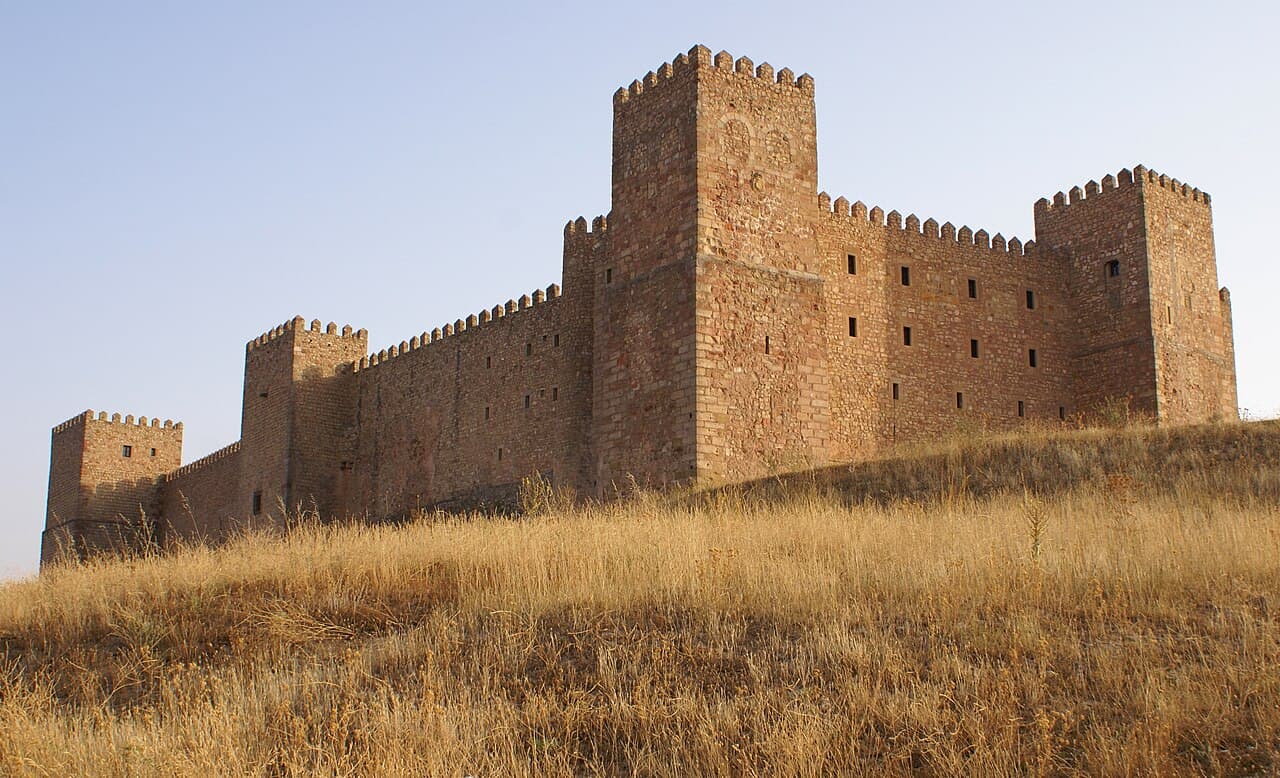
The castle's location atop a hill approximately 1,000 to 1,046 meters above sea level provided a commanding view of the surrounding landscape, making it a formidable defensive position. Its perimeter, restored to about 400 meters, encloses a complex of fortifications that blend medieval military architecture with later residential adaptations.
The main gate is a striking feature, flanked by twin towers equipped with machicolations—openings through which defenders could drop stones or boiling substances on attackers—and topped with battlements. This gate is protected by a large barbican added in the 15th century under the direction of Cardinal Mendoza, who significantly fortified the castle to withstand contemporary military threats. The barbican served as a fortified outwork, enhancing the castle's defensive capabilities by protecting the entrance from direct assault.
Defensive features and fortifications
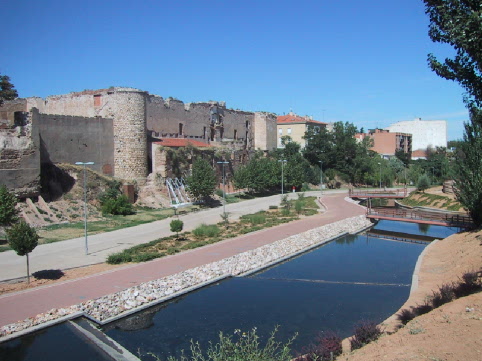
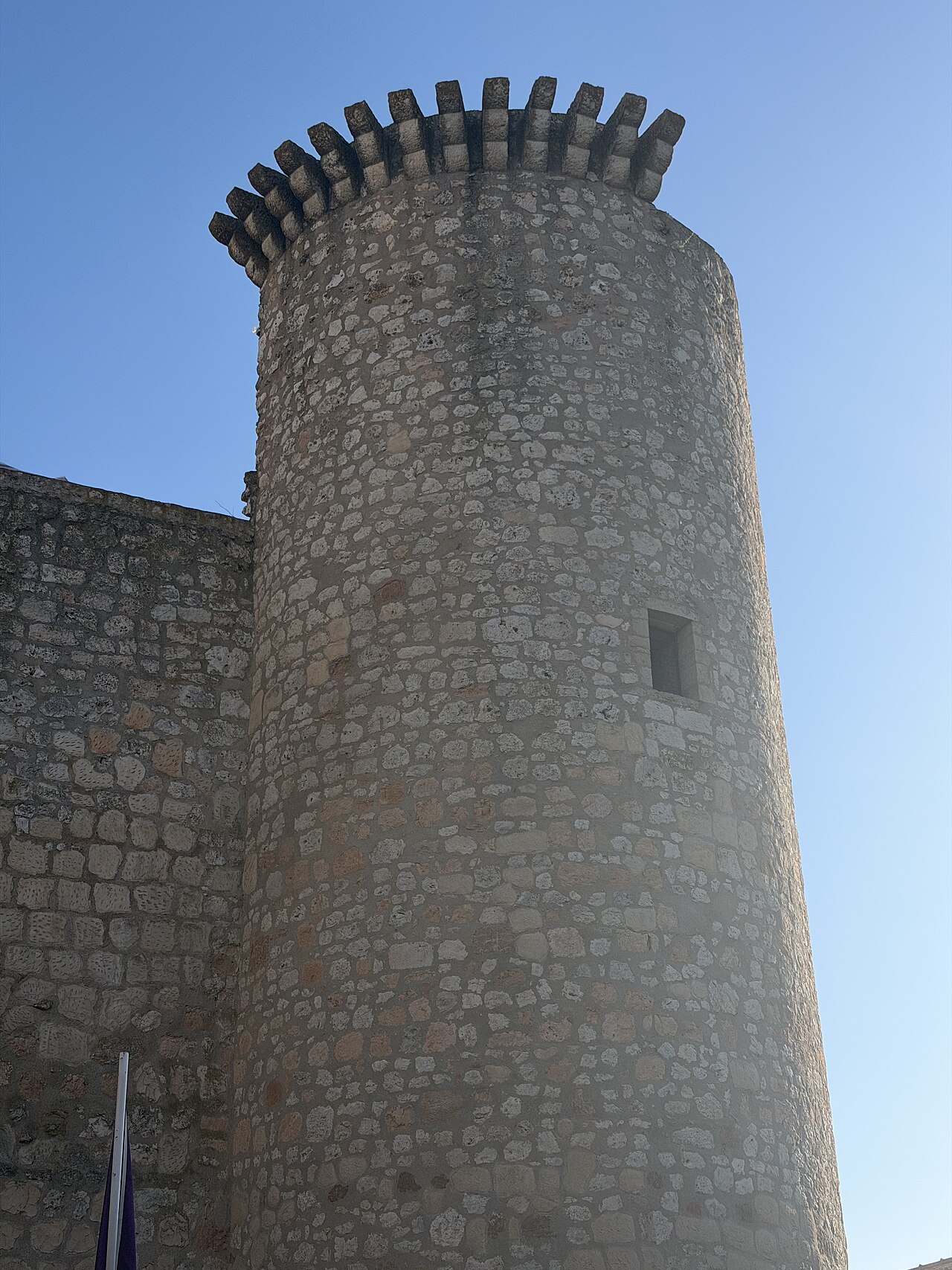
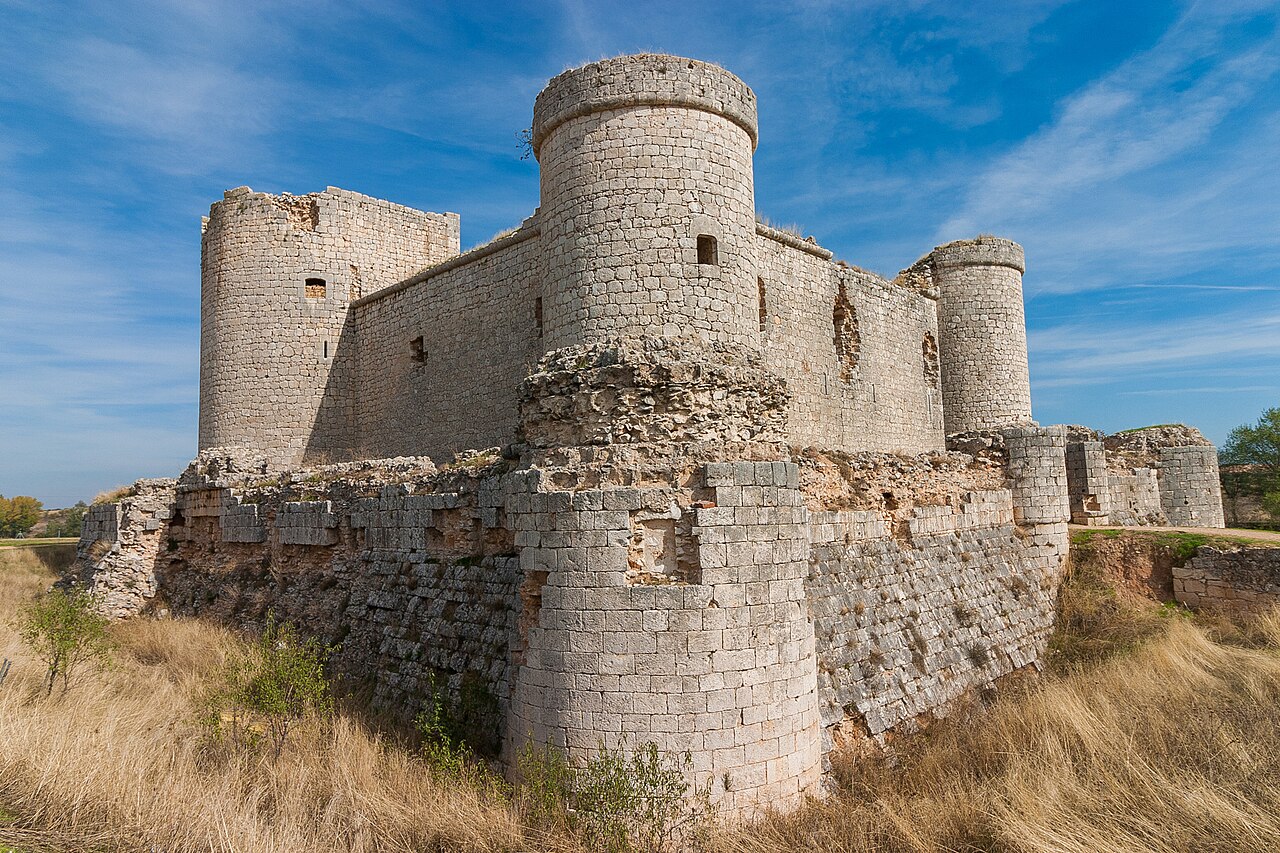
The castle walls incorporate white stone from the original Muslim fortress, integrating earlier construction techniques with medieval additions. The fortifications include towers, curtain walls, and arrow slits designed to repel invaders. The presence of a moat or water defenses is not documented, consistent with its classification as a hill castle relying on elevation and robust walls for defense.
Ecclesiastical and residential transformation
After its capture by Christian forces, the castle became the seat of the bishops of Sigüenza, who adapted it for both military and residential use. Over the centuries, the fortress evolved into a bishop’s palace, reflecting changing needs and architectural styles from the 14th to the 18th centuries.
The castle houses a Romanesque chapel, one of the oldest surviving elements dating back to the early phases of construction. Inside, two Renaissance portals lead into the inner courtyard, which historically served as a refuge for the town's population during attacks. This courtyard contains the original well that supplied water during sieges, a vital feature for sustaining defenders.
The Throne Hall remains a significant interior space, illustrating the castle's role as a political and ecclesiastical center. The bishop's living quarters have been carefully reconstructed with stone-carved rooms furnished with period-appropriate furniture, armor, and intricately carved fireplaces. These residential adaptations highlight the castle's transition from a purely military fortress to a palace with civil functions, including offices and housing for officials, particularly under Bishop Juan Díaz de la Guerra in the late 18th century.
Architectural styles and renovations
The castle exhibits a blend of Romanesque, Gothic, and Renaissance architectural styles. The 14th-century gate and battlements reflect Gothic military architecture, while the Renaissance portals and interior details showcase the influence of Renaissance aesthetics. The 15th-century barbican and other fortifications added by Cardinal Mendoza demonstrate the adaptation of the castle to evolving military technologies and threats.
Historical events and military significance
The Castle of Sigüenza played a vital role in numerous historical conflicts. It withstood a surprise attack in 1298 by supporters of Infante Alfonso de la Cerda and served as a prison for Queen Blanca de Borbón from 1355 to 1359 under King Pedro I of Castile. In the 15th century, it provided refuge during raids by Navarrese forces.
Beyond the medieval period, the castle was a strategic military headquarters during the War of Spanish Succession in 1710. It suffered severe damage during the Napoleonic occupation (1808–1814), the Carlist Wars in the early 19th century, and the Spanish Civil War (1936–1939). These conflicts left the castle in a ruinous state, with the loss of valuable elements such as ironwork, tiles, and carved decorations.
Restoration and modern use
Restoration efforts began in 1964 to rescue the castle from near ruin. The project aimed to preserve its authentic medieval character while adapting the building for contemporary use. The restoration was completed in 1976, and the castle reopened as a parador hotel in 1978, marked by a visit from King Juan Carlos and Queen Sofía.
The restoration carefully reconstructed authentic elements based on historical plans and documents. Many facades and courtyards were rebuilt, and modern amenities such as dining rooms, a cafeteria, a bar, elevated passageways, guest rooms, and a brick courtyard were added. These additions respect the medieval exterior by closing large openings and removing later non-historic elements.
Today, the Castle of Sigüenza serves not only as a luxury hotel but also as a cultural landmark and filming location for movies and television productions, preserving its historical legacy while welcoming modern visitors.
Visitor experience and cultural significance
Guests at the parador can explore the castle's rich history through its preserved chapel, Throne Hall, and reconstructed bishop's quarters. The castle's elevated position offers panoramic views of the surrounding countryside. Its blend of military and residential architecture provides insight into the evolving nature of medieval fortifications and ecclesiastical power in Spain.
Frequently asked questions (FAQ)
- How do I get to the Castle of Siguenza?
- The Castle of Siguenza is located in the town of Sigüenza, Spain, which is easily accessible by train or car from major cities like Madrid and Guadalajara. If you are traveling by car, you can follow the A-2 highway and then take the CM-211 road to reach the castle. Once in Sigüenza, the castle is situated on a hill, offering stunning views of the surrounding area.
- What is the historical significance of the Castle of Siguenza?
- The Castle of Siguenza, originally built in the 12th century, has played a crucial role in the history of Spain, particularly during the Reconquista. It was strategically important for controlling the surrounding region and has served various purposes over the centuries, including as a royal residence and a military fortification. Today, it stands as a testament to the rich history and architectural evolution of medieval Spain.
- When was the Castle of Siguenza built?
- The construction of the Castle of Siguenza began in the late 12th century, specifically around 1123, under the reign of Alfonso I of Aragon. It has undergone several renovations and expansions throughout the centuries, reflecting various architectural styles, including Romanesque and Gothic elements. This long history contributes to its significance as a cultural landmark.
- Can I visit the Castle of Siguenza?
- Yes, visitors can explore the Castle of Siguenza, which is open to the public for tours. The castle offers guided tours that provide insights into its history, architecture, and the surrounding landscape. Be sure to check the official website for any specific visitor guidelines or restrictions.
- Why is the Castle of Siguenza a popular tourist attraction?
- The Castle of Siguenza is popular due to its stunning architecture, rich history, and picturesque location. Visitors are drawn to its well-preserved structures and the breathtaking views it offers of the surrounding countryside. Additionally, the castle's connection to historical events in Spain enhances its appeal to history enthusiasts.
- Is it possible to host events at the Castle of Siguenza?
- Yes, the Castle of Siguenza can be rented for various events, including weddings, conferences, and other special occasions. Its unique setting and historical ambiance make it an extraordinary venue. Interested parties should contact the castle administration for more information on availability and services provided.
- What are the opening hours for the Castle of Siguenza?
- The Castle of Siguenza typically opens to visitors daily, with specific hours that may vary by season. Generally, the castle opens in the morning and closes in the late afternoon or early evening. It is advisable to check the official website or contact the castle directly to confirm current opening times before your visit.
- What are the ticket prices for visiting the Castle of Siguenza?
- Ticket prices for the Castle of Siguenza are generally affordable, making it accessible for most visitors. Discounts may be available for students, seniors, and groups, while children under a certain age often enjoy free entry. For the most accurate and up-to-date pricing, it's best to visit the castle's official website.
- When is the best time to visit the Castle of Siguenza?
- The best time to visit the Castle of Siguenza is during the spring and early fall when the weather is mild and pleasant. These seasons also coincide with fewer crowds, allowing for a more enjoyable experience. Summer can be quite hot, while winter may bring colder temperatures, so plan accordingly.
- Are there nearby attractions to visit after the Castle of Siguenza?
- Yes, after visiting the Castle of Siguenza, you can explore the charming town of Sigüenza, which features a historic cathedral and picturesque streets. Additionally, the surrounding countryside offers beautiful hiking trails, natural parks, and other medieval sites. This makes for a full day of exploration and discovery in the region.
Photo gallery

Information
Website
Visit websiteSources & official resources
Verify the information above using these authoritative references.
Loading map...
Visitor reviews
No reviews yet. Been here? Write the first review and help other travelers!
Write the first reviewVisited this castle? Share your experience
Your review helps other travelers and adds first-hand knowledge to our encyclopedia.