Pilsbury Castle
Pilsbury Castle stands as a significant historical and archaeological site near the village of Pilsbury, within the municipality of Hartington, Derbyshire, England. This Norman motte-and-bailey fortress occupies a commanding position on elevated terrain overlooking the River Dove and an ancient medieval routeway, including a river crossing. The castle's origins are deeply rooted in the Iron Age, with evidence suggesting an earlier fortified settlement existed on the site before the Norman arrival in the 11th century.
The origins and early history of Pilsbury Castle
The castle's earliest fortifications likely date back to the Iron Age, indicating the strategic importance of this location long before the medieval period. Following the Norman Conquest of 1066, the castle was constructed as a typical motte-and-bailey fortress. The lands surrounding Pilsbury were granted by King William the Conqueror to Henry de Ferrers, a prominent Norman nobleman. Henry de Ferrers probably commissioned the building of the castle shortly after 1066 to establish and consolidate Norman control over this part of Derbyshire, especially in the aftermath of the Harrying of the North, a brutal campaign that devastated much of northern England.
This fortress formed part of a wider network of defensive sites, including nearby castles such as Tutbury and Duffield, which collectively secured Norman influence and authority in the region. The castle's construction style, featuring a raised motte and enclosed baileys, was typical of Norman military architecture designed for rapid construction and effective defense.
Role during the Anarchy and subsequent decline
An alternative theory dates the castle's construction or significant reinforcement to the mid-12th century during the period known as The Anarchy (1135–1153), a civil war between King Stephen and Empress Matilda. During this turbulent era, members of the de Ferrers family, possibly Robert de Ferrers or his father, who were loyal to King Stephen, may have strengthened Pilsbury Castle as a military stronghold amid local conflicts and rivalries.
The castle's military function appears to have ceased by the late 12th century. Its decline was likely hastened by William de Ferrers' involvement in the Revolt of 1173–74, after which the castle may have been destroyed or deliberately abandoned as punishment. Additionally, the estate's transfer to the Duchy of Lancaster following the loss of lands by the sixth Earl of Derby diminished the castle's strategic importance. The nearby settlement of Hartington grew in prominence, while Pilsbury village experienced depopulation, further reducing the castle's administrative and defensive role.
Architectural features and site layout
Pilsbury Castle was established on a natural limestone outcrop, with the main motte rising prominently from the surrounding landscape. The site encompasses an area roughly 160 by 137 meters, with two baileys measuring approximately 40 and 45 meters across. These enclosed courtyards would have contained domestic buildings, stables, and accommodation for troops and livestock.
The castle's defenses included timber palisades and wooden structures typical of early Norman fortifications, complemented by deep ditches excavated around the motte and baileys. Additional earthworks flanked the castle, enhancing its defensive capabilities and controlling access routes. The surrounding terrain, featuring natural valleys and hills rising to 376 meters about one kilometer to the north, provided strategic vantage points for surveillance and defense.
Construction materials and techniques
Timber was the principal construction material used at Pilsbury Castle, consistent with early Norman military architecture focused on rapid erection and functionality. No stone structures have survived above ground, and by the 20th century, only earthworks remained visible. Archaeological excavations have uncovered foundations beneath these earthworks, confirming the castle's layout and construction methods.
Archaeological significance and preservation
Modern archaeological investigations at Pilsbury Castle have been instrumental in revealing the full extent and design of the site. Excavations have uncovered the foundations of buildings and defensive structures beneath the motte and baileys, providing valuable insights into Norman castle-building techniques and medieval military strategy.
The site is protected as a Scheduled Ancient Monument, recognizing its cultural and historical importance. The surviving earthworks and motte are prominent landscape features, offering visitors a tangible connection to England's Norman past and the broader history of medieval fortifications.
Visitor experience and landscape context
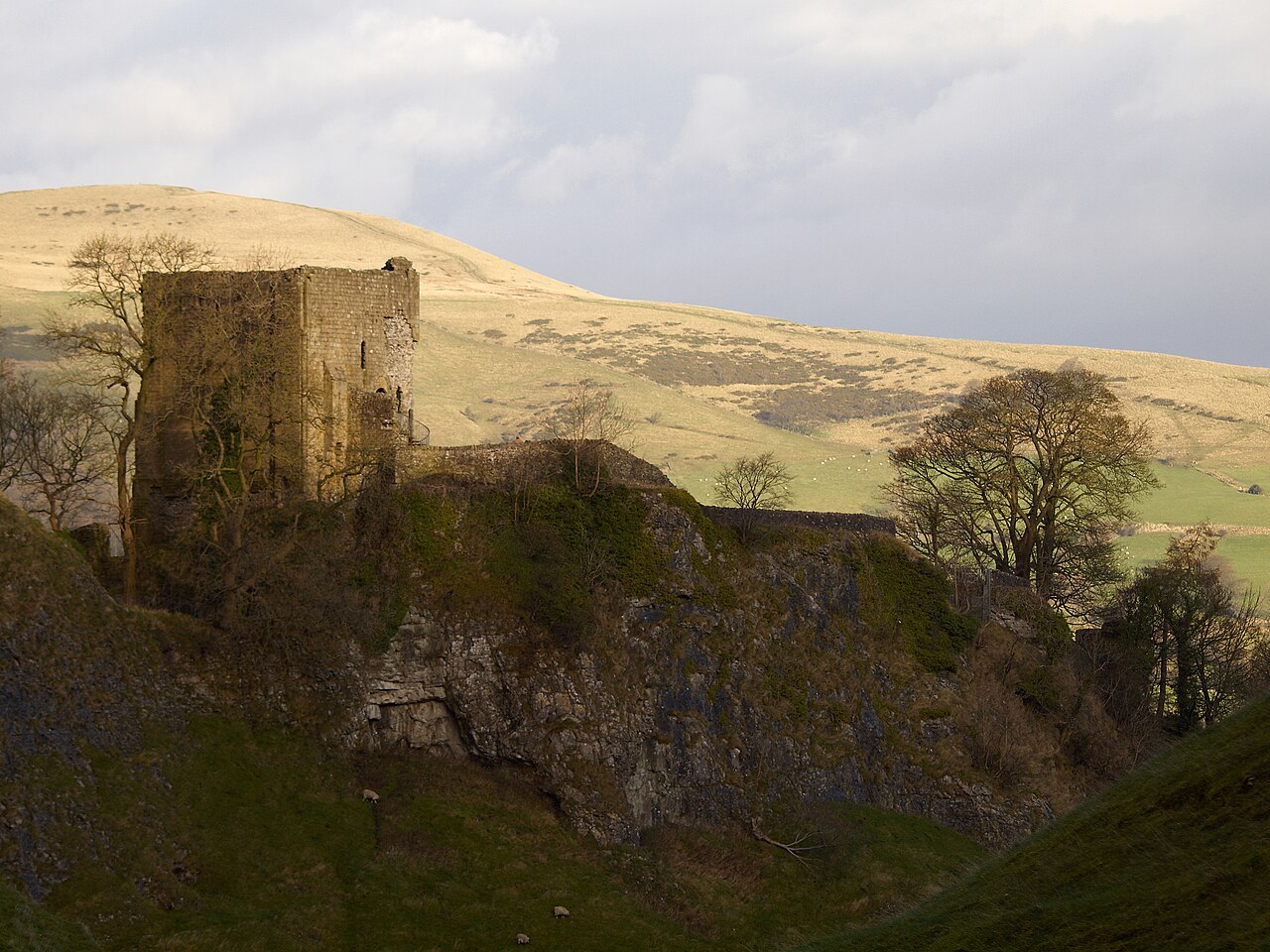
Today, Pilsbury Castle is a site of archaeological interest rather than a standing fortress. The visible earthworks, including the motte and ditches, allow visitors to appreciate the castle's strategic position overlooking the River Dove and the surrounding Derbyshire countryside. The natural topography, with hills and valleys, underscores the castle's role in controlling key routes and river crossings during its operational period.
While no standing buildings remain, the site offers a compelling glimpse into early Norman military architecture and the historical landscape of medieval England. Its proximity to other Norman castles in the region highlights the interconnected defensive network that shaped the political and military history of Derbyshire.
Frequently asked questions (FAQ)
- What is the historical significance of Pilsbury Castle?
- Pilsbury Castle is a Norman motte-and-bailey fortress with origins dating back to the Iron Age, playing a key role in securing Norman control in Derbyshire after 1066.
- Can I visit the remains of Pilsbury Castle?
- Yes, visitors can explore the earthworks and motte at Pilsbury Castle, which are visible on the site, though no standing structures remain.
- When was Pilsbury Castle built?
- The castle was likely constructed shortly after the Norman Conquest in the late 11th century, with possible enhancements during the mid-12th century Anarchy period.
- What architectural style characterizes Pilsbury Castle?
- Pilsbury Castle is an early Norman motte-and-bailey fortress primarily built with timber, characteristic of rapid medieval military construction.
- Why did Pilsbury Castle fall into ruin?
- The castle declined after the late 12th century, possibly due to destruction following William de Ferrers' revolt and the rise of nearby Hartington reducing its strategic importance.
Information
Website
Visit websiteSources & official resources
Verify the information above using these authoritative references.
Loading map...
Visitor reviews
No reviews yet. Been here? Write the first review and help other travelers!
Write the first reviewVisited this castle? Share your experience
Your review helps other travelers and adds first-hand knowledge to our encyclopedia.