Alton Castle
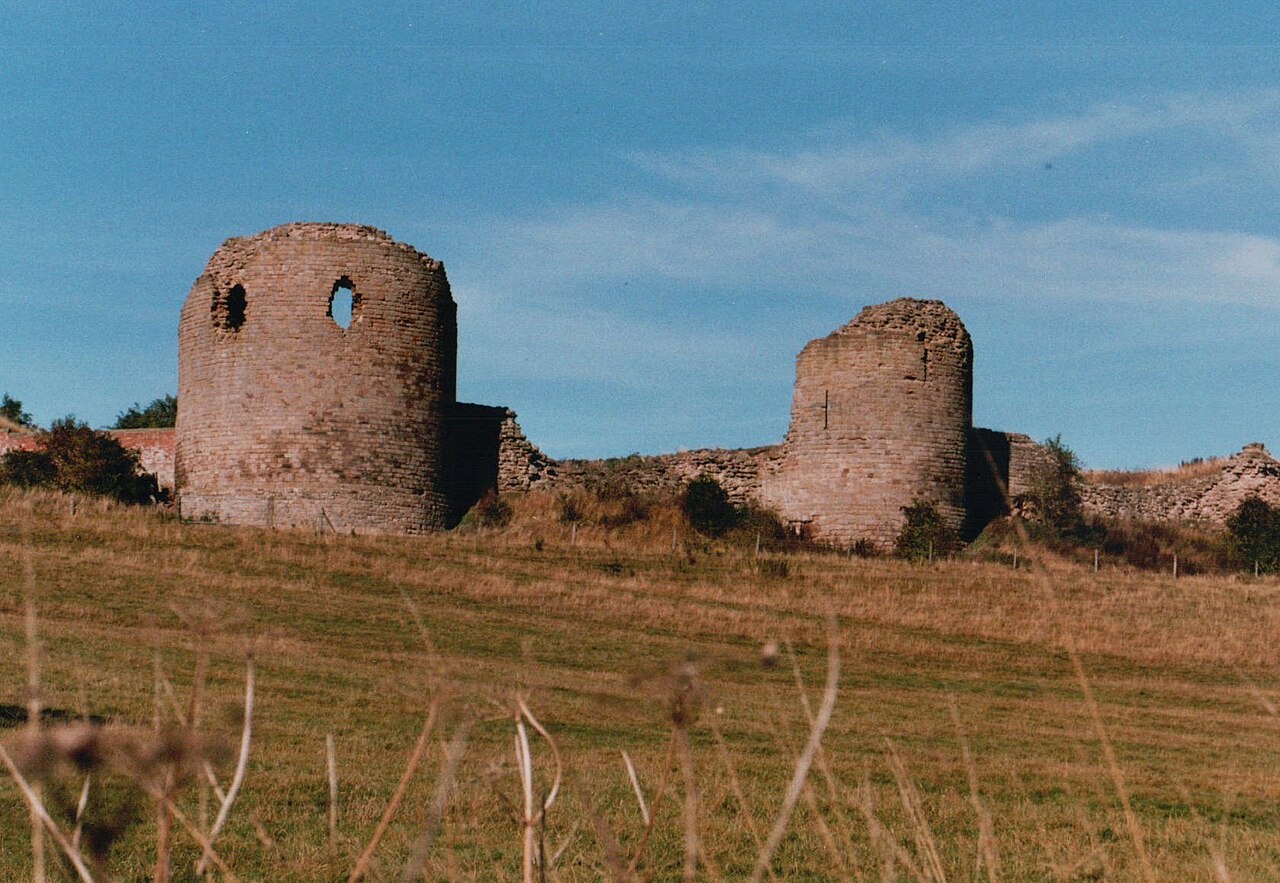
Alton Castle stands as a remarkable example of a historic hilltop fortress in Staffordshire, England, with origins dating back to the 12th century. Originally established by the Norman noble Bertram III de Verdun, the castle was constructed atop a rocky hill overlooking the River Churnet, a site fortified since Saxon times with wooden defenses. This strategic location highlights the castle's long-standing military and territorial importance in the region.
The castle's early medieval phase featured a stone fortress designed to control the surrounding valley and river routes. Over the centuries, the castle's structure evolved significantly. In the early 14th century, a substantial gatehouse was added, enhancing its defensive capabilities. The 15th-century rebuilding adapted the castle to changing military technologies and domestic needs, reflecting the transition from purely defensive stronghold to a noble residence. Ownership passed to the Earls of Shrewsbury in 1442, marking a new chapter in the castle's history.
Medieval origins and strategic significance
Alton Castle's location on a hill approximately 122 meters above sea level provided commanding views of the Churnet Valley, a vital advantage in medieval warfare and surveillance. The original Norman stone construction replaced earlier Saxon wooden fortifications, indicating the site's continuous use as a defensive position. The castle's multiple names, including Alverton and Aulton, reflect linguistic shifts over centuries.
Architectural features of the medieval fortress
The medieval castle featured robust stone walls, a gatehouse, and defensive towers typical of Norman military architecture. The gatehouse added in the 14th century served as a critical defensive structure controlling access to the inner bailey. The 15th-century renovations likely included enhancements to the curtain walls and living quarters, aligning with late medieval castle design trends that balanced fortification with residential comfort.
19th-century Gothic Revival transformation
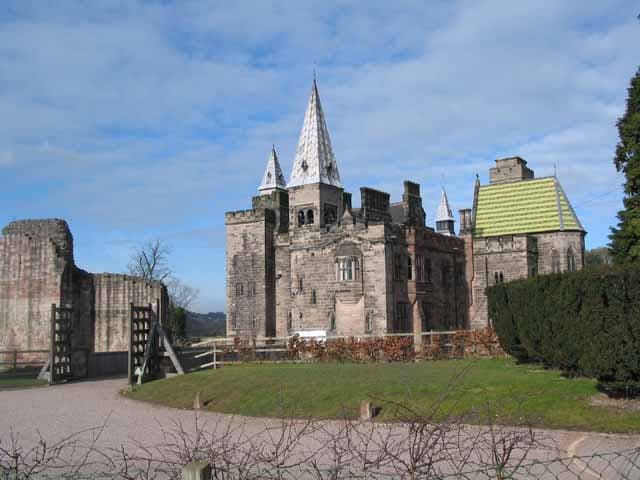
By the 19th century, Alton Castle had fallen into ruin as the Earls of Shrewsbury prioritized their nearby estate, Alton Towers. In the mid-1800s, John Talbot, the 16th Earl of Shrewsbury, commissioned the renowned architect Augustus Pugin to undertake a dramatic reconstruction. Pugin, a leading figure in the Gothic Revival movement, dismantled much of the medieval ruins and rebuilt the castle to resemble a medieval crusader fortress, inspired by castles associated with the Knights of the Teutonic Order in Germany and France.
Pugin's architectural vision and complementary buildings
Pugin's design incorporated characteristic Gothic architectural elements, including pointed arches, battlements, and stone masonry that evoked medieval craftsmanship. In addition to the main castle, Pugin designed several auxiliary structures on the hill, such as a replica medieval hospital, a guildhall, and a presbytery dedicated to St John the Baptist. These buildings served multiple community functions, including religious services, charitable housing for the poor, and education through a school for local children.
Use and ownership in the 19th and 20th centuries
The precise original purpose of Pugin's reconstructed castle remains somewhat ambiguous. It may have been intended as a residence for Bertram Talbot, the 17th Earl, or as a dower house. Later proposals to convert the castle into housing for priests were met with resistance from Pugin, who had distinct ideas about the building's function.
In 1855, the Sisters of Mercy took over the site, converting the presbytery into a convent. The castle continued as a private home until 1919, when the Sisters purchased it to expand their boarding school, which operated until its closure in 1989. The Archdiocese of Birmingham acquired the castle in 1995, reopening it as a Catholic Youth Retreat Centre. Since 1996, the castle has hosted outdoor educational activities for thousands of children annually, including those with social and physical challenges.
Architectural and cultural significance today
Alton Castle is recognized as a Grade I listed building and a scheduled monument, a status it has held since 1967. This designation ensures the preservation of its unique blend of medieval fortress remains and 19th-century Gothic Revival architecture. The castle's stone construction, battlements, and auxiliary buildings collectively embody centuries of English architectural and social history.
The castle's elevated position, overlooking the Churnet Valley and surrounded by gently rising terrain to the northeast, underscores its historical military importance. Today, the castle and its associated buildings remain well preserved, offering visitors insight into both medieval defensive architecture and the Victorian era's romanticized reinterpretation of the past.
Alton Castle continues to serve the community through its role as a youth retreat and educational centre, maintaining its legacy as a place of refuge, learning, and spiritual growth. Its combination of authentic medieval origins and Augustus Pugin's Gothic Revival masterpiece make it a significant landmark in Staffordshire's cultural heritage.
Frequently asked questions (FAQ)
- How do I visit Alton Castle and what are the opening hours?
- Alton Castle is open to visitors primarily for its Catholic Youth Retreat Centre activities. It is advisable to check the centre's official website or contact them directly for current visiting hours and tour availability, as public access may be limited due to its function as a retreat.
- What is the historical significance of Alton Castle?
- Alton Castle illustrates a unique blend of medieval fortress origins and 19th-century Gothic Revival architecture by Augustus Pugin. It reflects the military, religious, and social history of Staffordshire from the Norman period through the Victorian era.
- Can I explore the castle's medieval and Gothic Revival architecture?
- Visitors can appreciate the castle's architectural layers, including the original Norman stonework remnants and the extensive 19th-century Gothic Revival reconstruction by Augustus Pugin. The site includes the main castle and auxiliary buildings like the hospital, guildhall, and presbytery.
- Is Alton Castle accessible for visitors with disabilities?
- Due to its hilltop location and historic structures, accessibility may be limited in some areas. Visitors with mobility concerns should contact the retreat centre in advance to inquire about accommodations and accessible routes.
- When is the best time to visit Alton Castle?
- The castle is best visited during the warmer months when outdoor activities and the surrounding Churnet Valley landscape can be fully enjoyed. Checking ahead for special events or retreat programs is recommended to enhance the visit.
Photo gallery

Information
Sources & official resources
Verify the information above using these authoritative references.
Loading map...
Visitor reviews
No reviews yet. Been here? Write the first review and help other travelers!
Write the first reviewVisited this castle? Share your experience
Your review helps other travelers and adds first-hand knowledge to our encyclopedia.