Pignatelli della Leonessa Castle

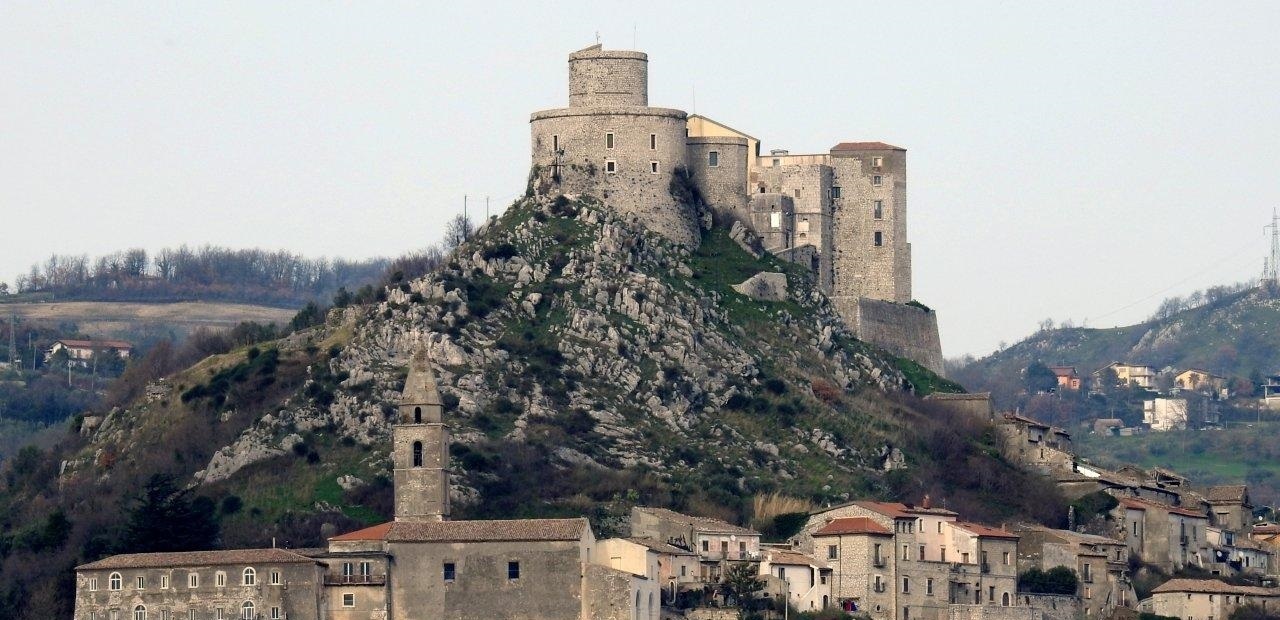
Pignatelli della Leonessa Castle in San Martino Valle Caudina
San Martino Valle Caudina, Campania, Italy
Early Medieval (5th–10th c.)
Well Preserved

The Pignatelli della Leonessa Castle is a significant medieval fortress located in the Municipality of San Martino Valle Caudina, nestled on the slopes of the Partenio mountains in southern Italy. This castle was originally constructed in the early medieval period, specifically in the first half of the 9th century AD, by the Lombards as a defensive stronghold. Its strategic position allowed it to dominate the surrounding valley and control important routes through the region, reflecting its military importance during the turbulent early Middle Ages.

Historical evolution and ownership

Throughout its long history, the castle underwent several renovations and modifications, particularly during the Norman-Swabian rule in southern Italy, which brought architectural and defensive enhancements. In 1343, the castle and the fiefdom of San Martino were acquired by Giovanni Lagonessa, a member of the French Lagonière family. Upon settling in Italy, this family adopted the surname Della Leonessa, which the castle still bears today.

The ownership of the castle was contested through the centuries, reflecting the complex feudal dynamics of the region. By the 17th century, the feudal lords of San Martino transformed the fortress into a noble residence, reducing its military function and adapting its interiors to more comfortable living standards. This included architectural changes such as lowering the height of certain rooms and installing wooden ceilings over the original vaulted structures.

Following the abolition of feudalism in 1806 and the extinction of the male line of the Della Leonessa family, the castle passed to the Pignatelli family. The Pignatellis undertook restoration efforts in the 1970s, preserving the castle’s medieval character while adapting it for modern use.

Architectural features and layout

The Pignatelli della Leonessa Castle retains much of its original medieval fortress appearance. The defensive structures such as the crenellated walls, watchtowers, and walkways remain largely intact, providing a clear example of early medieval military architecture adapted over centuries. The keep, or main defensive tower, stands as a prominent feature of the castle, designed for both defense and as a last refuge during sieges.

The castle complex includes a palace with a large hall decorated with frescoed walls and vaults embellished with friezes and coats of arms, reflecting its later use as a noble residence. The original pointed and barrel vaults in many rooms were covered by wooden ceilings during the 17th century renovations, which lowered the ceiling height but added warmth and comfort to the interior spaces.

Additional features include cistern-like oxbows designed to collect rainwater, essential for sustaining the castle during sieges, as well as prisons and an inner oratory, indicating the castle’s role as both a military and residential complex with religious functions.

Location and strategic importance

Situated on a commanding position overlooking the town of San Martino Valle Caudina, the castle’s location was chosen for its natural defensive advantages and its control over the surrounding territory. The Partenio mountains provided a rugged backdrop that enhanced the castle’s defensibility and allowed surveillance of the valley routes, which were vital for trade and military movements in the region.

This strategic placement underscores the castle’s role in the defense system of the Lombard duchies and later Norman and Swabian domains in southern Italy, serving as a bastion against invasions and local conflicts.

Preservation and current status

Today, the Pignatelli della Leonessa Castle is well preserved, maintaining much of its medieval fortress character. The restoration efforts by the Pignatelli family in the 20th century helped safeguard the castle’s architectural integrity while allowing for its adaptation to contemporary needs.

The castle stands as a cultural landmark and a testimony to the layered history of San Martino Valle Caudina, attracting visitors interested in medieval architecture, Italian history, and the evolution of feudal fortifications into noble residences.

Architectural styles and influences

The castle’s architecture primarily reflects early medieval military design, characterized by robust stone walls, crenellations, and defensive towers typical of Lombard fortifications. Later renovations introduced elements influenced by Norman and Swabian architectural styles, evident in the refinement of defensive structures and residential quarters.

The 17th-century modifications introduced more domestic architectural features, including decorative frescoes and friezes inside the palace, illustrating the transition from fortress to noble residence. These layers of architectural styles demonstrate the castle’s adaptation through different historical periods and ruling powers.

Frequently asked questions (FAQ)

How do I get to Pignatelli della Leonessa Castle?
Pignatelli della Leonessa Castle is located in San Martino Valle Caudina, Italy. You can reach it by car via the A16 motorway, taking the exit for Baiano and following the signs. Public transportation options include local buses that connect nearby towns, but a car is recommended for easier access.
What is the historical significance of Pignatelli della Leonessa Castle?
The castle dates back to the 15th century and is a significant example of medieval military architecture in Italy. It served as a strategic fortification during various conflicts, showcasing the power dynamics of the region. Today, it stands as a testament to the rich history of the area and is a popular site for visitors interested in medieval heritage.
When was Pignatelli della Leonessa Castle built?
Construction of Pignatelli della Leonessa Castle began in the late 15th century, specifically around 1480. It was commissioned by the Pignatelli family, who played a crucial role in the local nobility. Over the centuries, the castle has undergone various renovations, preserving its historical charm.
Can I explore the interior of the castle?
Yes, visitors can explore certain areas of the castle, including its towers and courtyards. Guided tours are available, which provide insights into the castle's history and architecture. Be sure to check the availability of tours in advance, as some areas may be restricted.
Why is Pignatelli della Leonessa Castle popular among tourists?
The castle is popular for its stunning architecture, picturesque setting, and historical significance. It offers breathtaking views of the surrounding valley, making it a great spot for photography. Additionally, its rich history and connections to the Pignatelli family attract history enthusiasts and culture seekers alike.
Is it possible to hold events at Pignatelli della Leonessa Castle?
Yes, the castle can be rented for private events such as weddings, parties, and corporate gatherings. Its unique atmosphere and beautiful surroundings provide a memorable backdrop for any occasion. It is advisable to contact the castle management for specific details and availability.
What are the opening hours for Pignatelli della Leonessa Castle?
The castle typically opens to visitors from 10 AM to 6 PM, Tuesday through Sunday. However, hours may vary depending on the season or special events, so it’s best to check the official website or contact the castle before your visit. Closed days may include major holidays.
Are there any ticket prices for visiting the castle?
Yes, there is an entry fee to visit Pignatelli della Leonessa Castle. Ticket prices are generally affordable, with discounts available for students and children. It's recommended to purchase tickets on-site or online in advance to secure your visit.
What is the best time to visit Pignatelli della Leonessa Castle?
The best time to visit is during the spring and fall months when the weather is mild and pleasant. These seasons also offer fewer crowds, allowing for a more enjoyable experience. Summer can be hot, and winter may bring colder temperatures, so plan your visit accordingly.
Are there any nearby attractions to visit after the castle?
Yes, there are several attractions near Pignatelli della Leonessa Castle, including the historic town of Benevento and the beautiful Taburno-Campania Regional Park. Visitors can also explore local wineries and enjoy the region's renowned cuisine. These nearby sites provide a well-rounded experience of the area's cultural and natural beauty.

Information

Hill Castle

Loading map...

Visitor reviews

No reviews yet. Been here? Write the first review and help other travelers!

Write the first review

Visited this castle? Share your experience

Your review helps other travelers and adds first-hand knowledge to our encyclopedia.
Write a review

(5/5)

0/2000 characters

Your review will be visible after admin approval

Nearby castles

5.5 km
Montesarchio Castle — Italy castle

Montesarchio Castle

Montesarchio, Italy

Montesarchio Castle, located in the town of Montesarchio in Campania, Italy, is a historic hilltop fortress with a rich and layered past spanning from the early medieval period to the modern era. Perched atop Monte Taburno, the castle commands a strategic vantage point overlooking the eastern boundary of the Valle Caudina. This location was crucial for controlling access through this important corridor, which was a significant military and territorial route throughout history. The site of Montesarchio Castle has been fortified since at least the 8th century, with early builders establishing defensive works that would evolve over the centuries. The Lombards, under the rule of Arigis II of Benevento, initially fortified the area, followed by occupation by the Normans. These early phases laid the foundation for the castle's role as a military stronghold. The present form of the castle mainly reflects extensive building and renovation campaigns undertaken during the Aragonese rule of the Kingdom of Naples in the late medieval period. Early medieval origins and strategic importance The castle's origins in the early medieval period are tied to the need for regional defense and control over the Valle Caudina, a vital passageway connecting different parts of southern Italy. The Lombards, who controlled much of the region after the fall of the Western Roman Empire, recognized the military and administrative importance of this site. Their fortifications established Montesarchio Castle as a key defensive outpost. Later, the Normans took possession of the castle, further reinforcing its fortifications. This period marked the transition from early medieval wooden and earthwork defenses to more permanent stone structures, reflecting changing military technologies and the need for stronger defensive capabilities. Aragonese reconstruction and architectural features The castle as it stands today owes much to the Aragonese dynasty, which ruled the Kingdom of Naples from the 15th to the early 16th centuries. During this time, the fortress was significantly rebuilt and expanded to serve both military and administrative functions. The Aragonese enhancements included strengthening the walls, adding towers, and improving the defensive layout to withstand artillery and siege warfare that had become prevalent in the late medieval period. The fortress features a hill castle design, typical of medieval military architecture, utilizing the natural topography of Monte Taburno to maximize defensive advantage. The castle's layout includes courtyards, moats (now largely vanished), and a network of walls and battlements designed to repel attackers. A notable architectural element is the presence of niches in the masonry that once held the mechanisms for a drawbridge, a key defensive feature controlling access to the castle. Opposite the main fortress stands the Torre di Montesarchio, a watchtower connected to the castle by an underground passage. This connection formed part of an integrated defensive system, allowing communication and reinforcement between the two structures during times of threat. Historical transitions and uses In the early 16th century, the castle's ownership changed following the Italian War of 1542-1546, a conflict involving the Holy Roman Emperor Charles V and King Francis I of France. In 1532, the castle was confiscated by the ruling authorities and granted to Alfonso II d’Avalos, the Marquis of Vasto, marking a shift in its political and military significance. By the 19th century, the castle had been repurposed as a state prison, reflecting broader changes in the region's governance and military needs. Beginning in 1830, Montesarchio Castle housed several prominent 19th-century Italian patriots who were imprisoned for their involvement in the country's struggles for independence and reform. Notable detainees included Carlo Poerio, Sigismondo Castromediano, Michele Pironti, and Nicola Nisco. The prisoners left behind inscriptions carved into the castle walls, providing poignant testimony to this turbulent period in Italian history. The castle continued to function as a prison through both World Wars, only ceasing this role after 1945. In the 1960s, it was transformed into the Istituto Mater Orphanorum, serving as an orphanage, before its current cultural role was established. Modern cultural significance and museum Since 2007, Montesarchio Castle has been home to the National Archaeological Museum of the Sannio Caudino (Museo Archeologico Nazionale del Sannio Caudino di Montesarchio). This museum showcases an extensive collection of artifacts from ancient Samnite settlements in the region, including those from Caudium, Saticula, and Telesia. The museum plays a vital role in preserving and interpreting the rich archaeological heritage of the Caudini tribe and the broader Sannio area. The castle's transformation into a museum has allowed for the preservation of its architectural fabric while providing public access to its historical and cultural treasures. Visitors can explore the castle's courtyards, walls, and towers, as well as view exhibits that illuminate the ancient and medieval history of the region. Architectural remains and features The castle's surviving structures reflect a complex layering of construction phases, with elements from the Lombard, Norman, and Aragonese periods visible in the masonry and layout. The fortress's design showcases typical medieval military architecture adapted to the local terrain. Defensive features such as the drawbridge niches, battlements, and the moat system demonstrate the castle's role as a fortified stronghold. The underground passage linking the castle to the Torre di Montesarchio is a distinctive feature, underscoring the strategic planning involved in the castle's defense. Inside the castle, the presence of inscriptions by political prisoners adds a human dimension to the fortress's history, connecting visitors with the personal stories of those who endured incarceration within its walls. A stone plaque near the entrance commemorates the passage of Gustaf Mauritz Armfelt in 1792, linking the castle to broader European historical narratives and highlighting its role as a site of political and military significance over many centuries. Visiting montesarchio castle today Today, Montesarchio Castle stands as a well-preserved hill castle that offers visitors a unique glimpse into the layered history of southern Italy. Its commanding position, architectural features, and museum collections make it an important cultural and historical destination in the Campania region. Visitors can explore the castle's extensive grounds, including its defensive walls, towers, and courtyards, while learning about the ancient Samnite civilization and the castle's role in medieval and modern history through the museum's exhibits. The site provides valuable insights into the evolution of military architecture and the socio-political history of the region.

High Medieval (11th–13th c.)
Details
8.2 km

Avella Castle

Avella, Italy

Avella Castle, also known as Saint Michael's Castle, is a significant medieval fortress located in Avella, Italy. Constructed by the Lombards in the 8th century AD, the castle occupies a commanding position on a hill overlooking the route that connects Monteforte Irpino with the Sabato Valley. This strategic location was crucial as it provided control over access to the region leading towards Puglia and the Adriatic coast, emphasizing the castle's military and regional importance during the early medieval period. Historical background and archaeological significance The hill on which Avella Castle stands has a rich history extending far beyond the medieval era. Notably, it was the site where the Cippus Abellanus was discovered, a remarkable archaeological artifact dating back to approximately 150 BC. This inscription, written in the Oscan language, documents an agreement between the ancient cities of Abella and Nola concerning land boundaries. The inscription also references a municipal Temple of Heracles that once stood in the region. Today, the Cippus Abellanus is preserved at the Episcopal Seminary of Nola, underscoring the area's long-standing cultural and historical importance. Architectural features and defensive structures The castle's fortress dominates the summit of the hill and is characterized by several prominent architectural elements. The most striking feature is the monumental cylindrical tower, which reflects the influence of Angevin architecture from a later period. This tower, alongside two imposing donjons—a specific type of fortified tower used for defense and residence—forms the core of the castle's defensive system. Surrounding the base of the fortress, two concentric walls encircle the slopes of the hill, providing layered protection against attackers. Within these walls lie the remains of various rooms that once served as housing and functional spaces for the castle's inhabitants. Among the surviving structures at the summit is a large rectangular cistern, which was essential for water storage during sieges and daily use. The cylindrical tower and donjons The cylindrical tower is a hallmark of the castle's later medieval modifications, particularly reflecting the architectural style brought by the Angevin dynasty, which ruled parts of southern Italy in the 13th and 14th centuries. This tower would have served both as a lookout point and a stronghold within the fortress. The donjons are robust defensive towers typical of medieval fortifications, providing secure refuge and strategic vantage points for defenders. Defensive walls and internal structures The two defensive walls that wrap around the hill's slopes demonstrate the castle's design to maximize natural terrain for protection. These walls would have been formidable barriers against invaders, combining with the elevated position to create a defensible stronghold. The interior remains, including the cistern, indicate the castle's capacity to sustain prolonged defense and habitation. The castle's role in regional history Avella Castle symbolizes the medieval heritage of the town of Avella in the Lower Irpinia area. Its construction by the Lombards places it within the context of early medieval power struggles in Italy, where fortified sites were vital for controlling territories and trade routes. Over the centuries, the castle's architecture evolved, incorporating elements from successive rulers such as the Angevins, reflecting the shifting political landscape of southern Italy. Strategic importance The castle's location was not only militarily strategic but also economically significant. Controlling the access route from Monteforte Irpino to the Sabato Valley allowed its occupants to oversee and regulate movement to the fertile lands of Puglia and the Adriatic coastline. This control would have implications for trade, military campaigns, and regional governance. Present condition and cultural value Today, Avella Castle stands as a partially preserved medieval fortress amidst largely natural surroundings. The ruins offer visitors a glimpse into the architectural and historical layers of the site, from ancient Oscan inscriptions to Lombard and Angevin fortifications. The castle remains a symbol of the town's medieval past and serves as a cultural landmark in Lower Irpinia. The castle's setting, surrounded by unspoiled nature, enhances its appeal as a destination for those interested in history, archaeology, and medieval architecture. Although only portions of the original structures remain, the site provides valuable insights into the defensive strategies and living conditions of its historical inhabitants.

Early Medieval (5th–10th c.)
Details
8.7 km

Ceppaloni Castle

Ceppaloni, Italy

Ceppaloni Castle stands as a remarkable example of a Norman hill castle that evolved over centuries into a baronial palace, reflecting the complex history and architectural transformations characteristic of southern Italy. Located in the municipality of Ceppaloni, in the Campania region of Italy, this fortress dominates the landscape atop a rocky spur overlooking the Sabato River valley. Its strategic position controlled a vital passage on the ancient road connecting Benevento to Salerno, marking it as a key military and administrative site from the 11th century onward. Originally constructed during the High Medieval period in the Norman era, the castle's earliest known lord was Raone II di Fraineta, who ruled in the early 12th century. The fortress was a contested border stronghold between the Kingdom of Naples and the Papal States, which governed Benevento from 1077 until 1860. Its history is marked by repeated conflicts, including destruction and rebuilding phases under prominent rulers such as King Roger II of Sicily, who reinforced the castle after its initial destruction by Beneventan forces in retaliation for attacks launched from the fortress. Historical significance and military role The castle's strategic importance is underscored by its role during the turbulent 12th and 13th centuries. In the early 1100s, it served as a base for Raone II's assaults against the Papal-controlled city of Benevento, prompting Pope Honorius II to order military actions against the city in 1128. Subsequently, the fortress was destroyed by Beneventan forces, only to be rebuilt by Roger II, who established Ceppaloni (then Cepparunum) as a fortified border town. During the reign of Emperor Frederick II, the castle was again a focal point of conflict between imperial and papal forces. The inhabitants of Benevento occupied the castle until Frederick's return in 1220. However, in 1229, while Frederick was on crusade, papal and allied Guelph forces burned the castle. Frederick swiftly recaptured it upon his return, demonstrating its military and symbolic importance. Under the Angevin dynasty, Ceppaloni Castle retained its military and administrative significance. It was governed by a castellan appointed by the royal court, overseeing royal lands and fiefs granted to French knights. The castle also played a role in the Angio-Aragonese wars, hosting notable figures such as King Alfonso V of Aragon in 1437 during his military campaigns. The presence of royal Aragonese troops in the vicinity during the 1460s further highlights its continued strategic value. Architectural evolution and features The castle's architecture reflects its long history, with a layout shaped by the natural contours of the rocky ridge on which it stands. The fortress has a roughly triangular plan with gently rounded corners enclosing an inner courtyard that mirrors this shape. The defensive walls closely follow the cliff's natural profile, enhancing its impregnable appearance. Originally, the castle featured several circular Norman towers, a hallmark of Norman military architecture designed to provide comprehensive defense and vantage points. Today, only the northwest circular tower remains, situated near the original main entrance. This entrance was strategically placed behind a bend in the approach road, limiting direct access and improving defense. In the 16th century, as military threats diminished and the castle's function shifted towards residential and administrative use, the original entrance was closed off. A new entrance was opened on the southwest side, reflecting the castle's transformation into a baronial palace. The interior buildings, standing two stories high, housed offices for the baronial court, including administrative chambers and a prison for feudal justice. The castle's foundations reveal a complex construction history, with numerous alterations and expansions over nine centuries. These changes illustrate the adaptation of the fortress to evolving military technologies and social functions, transitioning from a purely defensive stronghold to a noble residence and local governance center. Defensive structures and layout The castle's defensive system was enhanced by its natural setting atop a rocky spur, with walls designed to maximize the natural cliff's protection. The triangular shape allowed for efficient defense coverage, with towers positioned to guard vulnerable points. The surviving northwest tower is a testament to the original Norman design, providing a commanding view of the surrounding valley. Residential and administrative adaptations As the castle's military role declined, its architecture adapted to accommodate the needs of the ruling nobility. The transformation into a baronial palace included the addition of more comfortable living quarters and administrative offices. The presence of a prison within the castle walls underscores its role as a center of feudal authority and justice. Ownership and noble families Following its military prominence, Ceppaloni Castle passed through the hands of several noble families, each leaving their mark on its history and structure. In 1534, Emperor Charles V granted the castle to Don Rodrigo d’Avalos, initiating a period of noble residence that lasted until 1576. The estate was then sold to the Cosso (Coscia) family, prominent in nearby Sant’Agata de’ Goti, with Giovan Tommaso Cosso residing there in the early 17th century. By 1634, the castle was acquired by Fabio de Lagonessa, Archbishop of Conza and Patriarch of Antioch, who restored the fortress and made it his permanent residence. The della Leonessa family later occupied the castle, including Don Vincenzo della Leonessa, the first Duke of Ceppaloni, and Geronimo della Leonessa, connected to the influential Carafa family through marriage. Despite its noble status, the castle suffered damage during the 1688 earthquake, leading to its gradual abandonment as a primary residence. The della Leonessa family relocated to Naples by around 1740, and the castle's role shifted towards administrative and judicial functions under the baronial court system. Later history and restoration efforts After the abolition of feudalism in 1806, Ceppaloni Castle's importance declined significantly. It served as the location for the Curia office, administering justice under feudal law, with the governor residing in the castle acting as judge. The prison within the castle walls was used during this period, but these functions ceased with the end of feudal privileges. In the early 20th century, the castle was sold by Baroness Donna Maria Argentina Pignatelli della Leonessa in Carelli and divided into apartments by various local owners. Today, the Municipality of Ceppaloni owns the castle and has undertaken extensive restoration efforts to preserve this historic landmark. Ceppaloni Castle now stands as a well-preserved testament to nearly a millennium of history, showcasing the architectural evolution from a Norman military fortress to a Renaissance baronial palace. Its walls, towers, and courtyards continue to tell the story of the region's complex political and social history, making it a significant cultural heritage site in Campania.

High Medieval (11th–13th c.)
Details
