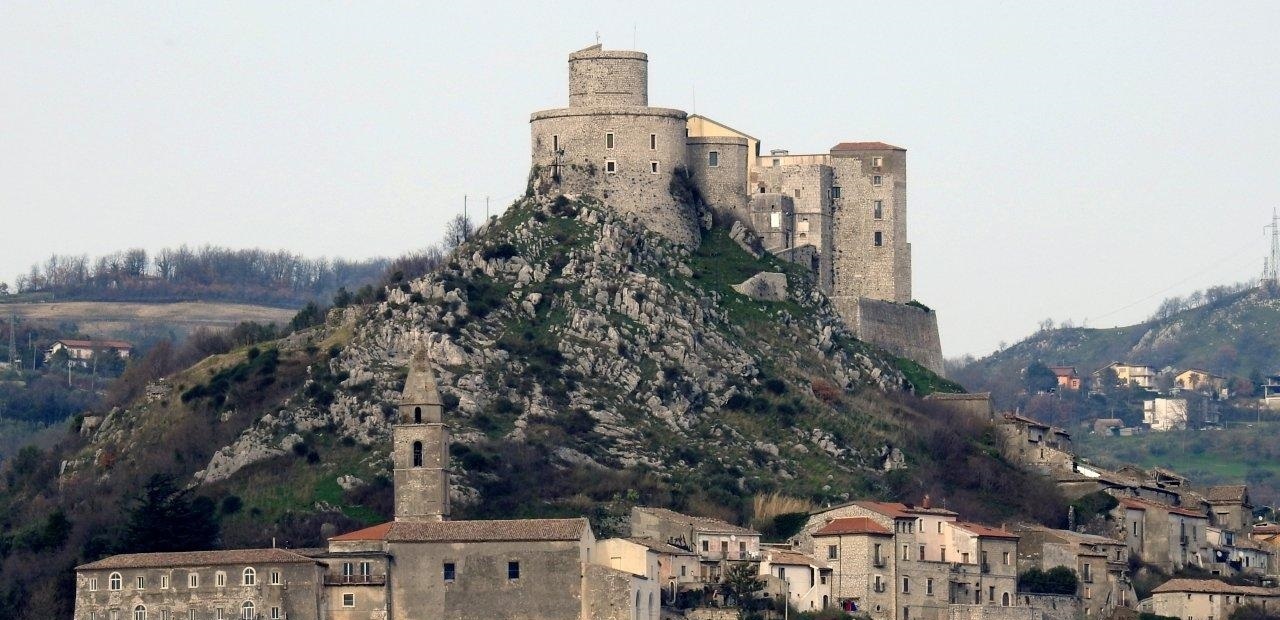
Avella Castle
Avella Castle, also known as Saint Michael's Castle, is a significant medieval fortress located in Avella, Italy. Constructed by the Lombards in the 8th century AD, the castle occupies a commanding position on a hill overlooking the route that connects Monteforte Irpino with the Sabato Valley. This strategic location was crucial as it provided control over access to the region leading towards Puglia and the Adriatic coast, emphasizing the castle's military and regional importance during the early medieval period.
Historical background and archaeological significance
The hill on which Avella Castle stands has a rich history extending far beyond the medieval era. Notably, it was the site where the Cippus Abellanus was discovered, a remarkable archaeological artifact dating back to approximately 150 BC. This inscription, written in the Oscan language, documents an agreement between the ancient cities of Abella and Nola concerning land boundaries. The inscription also references a municipal Temple of Heracles that once stood in the region. Today, the Cippus Abellanus is preserved at the Episcopal Seminary of Nola, underscoring the area's long-standing cultural and historical importance.
Architectural features and defensive structures
The castle's fortress dominates the summit of the hill and is characterized by several prominent architectural elements. The most striking feature is the monumental cylindrical tower, which reflects the influence of Angevin architecture from a later period. This tower, alongside two imposing donjons—a specific type of fortified tower used for defense and residence—forms the core of the castle's defensive system.
Surrounding the base of the fortress, two concentric walls encircle the slopes of the hill, providing layered protection against attackers. Within these walls lie the remains of various rooms that once served as housing and functional spaces for the castle's inhabitants. Among the surviving structures at the summit is a large rectangular cistern, which was essential for water storage during sieges and daily use.
The cylindrical tower and donjons
The cylindrical tower is a hallmark of the castle's later medieval modifications, particularly reflecting the architectural style brought by the Angevin dynasty, which ruled parts of southern Italy in the 13th and 14th centuries. This tower would have served both as a lookout point and a stronghold within the fortress. The donjons are robust defensive towers typical of medieval fortifications, providing secure refuge and strategic vantage points for defenders.
Defensive walls and internal structures
The two defensive walls that wrap around the hill's slopes demonstrate the castle's design to maximize natural terrain for protection. These walls would have been formidable barriers against invaders, combining with the elevated position to create a defensible stronghold. The interior remains, including the cistern, indicate the castle's capacity to sustain prolonged defense and habitation.
The castle's role in regional history
Avella Castle symbolizes the medieval heritage of the town of Avella in the Lower Irpinia area. Its construction by the Lombards places it within the context of early medieval power struggles in Italy, where fortified sites were vital for controlling territories and trade routes. Over the centuries, the castle's architecture evolved, incorporating elements from successive rulers such as the Angevins, reflecting the shifting political landscape of southern Italy.
Strategic importance
The castle's location was not only militarily strategic but also economically significant. Controlling the access route from Monteforte Irpino to the Sabato Valley allowed its occupants to oversee and regulate movement to the fertile lands of Puglia and the Adriatic coastline. This control would have implications for trade, military campaigns, and regional governance.
Present condition and cultural value
Today, Avella Castle stands as a partially preserved medieval fortress amidst largely natural surroundings. The ruins offer visitors a glimpse into the architectural and historical layers of the site, from ancient Oscan inscriptions to Lombard and Angevin fortifications. The castle remains a symbol of the town's medieval past and serves as a cultural landmark in Lower Irpinia.
The castle's setting, surrounded by unspoiled nature, enhances its appeal as a destination for those interested in history, archaeology, and medieval architecture. Although only portions of the original structures remain, the site provides valuable insights into the defensive strategies and living conditions of its historical inhabitants.
Frequently asked questions (FAQ)
- When was Avella Castle built and by whom?
- Avella Castle was built in the 8th century AD by the Lombards, a Germanic people who controlled parts of Italy during the early medieval period.
- What is the significance of the Cippus Abellanus found near the castle?
- The Cippus Abellanus is an ancient Oscan inscription dating to about 150 BC that records a land agreement between the cities of Abella and Nola. It highlights the area's historical importance before the castle's construction.
- What are the main architectural features of Avella Castle?
- The castle features a monumental cylindrical tower typical of Angevin architecture, two large donjons, defensive walls surrounding the hill, and a large rectangular cistern at the summit.
- Is Avella Castle open to visitors?
- Information on visiting hours and access is limited, so prospective visitors should check with local tourism offices in Avella for current details.
- Why was Avella Castle built in its specific location?
- The castle was strategically built on a hill to control the access route connecting Monteforte Irpino with the Sabato Valley, overseeing important routes to Puglia and the Adriatic coast.
Information
Loading map...
Visitor reviews
No reviews yet. Been here? Write the first review and help other travelers!
Write the first reviewVisited this castle? Share your experience
Your review helps other travelers and adds first-hand knowledge to our encyclopedia.