Pietrapelosa Castle
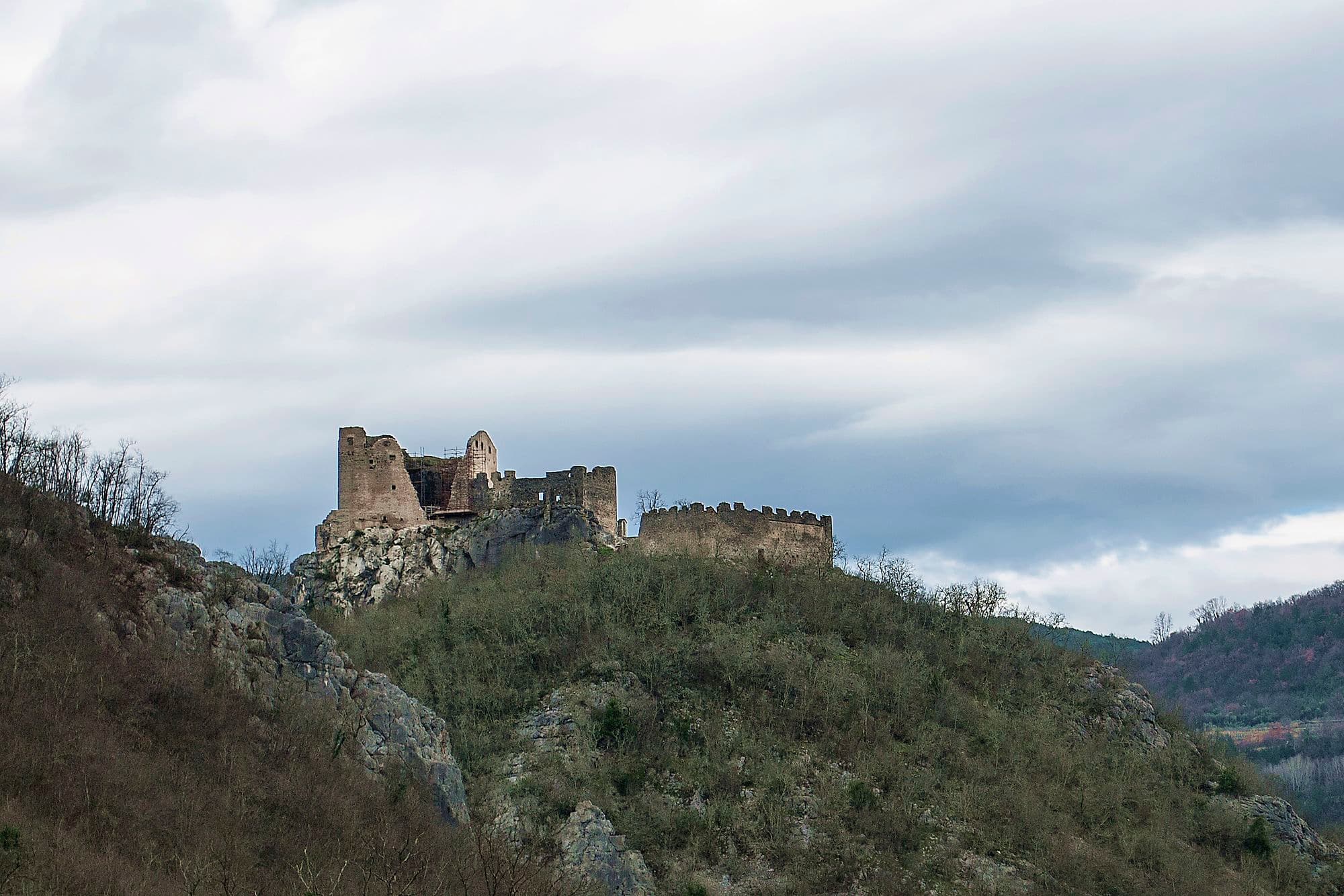
Pietrapelosa Castle stands as a remarkable medieval fortress located near Buzet in the Istrian region of Croatia. Perched on a steep rocky ridge above the Bračana River Valley, this castle offers commanding views of northern Istria and is renowned for its distinctive name, derived from the Italian words meaning "hairy stone," a nod to the moss that has long adorned its ancient walls. The castle's strategic location and well-preserved ruins make it one of the most significant historical landmarks in the region.
Early history and strategic significance
The site of Pietrapelosa Castle has a rich history extending far beyond its medieval origins. Archaeological evidence indicates human presence dating back to prehistoric times, with Illyrian settlers establishing fortified settlements during the Bronze Age. These early inhabitants capitalized on the natural elevation for defense, laying the groundwork for the site's enduring military importance.
During the Roman period, from the late 2nd century BCE through the decline of the Western Roman Empire in the 5th century CE, the site was transformed with the construction of a late antique fortification, or castrum. This fortification was likely part of the larger defensive system known as the Claustra Alpium Iuliarum, designed to protect northern Italy from invasions. Following Roman rule, the fortress came under Byzantine control, continuing its role as a military and administrative center.
The first documented mention of the castle dates to 965 AD, when Rodoald, the Patriarch of Aquileia, granted the ruined fortress, then known as Ruvin, to the bishopric of Poreč. The name "Ruvin," meaning "ruins," reflected the damage sustained during Slavic incursions, which had weakened the castle's defenses. Despite this, the fortress maintained strategic importance, overseeing movement through the Bračana valley and controlling key routes and a bridge over the Bračana stream.
Medieval ownership and political role
From the 13th to the mid-14th century, the castle was held by a family of German knights who took the name de Pietrapelosa, derived from the fortress itself. These knights served as vassals to the Patriarchate of Aquileia and later to the Counts of Gorizia. Their tenure was marked by involvement in regional conflicts, particularly those involving the expanding influence of the Venetian Republic and neighboring feudal lords.
In 1421, the Venetian commander Taddeo d'Este conquered Pietrapelosa, ending the secular rule of the Patriarchs of Aquileia in Istria. Subsequently, the region was divided between the Republic of Venice and the Habsburg County of Pazin. The Venetian Council granted the castle to Nicolò Gravisi in 1440, bestowing upon him the title of Marquis of Pietrapelosa. The Gravisi family undertook significant renovations, converting the fortress into a summer residence while preserving its defensive features.
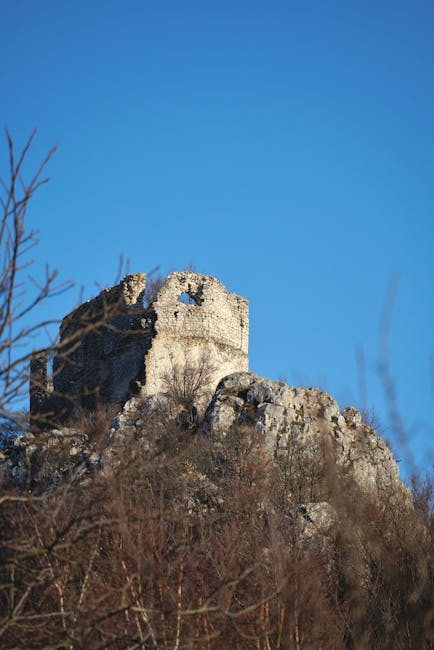
Photo by Damir K .
Architectural features and castle layout
Pietrapelosa Castle is built on a narrow, elongated ridge at approximately 119 meters above sea level, its design closely following the natural contours of the terrain. The fortress features a roughly pentagonal core surrounded on three sides by a robust outer defensive wall. These walls, originally three stories high, are still largely intact, showcasing the castle's formidable defenses.
One of the castle's most prominent architectural elements is the polygonal bergfried, a four-story watchtower that also served as residential quarters. This tower, with walls between two and four meters thick, stands about 20 meters tall and is positioned at the western edge of the castle's core. Its irregular pentagonal shape is adapted to the rocky outcrop, emphasizing its dual role as a stronghold and living space.
Adjacent to the bergfried is the palace (palas), a four-floor residential building connected by external staircases and wooden galleries. This structure includes a courtyard on its eastern side, which once housed a building with a long double-pitched roof, likely used for domestic or administrative purposes. The residential area extends onto the natural rock beside the castle without enclosing walls but remains connected to the main fortress by stairways.
The castle chapel, dedicated to St. Mary Magdalene, dates from the 12th century and exemplifies classic Istrian ecclesiastical architecture with a single nave and bell tower. In 1995, fragments of late 15th-century frescoes were discovered inside, alongside unique graffiti in both Glagolitic and Latin scripts, highlighting the cultural and religious life within the castle walls until the chapel's last service in 1793.
Events, restoration, and current condition
Throughout its history, Pietrapelosa Castle avoided destruction during the numerous wars that affected Istria. However, a fire in 1635 severely damaged the castle's interior, necessitating restoration efforts that allowed it to remain inhabited until the 18th century. The Gravisi family retained ownership until the abolition of the feudal system in 1869, marking the end of aristocratic control.
After abandonment, the castle gradually fell into ruin but has since undergone restoration to preserve its significant architectural and historical heritage. Today, Pietrapelosa stands as one of the best-preserved castles in Istria, notable for its combination of military and residential architecture and its panoramic views over the Bračana valley and northern Istria.
Archaeological significance and cultural heritage
Archaeological excavations around Pietrapelosa have revealed Roman cremation graves and grave goods scattered in the surrounding fields, underscoring the site's long-term importance. Inside the castle, archaeologists discovered the earliest known stone toilet in Istria, a rare feature that offers insight into the daily life and practical arrangements of medieval castle inhabitants.
The castle's layered history, from prehistoric settlement through Roman and Byzantine periods to medieval fortification, is evident in its architecture and artifacts. The preservation and restoration efforts have made Pietrapelosa a valuable cultural heritage site, attracting visitors interested in history, architecture, and panoramic landscapes.
Frequently asked questions (FAQ)
- What is the historical significance of Pietrapelosa Castle?
- Pietrapelosa Castle, located in Buzet, Croatia, dates back to the 12th century and is a remarkable example of medieval architecture. It played a crucial role in the region's defense and served as a residence for nobility, reflecting the rich history of feudal lords in Istria.
- When was Pietrapelosa Castle built?
- The castle was constructed in the 12th century, with several renovations and expansions throughout the centuries. Its strategic location allowed it to serve various military and residential purposes over the years.
- What are the opening hours for visitors?
- Pietrapelosa Castle is generally open to visitors from 9 AM to 6 PM during the tourist season, which runs from April to October. It's advisable to check the official website or local tourism information for any changes in hours or seasonal closures.
- Can I access Pietrapelosa Castle with a wheelchair?
- While Pietrapelosa Castle offers stunning views and historical insights, accessibility can be challenging due to its ancient structure and terrain. Visitors with mobility concerns should contact the castle management in advance to inquire about specific accessibility options.
- What is the best time to visit Pietrapelosa Castle?
- The best time to visit Pietrapelosa Castle is during the spring and early autumn months when the weather is mild and conducive for exploring. Additionally, these seasons tend to attract fewer crowds, allowing for a more peaceful experience.
- Are there any nearby attractions to visit?
- Yes, Buzet is rich in attractions, including the picturesque Motovun and the scenic Mirna Valley. Additionally, visitors can explore local vineyards and enjoy Istrian cuisine at nearby restaurants.
- How much are the ticket prices for Pietrapelosa Castle?
- Admission to Pietrapelosa Castle is typically affordable, with tickets priced around 5 to 10 Euros per person. Children and students may receive discounted rates, so it's best to check at the entrance for the latest pricing.
Photo gallery


Information
Website
Visit websiteSources & official resources
Verify the information above using these authoritative references.
Loading map...
Visitor reviews
No reviews yet. Been here? Write the first review and help other travelers!
Write the first reviewVisited this castle? Share your experience
Your review helps other travelers and adds first-hand knowledge to our encyclopedia.


