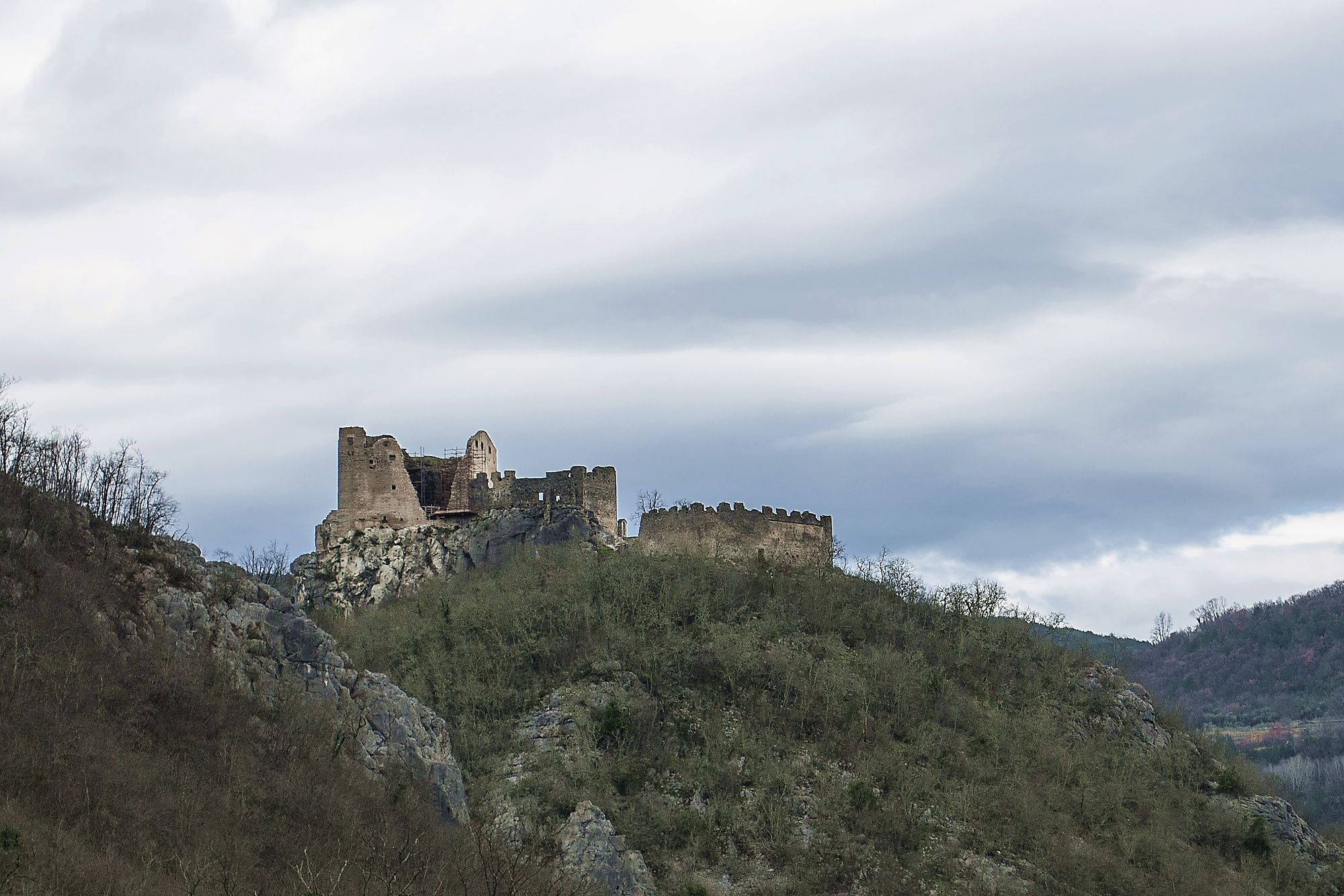
Castle Završje stands as a significant medieval fortress located in the municipality of Završje in Croatia, near the modern border with Slovenia. This hill castle occupies a strategic position atop a hill approximately 240 meters above sea level, commanding views over the surrounding Istrian landscape between the towns of Grožnjan and Oprtalj. Its elevated location underscores its historical role as a defensive stronghold overseeing important borderlands.
Constructed during the medieval period, Castle Završje was originally built by the noble Contarini family, vassals of Ulrik I, margrave of the Istrian march. The castle's history is intertwined with the complex political and military dynamics of the Istrian border region, which was contested by various noble families and states over centuries. The site was historically known by multiple names including Castrum Piemonte, Castrum Pyamont, Poymont, and Pemund, reflecting its evolving identity and significance.
Historical context and ownership
The earliest documentary reference to the settlement dates back to 1102, when Ulrik II, margrave of the Istrian march, made a donation concerning the area to the Patriarchate of Aquileia. This highlights the early medieval importance of the site within the regional power structures. Over the following centuries, Castle Završje and its lands passed through the hands of several notable noble families. By 1276, control had shifted to the influential Rihemberk family. Around the turn of the 14th century, the castle came under the ownership of the counts of Pazin and Gorizia, two key players in the region's feudal landscape.
The fortress was of strategic military importance, evidenced by its successful defense against an attack in 1360 under the authority of the Venetian Republic. The Venetians formally incorporated the area into their territories in 1511, marking a new phase in the castle’s history. Following the death of Count Albert IV of Pazin in 1374, the castle’s governance passed to the Pazin county under Habsburg rule, who appointed a captain to oversee the fief. In 1532, ownership reverted to the Contarini family, initiating a period of relative stability lasting nearly three centuries.
The 19th century brought significant political changes. The castle and its lands briefly came under Napoleonic control during the early 1800s, before returning to Austrian rule. The Austrians contributed to regional development, including the establishment of the narrow-gauge Parenzana railway, which enhanced connectivity in Istria.
20th-century developments and cultural heritage
In the 20th century, the village of Završje expanded its infrastructure with the addition of postal services, educational facilities, shops, an oil mill, and various craft workshops. During World War II, local Croatian and Italian anti-fascist groups united in resistance against the German occupation forces, reflecting the area's complex ethnic and political tensions.
After the war, the region was incorporated into Yugoslavia, leading to significant demographic changes. The local population declined sharply from approximately ninety families to around forty residents due to emigration. The area's ethnic composition historically included a blend of Romance-speaking Italians and Slavic groups such as Croatians and Slovenians. Slavic settlement is documented from the late 14th century onward, while Italian cultural influence remained strong, especially prior to World War II. Legal and administrative documents from the early 17th century indicate that Italian was commonly used by peasants, illustrating the layered cultural identity of the community.
Architectural features and remains
Castle Završje was part of a fortified settlement characterized by double defensive walls that protected both the castle itself and the surrounding village. This robust defensive system emphasizes the fortress’s role in securing the borderlands and the local population. Although detailed descriptions of the castle’s layout and building materials are scarce, historical maps and photographs depict the site under the name "Piemonte d’Istria".
Within the castle complex stands a notable medieval church dedicated to the Blessed Virgin Mary. Constructed in the 16th century, the church features a Romanesque bell tower distinguished by its rounded arches and sturdy stone construction, typical of the period’s architectural style. The church underwent its last recorded renovation in 1879.
The church historically housed valuable liturgical objects, including 18th-century silver lamps and candlesticks, as well as an elaborately decorated chalice bearing medallions dated 1476. This chalice was sold in the late 18th century and is now preserved in the Louvre Museum, underscoring the cultural significance of the site’s religious artifacts.
Current condition and archaeological status
The current physical condition of Castle Završje is not well documented, and no extensive archaeological excavations have been reported. There are no known discoveries of tools, pottery, or altars from the site. Despite this, the remaining defensive walls and the enduring presence of the church provide tangible links to the castle’s medieval past and its dual military and spiritual functions.
The castle’s role in regional history
Throughout its history, Castle Završje served as a crucial military and administrative center in the contested borderlands of Istria. Its repeated changes of ownership reflect the shifting political allegiances and power struggles that shaped the region from the 12th century through the 19th century. The castle’s fortifications and strategic location helped secure the area against external threats, while its associated religious structures fostered a sense of community and cultural continuity.
The castle’s story exemplifies the layered history of Istria, where diverse ethnic groups and political entities intersected. Its legacy continues to be an important part of Croatian cultural heritage, offering insights into medieval fortification architecture and the complex socio-political landscape of the region.
Frequently asked questions (FAQ)
- What is the historical significance of Castle Završje?
- Castle Završje is a 13th-century fortress located in Croatia, known for its strategic importance during various historical conflicts. It was part of the defense system of the region and showcases the architectural styles of different eras. The castle's ruins tell the story of its long-standing presence and the various rulers who once inhabited it.
- When was Castle Završje built?
- Castle Završje was constructed in the 13th century, with its origins dating back to the medieval period. It has undergone several modifications over the centuries, reflecting the architectural trends of the time. Today, visitors can appreciate the remnants of its walls and towers that have withstood the test of time.
- Can I visit Castle Završje?
- Yes, visitors are welcome to explore Castle Završje. The castle is accessible to the public, and it offers a glimpse into the rich history and stunning views of the surrounding landscape. It’s advisable to check local guidelines or tours available to enhance your visit.
- What are the opening hours for Castle Završje?
- Castle Završje typically opens its gates to visitors from early morning until late afternoon, but specific hours can vary by season. It is recommended to check the official website or local tourist information for the most current opening times before planning your visit. This ensures you have ample time to explore the site.
- Is it possible to access Castle Završje by public transport?
- Yes, Castle Završje can be accessed by public transport, though options may be limited. Visitors may need to take a bus or train to the nearest town and then use local transportation or taxis to reach the castle. It’s a good idea to plan your journey in advance to ensure a smooth visit.
- What is the best time to visit Castle Završje?
- The best time to visit Castle Završje is during the spring and early autumn months when the weather is pleasant and conducive to outdoor exploration. These seasons allow for comfortable temperatures and fewer crowds. Additionally, the surrounding nature is particularly beautiful during these times, enhancing your overall experience.
- Are there any nearby attractions to Castle Završje?
- Yes, there are several nearby attractions that complement a visit to Castle Završje. The picturesque town of Motovun, famous for its truffles and medieval architecture, is just a short drive away. Additionally, the stunning landscapes of Istria provide opportunities for hiking and exploring local vineyards.
- What are the ticket prices for visiting Castle Završje?
- Ticket prices for entering Castle Završje are generally modest, making it an affordable destination for visitors. Discounts may be available for students, seniors, and groups. It is recommended to check for any special events or guided tours that may have different pricing.
Information
Website
Visit websiteSources & official resources
Verify the information above using these authoritative references.
Loading map...
Visitor reviews
No reviews yet. Been here? Write the first review and help other travelers!
Write the first reviewVisited this castle? Share your experience
Your review helps other travelers and adds first-hand knowledge to our encyclopedia.